2026 Hanfu Guide: Birth, Wedding & Ancestral Ceremony Attire
The 2026 Hanfu Ritual Renaissance
As we navigate through 2026, the global Hanfu movement has matured far beyond casual streetwear and social media trends. Today, traditional Chinese garments are being reclaimed for their original, profound purpose: marking the most significant milestones of human life. Families across Asia and the diaspora are increasingly turning to historically accurate Hanfu to honor birth ceremonies, matrimonial unions, and ancestral rites. This shift represents a deep cultural reconnection, where the meticulous construction, symbolic motifs, and natural fabrics of traditional dress serve as a bridge between generations. According to historical textiles experts at The Metropolitan Museum of Art, the structural integrity and symbolic color palettes of Chinese dress have always been intrinsically linked to Confucian rites and familial piety. In 2026, modern artisans are combining these ancient philosophies with contemporary tailoring techniques, making ceremonial Hanfu more accessible, durable, and historically grounded than ever before.
Honoring New Life: Birth and Early Childhood Ceremonies
The arrival of a child is marked by two major milestones in traditional Chinese culture: the Man Yue (Full Moon celebration) and the Zhua Zhou (First Birthday). In 2026, parents are moving away from mass-produced, synthetic baby clothes in favor of organic, historically inspired garments that protect the infant's sensitive skin while invoking auspicious blessings.
Man Yue (Full Moon) Attire
For the Full Moon ceremony, infants are traditionally dressed in garments featuring the Jiaoling Youren (cross-collar, right lapel) style. The right-over-left lapel is a strict requirement, as the reverse is historically reserved for the deceased. In 2026, the most sought-after fabrics for infant Hanfu are organic bamboo-silk blends and unbleached cotton, which offer natural temperature regulation and hypoallergenic properties. Artisans are currently utilizing natural plant dyes, such as soft madder root for pale pinks and indigo for gentle blues, ensuring no harsh chemicals touch the baby's skin. The outfit is typically completed with a Hutou Mao (tiger-head hat) and matching tiger shoes, meticulously embroidered to ward off evil spirits and promote robust health.
Zhua Zhou (First Birthday) and the Object Grabbing Ritual
The first birthday involves the Zhua Zhou ritual, where the child is placed before a selection of objects (like a brush, abacus, or scallion) to predict their future aptitudes. The child's Hanfu for this event is usually brighter, featuring vibrant apricot or vermilion tones. A popular 2026 trend is the Doukou (belly cover) embroidered with the 'Five Poisons' motif or peaches of longevity, crafted from breathable Xiangyunsha (Gambiered Canton Gauze) for families in warmer, humid climates. The UNESCO-recognized sericulture and silk craftsmanship techniques used to create these lightweight, sweat-resistant silks have seen a massive resurgence in the children's ceremonial market this year.
The Matrimonial Union: 2026 Hanfu Wedding Trends
Traditional Chinese weddings (Hun Li) are elaborate affairs steeped in cosmological symbolism, representing the harmonious union of Yin and Yang. In 2026, the Ming Dynasty-style wedding Hanfu remains the undisputed gold standard for traditional ceremonies, though Tang Dynasty aesthetics are gaining traction for evening banquets.
Ming Dynasty Elegance: Fengguan Xiapei and Mamianqun
The quintessential Ming bridal ensemble features the Fengguan Xiapei (phoenix crown and cloud cape) paired with a vibrant red or deep sapphire Mamianqun (horse-face skirt). The Mamianqun is a marvel of structural engineering, featuring flat front and back panels with deeply pleated sides. In 2026, bespoke Ming wedding sets are highly personalized. Brides are commissioning weavers to incorporate specific familial motifs or regional flora into the gold-leaf Zhuanghua (brocade) weaving. The cloud cape, draped over the shoulders and fastened with a jade or gold toggle, adds a layer of regal authority to the bride's silhouette.
Groom's Attire: The Yuanlingpao and Wusha
Grooms in 2026 are increasingly embracing the Yuanlingpao (round-collar robe) in deep crimson or navy, often adorned with rank badges (Buzi) featuring mythical beasts like the Qilin or dragon, depending on the historical strictness the couple wishes to emulate. This is paired with a structured Wusha hat or a traditional scholar's cap. The layering of the groom's attire—typically a white inner garment (Zhongyi), a mid-layer, and the heavy outer robe—requires precise tailoring to ensure mobility during the complex kneeling and bowing rites of the tea ceremony.
2026 Pricing and Sourcing for Wedding Hanfu
The investment in authentic ceremonial wedding Hanfu has stabilized in 2026, with the market offering clear tiers of quality. Entry-level, machine-embroidered sets suitable for photoshoots range from $300 to $600 USD. However, for the actual rites, couples are investing in hand-woven Song brocade and authentic gold-thread work, with bespoke Ming-style sets averaging between $1,800 and $4,500 USD. Lead times for these custom pieces are currently 4 to 6 months, requiring couples to begin their fittings nearly a year before the wedding date.
Revering the Past: Ancestral Rites and Memorial Attire
Ancestral veneration is a cornerstone of traditional Asian family life, observed during major festivals like Qingming (Tomb-Sweeping Day) and the Zhongyuan (Ghost Festival), as well as private family death anniversaries (Ji Ri). The attire worn for these solemn occasions must reflect respect, humility, and a connection to the earth.
Color Theory and Fabric Selection for Memorials
Unlike the vibrant reds of a wedding, ancestral rites demand subdued, natural palettes. In 2026, the preferred colors for memorial Hanfu are slate grey, deep indigo, moss green, and unbleached hemp tones. The fabric of choice is often raw silk, heavy linen, or matte cotton, which drape with a dignified weight and lack the ostentatious sheen of festive brocades. The Shenyi (deep robe), a one-piece garment that wraps the body entirely, is highly favored for its modesty and historical association with scholars and ritual specialists.
Practicality for Outdoor Tomb-Sweeping
Qingming often involves hiking to rural or mountainous cemeteries. To accommodate this, many families in 2026 opt for the Duan Da (short garment) paired with loose-fitting trousers and cloth boots for the physical act of sweeping and weeding, changing into a more formal Daopao (Taoist robe) or wide-sleeved Shenyi only for the formal incense offering and bowing rites. This practical layering approach ensures that the sacred garments remain unsoiled while allowing for physical labor, perfectly balancing Confucian filial duty with modern pragmatism.
2026 Ceremonial Hanfu Comparison Chart
To help families plan their ceremonial wardrobes, below is a comprehensive breakdown of the styles, fabrics, and estimated 2026 market costs for major life events.
| Ceremony Type | Recommended Garment Style | Ideal 2026 Fabrics | Estimated Cost (USD) |
|---|---|---|---|
| Man Yue (Infant Full Moon) | Cross-collar jacket, Tiger hat | Organic bamboo-cotton, natural madder dye | $80 - $150 |
| Zhua Zhou (First Birthday) | Embroidered Doukou, soft shoes | Lightweight Xiangyunsha, raw silk | $120 - $250 |
| Hun Li (Traditional Wedding) | Ming Fengguan Xiapei, Mamianqun | Hand-woven Song brocade, gold Zhuanghua | $1,800 - $4,500 |
| Qingming (Tomb-Sweeping) | Duan Da (work), Shenyi (rites) | Heavy linen, matte raw silk, indigo dye | $200 - $600 |
| Ji Ri (Death Anniversary) | Daopao or plain Shenyi | Unbleached hemp, slate-grey cotton | $150 - $400 |
Sourcing, Fitting, and Caring for Ceremonial Hanfu
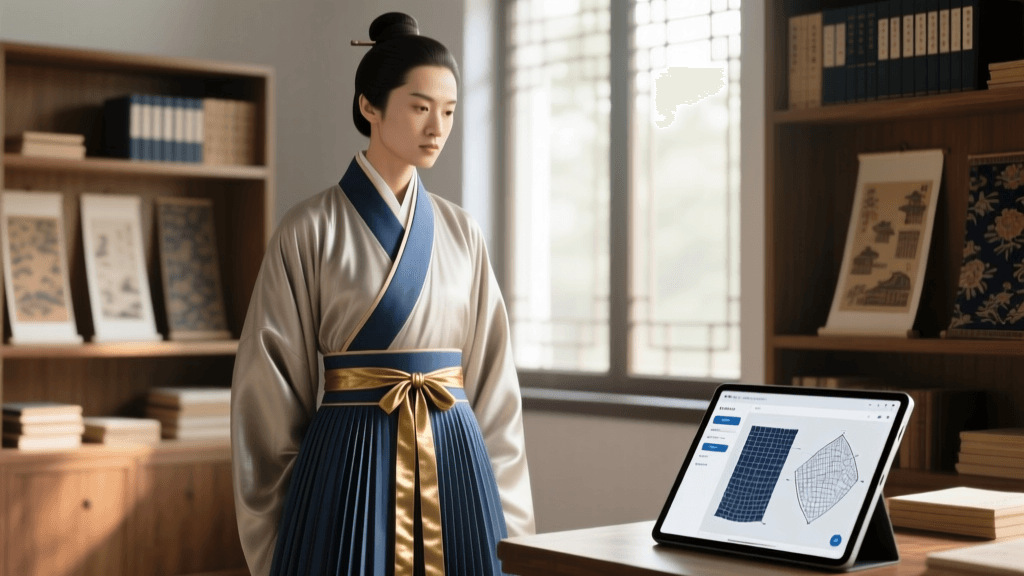
Acquiring authentic Hanfu for family rites requires an understanding of traditional measurements and garment care. Unlike Western tailoring, which focuses on contouring to the body's curves, Hanfu is cut from flat planes of fabric, relying on the drape and the tie of the sash to create the silhouette. When ordering a Mamianqun for a wedding, the waist measurement must be taken precisely at the natural waist, and the length should fall exactly to the ankle bone, allowing the pleats to swing freely without dragging on the floor. The waistband is typically white or off-white, symbolizing purity and providing a stark, elegant contrast to the rich colors of the skirt.
Caring for these garments is a ritual in itself. Ceremonial silks, particularly those featuring real gold leaf or delicate embroidery, must never be machine washed or dry-cleaned with harsh chemicals. In 2026, the standard of care involves gentle spot-cleaning with pH-neutral silk detergents and airing the garments out in shaded, well-ventilated areas. For heavily structured items like the wedding Fengguan (phoenix crown), which is often adorned with velvet flowers (Ronghua) and kingfisher feather alternatives, professional restoration and specialized archival storage boxes are highly recommended to preserve them as family heirlooms.
As institutions like the Smithsonian's National Museum of Asian Art continue to highlight the profound artistry of historical Asian textiles, the modern consumer is better educated than ever. By investing in historically accurate, ethically sourced Hanfu for births, weddings, and ancestral rites, families in 2026 are not merely wearing clothes; they are weaving their personal histories into the enduring fabric of Asian cultural heritage.