Ceremonial vs Everyday Hanbok & Qipao: 2026 Style Guide
The Evolution of East Asian Dress in 2026
As we navigate the fashion landscape of 2026, the distinction between ceremonial and everyday traditional Asian garments has never been more pronounced—or more beautifully integrated into modern wardrobes. Traditional dress is no longer confined to museum archives or rare cultural holidays. Instead, a dynamic duality has emerged: the preservation of opulent, historically accurate ceremonial wear alongside the rise of highly functional, breathable everyday iterations. For enthusiasts and cultural practitioners alike, understanding the structural, textile, and stylistic differences between these two categories is essential for building a respectful and versatile wardrobe.
This guide focuses on two of East Asia's most iconic garments: the Korean Hanbok and the Chinese Qipao (or Cheongsam). By examining their ceremonial roots and their 2026 everyday adaptations, we can appreciate how heritage textiles are being reimagined for contemporary life without losing their cultural soul.
Hanbok: From Royal Courts to Modern Streets
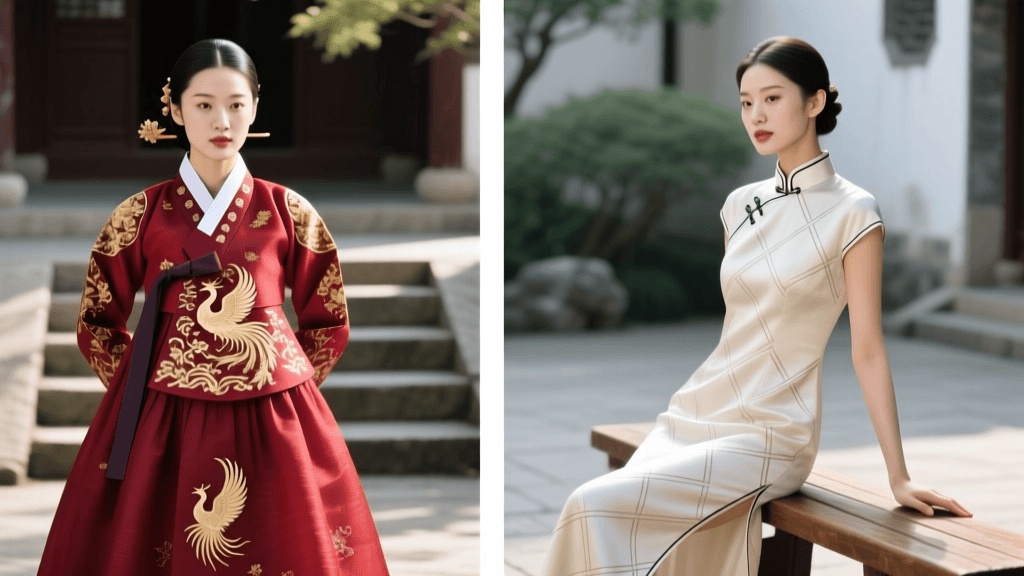
The Hanbok is characterized by its vibrant colors, graceful curves, and simple lines, traditionally composed of the jeogori (jacket) and chima (wrap-around skirt) for women, or baji (trousers) for men. In 2026, the Hanbok exists in two distinct spheres: the ceremonial and the everyday (Gaeryang Hanbok).
Ceremonial Hanbok (Myeonbok and Hwalot)
Ceremonial Hanbok is reserved for weddings, ancestral rites (charye), and major cultural festivals. The Hwalot (wedding robe) and Dangui (formal court dress) are masterclasses in textile artistry. In 2026, authentic ceremonial pieces are crafted from heavy, high-momme silk satins and organzas, often featuring geumbak (gold-leaf stamping) applied by master artisans. The silhouettes are voluminous, requiring multiple layered undergarments (sokgot) to achieve the signature bell-shaped chima. Because of the intricate embroidery and delicate gold leaf, ceremonial Hanbok requires specialized archival storage and professional textile conservation cleaning.
Everyday Hanbok (Gaeryang Hanbok)
The Gaeryang Hanbok (modernized Hanbok) has seen explosive growth in the 2026 streetwear and office-wear markets. Designers have re-engineered the traditional silhouette for mobility and climate comfort. The jeogori is often lengthened slightly to accommodate modern modesty standards, while the chima is simplified with hidden elastic waistbands and A-line cuts that eliminate the need for bulky ties. According to recent cultural initiatives highlighted by Korea.net's cultural focus, the global adoption of the Gaeryang Hanbok is heavily driven by sustainable fabric innovations. Today's everyday Hanbok utilizes organic linen-cotton blends, Tencel, and recycled polyester, making them machine-washable and breathable enough for summer commutes.
Qipao (Cheongsam): Elegance Redefined
Originating in the 1920s and evolving through decades of sartorial shifts, the Qipao is a masterclass in tailoring. It is defined by its mandarin collar, asymmetrical opening, and pankou (frog knot buttons). Like the Hanbok, the 2026 Qipao market is strictly divided between ceremonial grandeur and everyday practicality.
Ceremonial Qipao
Ceremonial Qipao are the epitome of formal East Asian elegance, frequently worn at banquets, red-carpet events, and traditional weddings. These garments are typically floor-length or calf-length, featuring high, stiffened mandarin collars and dramatic side slits. The Metropolitan Museum of Art's Asian Art department notes that the Qipao's evolution has always been tied to the body's relationship with the fabric, and modern ceremonial pieces honor this by using heavy silk brocades, velvet, and Xiangyunsha (a heritage mud-silk from Guangdong). The pankou knots on ceremonial pieces are entirely functional, often taking an artisan dozens of hours to hand-weave into intricate floral or zodiac motifs. Due to the structured inner boning and delicate brocade, these garments demand professional dry cleaning and careful padding on hangers to maintain their architectural shape.
Everyday Qipao
The 2026 everyday Qipao is a revelation in minimalist design. Stripped of heavy boning and restrictive high collars, the modern daily Qipao features relaxed, mandarin-inspired stand collars or subtle V-necks. The traditional pankou buttons are often replaced with hidden magnetic closures or side zippers for ease of dressing, retaining only one or two decorative knots at the collar for visual homage. Cut in shift, A-line, or wrap styles, these garments are crafted from breathable cotton poplin, chambray, and lightweight jersey. They are designed to be paired with modern accessories, seamlessly transitioning from a corporate boardroom to a casual dinner.
Ceremonial vs. Everyday: 2026 Comparison Matrix
To help you navigate purchasing and styling decisions, the following table outlines the core differences between these garment categories based on 2026 market data and textile standards.
| Garment Category | Primary 2026 Fabrics | Avg. Market Price (USD) | Maintenance Routine | Best Occasion |
|---|---|---|---|---|
| Ceremonial Hanbok | Heavy silk, Geumbak organza | $1,200 - $4,500+ | Specialist dry clean, archival box | Weddings, Charye, Galas |
| Everyday Hanbok | Linen blends, Tencel, Cotton | $85 - $250 | Machine wash cold, line dry | Office wear, cafes, travel |
| Ceremonial Qipao | Silk brocade, Xiangyunsha, Velvet | $800 - $3,000+ | Dry clean only, padded hangers | Banquets, formal evenings |
| Everyday Qipao | Cotton poplin, Jersey, Chambray | $60 - $180 | Machine wash gentle, steam iron | Daily commute, casual dining |
Fabric Technology and Sustainable Sourcing
A major defining factor of 2026 traditional wear is the integration of sustainable textile technology. The Victoria and Albert Museum's Asian collections frequently highlight how historical garments were inherently sustainable, made from natural fibers and designed to be passed down. Modern designers are returning to this ethos.
- Hemp and Ramie Blends: Traditionally used for mourning or summer wear in historical contexts, modern processed ramie is now blended with organic cotton to create everyday Hanbok that resist wrinkling and wick moisture.
- Peace Silk (Ahimsa Silk): For ceremonial Qipao and Hanbok, 2026 buyers are increasingly demanding peace silk, where the silkworm is allowed to emerge from the cocoon before the silk is harvested. This results in a slightly more textured, slubbed silk that adds profound ethical value to ceremonial wear.
- Digital Dyeing: To replicate the vibrant, nature-inspired colors of the Joseon and Qing dynasties without the heavy water pollution of traditional vats, modern everyday garments utilize closed-loop digital dyeing, ensuring zero wastewater runoff.
Wardrobe Integration and Care Guide
Integrating these garments into a 2026 wardrobe requires an understanding of proportion and care. Here is a seasonal styling and maintenance guide to ensure your investments last.
Spring & Summer: The Everyday Focus
During warmer months, lean heavily into everyday Garments. Pair a lightweight, short-sleeved cotton Qipao with structured linen trousers and leather loafers. For the Hanbok, a sheer organza jeogori layered over a modern slip dress bridges the gap between traditional modesty and contemporary summer styling. Care Tip: Sweat and humidity can degrade natural fibers. Hand-wash your everyday summer pieces in cold water with a pH-neutral detergent, and always air dry away from direct sunlight to prevent the botanical dyes from fading.
Autumn & Winter: The Ceremonial Transition
Colder months are ideal for the heavier, structured silhouettes of ceremonial and semi-formal wear. A velvet Qipao layered under a tailored wool overcoat creates a striking, sophisticated silhouette. For winter Hanbok, look for chima crafted from wool-blend twills that provide warmth without sacrificing the iconic drape. Care Tip: Ceremonial silks and brocades should never be stored in plastic garment bags, which trap moisture and cause yellowing. Use unbleached cotton canvas garment covers and store them in a cool, climate-controlled environment with cedar blocks to deter pests naturally.
Conclusion
The dichotomy between ceremonial and everyday traditional garments is not a compromise of heritage, but a celebration of its adaptability. In 2026, whether you are donning a heavy, gold-leafed Hanbok for a wedding or slipping into a breathable cotton Qipao for a day at the office, you are participating in a living, breathing sartorial tradition. By understanding the distinct fabrics, construction methods, and care requirements of both categories, you can curate a wardrobe that honors the past while fully embracing the present.