Analyzing 2026 Hanbok Trends in Global Fashion Media
The 2026 Editorial Renaissance of the Hanbok
In 2026, the traditional Korean hanbok has firmly transcended its ceremonial roots to become a dominant structural force in global high-fashion editorials. From the glossy pages of Vogue to the avant-garde digital spreads of Harper's Bazaar, the hanbok's distinct silhouette—characterized by its architectural volume and fluid lines—is being reimagined by top-tier stylists and haute couture houses. This integration into global fashion media is not merely a fleeting trend; it represents a profound appreciation for the garment's inherent geometry. As documented by institutions like the Victoria and Albert Museum, the global fascination with Korean culture has deeply influenced international runways, pushing traditional garments into the contemporary luxury spotlight.
For fashion historians and modern sartorialists alike, understanding the 2026 editorial hanbok requires a deep dive into its deconstructed elements. Global fashion media this year is heavily focused on the juxtaposition of historical authenticity and futuristic textile innovation, creating a hybrid aesthetic that honors Korean artisans while pushing the boundaries of modern couture.
Deconstructing the 2026 Jeogori: Structure and Sustainability
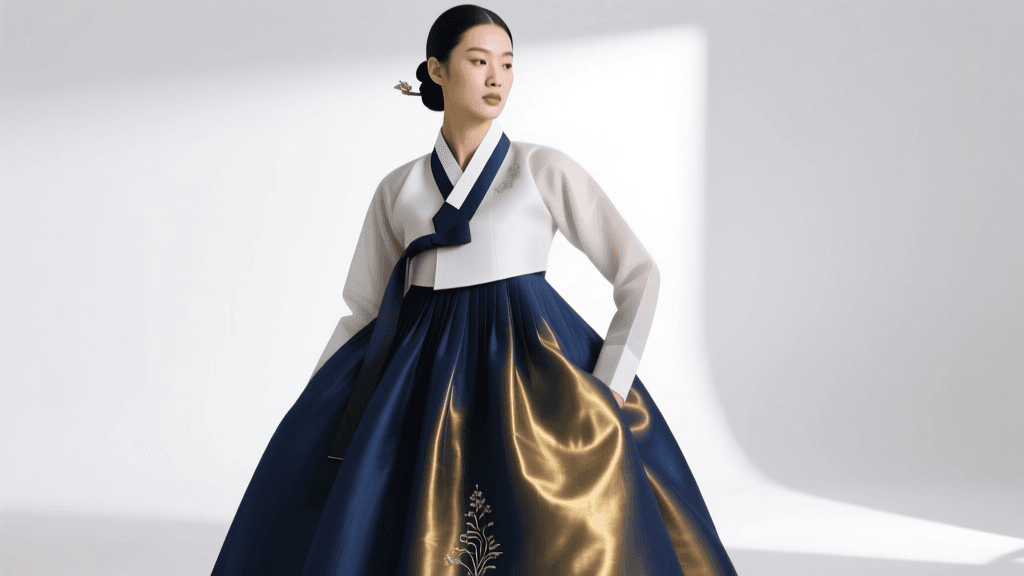
The jeogori (the upper garment of the hanbok) has undergone a radical transformation in 2026 editorial styling. Historically, the jeogori's length and fit fluctuated depending on the era and social class. Today, global fashion magazines are spotlighting the 'sculptural cropped' jeogori. Measuring precisely 15 to 20 centimeters above the natural waist, this modern iteration emphasizes the collarbone and the structural integrity of the shoulders.
In 2026, the traditional goreum (the long, flowing chest ribbon) is frequently reimagined in editorial spreads. While purists and cultural ceremonies still utilize the hand-tied silk ribbons, high-fashion editorials are opting for asymmetrical, magnetic silk-clasp closures or elongated, stiffened goreum that act as dramatic, sweeping belts. Furthermore, the textiles used for these editorial pieces have shifted toward sustainability. Top Seoul-based ateliers are now utilizing lab-grown peace silk and modernized ramie (mosi) blended with recycled marine polymers. This provides the crisp, paper-like stiffness required for editorial photography while adhering to the strict 2026 global fashion sustainability mandates.
The Architectural Chima: Volume, Boning, and Draping
The chima (the voluminous wrap skirt) is where 2026 haute couture truly flexes its engineering muscles. Traditional chimas rely on layers of petticoats to achieve their iconic bell shape. However, in contemporary fashion media, the 2026 editorial chima utilizes internal 'bell-cage' silhouettes constructed from flexible, 3D-printed carbon-fiber boning. This innovation reduces the physical weight of the garment by up to 60% while maintaining the dramatic, gravity-defying volume seen on magazine covers.
Stylists are also experimenting with high-low hems and cartridge pleating that originates from a corseted underbust rather than the natural waist. This elongates the torso, creating a striking visual proportion that photographs beautifully for full-page editorial layouts. The use of ombré-dyed silk organza, layered over matte silk crepe, creates a moiré effect that captures the light dynamically in studio environments.
Comparison: Historical Hanbok vs. 2026 Editorial Silhouettes
To fully grasp the evolution of the garment as presented in modern media, it is essential to compare the historical baseline with the 2026 editorial adaptations. The following table outlines the key structural and material differences currently dominating fashion publications.
| Garment Element | Historical / Traditional Baseline | 2026 Global Editorial Adaptation |
|---|---|---|
| Jeogori Length | Varies by era; generally covers the bust to natural waist. | Ultra-cropped (15-20cm above waist) to highlight layering and torso proportions. |
| Goreum (Ribbon) | Soft silk, hand-tied in a specific traditional knot with long trailing ends. | Stiffened structural bows, asymmetrical draping, or hidden magnetic clasps. |
| Chima Volume | Achieved through multiple layers of cotton or silk petticoats (sokchima). | Internal 3D-printed carbon-fiber cages; lightweight, architectural cartridge pleating. |
| Textiles | Naturally dyed silk, ramie, hemp, and cotton. | Lab-grown peace silk, recycled polymer-blended ramie, photochromic organza. |
| Collar (Dongjeong) | White, detachable paper or stiffened cotton collar for contrast. | Metallic leather, transparent acrylic, or integrated tonal silk with sharp, razor edges. |
Actionable Styling: Wearing Editorial Hanbok in 2026
For fashion enthusiasts and stylists looking to incorporate the 2026 editorial hanbok into high-end event wear, the key is balancing traditional volume with contemporary minimalism. Here is a practical guide to styling these pieces for modern galas, premieres, and high-fashion events.
- The Proportion Rule: If you are wearing a voluminous, architectural chima, pair it with a highly structured, cropped jeogori. Avoid overly embellished tops; let the skirt's silhouette command the space. A 2026 editorial favorite is pairing a matte black silk chima with a stark white, sharp-shouldered jeogori.
- Footwear Pairings: Traditional kkotsin (silk shoes) are reserved for strict cultural events. For a 2026 editorial look, global stylists recommend architectural, chrome-heeled mules or minimalist, square-toed leather boots that peek out from beneath the high-low hem of the chima.
- Jewelry and Accessories: Avoid heavy, traditional gold jewelry which can clash with the modern lines of the 2026 silhouette. Instead, opt for sculptural ear cuffs, single oversized metallic bangles, or sleek, minimalist chokers that echo the sharp line of the dongjeong (white collar).
- Hair and Makeup: The 2026 editorial aesthetic favors sleek, architectural hair. A tightly coiled low bun or a razor-sharp, slicked-back bob ensures the neckline and the intricate collar details of the jeogori remain the focal point of the ensemble.
Sourcing and Commissioning: Costs and Artisans
Acquiring a true 2026 editorial-grade hanbok requires commissioning from specialized ateliers that understand both traditional construction and modern couture finishing. According to market data from Seoul's luxury fashion district, bespoke editorial hanbok prices have shifted in 2026 to reflect the premium on sustainable textiles and artisanal labor.
A standard, high-quality modernized hanbok from a reputable boutique typically starts around $1,200 USD. However, true editorial pieces—featuring custom carbon-fiber boning, hand-painted silk organza, and lab-grown peace silk—range from $3,500 to $8,500 USD. When commissioning a piece, it is vital to provide the atelier with precise measurements: the underbust (crucial for the modern corseted chima waist), the nape-to-wrist measurement (for the dramatic, elongated sleeves seen in 2026 editorials), and the hollow-to-hem measurement to ensure the architectural cage sits perfectly above your chosen footwear.
Cultural Integrity in Global Fashion Media
As the hanbok's presence in global fashion media expands, the conversation around cultural appreciation versus appropriation has become paramount. In 2026, top-tier fashion publications are strictly adhering to new editorial guidelines that require the crediting of Korean jangin (master artisans) and cultural consultants. The Metropolitan Museum of Art and similar global institutions have set the standard for contextualizing these garments, ensuring that their historical significance is not erased in the pursuit of modern aesthetics.
Fashion houses are increasingly collaborating directly with foundations dedicated to preserving traditional Korean dyeing techniques, such as jungchok and natural indigo fermentation. This ensures that the financial benefits of the hanbok's global popularity flow back into the communities and artisans who have safeguarded these techniques for centuries. As highlighted by the Korean Culture and Information Service, the global embrace of the hanbok is most celebrated when it serves as a bridge to deeper cultural understanding, rather than mere aesthetic extraction.
Conclusion: The Permanent Imprint of the Hanbok
The 2026 global fashion media landscape has undeniably cemented the hanbok's status as a cornerstone of modern haute couture. By respecting the garment's historical geometry while embracing cutting-edge, sustainable textile innovations, designers and stylists have created a visual language that is both deeply rooted and fiercely forward-looking. Whether through the sharp, cropped lines of a modernized jeogori or the gravity-defying sweep of an architectural chima, the hanbok continues to captivate, proving that true cultural heritage is not static—it is a living, evolving masterpiece on the global stage.