2026 Global Media Trends: Styling Hanbok and Cheongsam for Everyday
The 2026 Editorial Shift: From Costume to Couture
The global fashion media landscape of 2026 has undergone a profound and necessary transformation. Gone are the days when traditional Asian garments were relegated to the costume departments of film studios or treated as mere exotic props in high-fashion editorials. Today, leading publications like Vogue, Harper's Bazaar, and Elle are actively collaborating with Asian heritage brands, indigenous artisans, and contemporary designers to feature the Hanbok and the Cheongsam (Qipao) as living, breathing elements of modern luxury and streetwear. This shift is not just about aesthetics; it is a celebration of craftsmanship, sustainable textiles, and cultural pride.
For the modern wardrobe, the challenge lies in translating these high-concept, avant-garde editorial looks into wearable, everyday street style without losing the garments' cultural soul. In this comprehensive guide, we will deconstruct the most prominent 2026 media trends surrounding these two iconic garments and provide actionable, precise styling advice for integrating them into your daily rotation.
Deconstructing the 2026 Hanbok Trend in Global Media
The Spring/Summer 2026 runway season and subsequent editorial spreads have placed an unprecedented spotlight on the Korean Hanbok. However, the media is no longer focusing on the voluminous, floor-sweeping ceremonial silhouettes of the Joseon dynasty. Instead, 2026 fashion journalism is obsessed with the architectural deconstruction of the jeogori (the traditional upper garment) and the chima (the wrap skirt).
The Cropped Jeogori and Wide-Leg Trousers
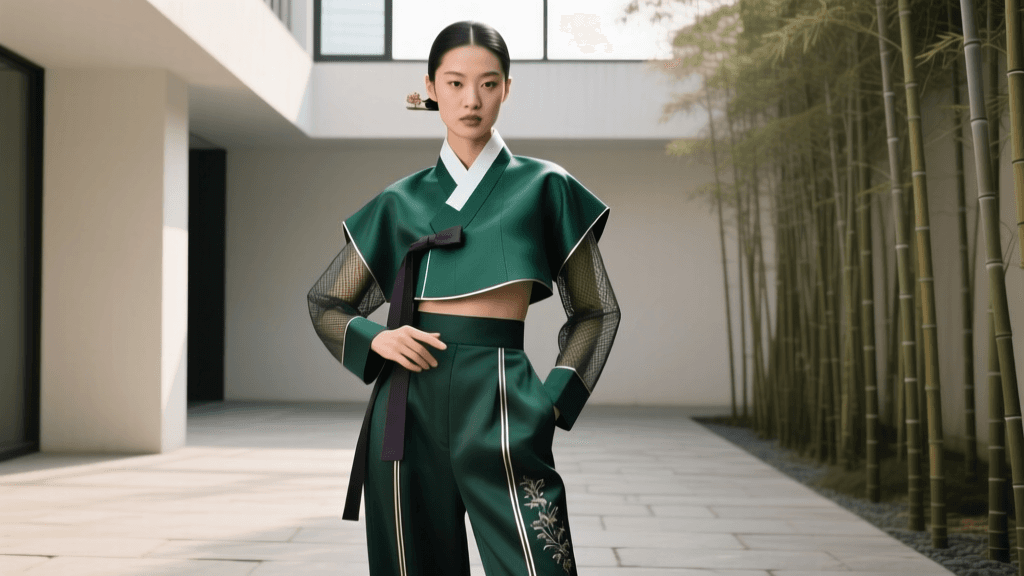
In recent 2026 editorials, the jeogori is being radically reimagined. Designers are cropping the hem to sit exactly two inches above the navel, emphasizing the traditional curved shoulder seam (baerae) while exposing the midriff. Global fashion magazines are pairing these cropped, structured silk jeogori with high-waisted, wide-leg wool trousers rather than the traditional chima. This creates a striking juxtaposition between the fluid, rounded lines of the Hanbok's upper half and the sharp, tailored, androgynous lines of modern European-inspired trousers.
Actionable Styling Tip: To replicate this 2026 editorial look, source a modern Hanbok top made from 19-momme organic peace silk. The weight is heavy enough to hold the structural collar (git) but breathable enough for layering. Pair it with high-waisted, pleated crepe trousers in a muted charcoal or deep plum. Ensure the trousers have a 32-inch inseam to create a pooling effect over chunky, square-toed leather loafers, a staple of 2026 street style.
The Cheongsam’s Structural Renaissance on the Runway
Simultaneously, the Cheongsam is experiencing a structural renaissance in global fashion media. Historically, as documented in the Metropolitan Museum of Art's Asian Art archives, the Cheongsam evolved from the loose, flowing robes of the Qing dynasty into the form-fitting, modernized silhouette of 1930s Shanghai. In 2026, fashion media is pushing the garment into its next evolutionary phase: modular asymmetry and sustainable fabrication.
Asymmetry and Sustainable Silks
Top-tier fashion editors are currently favoring Cheongsam designs that feature dramatic, asymmetrical hemlines and detachable elements. The traditional pankou (knotted buttons) are being scaled up, crafted from recycled brass or carved sustainable wood, and placed along the side seams rather than just the collar. Furthermore, 2026 media spotlights heavily feature Cheongsam made from lotus silk and wild nettle fibers, moving away from mass-produced synthetic brocades that dominated the fast-fashion market in the early 2020s.
Actionable Styling Tip: Look for a midi-length Cheongsam with a side-slit that extends to the hip bone, layered over a sheer, ribbed organic cotton turtleneck. This layering technique, heavily featured in late-2026 street-style photography from Seoul and Tokyo, allows the garment to be worn in cooler climates while maintaining modesty and adding a gritty, urban texture to the elegant silk.
Navigating Cultural Appreciation in 2026 Fashion Media
A major, defining theme in 2026 fashion journalism is the rigorous pivot from cultural appropriation to cultural appreciation. Global media outlets are now held to strict editorial standards that require the proper crediting of regional artisans, accurate historical contextualization, and equitable profit-sharing with indigenous communities. When you purchase and style these garments, you are participating in this global dialogue.
This modern media approach aligns perfectly with the principles outlined by UNESCO's Intangible Cultural Heritage frameworks, which emphasize the importance of safeguarding traditional craftsmanship and the social practices surrounding textile creation. By supporting brands that transparently document their weaving and dyeing processes, you ensure that the garments you wear carry the authentic weight of their heritage.
Actionable Guide: Translating 2026 Editorial Looks to Street Style
To help our readers navigate the transition from high-fashion magazine pages to everyday sidewalks, we have compiled a comparison chart detailing how to adapt the most prominent 2026 media trends into practical, wearable outfits.
| 2026 Media Trend | Garment Focus | Everyday Streetwear Adaptation | Estimated 2026 Cost |
|---|---|---|---|
| The Neo-Joseon Crop | Cropped Jeogori (Silk/Organza) | Layer over a fitted, ribbed tank top and pair with vintage high-waisted denim. | $140 - $280 |
| Modular Qipao | Detachable-sleeve Cheongsam | Wear the sleeveless base with an oversized, distressed knit cardigan and combat boots. | $220 - $450 |
| Architectural Chima | Pleated Wrap Skirt (Ramie) | Pair with a simple, oversized graphic tee and minimalist white leather sneakers. | $110 - $190 |
| Hardware Pankou | Cheongsam Jacket (Brocade) | Wear open as a duster coat over a monochromatic black turtleneck and tailored trousers. | $300 - $600 |
5 Rules for Styling Traditional Garments in 2026
- Rule 1: Mix Textures Intentionally. The 2026 editorial standard dictates that traditional silks and brocades must be grounded with matte, utilitarian fabrics like raw denim, heavy cotton canvas, or distressed leather to avoid looking like a costume.
- Rule 2: Respect the Collar. The mandarin collar of the Cheongsam and the structured V-neck of the Jeogori are the focal points. Avoid chunky, competing necklaces. Opt for subtle, elongated drop earrings or sleek, architectural ear cuffs instead.
- Rule 3: Footwear Matters. Stilettos and traditional embroidery shoes are largely out for daily wear in 2026. The media-approved street style relies on chunky loafers, square-toed mules, or high-end technical sneakers to modernize the silhouette.
- Rule 4: Understand the Fit. Traditional garments are not meant to be stretched to their limits. If a Cheongsam pulls at the pankou buttons, it is too tight. 2026 styling favors a relaxed, breathable fit that allows the fabric to drape naturally.
- Rule 5: Educate and Share. When complimented on your outfit, use it as an opportunity to share the history of the garment and the name of the artisan or heritage brand you purchased it from.
Sourcing Authentic Pieces for Your 2026 Wardrobe
Finding authentic, media-quality pieces requires looking beyond mainstream luxury conglomerates. In 2026, the most exciting fashion is coming from direct-to-artisan platforms and independent heritage studios based in Seoul, Shanghai, and Hanoi. Look for brands that provide detailed transparency reports regarding their supply chains, specifically highlighting the use of natural dyes (such as indigo, persimmon, and madder root) and hand-loomed textiles.
For those interested in deepening their understanding of the historical textiles that inspire these modern designs, the Victoria and Albert Museum's Asia collections offer an incredible digital and physical archive. Studying these historical pieces will train your eye to recognize the difference between a cheap, machine-printed imitation and a genuine, hand-woven textile that honors the legacy of Asian garment-making.
Ultimately, the 2026 global fashion media narrative is one of deep respect and innovative styling. By thoughtfully integrating the Hanbok and Cheongsam into your wardrobe, you are not just following a trend; you are participating in a global movement that honors the past while boldly designing the future of fashion.