Hakama and Keikogi Guide for Martial Arts and Tea Arts
The Intersection of Budo and Chado: Dressing for the Way
In Japan, the pursuit of mastery in martial arts (Budo) and the tea ceremony (Chado or Sado) extends far beyond physical technique. It encompasses the garments worn, the posture maintained, and the mindset cultivated. According to cultural archives maintained by The Japan Foundation, traditional Japanese clothing is not merely decorative; it is an active participant in the discipline, restricting certain movements while enforcing grace, humility, and spatial awareness. For cross-disciplinary practitioners or those attending traditional dojo and chashitsu (tea rooms), understanding the nuances of the hakama and keikogi is essential.
The Anatomy and Philosophy of the Hakama
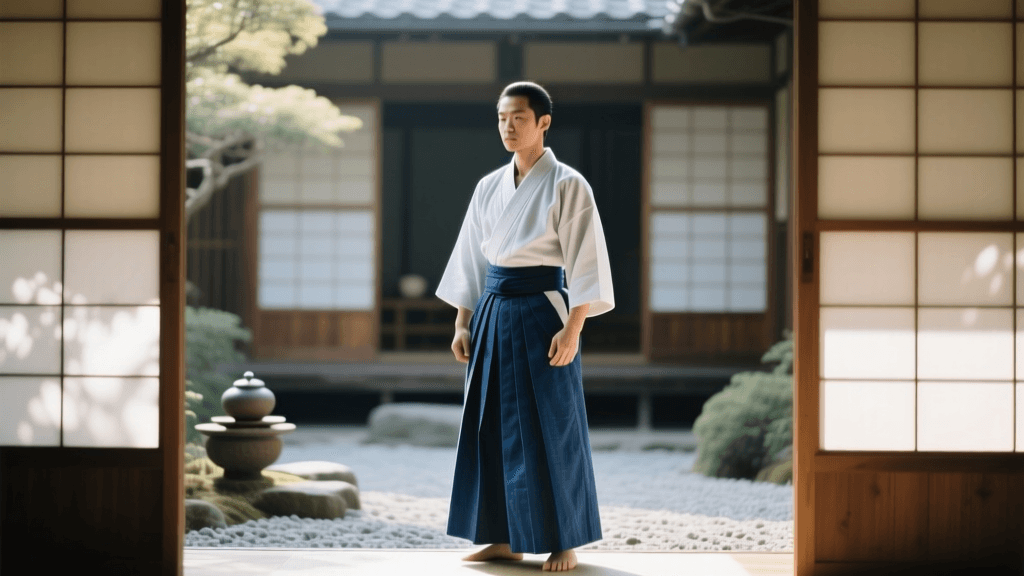
The hakama, a pleated, divided skirt worn over a kimono or keikogi, is the unifying garment across many Japanese martial arts (Aikido, Kendo, Iaido) and formal tea ceremonies. Originally worn by Heian-period nobility and later adopted by samurai to protect their legs while riding, the hakama carries deep philosophical weight.
The Seven Pleats and Confucian Virtues
A standard formal hakama features seven pleats: five in the front and two in the back. These are widely taught to represent the seven virtues of Bushido and Confucianism:
- Jin (Benevolence): Front right, first pleat.
- Gi (Justice/Righteousness): Front left, first pleat.
- Rei (Courtesy/Etiquette): Front right, second pleat.
- Chi (Wisdom): Front left, second pleat.
- Shin (Sincerity): Front center pleat.
- Chu (Loyalty): Back right pleat.
- Ko (Filial Piety): Back left pleat.
While the physical structure remains similar, the material and construction diverge sharply based on whether the garment is destined for the dojo or the tea room.
Martial Arts (Budo) Hakama: Durability and Movement
In martial arts, the hakama must withstand rigorous physical exertion, frequent washing, and the friction of tatami mats. The All Japan Kendo Federation outlines strict standards for Kendo practitioners, where the hakama must be dyed a deep, uniform indigo or black, maintaining a dignified appearance despite intense sweating and movement.
Fabric Choices for Budo
- Aizome (Indigo-Dyed Cotton): The traditional choice. Heavy, breathable, and naturally antibacterial. It requires meticulous care to prevent dye bleeding and must be hand-washed in cold water. Cost: $120 - $250.
- Tetron (Polyester/Rayon Blend): The modern standard for Aikido and Iaido. It holds its pleats permanently, resists wrinkles, and is machine washable. It is lighter and cooler, making it ideal for summer seminars. Cost: $50 - $90.
- Non-Stretch Cotton Drill: Often used for entry-level Kendo hakama. Durable but prone to wrinkling if not folded immediately after washing. Cost: $40 - $70.
The Budo hakama features a rigid koshiita (backboard) to support the lower spine and a longer cut that rests just above the ankle bone to prevent tripping during rapid footwork (suriashi).
Tea Ceremony (Chado) Hakama: Elegance and Restraint
In contrast, the tea ceremony demands garments that facilitate quiet, deliberate movements—kneeling (seiza), bowing, and whisking matcha. The Urasenke Foundation emphasizes the principle of wa (harmony), where the host's attire must reflect the season, the guests, and the serene atmosphere of the chashitsu.
Fabric and Formality in Chado
For formal tea gatherings (chaji), male hosts and high-ranking practitioners wear silk hakama. The most prized fabric is Sendai-hira, a stiff, ribbed silk that produces a distinctive, crisp rustling sound (kinu-zure) when the practitioner walks or kneels. This sound is considered an auditory cue of elegance and mindfulness.
- Sendai-hira Silk: Extremely stiff, holds pleats flawlessly, reserved for formal events. Cost: $300 - $600+.
- Tsumugi (Pongee Silk): A slubbed, textured silk used for semi-formal or everyday tea practice. It is softer and more subdued. Cost: $150 - $300.
- Tetron/Silk Blends: Used by students for daily lessons to avoid the high maintenance of pure silk. Cost: $80 - $120.
Unlike martial arts hakama, tea ceremony hakama often feature a softer koshiita and are tailored slightly shorter, ensuring the hem does not drag when the practitioner is seated in seiza.
Upper Body Garments: Keikogi vs. Kimono
The upper body attire further highlights the divergence in purpose.
The Martial Arts Keikogi
The keikogi (training jacket) is engineered for grappling and striking. Aikido and Judo jackets utilize sashiko (rice-grain) stitching, creating a thick, quilted cotton fabric that weighs up to 10,000 grams. This protects the skin from mat burns and provides grips for throws. The sleeves are shorter to allow wrist grabs, and the lapel is reinforced with heavy canvas.
The Tea Ceremony Kimono
Tea practitioners wear traditional kimono, selected based on the lunar calendar and seasonal motifs. In summer, breathable ro or sha (leno-weave silk) is worn to convey coolness to the guests. In winter, lined awase silk provides warmth. Formal kimono feature kamon (family crests) dyed into the fabric, and the color palette leans toward subdued, natural tones like Rikyu-nezumi (a gray-brown favored by tea master Sen no Rikyu) to avoid distracting from the tea bowl and scroll.
Comparison Chart: Budo vs. Chado Attire
| Feature | Martial Arts (Budo) | Tea Ceremony (Chado) |
|---|---|---|
| Primary Garment | Keikogi & Hakama | Kimono & Hakama (or Kamishimo) |
| Hakama Fabric | Heavy Cotton, Tetron, Indigo Dye | Sendai-hira Silk, Tsumugi, Subdued Colors |
| Koshiita (Backboard) | Rigid plastic or leather for spine support | Softer, flexible, or traditional cardboard |
| Pleat Maintenance | Ironing required for cotton; Tetron holds shape | Professional steaming; silk requires careful storage |
| Footwear | Barefoot or Tabi (split-toe socks) | White Tabi (mandatory in tea room) |
| Estimated Cost (Full Set) | $80 - $350 | $250 - $1,500+ |
Practical Sizing and Fitting Guide
Proper fit is critical. A hakama that is too long will cause tripping in the dojo and look sloppy in the tea room. A hakama that is too short will restrict hip movement and look disproportionate.
How to Measure
- Stand straight and locate your heso (navel). The hakama should sit exactly over the navel, supported by the hip bones.
- Measure straight down from the navel to the kurubushi (the protruding ankle bone on the outside of the leg).
- Subtract 2 to 3 centimeters from this measurement for martial arts (to clear the mat) or leave it exact for tea ceremony (to rest gently on the instep when standing).
Standard Japanese Sizing Chart
- Size 22: 83 cm (approx. 5'0" - 5'2")
- Size 23: 87 cm (approx. 5'2" - 5'4")
- Size 24: 91 cm (approx. 5'4" - 5'7")
- Size 25: 95 cm (approx. 5'7" - 5'9")
- Size 26: 99 cm (approx. 5'9" - 5'11")
- Size 27: 103 cm (approx. 5'11" - 6'1")
- Size 28: 107 cm (approx. 6'1" - 6'3")
The Ritual of Folding and Maintenance
The way you fold your hakama is a reflection of your mind. If your mind is chaotic, your pleats will be chaotic. Folding is the final technique of your practice.
Folding the hakama is a meditative ritual performed at the end of every class or gathering. It is not merely about storing the garment; it is an act of respect for the lineage of teachers and the space in which you trained.
Step-by-Step Folding Basics
- Align the Pleats: Lay the hakama flat. Ensure all seven pleats are perfectly aligned from the koshiita to the hem. Use your fingers to pinch and sharpen the creases.
- Secure the Center: Fold the left and right sides inward so the outer edges meet the center pleat.
- Fold the Length: Fold the bottom hem up toward the koshiita, leaving a two-inch gap so the hem does not press against the rigid backboard.
- Wrap the Himo (Ties): Cross the long front ties over the folded body, wrap the short back ties around, and tie a secure, flat knot. Tuck the excess strings neatly into the folds.
Care Tip: Never leave a damp cotton hakama in a gym bag. Indigo dye will mildew and rot the cotton fibers. Always air-dry in the shade, as direct sunlight will bleach the natural indigo.
Conclusion: Honoring the Garment
Whether you are executing a sword draw in an Iaido dojo or whisking matcha in a Kyoto chashitsu, the garments you wear are your first and most intimate teachers. They demand proper posture, reward mindfulness, and connect you to centuries of Japanese tradition. By selecting the appropriate fabrics, ensuring a precise fit, and maintaining your hakama with reverence, you honor the profound legacy of the Way.