Authentic Guatemalan Huipils: 2026 Sourcing & Loom Guide
The Enduring Legacy of the Mayan Huipil in 2026
The huipil (pronounced wee-peel) is far more than a traditional garment; it is a wearable codex of Mayan identity, cosmology, and regional pride. Worn by Indigenous women across Mesoamerica, the huipil serves as a visual language that communicates the wearer’s village, social status, and personal beliefs. As we navigate the textile landscape in 2026, the global appreciation for these handwoven masterpieces has reached unprecedented heights. However, this surge in popularity has also brought challenges, including the proliferation of machine-made knockoffs and the ongoing fight for Intellectual Property rights by Mayan weavers.
For collectors, cultural enthusiasts, and ethical fashion advocates, understanding the intricacies of Latin American traditional garments is essential. In 2026, a robust movement led by Indigenous cooperatives has successfully pushed for stricter Geographical Indication (GI) protections, ensuring that authentic, handwoven textiles are recognized and compensated fairly. This guide will walk you through the anatomy of the backstrap loom, the resurgence of natural dyes, and exactly how to ethically source authentic huipils today.
Anatomy of the Backstrap Loom: The Weaver’s Body as the Frame
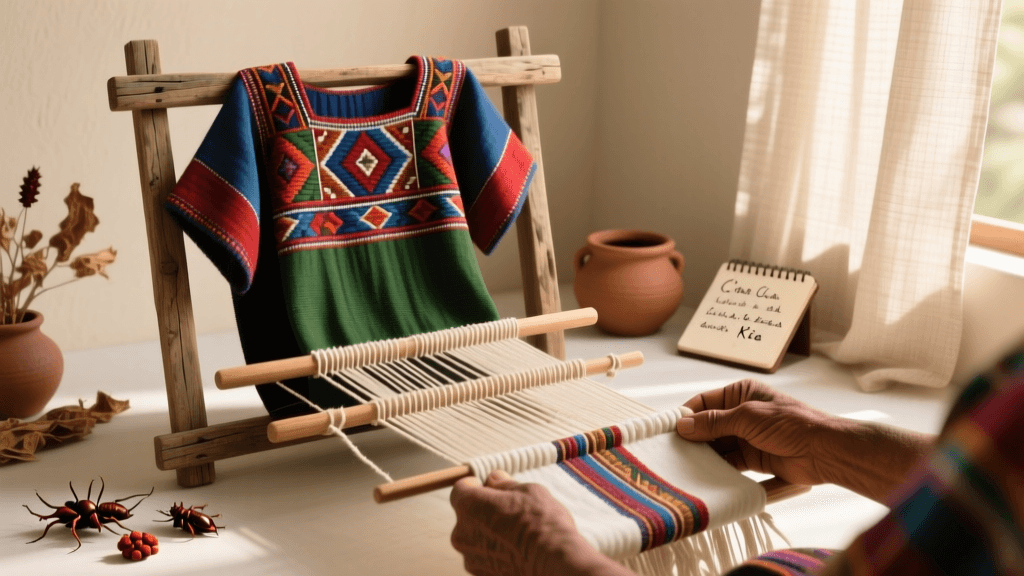
To truly appreciate a huipil, one must understand the technology that creates it: the telar de cintura, or backstrap loom. Unlike the rigid, floor-standing pedal looms introduced by the Spanish, the backstrap loom is an ancient, pre-Columbian technology that relies entirely on the weaver’s body to maintain tension.
The loom consists of a series of wooden rods. One end is tied to a sturdy anchor, such as a tree or a wooden post, while the other end is secured around the weaver’s lower back via a leather or woven strap (the backstrap). By leaning forward or backward, the weaver precisely controls the warp tension. This intimate connection between the artisan and the textile means that every slight variation in the weave carries the physical rhythm of the creator.
The true hallmark of a high-quality Mayan huipil is the brocado (brocade). Unlike embroidery, which is stitched onto a finished piece of fabric, brocade is woven directly into the textile on the loom. The weaver uses a small stick to manually count and lift specific warp threads, inserting the colored weft yarns to create complex geometric, zoomorphic, or floral patterns. A single, heavily brocaded ceremonial huipil can take anywhere from three to eight months of continuous, daily weaving to complete.
Regional Signatures: Decoding the Village Patterns
According to the Ixchel Museum of Indigenous Textiles and Clothing in Guatemala City, there are over 300 distinct regional variations of the huipil. Identifying the origin of a garment is a core skill for any serious collector in 2026.
- San Juan La Laguna: Famous for their intricate jaspe (ikat) techniques, where threads are tie-dyed before weaving to create soft, blurred geometric patterns and horizontal bands.
- Nahualá: Known for heavy, durable cotton fabrics featuring bold, repeating geometric motifs and vibrant stripes, often utilizing deep reds, yellows, and indigos.
- Chichicastenango: The huipils here are heavily brocaded with intricate floral and sun motifs, often featuring a distinctive square neckline and elaborate randa (decorative joining stitch) down the center.
- Tecpán: Recognized for their elegant, subtle brocades and the frequent use of silk threads blended with cotton, creating a luminous, high-end textile favored for special occasions.
The 2026 Resurgence of Natural Dyes
While synthetic aniline dyes dominated the late 20th century due to their low cost and bright colors, 2026 has seen a massive renaissance in natural dyeing techniques. Eco-conscious consumers and Indigenous cooperatives are reviving ancestral botanical and insect-based dyes, which offer a richer, more complex color palette that ages beautifully over time.
The Trama Textiles Cooperative, a women-led organization in the Guatemalan highlands, has been instrumental in documenting and teaching these natural dyeing methods to a new generation of weavers. Below is a comparison of the most prominent natural dyes used in authentic huipils today.
| Dye Source | Botanical/Insect Origin | Resulting Color Palette | 2026 Market Cost (Per Skein) |
|---|---|---|---|
| Cochineal | Dactylopius coccus (scale insect) | Crimson, Pink, Purple, Maroon | $12 - $18 USD |
| Indigo | Indigofera suffruticosa (plant) | Deep Blue, Navy, Teal | $15 - $22 USD |
| Sacatinta | Justicia tinctoria (plant) | Charcoal, Black, Dark Grey | $8 - $12 USD |
| Marigold | Tagetes erecta (flower) | Yellow, Gold, Orange | $6 - $10 USD |
| Pericon | Tagetes lucida (herb) | Olive Green, Earthy Yellow | $7 - $11 USD |
How to Ethically Source Authentic Huipils in 2026
The line between cultural appreciation and exploitation can be thin. In 2026, ethical sourcing means bypassing middlemen and tourist traps to purchase directly from weaver cooperatives or certified fair-trade organizations. The World Fair Trade Organization provides rigorous certification for cooperatives that ensure living wages, safe working conditions, and the preservation of traditional crafts.
Identifying Authentic Brocade vs. Machine Embroidery
Mass-market retailers often sell machine-embroidered blouses marketed as 'Mayan style.' To verify an authentic handwoven brocade, turn the garment inside out. In true backstrap loom brocade, the pattern threads are integrated into the warp and weft; the reverse side will show the floating threads of the design, but the structural integrity of the cloth remains unbroken. Machine embroidery, conversely, will show a dense, uniform layer of stitching applied to the surface of a pre-woven, often factory-milled, fabric base.
2026 Pricing Guide: What to Expect
Understanding the true cost of labor and materials is vital. If a vendor is selling a 'new, heavily brocaded huipil' for $40 USD, it is almost certainly machine-made or the weaver is being severely underpaid. Here is the realistic pricing landscape for authentic, cooperative-sourced garments in 2026:
- Everyday Cotton Huipil (Simple Brocade/Stripes): $90 - $160 USD. Woven in 3-4 weeks, utilizing a mix of natural and high-quality commercial cotton.
- Fine Silk-Blend Huipil (Complex Motifs): $220 - $380 USD. Requires 2-3 months of weaving, featuring intricate zoomorphic designs and silk-blend threads.
- Ceremonial Huipil (Fully Brocaded, Natural Dyes): $450 - $850+ USD. A museum-quality piece taking up to eight months to complete, utilizing entirely natural dyes and master-level brocade techniques.
- Vintage/Antique Huipils (Pre-1980s): $300 - $1,500+ USD. Sourced through specialized textile dealers; prices depend on condition, rarity of the village design, and historical significance.
Caring for Your Handwoven Textiles
An authentic huipil is an investment in living history. Proper care ensures the garment lasts for generations. Because many cooperatives are returning to natural dyes, special care must be taken during washing, as botanical dyes can be sensitive to harsh chemicals and extreme pH levels.
- Washing: Never machine wash or dry clean a handwoven huipil. Hand wash the garment in cold water using a pH-neutral, eco-friendly detergent (such as Eucalan or a mild baby shampoo). Do not wring or twist the fabric; instead, gently press the water out.
- Drying: Roll the huipil in a clean, dry towel to absorb excess moisture. Lay it flat on a drying rack in a shaded, well-ventilated area. Never hang it in direct sunlight, as UV rays will rapidly fade both natural and synthetic dyes and cause the heavy cotton to stretch out of shape.
- Ironing: If the garment requires pressing, use a low-heat setting and always place a damp cotton pressing cloth between the iron and the huipil. High heat can scorch the cotton and melt any synthetic accent threads used in the brocade.
- Storage: Store the huipil flat or gently folded in a breathable cotton pillowcase. Avoid plastic bins, which can trap moisture and lead to mildew. Include natural cedar blocks or dried lavender sachets to deter moths and textile pests without introducing harsh chemical odors into the fibers.
Conclusion: Wearing History with Respect
The Guatemalan huipil is a triumph of human creativity and resilience. By understanding the mechanics of the backstrap loom, recognizing the immense labor involved in natural dyeing, and committing to ethical, fair-trade sourcing, collectors and enthusiasts can help ensure that this vital Latin American textile tradition thrives well into the future. When you drape a handwoven huipil over your shoulders, you are not just wearing a garment; you are honoring centuries of Indigenous knowledge, artistry, and cultural survival.