Ojibwe Ribbon Shirts and Floral Beadwork: 2026 Guide
The Living Heritage of Great Lakes Anishinaabe Dress
The traditional clothing of the Indigenous peoples of the Great Lakes region is a profound visual language, weaving together centuries of history, environmental stewardship, and artistic innovation. Among the Anishinaabe people—which includes the Ojibwe (Chippewa), Odawa, and Potawatomi—the ribbon shirt and floral beadwork stand as iconic markers of cultural identity. As we navigate the powwow circuits, cultural revitalization workshops, and Indigenous fashion markets of 2026, these garments remain not just historical artifacts, but vibrant, evolving expressions of living heritage.
For collectors, cultural enthusiasts, and those looking to ethically support Native artisans, understanding the nuanced construction, regional variations, and material choices of Ojibwe dress is essential. This comprehensive guide explores the anatomy of the ribbon shirt, the intricate techniques of Great Lakes floral beadwork, and how to source authentic pieces in today's market.
The Evolution and Anatomy of the Ribbon Shirt
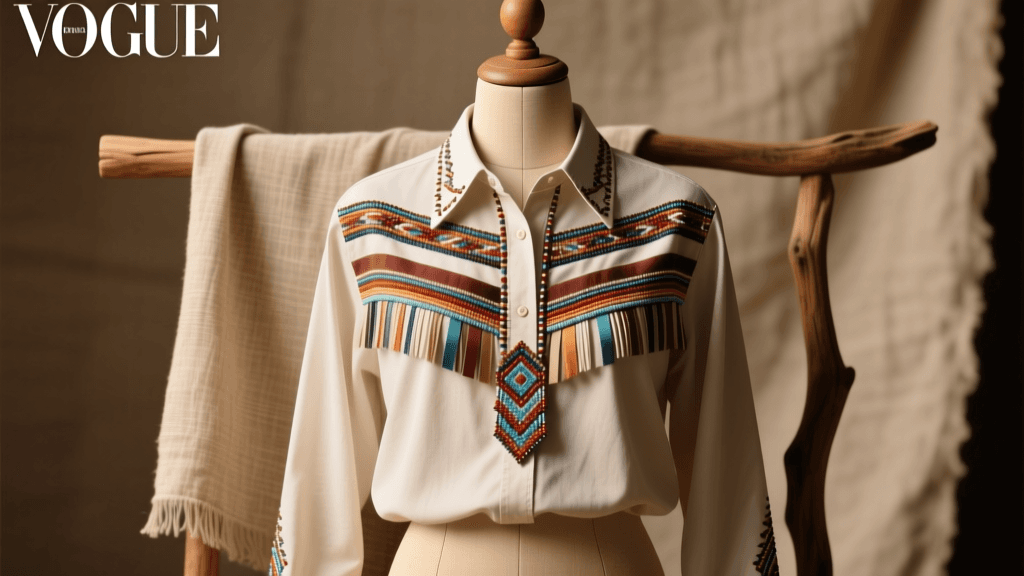
The ribbon shirt, known in some communities as a contemporary evolution of the traditional trade-shirt, originated from the intersection of Indigenous design and European trade goods. When French and British fur traders introduced silk ribbons and cotton broadcloth to the Great Lakes in the 18th and 19th centuries, Ojibwe women ingeniously adapted these materials. They replaced the older porcupine quillwork and hide-fringe techniques with vibrant silk appliqué, creating garments that signaled status, clan affiliation, and spiritual protection.
Contemporary 2026 Fabric Choices and Construction
Today, the construction of a high-quality Ojibwe ribbon shirt requires a deep understanding of fabric drape, breathability, and colorfastness. While historical shirts were made from heavy wool strouding or cotton calico, modern artisans in 2026 frequently utilize premium cotton-polyester blends for summer powwow regalia, ensuring the wearer remains cool during intense Grand Entry dances. For winter ceremonies and formal gatherings, rich cotton velvets and heavy broadcloths remain the gold standard.
The appliqué process is meticulously executed. Artisans fold the edges of satin or grosgrain ribbons and stitch them onto the base fabric using a tight zigzag or straight stitch. The ribbons are layered to create striking geometric patterns, stepped terraces, and flowing lines that often mirror the local topography of the Great Lakes, such as the ripples of water or the stratified layers of local rock formations.
The Language of Ojibwe Floral Beadwork
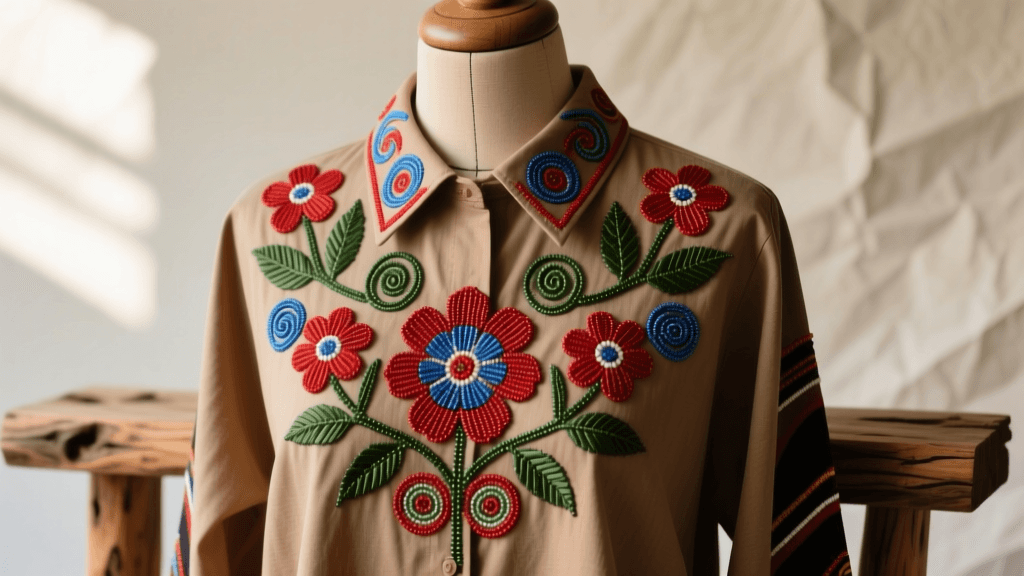
While the ribbon shirt provides the canvas, it is the floral beadwork—known in the Ojibwe language as mazinibaganjigan—that provides the soul of the garment. Great Lakes floral beadwork is globally renowned for its asymmetrical, organic, and highly stylized botanical motifs. Unlike the strict geometric symmetry found in Plains Indian beadwork, Ojibwe floral designs reflect the untamed, natural growth patterns of the northern woodlands.
Raised Beadwork and Botanical Symbolism
A hallmark of traditional Ojibwe beadwork is the "raised" or "padded" technique. Artisans achieve this three-dimensional effect by stitching beads over a backing of folded cloth, felt, or even tightly packed moss and sweetgrass. This technique catches the light and gives the floral motifs a lifelike, blooming appearance. The flora depicted is rarely arbitrary; it is deeply tied to traditional ecological knowledge and ethnobotany. Common motifs include the wild rose (representing healing and balance), the strawberry (a symbol of the heart and community gathering), and the fiddlehead fern (signifying renewal and the arrival of spring).
Archives at the Minnesota Historical Society highlight how these floral patterns were historically mapped onto bandolier bags, moccasins, and the yokes of ribbon shirts, serving as both aesthetic beautification and a coded language of clan and medicinal knowledge.
Regional Distinctions Across the Great Lakes
The term "Ojibwe floral" encompasses a wide array of regional styles, each with distinct color palettes and motif preferences. Recognizing these differences is a key skill for serious collectors and students of Indigenous textiles in 2026.
- Red Lake and Leech Lake (Minnesota): Beadwork from these reservations often features dense, tightly packed floral clusters with a preference for deep, rich background fabrics like navy or black velvet. The use of translucent and metallic beads to simulate morning dew on leaves is a prominent regional signature.
- White Earth (Minnesota): Artisans here are known for slightly more spaced, elegant floral vines that incorporate a wider spectrum of pastel and opaque beads, reflecting historical trade patterns and local artistic lineages.
- Wisconsin Bands (Lac du Flambeau, Bad River): Wisconsin Ojibwe beadwork frequently integrates more geometric borders framing the organic florals, a stylistic bridge influenced by neighboring Menominee and Ho-Chunk traditions.
2026 Material Sourcing and Bead Sizing Guide
Creating authentic Ojibwe floral beadwork requires specific materials. The global supply chain for glass seed beads has shifted in recent years, with many artisans moving away from mass-produced, poorly calibrated beads in favor of premium Czech and Japanese imports. Below is a guide to the bead sizes and types utilized by master beadworkers in 2026.
| Bead Size & Type | Characteristics | Primary Application in Floral Work |
|---|---|---|
| Size 13/0 Charlotte | Single-facet cut glass, high shine, very small | Outlining petals, creating fine stems, and adding brilliant highlights to leaf edges. |
| Size 11/0 Seed (Matte) | Uniform, non-reflective finish, versatile | Filling large floral centers, background padding, and creating soft, velvety texture contrasts. |
| Size 15/0 Charlotte | Micro-bead, single facet, extremely fine | Shading gradients within a single petal, micro-details on fern fronds, and advanced 3D raised work. |
| Size 11/0 Hex Cut | Hexagonal shape, multi-faceted light reflection | Representing water motifs, sky elements, or adding structural rigidity to the edges of bandolier bags. |
In addition to beads, the backing material is crucial. While commercial felt is common for practice and quick pieces, master artisans creating high-end regalia in 2026 increasingly favor brain-tanned deer hide or heavy, historically accurate wool strouding as the foundation for their beadwork, ensuring the garment drapes naturally and lasts for generations.
Ethical Sourcing and Supporting Native Artisans
As the appreciation for Indigenous fashion and traditional regalia continues to grow globally, so does the market for mass-produced, culturally appropriated knockoffs. When purchasing Ojibwe ribbon shirts, beaded medallions, or moccasins, it is vital to ensure you are supporting the Indigenous economy and respecting federal protections.
The Indian Arts and Crafts Board, a division of the U.S. Department of the Interior, strictly enforces the Indian Arts and Crafts Act. This law makes it illegal to offer or display for sale any art or craft product in a manner that falsely suggests it is Indian-produced. When shopping in 2026, always buy directly from Native-owned cooperatives, verified Indigenous artists at recognized markets (such as the Santa Fe Indian Market or the Heard Museum Guild Indian Fair), or through tribal enterprise websites.
Exhibitions and educational resources provided by the National Museum of the American Indian consistently emphasize that purchasing authentic Native art is an act of cultural preservation. It provides the economic foundation necessary for elders to pass down complex techniques, such as brain-tanning hides and harvesting natural dyes, to the next generation.
Conclusion: A Continuum of Culture
"Our beadwork and our ribbon shirts are not costumes frozen in the past. They are the armor and the beauty of our people today, adapting to the modern world while keeping our ancestors' voices close to our skin."
The Great Lakes Ojibwe ribbon shirt and its accompanying floral beadwork represent a masterclass in cultural resilience. From the careful selection of a 13/0 Charlotte cut bead to the precise folding of a silk ribbon appliqué, every stitch is an act of sovereignty and pride. Whether you are a researcher studying the textile history of the Americas, or a patron seeking to ethically invest in authentic Indigenous artistry, understanding the depth of these traditions enriches the experience and honors the hands that create them.