2026 Global Fashion Media: Styling Hanfu & Cheongsam Edits
The 2026 Editorial Shift: From Costume to Couture
In previous decades, global fashion media often flattened Asian traditional garments into monolithic,泛东方 (Pan-Eastern) tropes, frequently mislabeling distinct cultural attire as mere 'Oriental' costumes. However, the 2026 global fashion media landscape has undergone a profound and necessary transformation. Leading publications like Vogue, Harper's Bazaar, and Elle have adopted a rigorously respectful, highly specific approach to Asian traditions. Today's editorials do not just feature a 'silk dress'; they explicitly credit the Suzhou embroidery artisans, the Xiangyunsha mud-dyeing masters of Guangdong, and the intricate structural engineering of the Ming Dynasty Mamianqun.
This shift from cultural appropriation to authentic collaboration and education has brought traditional garments like the Hanfu and the Cheongsam (Qipao) out of the archives and onto the streets. According to the Metropolitan Museum of Art's Heilbrunn Timeline of Art History, the evolution of Chinese dress is deeply tied to dynastic shifts, trade routes, and cultural exchanges, making these garments living histories rather than static relics. In 2026, fashion editors are finally treating them with the sartorial reverence they deserve.
'The true luxury of 2026 fashion lies not in mass-produced logos, but in the preservation of intangible cultural heritage and the mastery of regional artisanal techniques.' — Global Fashion Media Consensus, Spring 2026
Breakdown of Media-Featured Garments
To understand how to integrate these pieces into a modern wardrobe, we must first look at how top-tier stylists are interpreting them in current 2026 editorials. The table below breaks down the most prominent traditional garments featured in this year's global fashion spreads, detailing their heritage roots, modern styling applications, and current market pricing for authentic, artisan-made pieces.
| Garment | Heritage Origin | 2026 Editorial Styling Trend | Recommended Authentic Fabric | 2026 Price Range (USD) |
|---|---|---|---|---|
| Mamianqun (Horse-Face Skirt) | Ming Dynasty (1368–1644) | Paired with oversized, structured wool blazers and minimalist turtlenecks for high-end corporate wear. | Xiangyunsha (Gambiered Canton Gauze) or heavy Jacquard silk. | $450 – $1,800 |
| Modern Cheongsam (Qipao) | 1920s Shanghai / Republican Era | Deconstructed asymmetrical hems, worn open as a duster coat over wide-leg linen trousers. | Song Brocade or heavyweight mulberry silk crepe. | $600 – $2,500 |
| Ruqun (Hanfu Top/Skirt Set) | Tang & Song Dynasties | Layered cross-collar tops over modern knitwear; pleated skirts worn with chunky leather boots. | Ramie blends and raw, unbleeded Mulberry silk. | $300 – $950 |
Actionable Styling: Bringing the Runway to the Street
While editorial spreads in Vogue China or Harper's Bazaar UK might feature avant-garde, floor-sweeping train layouts, adapting these garments for everyday 2026 life requires a balance of proportion, fabric weight, and contemporary tailoring. Here is how to style the two most prominent media-featured garments for real-world scenarios.
The Mamianqun (Horse-Face Skirt) in Modern Workwear
The Mamianqun is characterized by its flat front and back panels (the 'horse faces') and deeply pleated sides. In 2026, the most celebrated way to style this skirt for a professional environment is to treat it as a structural statement piece that replaces the standard pencil skirt.
- Proportions & Measurements: For a modern office-appropriate look, opt for a skirt length that hits exactly at the mid-calf (approximately 34 to 38 inches from the waistband, depending on your height). This prevents the heavy pleats from overwhelming your frame and keeps the hem clear of muddy commutes.
- Waistband Tailoring: Traditional Mamianqun feature a flat, wide waistband that ties at the side. If you are purchasing a modern reproduction, look for brands that have integrated discreet hook-and-eye closures or hidden side zippers while maintaining the visual illusion of the traditional tie. This prevents the heavy silk from slipping down throughout the workday.
- Top Pairing: Contrast the intricate, often metallic-woven patterns of the skirt with a stark, minimalist top. A crisp, white poplin button-down shirt, tucked in and slightly bloused, or a fine-gauge merino wool turtleneck in charcoal or navy, grounds the outfit and lets the skirt's heritage motifs (such as the 'four seasons' florals or 'cloud and dragon' weaves) take center stage.
The Deconstructed Cheongsam for Evening and Event Wear
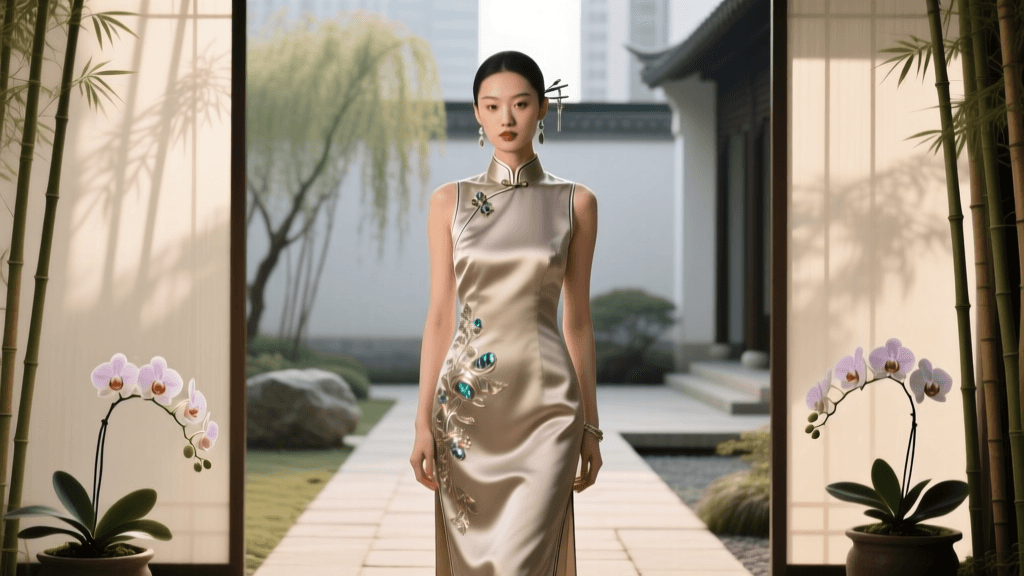
The Cheongsam, with its iconic mandarin collar and pankou (frog buttons), remains a symbol of elegance. However, 2026 media coverage highlights a departure from the skin-tight, restrictive silhouettes of the mid-20th century, favoring fluid, deconstructed cuts that prioritize movement and comfort.
- The Slit and the Drape: Look for modern Cheongsam designs that feature a relaxed, A-line or shift silhouette with a single, dramatic thigh-high slit. This allows the garment to be worn unbuttoned from the waist down, functioning as a luxurious duster or lightweight coat over a silk slip dress or tailored trousers.
- Pankou as Jewelry: In contemporary editorials, the pankou knots are no longer just functional fasteners; they are treated as textile jewelry. Seek out garments featuring oversized, sculptural knots—such as the intricate 'chrysanthemum' or 'butterfly' knots—crafted from contrasting silk cords. These details draw the eye upward and frame the face beautifully.
- Footwear: Abandon the traditional stiletto pump. The 2026 editorial consensus pairs the modern, fluid Cheongsam with architectural, low-block heels or even sleek, pointed-toe leather flats, emphasizing a grounded, powerful stride.
The Artisanal Fabrics Defining 2026 Editorials
You cannot discuss the 2026 Asian fashion renaissance without addressing the textiles. Global fashion media is currently obsessed with Xiangyunsha (gambiered Canton gauze). This extraordinary fabric is dyed using the juice of the Dioscorea cirrhosa (a type of yam) and then coated with iron-rich river mud from the Pearl River Delta, before being baked in the sun. The result is a dual-toned fabric—rich, dark brownish-black on one side and warm terracotta on the other—that is naturally water-resistant, antibacterial, and possesses a crisp, paper-like rustle that fashion editors adore for its acoustic and visual texture.
The dedication to preserving these methods is paramount. The intricate sericulture and silk craftsmanship recognized by UNESCO as an Intangible Cultural Heritage forms the backbone of these luxury garments. When purchasing pieces featured in high-end media, consumers in 2026 are increasingly demanding transparency, seeking out brands that provide certificates of authenticity and trace the garment's lineage back to specific weaving cooperatives in Suzhou or Hangzhou.
Sourcing Authentic Pieces Highlighted by Editors
To replicate the looks seen in global fashion spreads, it is crucial to avoid fast-fashion approximations that use synthetic polyesters and printed-on 'brocade' patterns. Authenticity in 2026 means investing in heritage brands and independent designers who collaborate directly with traditional artisans.
Brands such as Shiatzy Chen continue to lead the charge in integrating Su embroidery into modern silhouettes, while London-based designer Samuel Guì Yang is frequently lauded in Vogue for his masterful, contemporary tailoring of the Cheongsam. For those seeking highly accurate, museum-quality Hanfu reproductions that still function in a modern wardrobe, studios like Minghua Studio and Shi San Yu offer meticulously researched Mamianqun woven on traditional jacquard looms. Expect to invest between $500 and $1,500 for a genuine, artisan-woven skirt, a price point that reflects the dozens of hours of specialized labor required.
Caring for High-End Traditional Textiles
Garments constructed from Song Brocade, raw silk, and Xiangyunsha require specialized care to maintain their structural integrity and vibrant dyes. The Victoria and Albert Museum's conservation guidelines for Asian textiles emphasize the importance of climate control and gentle handling, principles that apply directly to your home wardrobe.
- Cleaning: Never machine wash or aggressively hand-wash structured brocades or mud-dyed Xiangyunsha. Xiangyunsha, in particular, should only be spot-cleaned with a damp cloth or taken to a dry cleaner who specializes in heritage silks, as harsh chemicals will strip the natural yam-juice tannins and mud coatings.
- Storage: Do not hang heavy Mamianqun or brocade Cheongsam on wire or thin plastic hangers, as the weight of the fabric will distort the shoulders and waistbands over time. Use padded, velvet-lined hangers for tops and jackets. For skirts, fold them along their natural pleat lines and store them flat in acid-free tissue paper inside a cedar-lined drawer to deter pests without the use of chemical mothballs, which can discolor silk.
- Resting the Fabric: Silk fibers need to 'rest' and recover their shape. Avoid wearing the same traditional garment two days in a row. Allow at least 48 hours between wears, airing the garment out in a well-ventilated, shaded area away from direct sunlight, which can rapidly fade natural plant and mineral dyes.
Conclusion
The representation of Asian traditional garments in 2026 global fashion media marks a triumphant return to cultural specificity and artisanal reverence. By understanding the history, mastering the modern styling proportions, and investing in authentic textiles, you can seamlessly integrate the Hanfu and Cheongsam into your contemporary wardrobe. These garments are no longer relegated to the realm of costume or ceremonial wear; they are dynamic, living expressions of heritage that command respect and elevate the global fashion narrative.