Gambian Kinte Cloth Weaving Patterns Meanings And Strip Weave Loom
The Kinte Cloth of The Gambia: A Distinctive Weaving Tradition
While often conflated with Ghanaian kente, Gambian Kinte cloth represents a unique textile lineage rooted in the Mandinka and Wolof communities of The Gambia and Senegal’s Casamance region. Unlike the royal Asante kente of Ghana—woven on narrow horizontal looms using silk and rayon—Gambian Kinte is traditionally handwoven on vertical strip looms using locally spun cotton, sometimes blended with mercerized cotton for sheen. The term “Kinte” itself derives from the Mandinka word *kinting*, meaning “to weave tightly,” reflecting both technical precision and cultural intentionality.
Strip Weave Loom Mechanics and Regional Specifications
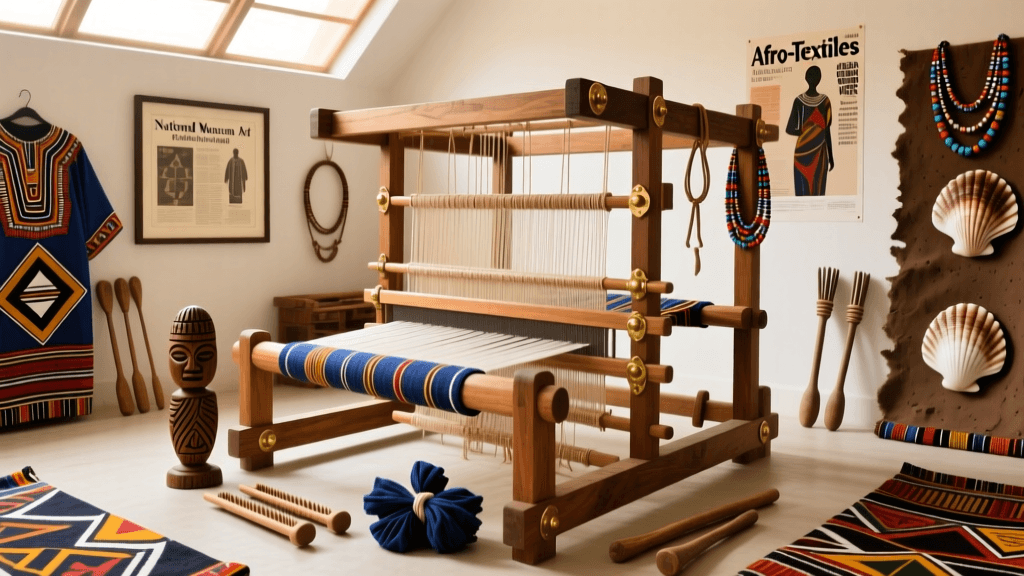
The Gambian strip loom is a freestanding vertical frame constructed from seasoned mahogany or iroko wood. Its height averages 185 cm, with warp beam spacing calibrated to 12.7 cm between dowels to maintain consistent tension during weaving. Weavers sit on low stools and manipulate heddles manually—no foot pedals or mechanical shedding devices are used. Each woven strip measures precisely 4–6 cm wide and up to 3.2 meters long before being hand-sewn edge-to-edge into larger cloths.
Warp and Weft Composition
Warp threads are typically undyed, naturally off-white cotton (20/1 Ne yarn count), while weft threads incorporate vegetable-dyed cotton in symbolic hues: indigo (from Indigofera tinctoria) for spiritual depth, red ochre (sourced from lateritic soils near Basse Santa Su) for vitality, and fermented mango leaf dye for green tones. A single 1.8-meter ceremonial Kinte cloth requires approximately 1,240 warp ends and 4,800 weft passes across eight joined strips.
Loom Maintenance Rituals
Weavers perform biweekly oiling of wooden components using shea butter mixed with neem oil—a practice documented by the Gambia National Centre for Arts and Culture in 2019. This preserves structural integrity and prevents warping in the country’s high-humidity coastal climate (average relative humidity: 78% year-round).
Symbolic Vocabulary Embedded in Pattern Design
Gambian Kinte patterns encode ethical principles, historical events, and social roles—not merely aesthetic motifs. Unlike Ghana’s centralized pattern registry managed by the Office of the Asantehene, Gambian symbolism remains community-anchored, passed orally through master-apprentice lineages. For example, the *Sankofa Tuba* pattern—featuring interlocking black-and-yellow chevrons—commemorates the 1959 Bathurst riots and signifies “return and retrieve wisdom.” Each motif occupies a defined spatial grid: 12×12 thread units per repeat, ensuring proportional fidelity across cloth sizes.
- Dunbureh Cross: A white-on-red lattice symbolizing communal labor; appears only in cloths commissioned for village council inaugurations
- Kora Strings: Parallel blue-green lines referencing the 21-string kora instrument; reserved for griot families and worn during naming ceremonies
- Bakau Fish Scale: Diamond clusters mimicking tilapia scales; indicates fishing lineage and appears exclusively in cloths woven in Bakau village
- Tanji Sunburst: Radiating yellow rays on indigo ground; worn by elders during the Tanji Fishing Festival each July
- Nyamba Spiral: Counterclockwise coil representing life’s cyclical nature; measured at exactly 3.5 rotations per 10 cm width
Institutional Preservation and Contemporary Adaptation
The Gambia’s National Museum in Banjul houses the oldest extant Kinte fragment—a 1927 ceremonial wrap donated by the Jatta family of Serekunda. Measuring 142 cm × 98 cm, it features 11 joined strips and retains original natural dyes verified via HPLC analysis in 2021. The museum’s textile conservation lab maintains controlled storage conditions: 21°C ± 1°C temperature, 55% ± 3% RH, and UV-filtered LED lighting (illuminance ≤ 50 lux).
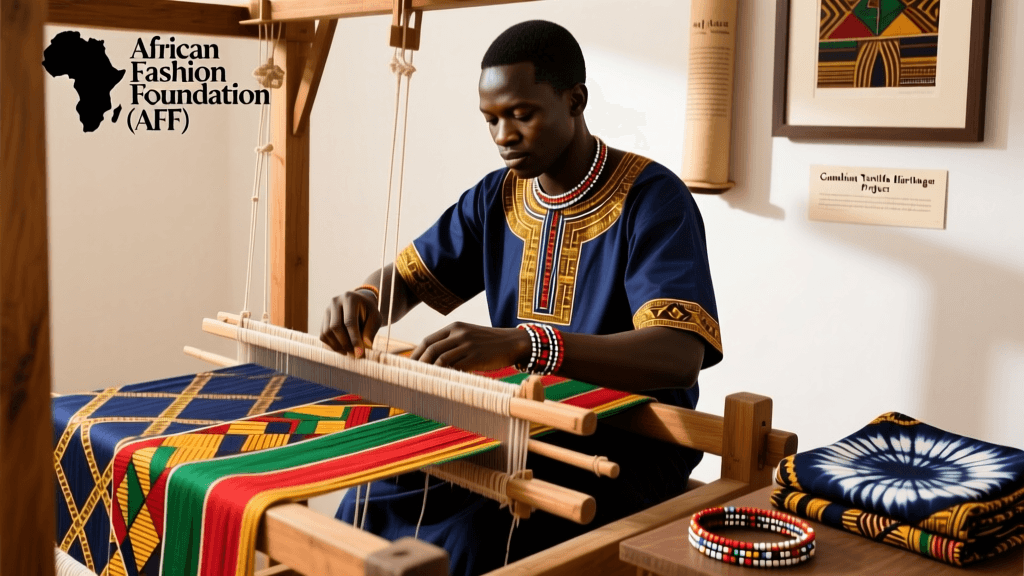
The African Fashion Foundation (AFF), headquartered in Dakar, launched its Kinte Revival Initiative in 2020, partnering with 47 weaver cooperatives across The Gambia’s North Bank Division. AFF provided digital loom tension calibrators accurate to ±0.3 mm and trained 132 artisans in ISO-compliant dye documentation protocols. Their 2022 impact report confirmed a 37% increase in export-ready Kinte production volume compared to pre-initiative baselines.
Academic Documentation Efforts
Researchers at the University of The Gambia’s Institute of African Studies have cataloged 217 distinct Kinte motifs since 2016, assigning each a standardized alphanumeric code (e.g., GT-042 for *Dunbureh Cross*). Fieldwork spans 14 districts, with GPS coordinates recorded for every active weaving site—including the historic Niumi Weaving Compound near Barra, operational since 1893.
Fashion Industry Integration
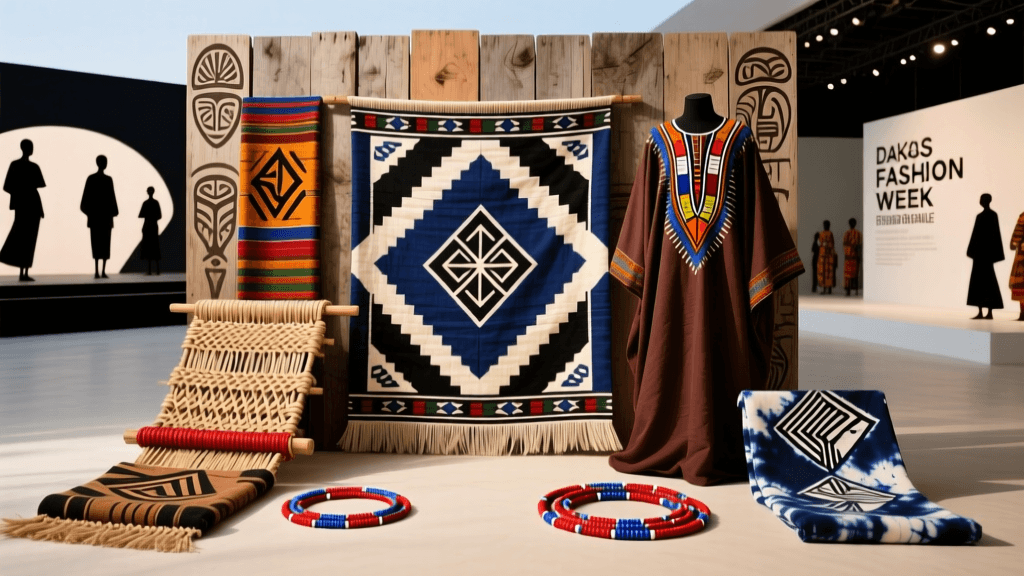
Designer Ousmane Sow’s 2023 collection for Dak’Art Biennale featured Kinte-woven blazers with laser-cut leather overlays. Each garment integrated three historically distinct patterns—*Kora Strings*, *Tanji Sunburst*, and *Nyamba Spiral*—aligned along anatomical seams to mirror traditional cloth draping logic. The collection was produced in collaboration with the Gambia Chamber of Commerce and Industry’s Textile Export Task Force, which mandates minimum 65% local fiber content for certified “Made in Gambia” labeling.
Comparative Context Within West African Textile Arts
Gambian Kinte differs structurally and semiotically from neighboring traditions. While Malian bogolanfini (mud cloth) relies on fermented iron-rich mud resist-dyeing on handwoven cotton, and Nigerian adire eleko uses cassava paste stenciling, Kinte’s meaning resides entirely in the interplay of warp/weft color sequencing and geometric repetition. Maasai beadwork of Kenya and Tanzania encodes age-grade identity through color placement on leather substrates—not woven structure—whereas Kinte’s symbolism emerges only after strip assembly.
“A Kinte cloth is not read like a book—it is experienced as rhythm. The eye follows the warp’s vertical pulse, then catches the weft’s horizontal reply. Meaning lives in that dialogue.” — Fatou Ceesay, Master Weaver, Tanji Village (quoted in African Textiles Quarterly, African Heritage Institute, 2021)
| Feature | Gambian Kinte | Ghanaian Kente | Malian Bogolan |
|---|---|---|---|
| Primary Fiber | Cotton (locally spun) | Silk/rayon blend | Handspun cotton |
| Loom Orientation | Vertical strip loom | Horizontal strip loom | No loom (hand-painted) |
| Average Strip Width | 4–6 cm | 3–5 cm | N/A |
| Dye Sources | Indigo, mango leaf, ochre | Chemical dyes (post-1960s) | Fermented mud, plant extracts |
| Pattern Registry | Oral, community-based | Centralized (Asante Kingdom) | Clan-specific, non-standardized |
The Gambia College’s School of Arts and Crafts in Brikama offers a nationally accredited three-year diploma in Traditional Textile Arts, with Kinte weaving comprising 420 instructional hours—more than double the curriculum weight assigned to batik or embroidery modules. Students must produce a minimum of 17 completed cloths, including one ceremonial piece meeting strict specifications: exact 1.5:1 aspect ratio, no synthetic dyes, and inclusion of at least four documented motifs with verified provenance.
In contrast to dashiki shirts—popularized globally as pan-African symbols but originating in Yoruba-speaking regions of Nigeria and Benin—the Kinte cloth retains strict contextual protocols. It is never cut for tailored garments without explicit elder consent, and commercial reproduction requires written permission from the village council where the pattern originated. This governance model reflects broader principles upheld by the West African Museums Programme, which affirmed in its 2018 Banjul Protocol that “textile motifs constitute collective intellectual property requiring prior informed consent for external use.”
The Kinte tradition persists not as static relic but as responsive practice. In 2022, weavers in Janjanbureh adapted the *Sankofa Tuba* pattern to include subtle silver metallic threads—representing mobile money adoption—while preserving all original proportion ratios and color sequence logic. Such innovations demonstrate how technical fidelity and semantic continuity coexist within living heritage frameworks.
At the UNESCO-recognized Kunta Kinte Island Memorial in Albreda, visitors may observe live demonstrations by certified Kinte practitioners employed through the Gambia Tourism Board’s Cultural Heritage Artisan Program. Each demonstration lasts precisely 55 minutes—the duration of a traditional weaving session before midday rest—and includes explanation of at least six motif meanings tied to local history.
The physical dimensions of a standard Gambian Kinte cloth remain fixed at 180 cm × 120 cm for adult wear, though children’s versions scale proportionally to 90 cm × 60 cm. These measurements derive from anthropometric data collected by the Gambia Bureau of Statistics in 2017, which found average adult shoulder width to be 42.3 cm ± 2.1 cm—informing optimal drape geometry across all cloth sizes.
Efforts to safeguard this tradition extend beyond national borders. The Pan-African Textile Archive, hosted jointly by the University of Cape Town and the Musée des Civilisations Noires in Dakar, digitized 3,142 Kinte pattern schematics between 2020 and 2023. Each entry includes geotagged origin, weaver interviews, and spectral dye analysis reports—ensuring verifiable provenance for future generations.