Everyday vs Ceremonial Saris: 2026 Fabric & Styling Guide
The Enduring Duality of the Sari in 2026
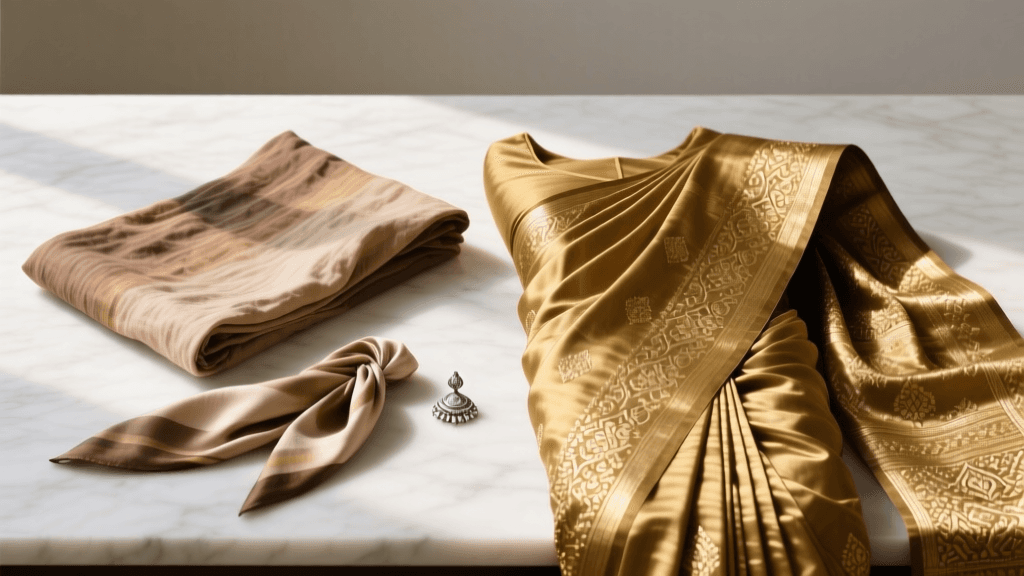
The sari remains arguably the most enduring, versatile, and culturally significant garment in South Asian history. As we navigate the global fashion landscape of 2026, the distinction between everyday and ceremonial saris has become more pronounced than ever. This divergence is driven by climate-conscious fabric choices, evolving corporate workplace norms, and a fiercely renewed appreciation for heritage craftsmanship. While the everyday sari prioritizes comfort, mobility, and sustainable textiles, the ceremonial sari remains a magnificent canvas for opulent weaving techniques, heavy embellishments, and the display of generational wealth.
Understanding the nuanced differences between daily wear cottons and ceremonial Banarasi or Kanjeevaram silks is essential for building a functional, culturally rich wardrobe. According to foundational textile research from the Metropolitan Museum of Art, the evolution of Indian textiles has always balanced regional climate needs with the demands of royal and ceremonial patronage—a duality that remains perfectly intact today. This comprehensive guide breaks down the fabrics, styling protocols, and market pricing for both categories in 2026.
The Everyday Sari: Breathability and Modern Workwear
In 2026, the everyday sari is defined by lightweight, breathable fabrics designed for tropical climates and modern, active lifestyles. The corporate and creative diaspora has heavily popularized 'workwear saris,' which rely on organic cotton, mulmul (fine muslin), linen, and blended textiles that allow for ease of movement during commutes and long office hours.
Mulmul and Organic Cotton
Mulmul, historically known as 'woven wind,' is the gold standard for daily summer wear. In 2026, artisanal cooperatives in West Bengal and Odisha are producing ultra-fine, high-thread-count mulmul that resists wrinkling better than older variants. Organic cotton saris, dyed with natural, AZO-free botanical pigments, are highly sought after by eco-conscious consumers. These fabrics drape softly, require minimal starch, and allow the skin to breathe in high humidity.
Linen and Blended Textiles
Linen saris have surged in popularity for boardroom settings. The natural slub texture of linen lends a sophisticated, understated elegance that pairs perfectly with minimalist jewelry. Furthermore, linen-cotton and linen-silk blends offer a slight sheen and improved drape while maintaining the matte, professional aesthetic required in modern corporate environments.
Pre-Pleated and Stretch Options
To accommodate fast-paced lifestyles, 2026 has seen a massive rise in pre-pleated and wrap-style saris made from four-way stretch crepe and jersey blends. These garments eliminate the need for pins and complex draping, allowing the wearer to step into the sari like a skirt and zip it into place, making them ideal for travel and daily errands.
2026 Everyday Pricing
A high-quality, handloom everyday cotton or linen sari typically ranges from $30 to $90 USD (₹2,500 to ₹7,500 INR). Designer or premium sustainable brands may charge up to $150 USD for bespoke block-printed linens.
The Ceremonial Sari: Heritage Silks and Real Zari
Ceremonial saris are investment pieces, often worn for weddings, major religious festivals (like Diwali, Eid, or Durga Puja), and milestone celebrations. These garments are defined by their substantial weight, intricate regional motifs, and the use of precious metals in their weaving.
Banarasi and Kanjeevaram Silks
The Banarasi silk sari from Varanasi and the Kanjeevaram silk sari from Tamil Nadu are the undisputed queens of South Asian bridal and ceremonial wear. In 2026, authentic Kanjeevarams are prized for their 'korvai' technique, where the border and the body of the sari are woven separately and interlocked so strongly that even if the sari tears, the border will not detach. Banarasi silks are celebrated for their 'jal' (trellis) and 'butidar' (floral) patterns, heavily influenced by Mughal architecture.
The Zari Factor: Real vs. Synthetic
The defining feature of a ceremonial sari is 'zari'—the metallic thread woven into the silk. In 2026, purists and collectors strictly seek out 'pure zari' (also known as real zari), which consists of a silk core wrapped in flattened silver wire and electroplated with pure gold. This gives the sari a rich, muted, and deeply luxurious gleam that synthetic plastic zari simply cannot replicate. A genuine pure zari sari will oxidize beautifully over decades, becoming a family heirloom.
2026 Ceremonial Pricing
Due to the rising cost of raw silk and precious metals, authentic ceremonial saris have seen significant price appreciation. A standard pure silk Kanjeevaram starts around $350 USD (₹30,000 INR). Intricate Banarasi bridal pieces with heavy pure gold zari work easily range from $1,200 to over $4,000 USD (₹1,00,000 to ₹3,50,000+ INR).
2026 Comparative Breakdown: Everyday vs. Ceremonial
| Feature | Everyday Sari (Cotton/Linen) | Ceremonial Sari (Silk/Zari) |
|---|---|---|
| Primary Fabrics | Mulmul, Linen, Chanderi Cotton | Pure Silk, Banarasi, Kanjeevaram |
| Weight | 150g - 350g (Ultra-light) | 600g - 1.5kg (Heavy/Structured) |
| Drape & Stiffness | Soft, fluid, requires minimal pinning | Stiff, structured, requires secure pinning |
| Embellishments | Block prints, subtle embroidery, Ikat | Heavy Zari, brocade, Swarovski crystals |
| Average Cost (2026) | $30 - $150 USD | $350 - $4,000+ USD |
| Maintenance | Machine wash (gentle) or hand wash | Strict dry-clean only, muslin storage |
Draping Techniques: Practicality vs. Grandeur
The way a sari is draped fundamentally alters its function and silhouette. In 2026, draping styles are strictly categorized by the garment's weight and the occasion's formality.
The Nivi Drape for Daily Wear
The Nivi drape, originating from Andhra Pradesh, remains the global standard for everyday wear. It involves pleating the fabric at the waist and draping the 'pallu' (the decorative end) over the left shoulder. For modern workwear, the pallu is often tightly pleated and pinned to the shoulder to prevent it from slipping during commutes, ensuring a neat, hands-free silhouette.
Regional Drapes for Ceremonial Grandeur
For weddings and temple ceremonies, regional drapes are utilized to showcase the sari's heavy borders and intricate pallus. The Gujarati 'seedha pallu' drape brings the decorative end over the right shoulder and across the front, allowing the heavy zari work to be fully visible. The traditional Bengali drape, which features wide box pleats and leaves the pallu unpleated over both shoulders, is reserved for major cultural festivals and requires a heavily starched cotton or rich silk to hold its sculptural shape.
Blouse Pairings in 2026
Everyday saris are paired with breathable cotton blouses, sleeveless linen tops, or even crisp white button-down shirts for a fusion corporate look. Ceremonial saris demand heavily tailored blouses. In 2026, bridal and festive blouse trends include corset-style structures, deep sweetheart necklines, and elbow-length sleeves adorned with matching zari and maggam (aari) embroidery.
Care, Storage, and Sustainability Protocols
Maintaining the stark contrast between everyday and ceremonial saris requires entirely different care regimens. As highlighted in a comprehensive cultural analysis by BBC Culture, the sari's longevity is a testament to the meticulous care passed down through generations.
Everyday Care
Cotton and linen saris should be hand-washed in cold water with a mild, pH-neutral detergent to preserve botanical dyes. They should be dried in the shade to prevent UV fading. A light application of liquid starch during the final rinse gives cotton saris the crisp drape required for pleating.
Ceremonial Preservation
Silk and zari saris must never be washed at home. They require professional dry cleaning by specialists who understand heritage textiles. In 2026, the gold standard for storage involves wrapping the silk sari in unbleached, acid-free muslin cloth. Plastic covers are strictly avoided as they trap moisture and cause the zari to tarnish or the silk to develop mildew. Furthermore, modern preservation has moved away from toxic naphthalene balls; instead, cedar wood blocks and dried lavender sachets are used to repel insects naturally.
Conclusion: Building a Balanced 2026 Wardrobe
The dichotomy between the everyday and ceremonial sari reflects the broader narrative of South Asian culture in 2026: a deep respect for ancestral heritage seamlessly integrated with the demands of modern, globalized life. By investing in high-quality, breathable cottons for daily wear and allocating a dedicated budget for at least one heirloom-grade pure silk ceremonial piece, you ensure that your traditional wardrobe is both highly functional and culturally profound. Whether you are navigating a busy workday or stepping into a multi-day wedding celebration, understanding these textile distinctions guarantees you will drape yourself in both comfort and unparalleled elegance.