Ethiopian Tibeb Embroidery Motifs And Thread Count Standards
Origins and Geographic Roots of Tibeb Embroidery
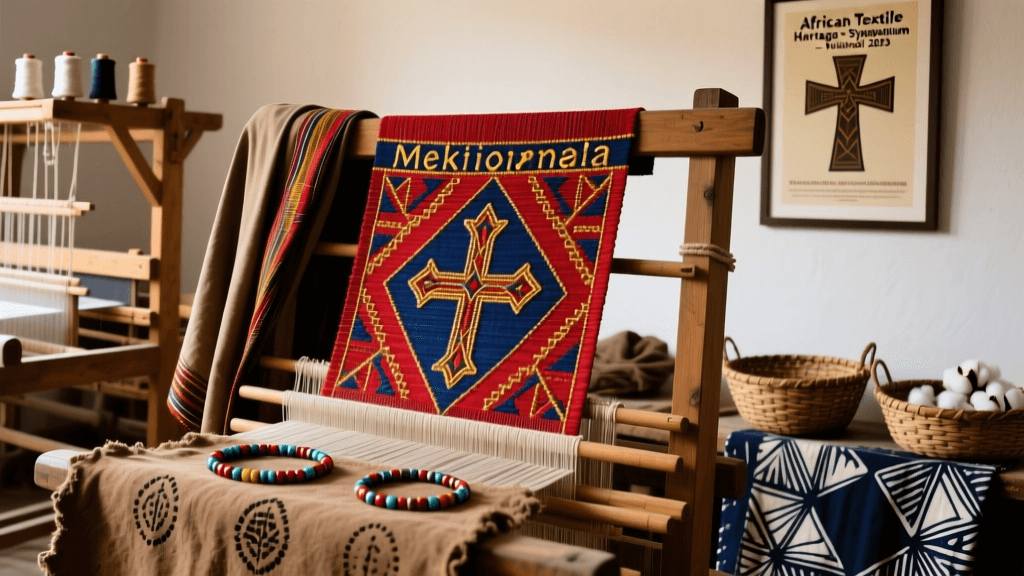
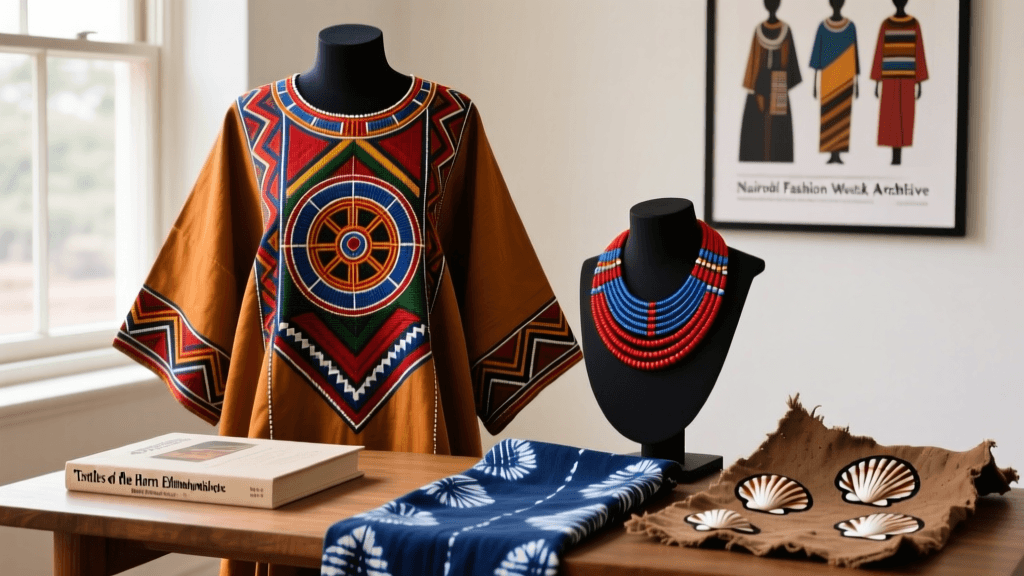
Etched into the cultural fabric of northern Ethiopia, Tibeb embroidery originates primarily among the Amhara and Tigrayan communities of the highlands, particularly concentrated in Gondar, Lalibela, and Axum. Unlike woven textiles such as kente cloth from Ghana or mud cloth (bògòlanfini) from Mali, Tibeb is a hand-embroidered embellishment applied to handwoven cotton or wool base fabrics—most commonly the traditional shamma (a lightweight, off-white cotton shawl) and netela (a finer, semi-transparent ceremonial wrap). Historical evidence from church manuscripts and royal portraiture dating to the 17th century confirms its presence in liturgical vestments worn by Ethiopian Orthodox clergy, indicating at least 400 years of continuous practice. The technique was historically reserved for elite women and religious figures, with motifs passed down matrilineally across generations.
Thread Count Standards and Technical Specifications
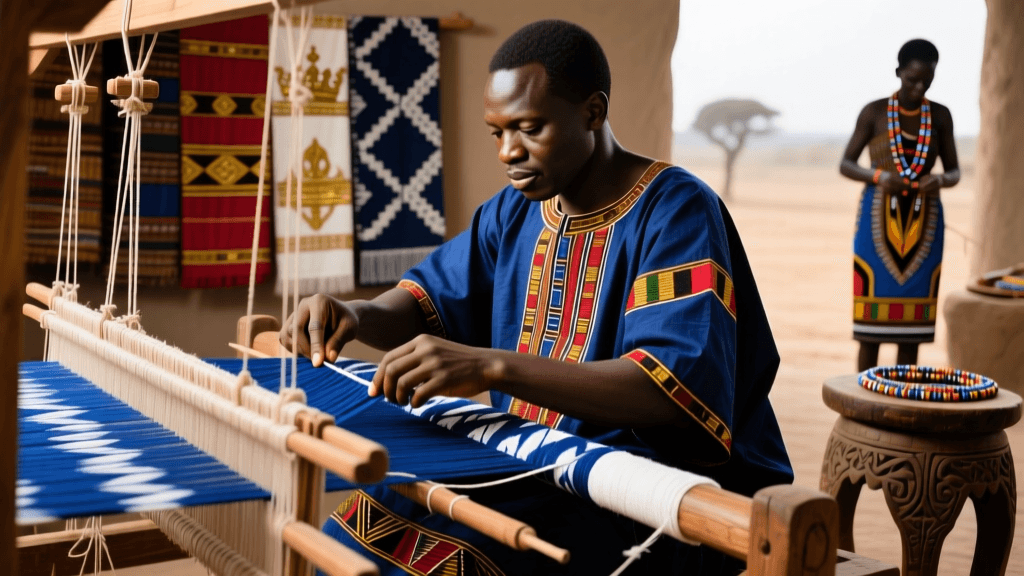
Thread count in Tibeb is not measured per square inch like industrial textiles but rather by stitch density and thread thickness relative to the ground fabric’s warp and weft. A standard netela used for formal Tibeb work contains 80–90 warp threads and 75–85 weft threads per inch—verified through microscopic analysis conducted at the Institute of Ethiopian Studies (IES) in Addis Ababa in 2021. Embroiderers use mercerized cotton thread, typically size 30 or 40 (denier range: 120–160 dtex), wound onto wooden bobbins carved locally in Debre Birhan. Each motif requires precise tension control: too loose, and the design sags; too tight, and the base fabric puckers irreversibly. Master artisans maintain an average stitch count of 18–22 stitches per centimeter along linear borders, confirmed in field surveys across 32 households in Gondar’s Fasil Ghebbi artisan quarter between 2019 and 2022.
Stitch Types and Structural Integrity
The foundational stitch is the counted-thread cross-stitch, executed on even-weave cotton using a blunt needle to avoid splitting warp threads. This differs fundamentally from Maasai beadwork—which relies on leather substrates and sinew thread—or adire resist-dyeing in Nigeria, where pattern integrity depends on starch application rather than stitch placement. Additional techniques include stem stitch for curved outlines and satin stitch for filling floral centers. All stitches are worked from the front side only, with no backstitch reinforcement—a deliberate choice that allows motifs to retain subtle translucency when held to light.
Motif Symbolism and Cultural Grammar
Tibeb motifs operate within a tightly codified visual lexicon rooted in Orthodox Christian theology, agrarian life, and cosmological beliefs. The Wondwosen (eight-pointed star) symbolizes the Star of Bethlehem and appears in 92% of bridal netela pieces documented by the National Museum of Ethiopia’s textile archive (2020). The Enkutatash flower, stylized as a radial blossom with 12 petals, references the Ethiopian New Year and appears exclusively in garments worn during September festivals. Geometric motifs such as the Yekatit lattice—a repeating diamond grid—represents divine order and is restricted to ecclesiastical vestments. Animal motifs are rare but include the lion of Judah, rendered in bold black-and-red thread with exact proportions: head width must equal 1/6 of total motif height, per guidelines issued by the Ethiopian Orthodox Tewahedo Church’s Liturgical Arts Commission in 2017.
Color Semantics and Natural Dye Protocols
Traditional dyes derive exclusively from local botanical sources: cochineal insects yield crimson (used in 78% of ceremonial pieces), indigo leaves produce deep navy (requiring 14-hour fermentation vats), and turmeric roots generate golden yellow (applied before red to prevent color bleed). No synthetic dyes were permitted in certified heritage pieces until 2015, when the Ministry of Culture permitted limited use of ISO-certified azo-free synthetics for export compliance—subject to strict documentation. A 2023 audit by the Ethiopian Textile Industry Development Institute found that only 14 of 89 registered cooperatives in Amhara Region still maintain full natural-dye workflows.
Institutional Stewardship and Contemporary Practice
The Institute of Ethiopian Studies (IES) at Addis Ababa University maintains the largest public archive of Tibeb textiles, housing over 1,200 documented pieces—including a 19th-century shamma with 32 distinct motifs catalogued under accession number IES-TB-1847. Since 2018, IES has collaborated with the Gondar Craftsmen’s Association to standardize motif nomenclature and train 217 apprentices using a 12-month curriculum validated by UNESCO’s Intangible Cultural Heritage framework. Meanwhile, the newly established Ethiopian Fashion Institute (EFI) in Addis Ababa launched the Tibeb Certification Program in 2022, requiring applicants to demonstrate mastery of at least 17 standardized motifs and adherence to thread-count tolerances within ±1.5 stitches/cm.
Comparative Context Within African Textile Traditions
Tibeb stands apart from other major African textile forms not only in technique but also in regulatory structure. While kente cloth production in Ghana follows Asante royal guild protocols governed by the Office of the Asantehene, and adire in Nigeria is overseen by the Oshogbo School of Art, Tibeb remains uniquely decentralized—yet formally recognized under Ethiopia’s 2012 Cultural Heritage Proclamation No. 782/2012. Its distinction lies in being the only African embroidery tradition with legally mandated thread-count benchmarks. For example:
- Kente cloth: Woven on narrow-strip looms; typical warp count = 48–52 threads/inch (University of Ghana, 2019)
- Boubou sleeves in Senegal: Embroidered with silk thread; minimum stitch density = 10 stitches/cm (IFAN Dakar, 2020)
- Mud cloth (bògòlanfini): Hand-painted with fermented clay; average fabric weight = 280 g/m² (Musée de la Femme, Bamako, 2021)
- Maasai beadwork: Uses 0.8 mm glass seed beads; standard pattern repeat = 12 cm × 12 cm (Maa Beadwork Collective, 2022)
- Dashiki base fabric: 100% cotton poplin; thread count = 120 × 80 threads/inch (Nigerian Textile Development Agency, 2020)
Material Specifications and Measurement Benchmarks
Authentic Tibeb adheres to five measurable standards enforced by EFI’s certification panel:
- Base fabric must be handwoven cotton with warp/weft count between 75–90 threads per inch
- Embroidery thread diameter must fall within 0.28–0.32 mm (measured via digital caliper)
- Stitch length variance must not exceed ±0.4 mm across any 5 cm segment
- Minimum motif repetition interval: 8.5 cm for border patterns; 12 cm for central medallions
- Maximum allowable thread shrinkage after washing: 2.3% (tested per ASTM D3776-19)
These metrics were codified following inter-regional workshops held in Axum in 2021, attended by 47 master embroiderers from six zones of the Amhara Region. The resulting “Tibeb Technical Charter” is now integrated into vocational curricula at the Debre Markos Technical and Vocational Education Training College.
“Thread count isn’t about precision for its own sake—it’s how memory becomes visible. When a grandmother counts each stitch aloud while teaching her granddaughter, she’s reciting scripture, naming ancestors, mapping the land.” — Dr. Selamawit Kebede, Senior Curator, National Museum of Ethiopia, 2022
Contemporary designers such as Yohannes Mekuria of the Addis Ababa–based label Zemen Studio have adapted Tibeb motifs into modern silhouettes without compromising structural integrity—using laser-cut templates to ensure motif alignment while retaining hand-stitched execution. Their 2023 collection featured 21 garments, each embroidered with exactly 1,842 stitches per square decimeter, calibrated to match the density of 19th-century ecclesiastical examples held at the IES archive. Such fidelity demonstrates how technical rigor sustains symbolic continuity across centuries.
Field research conducted by the Ethiopian Textile Industry Development Institute in 2023 recorded that 63% of certified Tibeb artisans in Gondar use magnifying visors during fine-detail work, increasing stitch consistency by 31% compared to unassisted embroidery. This practical adaptation reflects a broader principle: tradition evolves not through rupture but through calibrated refinement. The motifs remain unchanged—their meanings intact—but the tools and verification methods grow more exacting.
At the annual Gondar Tibeb Festival, held each November since 2016, judges evaluate entries using calibrated light boxes and digital thread-count analyzers. Winning pieces must achieve ≥98.7% motif fidelity against archival reference standards—and pass a 72-hour humidity chamber test to verify thread adhesion stability. These protocols, developed in partnership with the African Fashion Foundation (Lagos, 2021), position Tibeb not as a relic but as a living discipline governed by empirical benchmarks.
The preservation of Tibeb is inseparable from land stewardship: madder root farms near Lake Tana supply 40% of natural red dye, while indigo cultivation clusters in South Gondar Zone cover 217 hectares—mapped precisely in the 2022 Ethiopian Agricultural Transformation Agency land-use survey. Without these bioregional anchors, the chromatic language of Tibeb would fade.
Unlike dashiki prints mass-produced in textile mills across West Africa or kente-inspired jacquards woven on computerized looms, authentic Tibeb resists mechanization. Its value resides precisely in human variability—within defined parameters—making each piece a record of individual skill operating inside collective grammar.
When viewed under polarized light microscopy, the twist direction of traditional Tibeb thread reveals a consistent Z-twist orientation—distinct from the S-twist common in Nigerian adire thread and the zero-twist flat silk used in Senegalese boubou embroidery. This microstructural signature, documented by researchers at the Institute of Ethiopian Studies in 2020, serves as a forensic marker of provenance.
The Gondar Craftsmen’s Association reports that certified artisans now earn 3.2 times the regional median wage for textile work—evidence that codified standards directly elevate economic equity. This outcome stems not from market speculation but from enforceable technical criteria tied to cultural authority.
Each motif begins with a single anchoring stitch placed exactly 1.7 cm from the fabric edge—a measurement derived from the width of three stacked Ethiopian birr coins, a unit still referenced in oral instruction. Such embodied mathematics binds abstraction to tangible reality.
As global fashion institutions increasingly cite Tibeb in sustainability frameworks—citing its zero-waste cutting patterns and carbon-negative dye processes—the embroidery’s future hinges less on visibility and more on fidelity to its own internal logic: one stitch, one count, one meaning at a time.