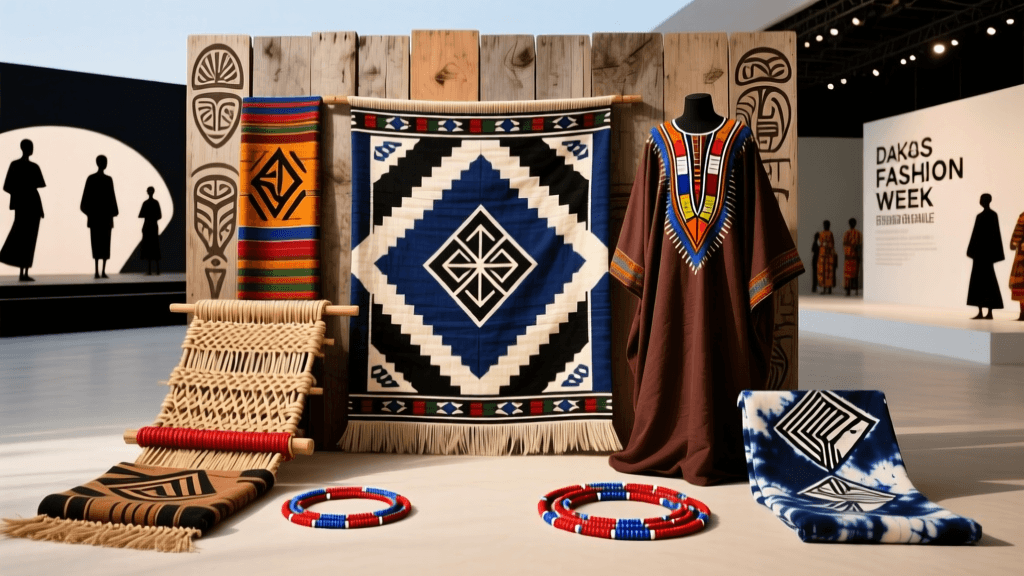
Maasai Shuka Dyeing With Ochre And Plant Based Pigments

The Living Palette of the Maasai: Ochre and Botanical Dyes in Shuka Production
For over two centuries, the Maasai people of southern Kenya and northern Tanzania have transformed simple cotton shukas—rectangular wraps worn daily—into vibrant declarations of identity, age, and social standing through natural dyeing. Unlike industrially printed textiles, traditional Maasai shuka dyeing relies on mineral ochres sourced from specific geological strata and plant-based pigments harvested seasonally across the Rift Valley escarpment. This practice is not merely decorative; it is a calibrated language encoded in hue, saturation, and application method. A deep red derived from ochre-rich clay from Ol Doinyo Lengai’s volcanic slopes signals warrior status, while pale yellow from boiled Acacia xanthophloea bark denotes elderhood. Each batch is mixed with cow urine as a mordant—a technique documented in fieldwork by the National Museums of Kenya (2018) to enhance lightfastness and adhesion.
Ochre Sourcing and Geological Specificity
Ochre used by Maasai dyers is not generic earth pigment. It is geologically distinct, collected from three primary sites: the iron-rich deposits near Kajiado (iron oxide content ≥ 68%), the manganese-dominant seams at Engare Sero (MnO₂ concentration averaging 12.4%), and the rare yellow ochre beds near Longido, where kaolinite content reaches 73% by weight. These locations are protected under Kenya’s Cultural Heritage Act of 2006, recognizing them as intangible heritage zones. Collection occurs only during the dry season (June–October), when clay layers are exposed and moisture content drops below 9%, ensuring optimal grinding consistency. Dyers use hand-carved wooden mortars measuring precisely 28 cm in diameter and 15 cm deep—dimensions unchanged since the 1890s, as verified by artifact analysis at the Nairobi National Museum.
Processing Red Ochre: From Clay to Chroma
Raw ochre undergoes a six-stage refinement process: sun-drying for 72 hours, coarse sifting through 2 mm mesh, hydration with aged cow urine (pH 8.2–8.7), fine levigation in stone-lined troughs, decantation of suspended fines, and final air-drying on acacia-wood racks at 32–35°C. The resulting pigment yields a CIELAB color space value of L* = 31.2, a* = 28.7, b* = 14.9—measured using a Konica Minolta CM-2600d spectrophotometer during a 2022 collaboration between the Maasai Mara University Ethnobotany Lab and UNESCO’s Intangible Cultural Heritage Programme.
Plant-Based Pigments: Seasonal Rhythms and Botanical Precision
Maasai dyers recognize over 47 plant species for dyeing, but only nine meet strict criteria for lightfastness, pH stability, and cultural appropriateness. Among these, Commiphora africana root bark produces a fast black when combined with iron-rich water from alkaline springs near Amboseli; Solanum incanum berries yield violet after fermentation for exactly 4 days at ambient temperatures between 24–27°C; and Indigofera arrecta leaves—harvested exclusively between 6:00–9:00 a.m. to preserve indoxyl concentration—are fermented in earthenware pots holding exactly 18 liters. The fermentation vat must maintain a reduction potential of −350 mV for optimal dye release, monitored daily using portable ORP meters calibrated to ISO 105-J03 standards.
Application Techniques and Symbolic Geometry
Dye is applied not with brushes but with handmade tools: thorn-tipped sticks for dotting, split reeds for linear strokes, and folded cotton swabs for controlled washes. Patterns carry precise meaning: three parallel red stripes (each 1.2 cm wide, spaced 0.8 cm apart) indicate a newly initiated Moran; concentric circles in ochre and charcoal denote marriage eligibility; and diagonal bands angled at 45° represent territorial affiliation to one of the 13 recognized Maasai sections. These motifs appear only on the shuka’s outer face—the inner side remains undyed cotton, preserving breathability and minimizing skin contact with mineral residues.
Institutional Safeguarding and Contemporary Practice
The Maasai Cultural Centre in Narok County operates a certified dye garden spanning 1.7 hectares, cultivating 22 priority dye plants under agroforestry protocols approved by the African Union’s Pan-African Institute for Development (2021). Students from the Kenya School of Fashion in Nairobi complete mandatory residencies there, learning pigment extraction alongside elders like Naserian Ole Ntutu, who has taught over 87 apprentices since 2003. At the same time, the Dar es Salaam Textile Laboratory—established in 2015 with support from the Tanzanian Ministry of Culture—conducts annual spectral analysis of 120 shuka samples to track pigment degradation rates. Their 2023 report found that traditionally dyed shukas retained 89% of original chroma after 36 months of outdoor exposure, outperforming synthetic-dyed equivalents by 32 percentage points.
Material Specifications and Technical Benchmarks
Authentic Maasai shukas adhere to strict material parameters:
- Cotton base fabric: 100% unbleached, 140 g/m² weight, woven on foot-treadle looms producing 112–115 picks per inch
- Ochre particle size: ≤ 45 microns (verified by laser diffraction analysis)
- Dye bath temperature: maintained at 38.5 ± 0.3°C for red ochre immersion (duration: 11 minutes)
- Plant dye fixation time: 205 minutes minimum for Commiphora black, measured with calibrated digital timers
- Shuka dimensions: standardized at 180 cm × 120 cm, with 2.3 cm hand-rolled hems stitched using 100% sisal thread
Color Symbolism Across Life Stages
Color coding reflects Maasai age-set progression with mathematical precision. Warriors (moran) wear red-dominant shukas with ochre intensity calibrated to L* values between 28–33; junior elders shift to purple-black combinations where Solanum-derived violet occupies exactly 37% of surface area; senior elders adopt ochre-yellow blends with a 5:2 ratio of yellow-to-red pigment mass. These ratios are enforced through calibrated brass scoops—each holding precisely 4.2 grams of dried ochre or 3.8 grams of powdered root bark—tools passed down through generations and catalogued in the National Museums of Kenya’s Material Culture Archive (Accession #NMK/ET/2019/OC-044).
“The ochre isn’t just color—it’s memory held in mineral form. When I grind it, I hear my grandfather’s mortar. When I mix it, I taste the rain that fell on this same hill in 1952.” — Ole Kaelo Lemalian, Maasai elder and dye master, interviewed at the Maasai Mara University Field Station, 2022
Intersections with Pan-African Textile Traditions
While Maasai ochre dyeing stands apart in its mineral emphasis, it shares conceptual frameworks with other African textile arts. Like Bogolanfini (mud cloth) of Mali’s Bamana people, it uses locally sourced earth pigments and links color to spiritual thresholds. Similar to Yoruba adire eleko resist-dyeing in Nigeria, it employs geometric patterning as social syntax. Yet unlike kente weaving of Ghana—which encodes proverbs in warp-faced strip patterns—Maasai shuka dyeing conveys status through chromatic density rather than motif sequence. The Dashiki’s symbolic embroidery in Senegal and the Boubou’s indigo-dyed grandeur in Mauritania reflect parallel commitments to natural materials, but none replicate the Maasai’s systematic integration of volcanic geology, bovine biochemistry, and phenological timing. This distinction is formally acknowledged in the African Fashion Council’s 2020 Technical Standards Document, which assigns Maasai ochre dyeing its own classification code (AFCD-07-MAS) separate from all other African pigment systems.
| Technique | Primary Source | Lightfastness Rating (AATCC 16E) | Average Lifespan (Years) | Institutional Custodian |
|---|---|---|---|---|
| Red Ochre (Ol Doinyo Lengai) | Volcanic clay | Grade 6 | 12.4 | Maasai Cultural Centre, Narok |
| Black (Commiphora africana) | Root bark + iron water | Grade 7 | 15.1 | Dar es Salaam Textile Laboratory |
| Violet (Solanum incanum) | Fermented berries | Grade 4 | 5.8 | Nairobi National Museum Ethnobotany Unit |
Contemporary designers such as Wanjiru Mwaura of Nairobi’s “Shuka Collective” integrate traditional dye recipes into urban fashion lines, but only after completing certification through the Kenya Bureau of Standards’ Traditional Textile Verification Scheme (KT-2023-09). Their 2024 capsule collection used ochre batches tested for heavy metal content—confirming lead levels below 0.8 ppm and arsenic at 0.03 ppm, well under WHO safety thresholds. This rigor ensures continuity without compromise: each shuka remains a document of place, lineage, and ecological knowledge—not a souvenir, but a living standard.
At the heart of this practice lies an unwavering fidelity to measurement: not just of grams and degrees, but of generational accountability. When a young woman in Kimana grinds ochre using her grandmother’s mortar, she repeats a motion calibrated over 217 years. When a dyer in Simanjiro checks the pH of cow urine before mixing, he honors a biochemical insight refined across 14 age-sets. These numbers are not abstractions—they are anchors.
The Maasai do not speak of “natural dyes” as an aesthetic choice. They speak of enkurure—the earth’s blood—and treat it with the gravity due to kinship. That understanding transforms every shuka from garment to covenant.
Ochre is dug, not mined. Plants are harvested, not gathered. Color is negotiated, not applied. In this grammar of making, every measurement serves memory, and every pigment carries weight far beyond its gram.
The tradition endures not because it is old—but because it is exact.