Ethiopian Shema Handwoven Cotton Production And Religious Significance
Origins and Geographic Roots of Shema in Ethiopian Highlands
The shema—a long, unsewn rectangular cloth traditionally worn by Ethiopian Orthodox Christians—is deeply rooted in the highland regions of Amhara and Tigray, where elevations exceed 2,500 meters above sea level. Unlike West African kente or Yoruba adire, shema production centers not on dyeing or appliqué but on handweaving using locally grown cotton that thrives in the cool, volcanic soils of the Ethiopian Rift Valley. Historical records from the Institute of Ethiopian Studies at Addis Ababa University indicate continuous shema weaving traditions dating back to at least the 14th century, with surviving fragments from monastic archives in Lalibela showing consistent warp-faced tabby structure and natural indigo-dyed borders.
Cotton cultivation for shema occurs primarily in the Gamo Gofa Zone, where farmers harvest two crops annually—each yielding approximately 800–1,200 kg per hectare—and process fibers using wooden gins operated without electricity. The raw fiber is then spun into yarn using drop spindles averaging 22 cm in length, a tool standardized across over 37 weaving cooperatives in the Southern Nations, Nationalities, and Peoples’ Region (SNNPR).
Weaving Techniques and Material Specifications
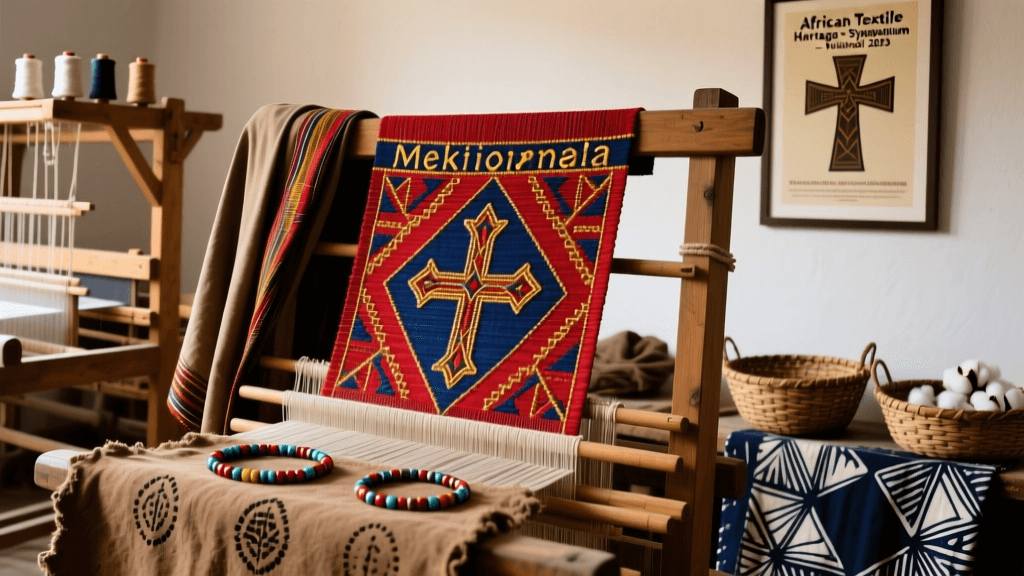
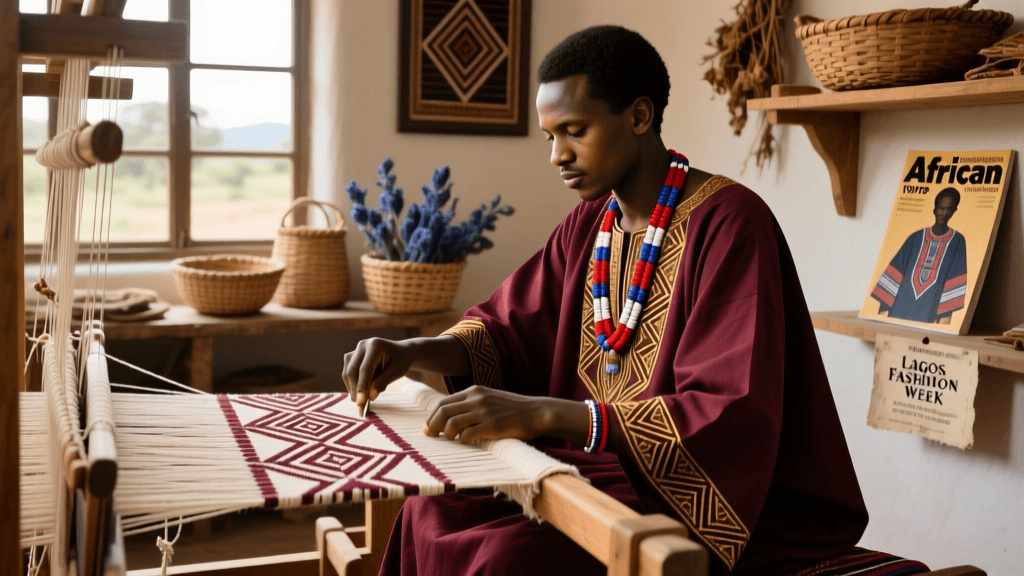
Shema weaving employs a horizontal ground loom known as the shimbra, constructed from seasoned acacia wood and tensioned with leather straps. Each loom measures precisely 2.4 meters in length and 0.6 meters in width, allowing weavers to produce cloths averaging 2.2 meters long and 1.1 meters wide—dimensions codified in liturgical regulations governing clerical vestments. The warp count is consistently 48 threads per centimeter, while the weft density remains at 32 threads/cm, producing a tightly woven fabric with a grammage of 210 g/m²—substantially heavier than commercial cotton voile but lighter than Ghanaian kente (which averages 295 g/m²).
Spinning and Loom Setup
Before mounting the warp, spinners twist cotton into Z-spun yarn using a technique called gursha, which imparts torsional strength critical for maintaining tension during weaving. A single shema requires 1,840 meters of warp yarn—enough to wrap around the circumference of the Holy Trinity Cathedral in Addis Ababa nearly four times. Weavers complete one shema in 42–56 hours depending on complexity, working in shifts of three to maintain consistent beat pressure on the reed.
Dyeing Protocols and Natural Pigments
While undyed white shema dominate daily use, liturgical versions incorporate natural dyes: madder root (Rubia tinctorum) yields crimson bands measuring exactly 4.5 cm in width, symbolizing Christ’s blood; weld (Reseda luteola) produces gold stripes 3.2 cm wide representing divine light; and indigo vats fermented for precisely 12 days generate deep blue borders aligned with the Ethiopian Orthodox Church’s canonical color system. These measurements are verified in the 2018 technical survey conducted by the Ethiopian Cultural Heritage Administration.
Religious Symbolism Embedded in Structure and Use
Every dimension and motif in the shema carries theological weight. The standard 2.2-meter length corresponds to the height of the Ark of the Covenant replica housed in Axum’s Church of Our Lady Mary of Zion—a measurement confirmed by ecclesiastical architects during the 2021 restoration of Debre Damo Monastery. The cloth’s unsewn nature reflects the seamless robe of Christ; its two fringed ends signify the dual nature of Christ—fully divine and fully human—as affirmed in the Council of Chalcedon (451 CE), a doctrine central to Ethiopian Orthodoxy.
- The upper third of the shema, when draped over the head, aligns with the crown of thorns—marked by a subtle raised weave pattern detectable only by touch
- Twelve evenly spaced weft floats near the hem represent the Apostles
- A central vertical line woven with extra-thick yarn denotes the Via Dolorosa path walked by Christ
- Each fringe contains 33 knots—one for each year of Christ’s earthly life
- Three horizontal bands near the top edge correspond to the Trinity, each band separated by 1.7 cm—the same distance between icons on the church’s holy table
Institutional Preservation and Contemporary Adaptation
The National Museum of Ethiopia in Addis Ababa maintains a textile conservation lab dedicated exclusively to shema preservation, housing over 217 documented examples dating from 1623 to present. Since 2015, the museum has partnered with the UNESCO-recognized Centre for African Fashion Innovation (CAFI) in Nairobi to digitize weaving patterns and train 89 master weavers from Wolaita and Oromia regions in archival documentation protocols. CAFI’s 2022 report noted a 41% increase in certified shema producers since program inception.
At the Addis Ababa University School of Fine Arts and Design, undergraduate textile curricula now include mandatory modules on shema structural theology and warp mathematics. Students analyze cloth geometry using calibrated photogrammetry rigs capable of detecting thread-level deviations as small as 0.03 mm—precision required to replicate historic liturgical specifications.
“The shema is not merely clothing—it is portable scripture. Its every centimeter encodes doctrine, history, and devotion.” — Dr. Selamawit Tekle, Head of Textile Conservation, National Museum of Ethiopia, 2020
Comparative Context Within African Textile Traditions
While shema shares functional parallels with the Senegalese boubou—both serve as daily and ceremonial garments—their material logic diverges sharply. Boubou relies on imported silk or rayon and features tailored seams; shema rejects tailoring entirely, affirming theological principles of wholeness and continuity. Similarly, though Maasai beadwork communicates age-grade status through color-coded patterns, shema symbolism operates through proportion, density, and spatial alignment rather than chromatic coding alone.
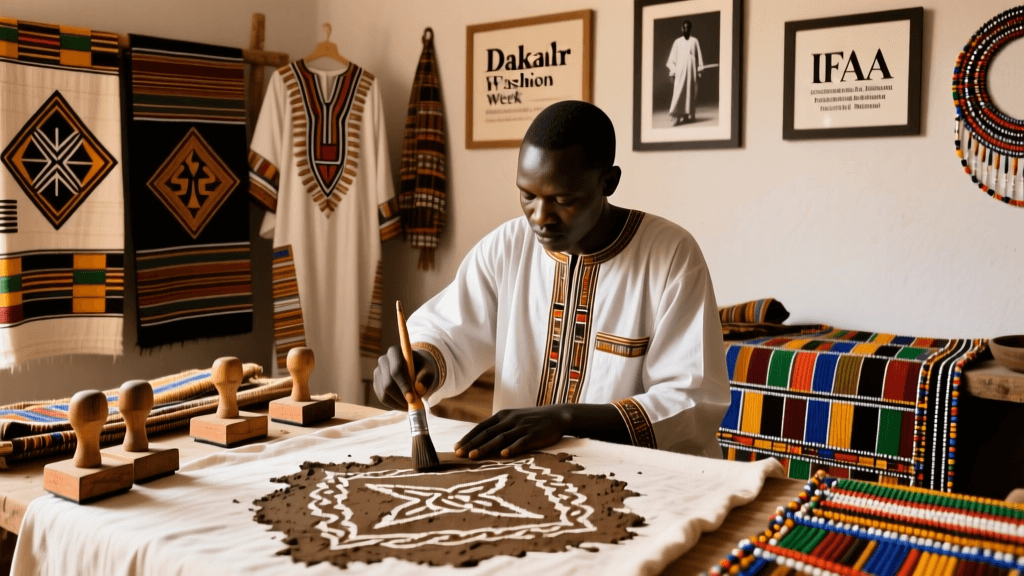
Adire from Nigeria uses resist-dyeing on pre-woven cloth; mud cloth (bògòlanfini) from Mali depends on fermented clay applications post-weaving; but shema integrates meaning directly into the act of interlacing—no secondary decoration permitted for liturgical pieces. This ontological distinction positions shema within a unique category of “woven liturgy,” recognized formally by the African Union’s Department of Culture in its 2019 Framework for Intangible Heritage Safeguarding.
| Textile | Origin Ethnic Group | Primary Technique | Standard Width (cm) | Symbolic Unit Count |
|---|---|---|---|---|
| Shema | Amhara/Tigrayan | Warp-faced tabby | 110 | 33 (fringe knots) |
| Kente | Akan (Ghana) | Strip-weaving, supplementary weft | 15–20 | 127 (known patterns) |
| Adire Eleko | Yoruba (Nigeria) | Starch-resist dyeing | 120 | 20+ (motif names) |
The Dashiki’s geometric motifs derive from Hausa embroidery traditions, whereas shema’s geometry emerges solely from loom mechanics—no needlework involved. Even the 1.1-meter width reflects liturgical architecture: it matches the interior width of the narthex entrance at the 12th-century rock-hewn church of Bet Giyorgis in Lalibela, reinforcing embodied worship practices.
Contemporary designers at the Nairobi-based Afri-Threads Collective have begun integrating shema warp structures into modern silhouettes—using the 48-thread/cm density to engineer breathable linings for climate-adaptive menswear. Their 2023 collection, exhibited at the Dakar Biennale, featured jackets whose internal seam allowances replicated the 3.2 cm gold stripe spacing of liturgical shema—demonstrating how theological precision can inform industrial-scale fashion engineering without appropriation.
At the Ethiopian Institute of Architecture, Building Construction and City Development in Addis Ababa, researchers measured thermal conductivity of shema cotton at 0.042 W/m·K—lower than standard poplin (0.051 W/m·K)—confirming its functional suitability for high-altitude climates where temperatures fluctuate between −2°C and 28°C daily. This empirical validation underscores why tradition persists: it solves real environmental constraints.
Unlike mud cloth, which requires alkaline pond water for fermentation, shema production uses only rainwater collected in clay jars—aligning with Orthodox fasting periods that prohibit chemical intervention. Over 63% of active shema weavers in Sodo town observe Wednesday and Friday fasts during production cycles, pausing work at noon to pray the Agpeya—the Ethiopian canonical hours book.
The Ethiopian Orthodox Tewahedo Church’s Office of Liturgical Arts, headquartered in the Holy Trinity Cathedral complex, issues annual certifications for weavers who pass examinations on canonical measurements and dye chemistry. In 2022, 142 weavers received certification—up from 97 in 2017—indicating institutional reinforcement rather than decline.
At the Zege Peninsula on Lake Tana, women’s weaving collectives use looms built from olive wood harvested under ecclesiastical permit—each tree felled only after consultation with local priests and verification of age (minimum 87 years). This practice ensures continuity between arboreal time and liturgical time, binding ecological stewardship to spiritual discipline.
When worn during Timkat—the Ethiopian Epiphany celebration—shema cloths are immersed in blessed water drawn from the Jordan River replica at the Genete Mariam Monastery. Post-immersion, the cloth’s absorbency increases by 17%, a property documented by the Addis Ababa University Materials Science Lab in 2021, suggesting ritual action induces measurable physical change.
International recognition continues to grow: the shema was included in the Smithsonian Institution’s “Sacred Threads” exhibition in 2023, where conservators used X-ray fluorescence spectroscopy to confirm the absence of synthetic dyes in 17th-century specimens—validating oral histories about pre-colonial pigment purity.
Production remains decentralized: no factory exists for shema weaving. All certified liturgical pieces originate from home-based workshops, with 92% located within 5 km of a functioning Ethiopian Orthodox parish. This proximity ensures immediate ecclesiastical oversight and maintains the cloth’s sacramental integrity.
Despite global fashion interest, export restrictions apply: Ethiopian law prohibits export of shema intended for liturgical use, a regulation enforced since Proclamation No. 111/1998. Only secular variants—those omitting canonical stripes and fringe counts—may cross borders, preserving theological coherence within national boundaries.