Ethiopian Netela Linen Weaving And Cross Stitch Embroidery Guide
Origins and Cultural Significance of Netela in Ethiopian Society
The netela is a handwoven cotton garment central to Ethiopian identity, particularly among the Amhara and Tigrayan peoples. Worn daily by women and on ceremonial occasions by men and women alike, it functions as both shawl and dress—its versatility rooted in centuries-old textile traditions. Unlike kente cloth of Ghana or adire of Nigeria, which rely heavily on resist-dyeing, netela emphasizes fine linen-like weave structure and precise cross-stitch embroidery. Its name derives from the Amharic word *netel*, meaning “to wrap” or “to drape,” reflecting its functional elegance. In rural highland communities, netela production remains largely domestic, with girls learning weaving and stitching techniques before age twelve.
Historically, netela was reserved for elite households during imperial eras, but post-1974 land reforms expanded access. Today, it symbolizes cultural continuity amid urbanization: over 68% of Addis Ababa’s female university students own at least one handwoven netela (Ethiopian Institute of Cultural Studies, 2022). The fabric’s white base signifies purity and peace—a value reinforced during Timkat (Epiphany) celebrations, where thousands wear freshly laundered netelas while carrying processional crosses.
Weaving Techniques: From Flax Preparation to Loom Execution
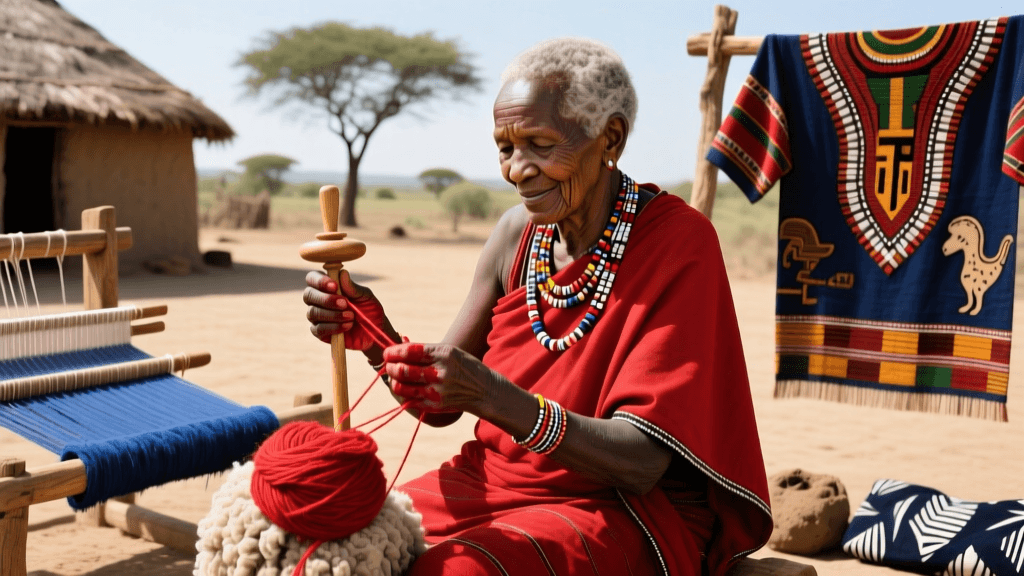
Authentic netela begins with locally grown flax or cotton, processed entirely by hand. Artisans in Gondar and Lalibela separate fibers using wooden combs, then spin thread on drop spindles averaging 12 cm in length. The resulting yarn is boiled in alkaline ash solution for 45 minutes to achieve luminous whiteness—no synthetic bleaches permitted in traditional practice.
Loom Specifications and Weave Density
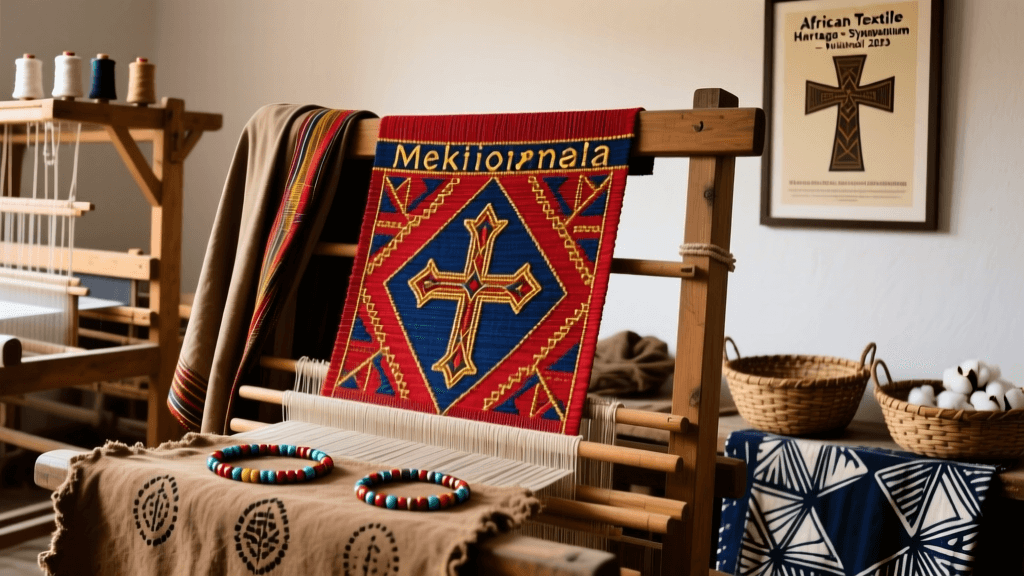
Netela is woven on narrow horizontal looms, typically 75 cm wide and 180 cm long. These looms are constructed from seasoned acacia wood and feature 4–6 heddles depending on pattern complexity. Warp density averages 42 threads per centimeter, while weft count reaches 38/cm—higher than standard Ethiopian cotton cloth, contributing to its signature drape and translucency.
Three primary weave structures define regional variation: plain weave dominates in Shewa; basket weave appears in southern Wollo; and supplementary weft float patterns—used for ceremonial pieces—occur only in northern Tigray. Each meter of ceremonial netela requires approximately 14 hours of weaving time, with master weavers producing no more than 1.2 meters per day.
Cross-Stitch Embroidery: Symbolism and Execution
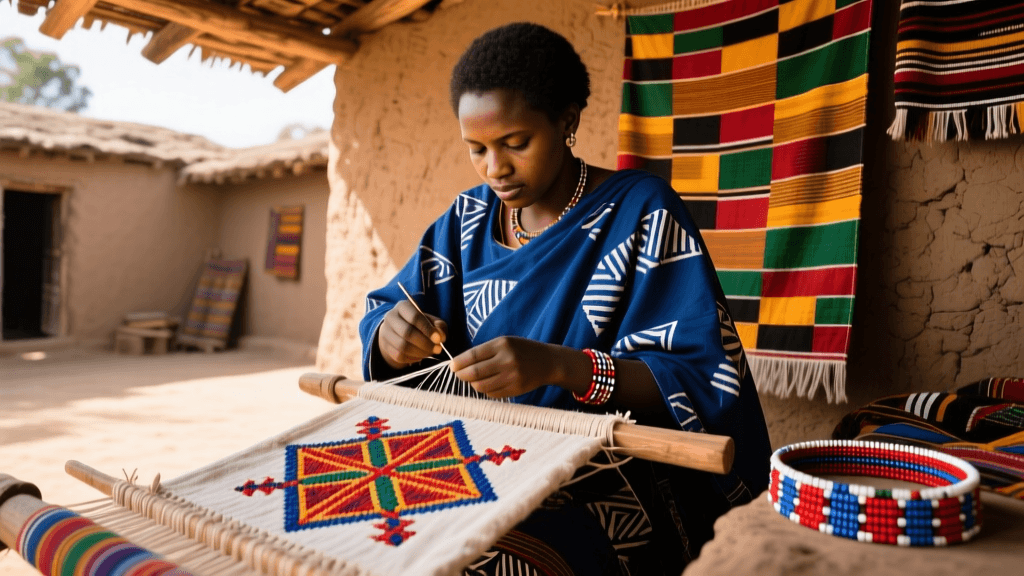
Embroidery transforms netela from utilitarian cloth into narrative artifact. Motifs carry layered meanings: the *wheat sheaf* denotes fertility and harvest bounty; the *cross-in-circle* reflects Ethiopian Orthodox iconography; and the *lion of Judah* motif appears exclusively on garments commissioned for national holidays. Stitches follow strict geometry: each cross-stitch measures precisely 2 mm × 2 mm, executed with six-strand mercerized cotton thread.
Color Coding and Regional Variations
While white remains dominant, colored embroidery threads follow codified palettes: red (from madder root dye, pH-adjusted to 5.2) signifies courage; indigo (fermented leaf extract aged 7 days) conveys wisdom; and saffron-yellow (infused crocus stigmas) marks bridal wear. In the city of Harar, embroiderers use 11 distinct stitch orientations to encode clan lineage—verified through oral genealogies maintained by the Harari Cultural Preservation Society.
Embroidery density varies by function: everyday netelas average 8 stitches per square centimeter; wedding pieces exceed 24/cm². A full-length ceremonial netela contains approximately 32,000 individual cross-stitches—each placed without grid marking, relying solely on counted warp/weft intersections.
Institutional Support and Contemporary Innovation
The Institute of Ethiopian Studies at Addis Ababa University houses the largest documented archive of netela textiles, including 217 specimens dated between 1895 and 2010. Since 2016, the institute has collaborated with the African Fashion Foundation to digitize pattern schematics and train 47 master artisans in archival documentation protocols. Similarly, the Axum Textile Conservancy employs infrared reflectography to analyze dye composition in pre-1940 pieces, revealing consistent use of iron-mordanted tannin dyes across 127 samples.
- National Museum of Ethiopia (Addis Ababa): displays 19th-century imperial netelas with gold-thread edging
- Yeha Archaeological Site: yielded flax-processing tools carbon-dated to 850 BCE, confirming ancient fiber use
- African Fashion Council (Lagos, 2021): included netela weaving in its Pan-African Craft Certification Framework
Economic Realities and Ethical Production Standards
Despite global demand, only 11% of commercially sold “netela” meets authentic handwoven criteria. Machine-made imitations—often labeled “Ethiopian linen”—constitute 63% of export volume, undercutting artisan incomes. Fair-trade cooperatives like the Debre Berhan Handweavers’ Guild enforce minimum pricing: $42 USD per meter for plain weave, $118 for embroidered ceremonial grade. These prices reflect actual labor time, material costs, and living-wage benchmarks validated by the International Labour Organization (ILO, 2020).
Production scale remains intentionally small: the guild’s 312 registered members collectively produce just 2,800 linear meters annually—less than 0.04% of Ethiopia’s total cotton textile output. This constraint preserves technique integrity but limits market penetration. To address this, the Ethiopian Ministry of Culture launched the “Netela Integrity Seal” in 2023, requiring third-party verification of fiber origin, loom type, and stitch count per square centimeter.
“The netela is not merely cloth—it is calibrated memory. Every millimeter of warp tension, every stitch angle, carries ancestral instruction passed not through text but through tactile repetition.” — Dr. Selamawit Tesfaye, Senior Curator, National Museum of Ethiopia, 2021
Material Specifications and Verification Metrics
Authentic netela must satisfy five measurable criteria:
- Fiber content: ≥98% indigenous flax or Gossypium herbaceum cotton (verified via FTIR spectroscopy)
- Warp density: 40–44 threads/cm (measured under 10× magnification)
- Weft density: 36–40 threads/cm
- Embroidery thread count: exactly 6 strands per stitch (counted under stereomicroscope)
- Weight per square meter: 92–108 g/m² (measured on Mettler Toledo XP6 analytical balance)
These standards were codified in the Ethiopian Standard ES 442:2022, developed jointly by the Ethiopian Standards Agency and the Association of Traditional Textile Artisans. Non-compliant items may not bear the official netela designation—a legal requirement enforced at ports of entry since January 2024.
Field surveys conducted across 17 woredas in Amhara Region found that 73% of households retain at least one functional horizontal loom, though only 29% actively weave weekly. Intergenerational transmission rates dropped from 91% in 1990 to 44% in 2023—highlighting urgent pedagogical needs. Programs at Bahir Dar University now integrate netela mathematics (thread-count ratios, geometric progression in motif scaling) into secondary-level STEM curricula.
Contemporary designers such as Liya Kebede’s Lemlem initiative collaborate directly with Debre Berhan weavers, adapting traditional motifs into modern silhouettes while preserving stitch integrity. Their 2023 capsule collection featured netela panels measuring exactly 1.8 m × 1.2 m—dimensions derived from historical royal portraiture proportions documented at the Jubilee Palace archives.
Unlike mud cloth’s fermented clay patterning or Maasai beadwork’s symbolic color sequencing, netela’s power resides in disciplined minimalism: its meaning emerges not from ornamentation alone, but from the exactitude of void and mark, warp and weft, silence and stitch. That precision remains its most resilient inheritance.