Ancient Greek Chiton & Roman Toga Reconstruction Guide 2026
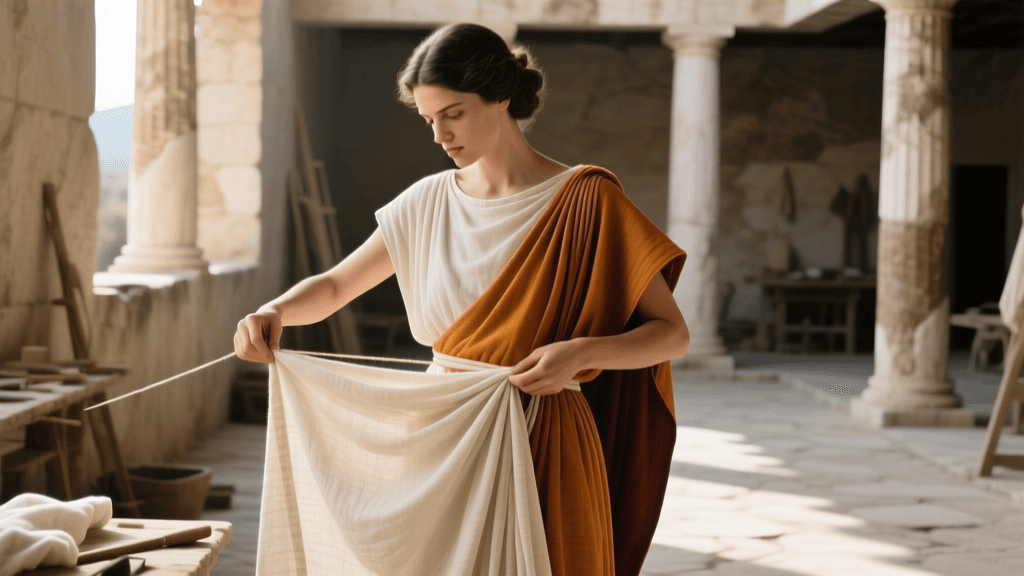
The Revival of Classical Antiquity in 2026
The landscape of historical reenactment and European folk dress revival has evolved dramatically as we move through 2026. Today, enthusiasts, theater costumers, and experimental archaeologists are moving away from the inaccurate, mass-produced theatrical costumes of the past, favoring meticulous, museum-quality reconstructions of ancient Mediterranean garments. Whether you are preparing for the 2026 Natale di Roma festival in April, participating in the Athens & Epidaurus classical workshops, or simply studying the foundations of European textile history, understanding the precise drape, weave, and weight of ancient garments is essential.
Ancient Greek and Roman clothing was fundamentally different from the tailored garments that would later dominate medieval and Renaissance European folk dress. Instead of cutting and sewing fabric into complex shapes, classical antiquity relied on the artful draping, pinning, and belting of large, rectangular or semi-circular pieces of woven cloth. This guide will walk you through the exact specifications, textile sourcing, and draping techniques required to recreate the Greek chiton, the Roman toga, and the stola with absolute historical accuracy in 2026.
The Greek Chiton: Doric and Ionic Variations
The chiton was the foundational garment of ancient Greece, worn by both men and women. According to the Metropolitan Museum of Art's Heilbrunn Timeline of Art History, the chiton evolved into two distinct primary styles: the heavier, structured Doric chiton (often referred to as the peplos) and the lighter, more fluid Ionic chiton. Understanding the distinction is critical for any modern reconstruction.
The Doric Chiton (Peplos)
The Doric chiton, or peplos, was traditionally worn by women and is characterized by its heavy, structured drape and distinctive overfold. It was constructed from a single large rectangle of lightweight wool. The top edge of the fabric was folded down to the waistline, creating an overfold known as the apoptygma. This overfold not only provided warmth but also added visual weight and structure to the upper body. The garment was pinned at the shoulders using large, decorative bronze fibulae (brooches) and left open or partially sewn along the right side. The heavy wool allowed the fabric to fall in deep, sculptural columns, a hallmark of classical Greek sculpture.
The Ionic Chiton
In contrast, the Ionic chiton was crafted from wide panels of fine, lightweight linen. As noted by the World History Encyclopedia, the Ionic style eliminated the heavy overfold. Instead, the wide fabric was gathered and pinned at intervals along the arms, creating the illusion of sleeves. This style required significantly more fabric and relied on the delicate, crinkled texture of finely woven linen to achieve its elegant, flowing silhouette. The Ionic chiton was often belted high under the bust or at the natural waist, with the fabric bloused over the belt to create a graceful overhang called the kolpos.
Roman Garments: The Toga and Stola
While the Romans adopted and adapted many Greek garments (such as the tunica, which evolved from the chiton), their formal civic and ceremonial wear was uniquely Roman. The complex draping of Roman garments served as a visual language of citizenship, gender, and social status.
The Toga Virilis: Engineering a Symbol of Citizenship
The toga was the ultimate symbol of Roman male citizenship. Far from the simple bedsheet draped over a shoulder seen in mid-century cinema, the authentic toga virilis was a massive, complex garment. By the Imperial period, the toga was cut in a broad semi-circle, measuring up to 5.5 meters along the curved edge and roughly 2.7 meters across the center. Draping the toga required assistance and a deep understanding of tension and gravity. The fabric was folded lengthwise, draped over the left shoulder, brought under the right arm, and thrown back over the left shoulder. The resulting folds created the sinus (a deep pouch used to carry small items) and the umbo (a decorative knot of fabric resting on the chest). In 2026, experimental archaeologists emphasize that a proper toga requires a heavyweight wool with a slightly fulled (felted) texture to grip itself and hold these complex folds in place without constant readjustment.
The Stola and Palla: Women's Attire
Roman female citizens wore the stola over a long under-tunic. The stola was a sleeveless, voluminous garment suspended from the shoulders by straps or small pins. Its defining feature was the instita, a woven decorative border at the hem and sometimes at the neckline, which signaled the wearer's respectable status as a married woman. Over the stola, women wore the palla, a large rectangular mantle draped over the body and often pulled over the head when in public. The World History Encyclopedia highlights that the palla was highly versatile, serving as both a modesty veil and a protective outer layer against the elements.
2026 Textile Sourcing and Pricing Guide
Achieving an authentic drape in 2026 requires ignoring modern apparel fabrics and sourcing historically accurate textiles. The weight, measured in grams per square meter (GSM), and the weave structure are paramount.
- Doric Chiton (Wool): Seek a lightweight to mid-weight merino or worsted wool in a plain tabby weave, ideally between 150 and 200 GSM. Avoid modern twills or herringbones. In 2026, specialized historical textile mills in Italy and the UK offer authentic fulled wools averaging €45 to €60 per meter.
- Ionic Chiton & Tunics (Linen): You need a fine, semi-sheer to mid-weight linen (120 to 160 GSM). Premium European flax linen, particularly from Lithuanian or Belgian heritage weavers, provides the necessary crinkle and drape. Expect to pay €28 to €40 per meter for high-quality, historically accurate tabby-weave linen.
- Roman Toga (Heavy Wool): The toga requires a heavyweight, slightly textured wool (250 to 320 GSM) to hold the sinus and umbo. A fulled wool flannel or broadcloth is ideal. Budget approximately €55 per meter; a full toga will require 5 to 6 meters.
- Fasteners: Discard modern safety pins. Hand-forged bronze fibulae are mandatory for authenticity. Artisan blacksmiths and historical guilds currently charge between €25 and €65 per pair for museum-quality reproductions based on classical provincial typologies.
Step-by-Step Draping Techniques
Translating flat fabric into three-dimensional classical dress requires precise measurements and technique. Here is how to drape the foundational Doric Chiton:
- Cut the Fabric: For a wearer who is 170 cm tall, cut your lightweight wool to a height of 205 cm (your height + 35 cm for the overfold and hem adjustment). The width should equal your wingspan, typically 160 cm to 180 cm.
- Create the Overfold: Fold the top 35 cm of the fabric down to the outside (so the fold shows on the exterior). This is your apoptygma.
- Pin the Shoulders: Wrap the fabric around your body. Bring the front and back panels together at your left shoulder, and pin them securely with a bronze fibula. Repeat on the right shoulder, leaving enough space for your head to pass through the neck gap.
- Belt and Blouse: Tie a woven wool or linen cord around your natural waist, over the overfold. Pull the fabric up and over the belt to hide the cord and adjust the hem so it grazes your ankles. This bloused effect is the kolpos.
- Secure the Side: The right side of the Doric chiton was historically left open to allow for movement, but it can be lightly tacked or pinned at the hip if modesty or wind requires it.
Garment Specifications and Comparison Table
Use the following reference table to ensure your 2026 reconstructions meet the precise specifications required for classical European folk dress and historical reenactment.
| Garment | Primary Fabric & Weight | Dimensions (Approx.) | Essential Fasteners | Key Structural Feature |
|---|---|---|---|---|
| Doric Chiton (Peplos) | Lightweight Wool (150-200 GSM) | 205cm H x 170cm W | 2 Large Bronze Fibulae | Apoptygma (Overfold) |
| Ionic Chiton | Fine Linen (120-160 GSM) | 170cm H x 300cm W | 6-10 Small Pins/Fibulae | Sleeves formed by arm pins |
| Toga Virilis | Heavy Fulled Wool (250-320 GSM) | 550cm Curve x 270cm W | None (Tension draped) | Sinus (Pouch) and Umbo |
| Roman Stola | Mid-weight Linen or Wool | 220cm H x 250cm W | Shoulder straps/pins | Instita (Woven border) |
| Palla (Mantle) | Wool or Linen Blend | 150cm H x 250cm W | None (Wrapped) | Used as head cover/veil |
Conclusion
Reconstructing the garments of ancient Greece and Rome is a profound exercise in understanding the roots of European textile traditions. By abandoning modern tailoring assumptions and embracing the mathematical precision of classical draping, you can achieve a level of historical authenticity that honors the original wearers. As the historical reenactment community continues to elevate its standards in 2026, mastering the drape of the chiton, the engineering of the toga, and the sourcing of heritage textiles will set your classical wardrobe apart as a true masterpiece of experimental archaeology.