DIY Hanfu Sewing Guide: Patterns, Measurements, and Fabrics
The Renaissance of Traditional Chinese Dressmaking
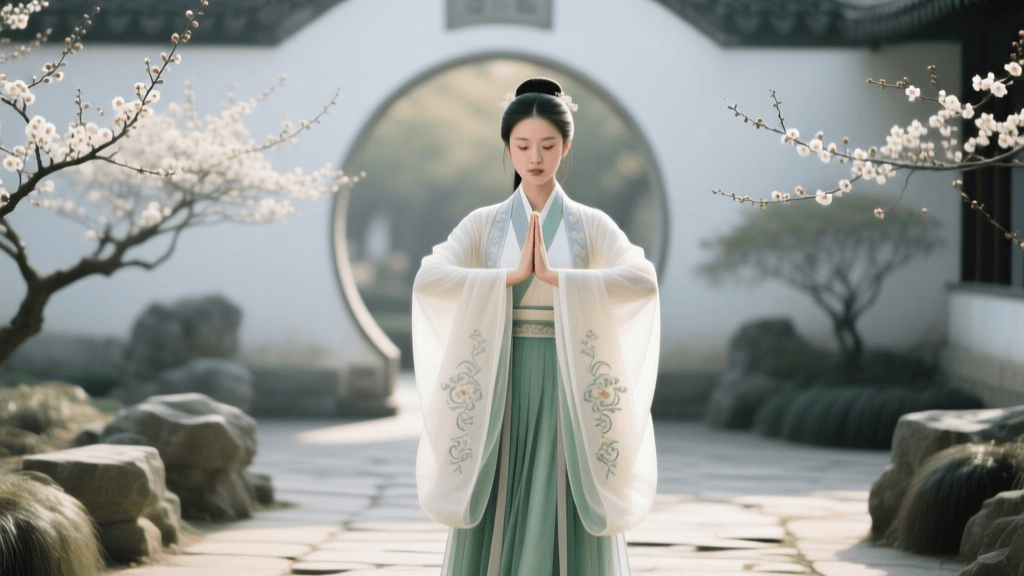
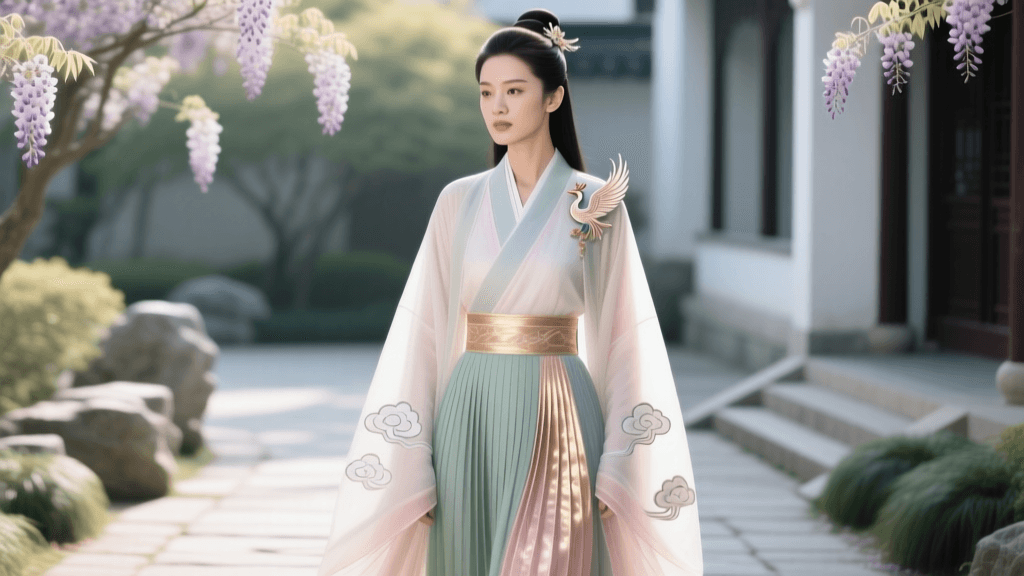
The global resurgence of traditional Chinese clothing, commonly known as Hanfu, has transitioned from a niche historical interest into a vibrant, community-driven movement. As enthusiasts seek deeper connections to their cultural heritage, many are moving beyond purchasing ready-made garments and embracing the art of DIY Hanfu sewing. Crafting your own Hanfu is not merely a sewing project; it is an immersive journey into the historical tailoring techniques, textile philosophies, and aesthetic principles that have defined Chinese dress for millennia.
According to a comprehensive feature by BBC Travel, the modern Hanfu revival is heavily driven by younger generations who view these garments as a wearable expression of cultural identity. By drafting your own patterns and selecting authentic fabrics, you participate directly in this living history. This guide will walk you through the essential measurements, pattern drafting philosophies, fabric selection, and step-by-step construction techniques required to sew your first authentic Hanfu ensemble.
The Philosophy of Flat-Cutting and Traditional Silhouettes
Unlike Western tailoring, which relies heavily on darts, curved seams, and complex shaping to contour the body, traditional Chinese garment construction is rooted in the philosophy of flat-cutting. As detailed by the Metropolitan Museum of Art's Heilbrunn Timeline of Art History, historical Chinese textiles were highly valued, and garments were designed to minimize fabric waste while maximizing the drape and flow of the material.
The foundational silhouette of Hanfu relies on straight lines, geometric shapes, and the natural drape of the fabric over the human form. Key characteristics include:
- Jiaoling Youren (Cross-Collar, Right Lapel): The left side of the collar crosses over the right, forming a 'y' shape at the neckline. This is a hallmark of Hanfu and holds deep historical significance.
- Pingjian (Flat Shoulders): Sleeves are typically cut in one continuous piece with the bodice, extending past the shoulder line without a structured shoulder seam, creating a gentle, sloping silhouette.
- Wide Sleeves and Loose Fit: The bodice is cut generously, allowing the garment to flow over the body rather than clinging to it.
Essential Measurements for Hanfu Pattern Drafting
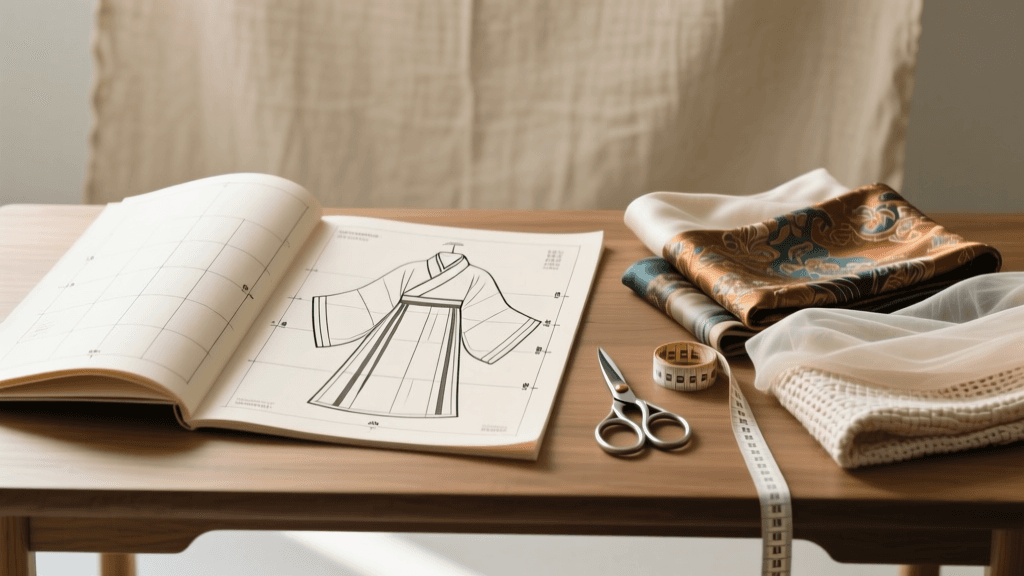
Because Hanfu does not use darts for shaping, accurate horizontal and vertical measurements are crucial to ensure the garment drapes correctly and the cross-collar sits securely without gaping. Below are the primary measurements needed to draft a standard Ruqun (a traditional top-and-skirt ensemble).
| Measurement | How to Measure | Application in Hanfu Drafting |
|---|---|---|
| Bust/Chest | Measure around the fullest part of the chest, keeping the tape parallel to the floor. | Determines the width of the bodice panels. Add 4-6 inches for ease and overlap. |
| Arm Span | Measure from wrist bone to wrist bone with arms outstretched horizontally. | Dictates the total width of the bodice and sleeves, as they are cut as one piece. |
| Shoulder to Floor | Measure from the base of the neck (shoulder line) down to the desired hemline. | Used for the total length of the skirt and the vertical length of the top (Ru). |
| Upper Arm Circumference | Measure around the widest part of the bicep. | Determines the minimum width of the sleeve root to ensure comfortable arm movement. |
| Waist | Measure around the natural waist or where the skirt will sit. | Used to calculate the gathering ratio for the skirt waistband. |
Fabric Selection: Honoring Tradition with Modern Accessibility
Selecting the right fabric is arguably the most critical step in DIY Hanfu sewing. The fabric dictates the drape, the historical accuracy, and the comfort of the garment. Historically, silk was the premier textile in China, but plant-based fibers like ramie and hemp were widely used by the general populace.
When sourcing fabrics, you must consider the weight, opacity, and weave. A standard Ruqun requires approximately 4.5 to 6 yards of fabric for the skirt (depending on the desired volume) and 2.5 to 3 yards for the top. Below is a comparison chart of popular fabrics used in modern Hanfu construction.
| Fabric Type | Characteristics & Drape | Best Used For | Est. Cost per Yard (USD) |
|---|---|---|---|
| Silk Charmeuse | Heavy, lustrous, fluid drape. Slippery to sew. | Winter/Spring Ruqun, formal Ao (jackets), outer layers. | $25 - $45 |
| Ramie / Xia Cloth | Crisp, breathable, slightly textured. Excellent historical accuracy. | Summer garments, inner layers, structured skirts. | $15 - $30 |
| Cotton-Linen BlendSoft, opaque, easy to sew, matte finish. Good for beginners. | Everyday Hanfu, practice garments, inner tops. | $10 - $18 | |
| Silk Organza | Sheer, lightweight, stiff. Holds pleats exceptionally well. | Overlays, wide-sleeve outer layers (Beizi), summer skirts. | $20 - $35 |
Pro Tip: Always pre-wash and dry your fabric using the exact method you plan to use for the finished garment. Natural fibers like ramie and linen can shrink up to 10%, which will drastically alter the fit of a flat-cut garment.
Step-by-Step Construction: Sewing the Jiaoling Ru (Top)
Drafting and sewing the Ru (the upper garment) requires precision, particularly at the collar. Follow these steps for a clean, authentic finish:
1. Drafting the Bodice and Sleeves
Begin by folding your fabric in half, then in half again. Using your Arm Span measurement, mark the total width. The center fold will become the center back. Cut out the basic T-shape, ensuring the sleeve width tapers slightly toward the wrist if you are making a standard sleeve, or leave it wide for a Guangxiu (large sleeve) style. Remember to add a 5/8-inch seam allowance to all edges.
2. Creating the Cross-Collar (Jiaoling)
The collar is a separate strip of fabric, typically cut on the bias or straight grain, measuring about 3 to 4 inches wide.
- Interface the collar strips with lightweight fusible interfacing to prevent stretching.
- Sew the collar strips together at the center back neck.
- Attach the collar to the neckline, starting from the center back and working your way down the front edges. The left front panel must overlap the right front panel, extending past the side seam to tie securely under the right arm.
3. Seam Finishing
Because Hanfu garments are often unlined or lightly lined, internal seam finishes are vital for both aesthetics and durability. Use French seams for lightweight fabrics like silk organza and cotton-linen to enclose the raw edges completely. For heavier silks or ramie, use flat-felled seams or bind the raw edges with homemade silk bias tape.
4. Hemming and Ties
Hem the sleeves and bottom edge with a narrow rolled hem or a blind stitch. Finally, create the ties (Yingluo or simple fabric ribbons). You will need two sets: one attached to the inside right seam to secure the left lapel, and one attached to the outside left side seam to tie around the waist.
Sourcing Tools and Budgeting for Your Project
Embarking on a DIY Hanfu project is highly cost-effective compared to purchasing imported, custom-tailored pieces. Here is a breakdown of the essential tools and estimated costs for a beginner's cotton-linen Ruqun:
- Fabric (6 yards cotton-linen): $70 - $100
- Pattern Paper & Tracing Wheel: $15
- Lightweight Fusible Interfacing (for collar): $8
- Matching Polyester or Silk Thread: $5
- Fabric Shears and Glass Head Pins: $25
Total estimated cost ranges from $120 to $150, yielding a custom-fitted, historically inspired garment that would easily retail for over $250 from specialized boutiques.
Conclusion: Stitching History into the Modern Wardrobe
Sewing your own Hanfu is a profoundly rewarding endeavor that bridges the gap between ancient craftsmanship and modern wearable art. By understanding the flat-cutting philosophy, meticulously taking your measurements, and respecting the drape of traditional textiles, you do more than create a piece of clothing—you become a custodian of Asian sartorial traditions. Whether you are crafting a breezy ramie ensemble for summer festivals or a luxurious silk Charmeuse set for Lunar New Year, the skills you develop in DIY Hanfu sewing will forever change how you view the intersection of fabric, culture, and identity.