Navajo & Lakota Traditional Dress: 2026 Regional Guide
The landscape of Indigenous North American fashion in 2026 is a vibrant, living tapestry that honors ancestral techniques while embracing contemporary realities. Far from being static museum relics, traditional garments across the Americas are actively worn, adapted, and celebrated in both ceremonial and everyday contexts. For collectors, cultural enthusiasts, and those seeking to ethically support Native artisans, understanding the distinct regional variations of Indigenous dress is paramount. In this comprehensive 2026 guide, we delve deeply into two of the most iconic and widely recognized garment traditions in North America: the Diné (Navajo) velveteen shirt and concho belt ensembles of the Southwest, and the Lakota ribbon shirts and dentalium regalia of the Northern Plains. By examining the materials, construction techniques, and cultural significance of these garments, we can better appreciate the profound artistry of Indigenous North American dress traditions by tribe and region.
The Southwest: Diné Velveteen Shirts and Silverwork
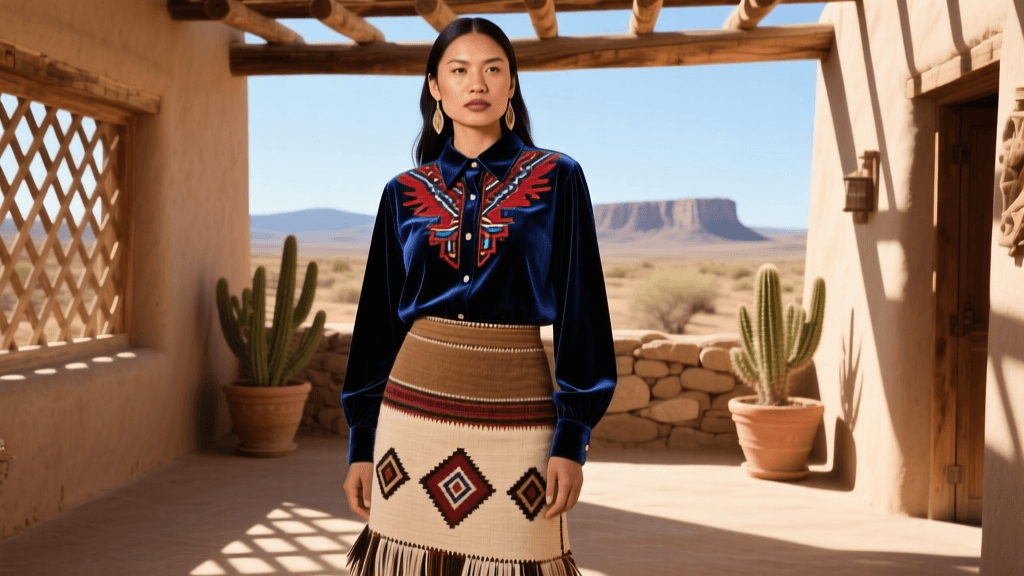
The traditional dress of the Diné (Navajo) people is a striking example of cultural adaptation and mastery of new materials. While pre-colonial Diné clothing was primarily crafted from woven yucca fibers and later, hand-spun Churro sheep wool, the introduction of trade goods in the late 19th century fundamentally shifted the aesthetic. Today, the quintessential Diné traditional garment for men is the velveteen shirt, often paired with a meticulously crafted silver concho belt and a squash blossom necklace.
Anatomy and Construction of the Velveteen Shirt
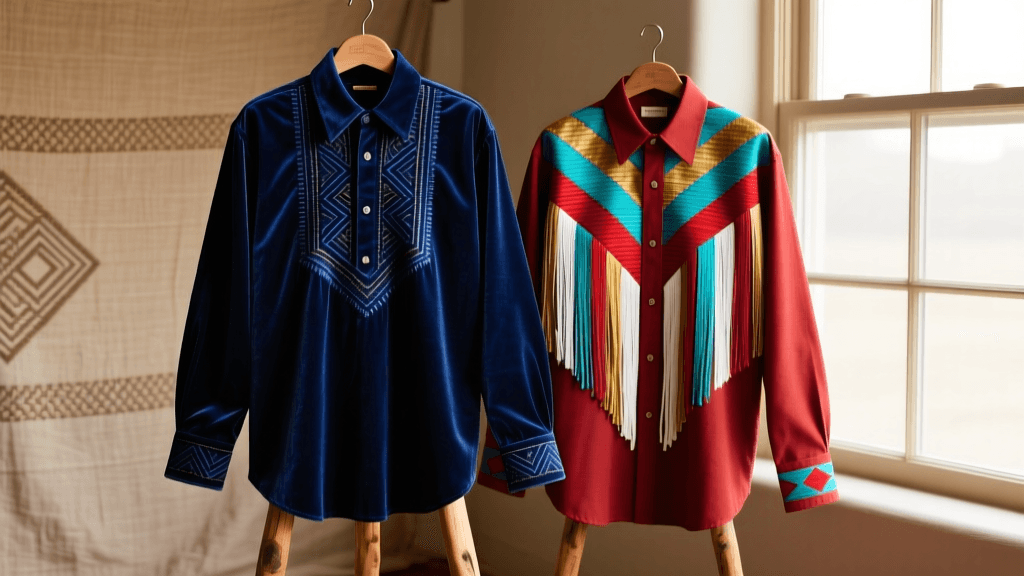
In 2026, the Diné velveteen shirt remains a staple of formal and ceremonial wear, frequently seen at graduations, tribal council meetings, and major cultural gatherings. The shirt is typically constructed from heavy, high-pile cotton velveteen, chosen for its rich texture and ability to hold vibrant, deep colors like royal blue, emerald green, and classic black.
Artisans utilize traditional tailoring methods, often featuring a distinct collarless neckline or a subtle mandarin collar, fastened with ornate silver and turquoise buttons. The yoke and cuffs are frequently adorned with intricate silver conchos or embroidered motifs that reflect the wearer's clan affiliations or personal achievements. The cost of authentic, hand-tailored Diné velveteen shirts in 2026 ranges from $250 for basic, unadorned versions to over $1,200 for bespoke pieces featuring hand-stamped sterling silver buttons and custom silk linings.
The Concho Belt and Squash Blossom Necklace
No discussion of Diné traditional dress is complete without addressing the world-renowned silversmithing tradition. The concho belt, consisting of a series of oval or round silver plates (conchos) strung on a leather belt, is a masterpiece of metallurgy. In 2026, with the rising global cost of precious metals, authentic sterling silver concho belts crafted by master Diné silversmiths are highly sought-after investments, often commanding prices between $3,500 and $15,000 depending on the weight of the silver and the quality of the inset turquoise.
The turquoise used in 2026 is increasingly sourced from ethically managed, small-scale mines in Nevada and New Mexico, such as the Sleeping Beauty or Number 8 mines. Buyers are advised to request certificates of authenticity and provenance, ensuring the stones are natural and untreated, rather than synthetic or stabilized imitations that flood the mass market.
The Northern Plains: Lakota Ribbon Shirts and Regalia
Moving northward to the Great Plains, the traditional dress of the Lakota, Dakota, and Nakota (Sioux) peoples showcases a completely different material history and aesthetic philosophy. The Lakota ribbon shirt is perhaps the most recognizable garment of the Plains region, serving as a powerful symbol of Indigenous identity, resilience, and pan-tribal unity in the 21st century.
The Evolution and Technique of Ribbon Appliqué
The origins of the ribbon shirt trace back to the 18th and 19th centuries when European traders introduced silk and satin ribbons, as well as broadcloth, to Native communities. Indigenous women ingeniously adapted these materials, developing complex reverse-appliqué techniques to create striking, geometric patterns that replaced the earlier porcupine quillwork and painted hide designs.
Today, a traditional Lakota ribbon shirt is constructed from a base of wool blend or cotton broadcloth. The artisan layers contrasting satin ribbons, folding and stitching them to create intricate, symmetrical patterns across the chest, shoulders, and back. The 2026 powwow season has seen a resurgence in the use of vibrant, neon-adjacent color palettes alongside the traditional sacred colors of the Lakota medicine wheel: black, red, yellow, and white.
Dentalium Shells and Beadwork Accents
Many formal Lakota ribbon shirts are elevated by the addition of dentalium shell chest pieces and fully beaded yokes. Dentalium shells, historically harvested from the Pacific Coast and traded across the continent, remain a prestigious adornment. In contemporary 2026 regalia, artisans often combine antique glass beads (such as vintage Czech Charlottes) with modern metallic seed beads to create a luminous, textured effect on the shirt's epaulets and collar.
Purchasing an authentic, hand-beaded, and ribbon-appliquéd Lakota shirt is a significant investment. Due to the hundreds of hours of meticulous hand-stitching required, prices in 2026 typically start at $800 for a basic ribbon shirt and can exceed $4,500 for fully beaded, competition-grade powwow regalia.
Regional Comparison: Diné vs. Lakota Dress Traditions
To better understand the distinct characteristics of these two regional styles, refer to the comparison table below.
| Feature | Diné (Navajo) Southwest | Lakota Northern Plains |
|---|---|---|
| Primary Base Material | Heavy Cotton Velveteen | Wool Blend or Cotton Broadcloth |
| Key Decorative Elements | Sterling Silver Conchos, Turquoise Inlay | Satin Ribbon Appliqué, Dentalium Shells |
| Color Palette | Deep Jewel Tones (Black, Navy, Emerald) | High Contrast, Medicine Wheel Colors, Neons |
| Primary Occasions | Ceremonies, Graduations, Formal Gatherings | Powwows, Rodeos, Everyday Cultural Pride |
| 2026 Average Price Range | $250 - $1,200 (Shirts only) | $800 - $4,500 (Fully decorated) |
Ethical Sourcing and Supporting Indigenous Artisans in 2026
As the global interest in Indigenous fashion continues to grow, so does the prevalence of culturally appropriated, mass-produced knock-offs. For those looking to purchase authentic Diné or Lakota garments, ethical sourcing is not just a preference; it is a legal and moral imperative.
Navigating the Indian Arts and Crafts Act
In the United States, the Indian Arts and Crafts Act makes it illegal to offer or display for sale any art or craft product in a manner that falsely suggests it is Indian-produced, an Indian product, or the product of a particular Indian or Indian Tribe. When shopping in 2026, always verify the artisan's tribal enrollment. Reputable galleries, trading posts, and online Native-owned boutiques will transparently list the artist's name and tribal affiliation. For more information on consumer protection and authentic Native arts, consult the Indian Arts and Crafts Board.
Attending Major Indigenous Markets
One of the most reliable ways to purchase authentic regional garments directly from the source is by attending major juried markets. The 104th Santa Fe Indian Market, organized by the Southwestern Association for Indian Arts (SWAIA), remains the premier event for acquiring high-end Diné silverwork and textiles. Similarly, regional powwows and tribal fairs across the Northern Plains offer direct access to Lakota beadworkers and ribbon appliqué masters, ensuring your investment directly supports the Indigenous economy.
Digital Verification and Museum Resources
For collectors and historians, verifying the historical accuracy and construction techniques of vintage or contemporary pieces is essential. The Smithsonian National Museum of the American Indian offers extensive digital archives and educational resources that detail the evolution of regional dress, helping buyers distinguish between authentic traditional construction and modern, mass-market interpretations.
Conclusion
The Indigenous North American dress traditions of the Diné and Lakota peoples are profound expressions of cultural continuity, artistic brilliance, and regional identity. Whether it is the heavy, silver-studded velveteen of the Southwest or the vibrant, meticulously appliquéd ribbon shirts of the Northern Plains, these garments tell the story of survival and adaptation. As we navigate the fashion landscape of 2026, prioritizing ethical sourcing, respecting intellectual property, and supporting Native artisans ensures that these magnificent textile and metallurgical traditions will continue to thrive for generations to come.