Diné Velvet & Silver Traditions: 2026 Authentic Buyer Guide
The Evolution of Diné Sartorial Identity
When discussing Indigenous North American dress traditions by tribe and region, the sartorial elegance of the Diné (Navajo) people stands as a masterclass in cultural adaptation and artistic mastery. Long before European contact, the Diné were renowned for their intricate woven textiles, utilizing cotton and later wool to create garments that offered both utility and profound spiritual significance. However, the iconic Diné velvet shirt and the heavy silver concho belt—now globally recognized symbols of Native American prestige and cultural pride—are the result of a fascinating historical synthesis that began in the late 19th century.
As trading posts expanded across the Dinétah (Navajo homeland) in the 1880s, new materials were introduced. Velvet fabric, originally brought over by European traders and favored by Victorian aristocrats, was quickly adopted by Diné tailors who recognized its rich texture and deep, light-absorbing colors. Simultaneously, the introduction of silver coins and ingots sparked a revolution in Indigenous metalwork. Today, in 2026, the Diné velvet shirt paired with a hand-stamped concho belt and a turquoise squash blossom necklace remains the ultimate expression of Indigenous formalwear, worn at graduations, weddings, tribal council meetings, and major cultural gatherings across the Americas.
Anatomy of the Traditional Diné Velvet Shirt
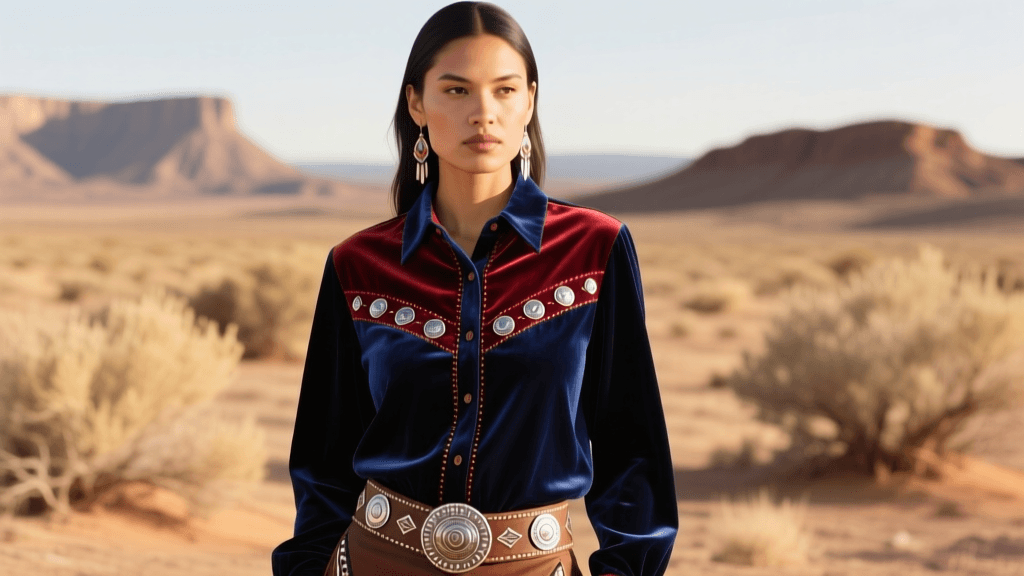
The traditional Diné velvet shirt is a marvel of bespoke tailoring. Unlike standard western shirts, the velvet shirt is characterized by its high, mandarin-style collar, long sleeves with tight, buttoned cuffs, and a tailored fit that tucks neatly into trousers or a traditional woven skirt. In 2026, master Diné tailors and contemporary Indigenous fashion houses continue to use high-grade, crush-resistant cotton velveteen, favoring deep jewel tones such as sapphire blue, emerald green, burgundy, and classic black.
The Silver Buttons
The most striking feature of the velvet shirt is its buttons. Historically, these were actual US silver dimes and quarters, soldered with a loop on the back and sewn onto the garment. As silver became more valuable and coins harder to source for everyday wear, Diné silversmiths began casting and stamping custom silver buttons. A full set of hand-stamped sterling silver buttons for a velvet shirt in 2026 can feature intricate geometric patterns, sand-cast textures, or inlaid turquoise cabochons, elevating the shirt from a simple garment to a wearable art piece.
The Biil (Woven Sash)
While the velvet shirt is the uppermost layer, it is almost always secured or accented by a biil, a traditional hand-woven wool sash. The sash wraps around the waist, providing a striking textural contrast to the smooth velvet and the hard, reflective silver of the concho belt worn over it. The ends of the sash, featuring complex diamond or zigzag weaves, hang down the side of the leg, creating a dynamic silhouette in motion.
Concho Belts: Mastery of Silver and Stone
No discussion of Diné dress is complete without the concho belt. The word 'concho' derives from the Spanish word for shell, but in the context of Native American jewelry, it refers to the large, oval or round silver plates that are strung together on a heavy leather strap. The evolution of the concho belt is generally divided into three distinct phases, and understanding these phases is critical for collectors and buyers in the 2026 market.
- First Phase (1870s–1890s): These early belts were made from melted silver coins. The conchos were solid silver with a diamond-shaped cutout in the center, through which the leather strap was threaded. They featured minimal stamping and no gemstones.
- Second Phase (1890s–1920s): Silversmiths began soldering copper loops to the back of the conchos, allowing the leather to pass behind the silver. This freed up the face of the concho for more elaborate stamping, chisel work, and the occasional placement of a single, small turquoise stone in the center.
- Third Phase (1920s–Present): This era introduced the heavy use of turquoise. The face of the concho became a canvas for intricate silver stamping surrounded by clusters of high-grade turquoise, and eventually, butterfly-shaped spacer plates were added between the main conchos.
In 2026, the scarcity of natural, untreated turquoise from historic mines like Sleeping Beauty and Kingman has driven up the value of vintage third-phase belts, while contemporary master silversmiths are experimenting with alternative stones like lapis lazuli, red coral, and gaspeite to meet modern aesthetic demands while maintaining traditional techniques.
Regional Variations in Diné Silverwork
While the velvet shirt and concho belt are universally recognized as Diné, the silverwork itself varies significantly depending on the region of the vast Navajo Nation. Buyers in 2026 should be aware of these regional hallmarks when evaluating a piece's provenance.
| Region | Design Characteristics | Common Motifs & Techniques |
|---|---|---|
| Western Dinétah | Heavier silver gauge, bold and deep stamping, larger turquoise settings. | Sunburst patterns, heavy sand-casting, use of large, matrix-heavy turquoise. |
| Eastern Dinétah | Lighter, more delicate silverwork, intricate wirework, precise stone cutting. | Floral and leaf motifs (influenced by neighboring Pueblo and Spanish traditions), channel inlay. |
| Central Dinétah | Balanced approach, high polish, classic proportions. | Traditional geometric stamps, twisted square wire, classic oval cabochons. |
The Squash Blossom Necklace: The Perfect Companion
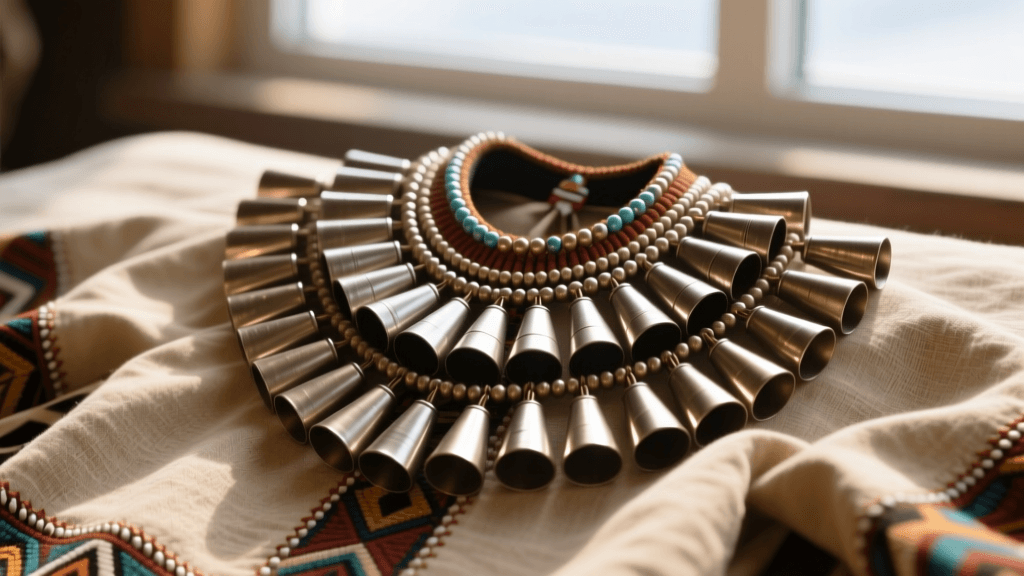
The velvet shirt and concho belt are traditionally anchored by the squash blossom necklace. Despite its name, the 'blossom' beads are actually stylized representations of pomegranate blossoms, a motif introduced by Spanish colonizers. The centerpiece of the necklace is the naja, a crescent-shaped pendant that historically served as a protective amulet on horse bridles. In 2026, a master-crafted squash blossom necklace featuring natural, untreated turquoise and heavy sterling silver can easily command prices between $4,000 and $15,000, serving as both a profound cultural statement and a significant financial investment.
2026 Market Pricing and Collector's Guide
The market for authentic Indigenous North American garments and jewelry has matured significantly. In 2026, collectors and cultural enthusiasts must navigate a landscape where mass-produced, overseas imitations attempt to mimic the Diné aesthetic. Below is a current pricing guide for authentic, Diné-made velvet garments and silverwork.
| Item Category | Contemporary Masterwork (2026) | Vintage / Antique (Pre-1980) |
|---|---|---|
| Velvet Shirt (Bespoke, no buttons) | $450 - $800 | $300 - $600 (Condition dependent) |
| Custom Silver Button Set (12-15 pcs) | $350 - $900 | $800 - $2,500 (Coin silver) |
| Third Phase Concho Belt (Turquoise) | $2,500 - $8,000 | $10,000 - $35,000+ |
| Squash Blossom Necklace | $1,800 - $6,000 | $5,000 - $20,000 |
Note: Prices fluctuate based on the renown of the artisan, the quality and origin of the turquoise, and the weight of the sterling silver used.
Ethical Sourcing and Avoiding Imitations
As the global appreciation for Indigenous fashion grows, so does the proliferation of counterfeit goods. In 2026, it is more important than ever to ensure that your purchases directly support Native artisans and comply with federal law. The Indian Arts and Crafts Board strictly enforces the Indian Arts and Crafts Act, which makes it illegal to offer or display for sale any art or craft product in a manner that falsely suggests it is Indian-produced. When buying a Diné velvet shirt, concho belt, or turquoise jewelry, always demand a certificate of authenticity that includes the artist's name, tribal affiliation, and the materials used.
For the most secure and ethical purchasing experience, buyers should look to tribally owned enterprises. The Navajo Arts and Crafts Enterprise (NACE) remains the premier, officially sanctioned source for authentic Diné crafts. Purchasing through NACE or reputable, established galleries that maintain direct relationships with Navajo silversmiths and tailors ensures that your investment honors the cultural heritage of the maker and sustains the local Indigenous economy.
Furthermore, institutions like the Smithsonian National Museum of the American Indian offer extensive digital archives and educational resources. Utilizing these archives allows buyers to study the hallmarks, stamping techniques, and construction methods of genuine historical pieces, making them far more discerning and respectful participants in the 2026 Indigenous art market.
Conclusion: A Living Tradition
The Diné velvet shirt and concho belt are not relics of a bygone era; they are living, breathing components of contemporary Indigenous North American dress. In 2026, a new generation of Diné designers and silversmiths are pushing the boundaries of these traditions, incorporating modern tailoring techniques and sustainable silver sourcing while fiercely protecting the spiritual and cultural core of their craft. By understanding the history, regional nuances, and ethical sourcing requirements of these magnificent garments, collectors and wearers alike can participate in the ongoing story of Diné resilience, beauty, and artistic supremacy.