Diné Biil Woven Dress Traditions: 2026 Revival Guide
The Spiritual and Cultural Origins of the Biil
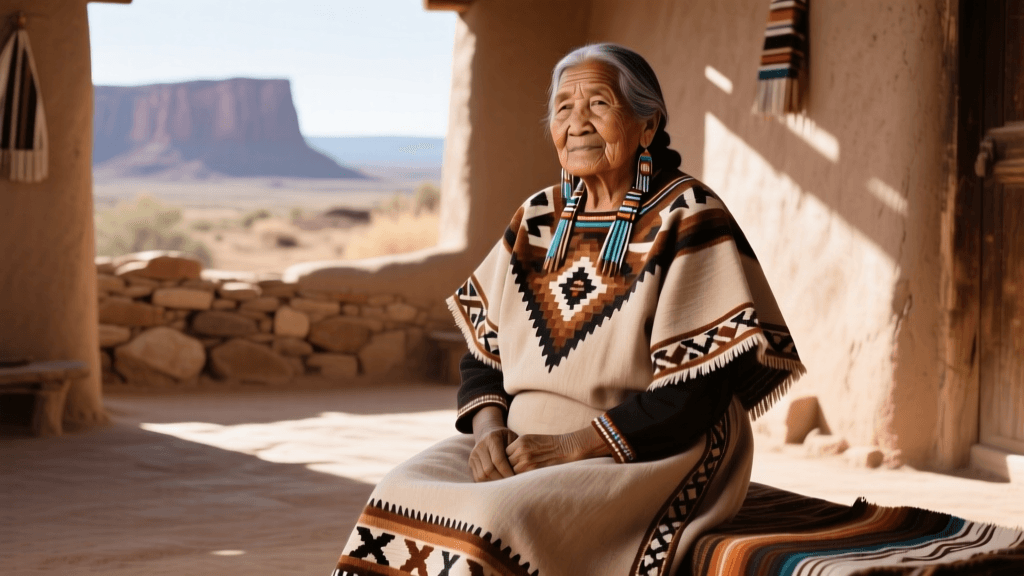
The biil (often referred to in English as the Navajo rug dress or blanket dress) is far more than a simple garment; it is a profound expression of Diné (Navajo) cosmology, identity, and resilience. In Diné tradition, the art of weaving was not merely invented but gifted by the Holy People. According to oral histories, Spider Woman (Na'ashjé'íí Asdzáá) taught the Diné how to weave, while Spider Man constructed the first loom using tools made of sky, earth, sunrays, and rock crystal. This spiritual foundation means that every traditional biil woven today carries the blessing and protection of these deities.
Historically, before the devastating forced relocation known as the Long Walk in the 1860s, Diné women wore the biil as everyday and ceremonial attire. The garment consists of two identical rectangular panels woven to exact measurements, which are then laced together at the shoulders and down the sides, leaving openings for the head and arms. A woven sash or belt is tied around the waist. Today, in 2026, the biil is experiencing a massive cultural renaissance, worn with immense pride by Diné women at graduations, political inaugurations, powwows, and sacred ceremonies.
Anatomy and Construction: Weaving Without Cutting
One of the most remarkable aspects of the traditional biil is that the fabric is never cut. Unlike Western tailoring, which relies on cutting woven cloth into patterns and sewing the pieces together, a Diné weaver creates the garment directly on the upright loom. The weaver envisions the final dimensions and weaves the panels to the exact size required by the wearer. This technique, known as "weaving to shape," ensures that the spiritual integrity of the continuous thread is never severed.
The upright loom itself is a marvel of Indigenous engineering. The warp (the vertical threads) is continuous, looped around the top and bottom beams. As the National Park Service notes regarding traditional Canyon de Chelly weaving practices, the continuous warp allows for a seamless edge and immense structural durability. The weaver uses a wooden batten to separate the warp threads and a comb-like fork to pack the weft (horizontal threads) tightly, creating a dense, weather-resistant textile that can last for generations.
Regional Variations and Textile Palettes
While the structure of the biil remains consistent, the visual language of the weaving varies dramatically by region. Trading posts in the late 19th and early 20th centuries influenced local color palettes and motifs, leading to distinct regional styles that are still fiercely protected and celebrated by master weavers in 2026.
| Regional Style | Key Characteristics & Motifs | Dominant Color Palette |
|---|---|---|
| Ganado | Central medallions, bold geometric diamonds, and strong symmetry. Often features a distinct border. | Deep commercial red, black, white, and natural grey. |
| Two Grey Hills | Highly complex, fine-spun geometric borders and stepped terraces. Renowned for exceptional wool quality. | Strictly natural wool colors: brown, black, white, and carded greys. |
| Wide Ruins | Horizontal banded patterns, stepped motifs inspired by local ancestral Puebloan ruins. | Earth tones, pastel greens, soft reds, and natural browns. |
| Teec Nos Pos | Intricate, highly detailed designs often compared to Persian rugs. Features complex interlocking geometries. | Vibrant mix of commercial and natural dyes, including bright reds, greens, and purples. |
The Navajo-Churro Sheep: Heart of the Garment
A true biil cannot be discussed without honoring the source of its wool: the Navajo-Churro sheep. Brought to the Americas by Spanish colonizers in the 16th century, the Churro sheep adapted perfectly to the harsh, arid climate of the Colorado Plateau. Their fleece is unique, featuring a long, lustrous outer coat and a soft inner coat, with very little lanolin, making it incredibly easy to clean and spin by hand.
The Churro flock faced near-extinction twice in history—once during the Kit Carson campaigns of the 1860s and again during the US government's livestock reduction programs in the 1930s. However, thanks to relentless grassroots preservation efforts, the breed has survived. According to the Navajo-Churro Sheep Association, 2026 has seen a remarkable surge in youth-led and women-led Churro flocks across the Navajo Nation, ensuring a sustainable, ethical, and culturally resonant supply of wool for contemporary weavers.
2026 Revitalization: Youth, Cooperatives, and Wearable Art
As of 2026, the Diné weaving community is undergoing a vibrant revitalization. Immersion schools and chapter-house cooperatives are pairing elder master weavers with Gen Z and Gen Alpha youth, teaching not only the physical mechanics of carding, spinning, and weaving but also the Diné language and songs associated with the loom. This intergenerational knowledge transfer is critical, as it transforms the biil from a historical museum artifact into a living, breathing element of modern Indigenous fashion and ceremony.
In contemporary settings, the biil is frequently paired with modern accessories, such as turquoise and silver squash blossom necklaces, concho belts, and even contemporary footwear. It is increasingly common to see Diné female graduates wearing a custom-woven biil over their academic regalia, a powerful visual assertion of Indigenous sovereignty and academic achievement. The 2026 iteration of major cultural gatherings, such as the Santa Fe Indian Market and the Navajo Nation Fair, have featured dedicated "Wearable Art" categories, elevating the biil to the forefront of global Indigenous textile arts.
A Guide to Ethical Acquisition in 2026
For collectors, museums, and supporters of Indigenous arts, purchasing a hand-woven biil or textile is a significant investment. In 2026, the market for authentic, hand-spun, naturally dyed Navajo textiles is robust, but it is also plagued by mass-produced, overseas knockoffs that exploit Diné cultural intellectual property. To ensure your purchase ethically supports the community, follow these actionable guidelines:
- Buy Direct or Through Verified Cooperatives: Seek out established, Native-owned cooperatives such as the Diné be'ína' (Navajo Lifeways) or purchase directly from artists at reputable, juried markets. The School for Advanced Research Indian Arts Research Center also provides excellent resources and ethical sourcing guidelines for collectors.
- Understand the Pricing: A genuine, hand-woven biil requires hundreds of hours of labor—from shearing and washing the raw fleece, to hand-carding and spinning the yarn, to months at the loom. In 2026, expect to pay between $4,500 and $8,000 for a high-quality dress woven by an emerging artist, while master weavers utilizing rare, hand-dyed Churro wool command prices ranging from $10,000 to well over $18,000.
- Ask About the Materials: Ethical weavers are proud of their materials. Ask the artist about the source of their wool and the origin of their dyes (such as wild walnut hulls for black, sagebrush for yellow, or cochineal for red). If a seller cannot provide details about the spinning and dyeing process, proceed with caution.
- Look for the "Inspired Natives" Label: Be highly critical of commercial fashion brands using Southwestern geometric patterns. Always look for certifications or labels that guarantee the garment was created by a Native American artist, complying with the Indian Arts and Crafts Act.
Conclusion
The Diné biil is a masterclass in sustainable fashion, spiritual engineering, and cultural endurance. It is a garment that wraps the wearer in the history of the land, the resilience of the Churro sheep, and the protective songs of Spider Woman. As the 2026 revitalization movement continues to empower a new generation of weavers, the biil stands as a brilliant testament to the fact that Indigenous North American dress traditions are not relics of the past, but dynamic, evolving expressions of the future.