Navajo Diné Traditional Dress: Biil & Velvet in 2026
Introduction to Diné Sartorial Heritage
The sartorial traditions of the Diné (Navajo) people represent a profound intersection of resilience, artistry, and cultural identity. In 2026, Indigenous fashion and traditional garment revitalization are experiencing a massive renaissance across the Southwest. While contemporary Native designers frequently make headlines on global runways, the foundational garments of the Diné remain the bedrock of cultural expression, worn with immense pride at ceremonies, graduations, powwows, and daily life on the reservation. Understanding the evolution, construction, and modern sourcing of Diné traditional dress requires a deep dive into both ancient weaving practices and the adaptive history of the 19th century.
For collectors, cultural enthusiasts, and Indigenous artisans looking to create or preserve these garments in 2026, navigating the world of Diné textiles means understanding the profound spiritual significance woven into every thread. As documented by the Smithsonian National Museum of the American Indian, Navajo textiles are not merely clothing; they are architectural maps of the universe, reflecting the teachings of the Holy People and the geographical boundaries of Dinétah (the Navajo homeland).
The Biil Dress: Two-Piece Woven Mastery
Long before the introduction of European trade goods, Diné women wore the biil, a traditional two-piece woven dress. The biil is a masterclass in textile engineering and spiritual discipline. Woven on an upright Pueblo-style loom, the biil consists of two identical rectangular panels of handspun, hand-dyed wool. These panels are placed over the shoulders and tied together at the sides and shoulders with woven sashes or, in later years, silver pins and brooches.
The Spiritual Architecture of the Loom
The creation of a biil is governed by the teachings of Na'ashjé'íí Asdzáá (Spider Woman), who instructed the Diné on how to weave. The loom itself is a sacred microcosm: the cross poles represent the sky and earth, the warp sticks represent the sun's rays, and the batten represents the sun's halo. In 2026, master weavers continue to honor these protocols, often beginning their work at dawn and offering prayers before the first thread is strung. The geometric patterns—ranging from terraced diamonds representing the four sacred mountains to zigzag lightning motifs—are never merely decorative. They serve as protective barriers and spiritual pathways for the wearer.
Contemporary Biil Weaving in 2026
Today, a fully handspun, naturally dyed biil dress is considered a high-end collector's item and a priceless family heirloom. The warp is traditionally spun tightly from the fleece of the Navajo Churro sheep, a breed that was nearly eradicated in the late 19th and early 20th centuries but has seen a robust, community-led resurgence. Artisans in 2026 are utilizing revived Churro flocks to produce wool that is exceptionally long-stapled, lustrous, and durable, perfectly suited for the high-tension warp threads required for a garment that must withstand decades of wear.
The Velvet Shirt and Skirt: Post-Long Walk Elegance
If the biil represents the ancient, spiritual connection to the land, the velvet shirt and tiered skirt represent the Diné's unparalleled ability to adapt, survive, and transform adversity into beauty. Following the tragic forced relocation known as the Long Walk (Hwéeldi) in 1864, the U.S. government issued annuity goods to the Diné upon their return to a reduced reservation in 1868. Among these rations were bolts of cotton velveteen, calico, and muslin.
The Anatomy of the Velvet Shirt
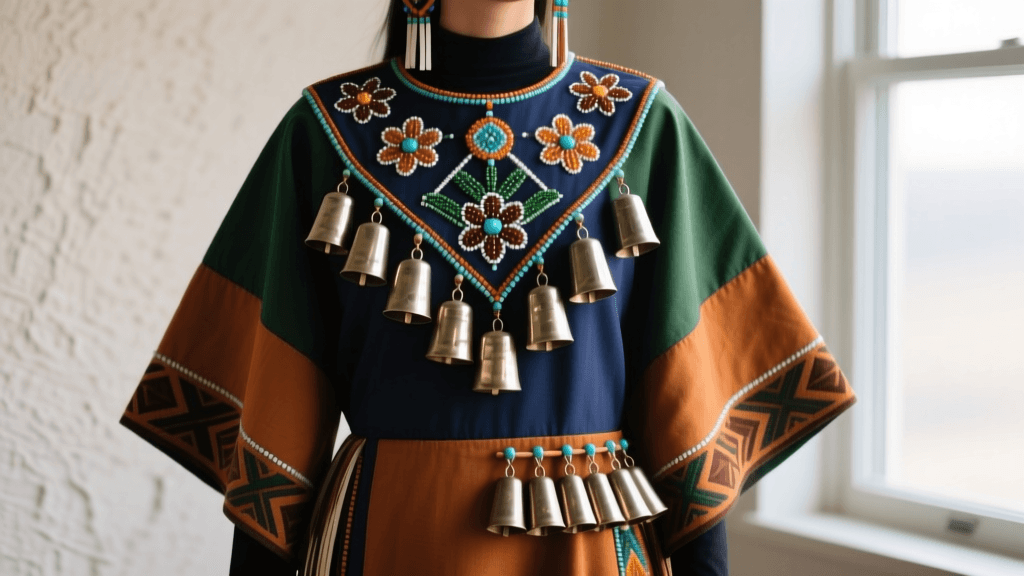
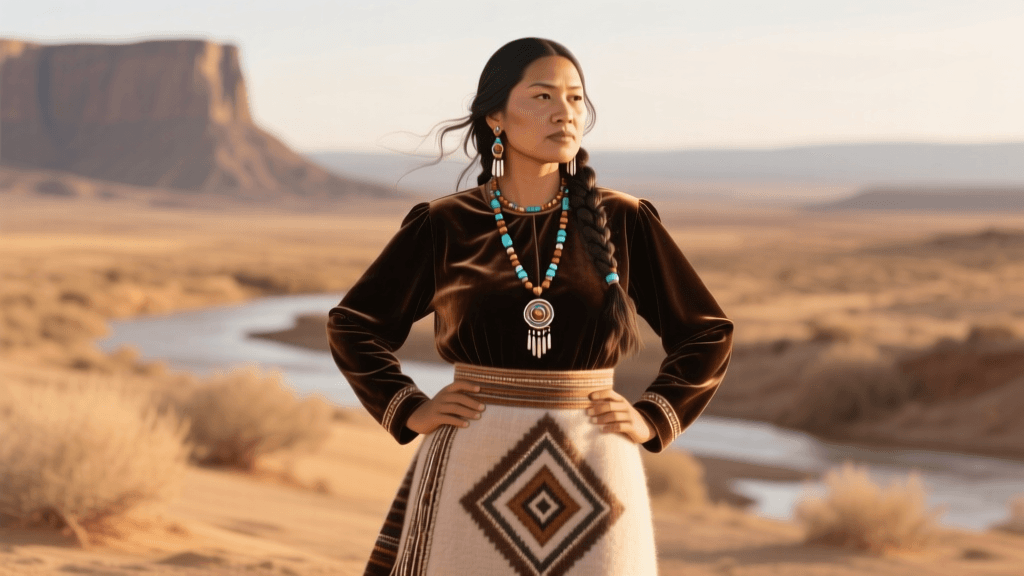
Diné women quickly adapted this foreign material into a garment that would become globally recognized as traditional Navajo dress. The classic velvet shirt features a high, mandarin-style collar, long sleeves with subtle gathering at the cuffs, and a fitted bodice that flares slightly at the hips. It is almost universally adorned with rows of silver concho buttons or dimes sewn along the front placket and down the sleeves. In 2026, the velvet shirt remains the standard formal wear for Diné women attending chapter house meetings, university graduations, and sacred Yeibichai dances.
The Tiered Skirt and the Manta
Paired with the velvet shirt is the traditional tiered skirt, usually crafted from three or four horizontal flounces of calico or velvet, gathered to create a sweeping, elegant silhouette. For more formal or ceremonial occasions, women may drape a woven manta (a rectangular rug-style shawl) over the shoulders, secured at the right side with a large, hand-stamped silver concho pin. The interplay of the deep, rich jewel tones of the velvet—such as sapphire blue, emerald green, and deep burgundy—with the bright, oxidized silver and turquoise jewelry creates a visual impact that is distinctly Diné.
Material Sourcing Guide for Artisans in 2026
For contemporary Diné seamstresses and weavers, sourcing authentic, high-quality materials is paramount. The market in 2026 has seen a shift toward supporting Indigenous-owned supply chains and sustainable agriculture. Below is a comprehensive guide to sourcing materials for traditional Diné garments this year.
| Material | Best Application | 2026 Sourcing Notes & Recommendations | Estimated Cost |
|---|---|---|---|
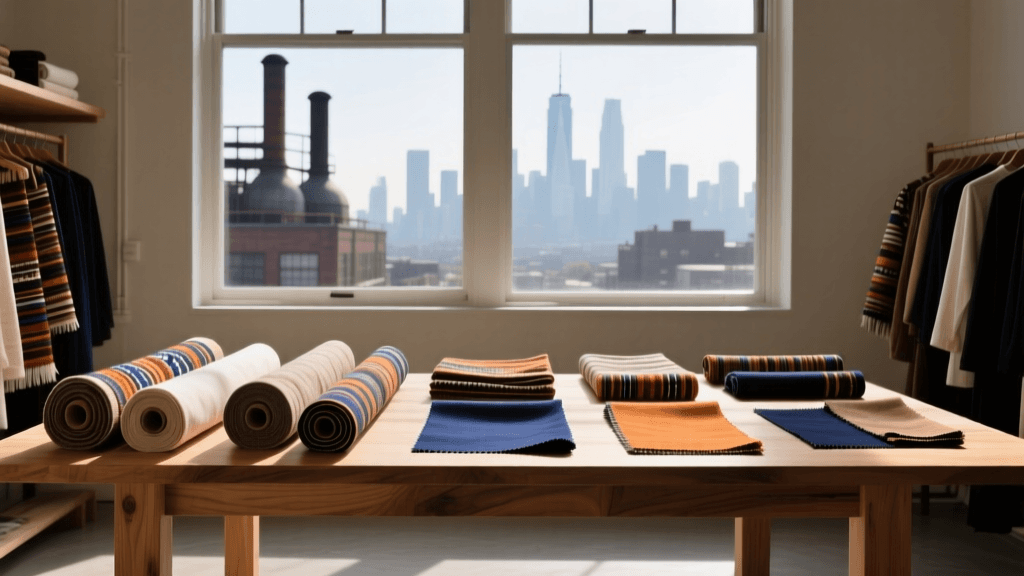
| Navajo Churro Wool (Raw Fleece) | Handspun yarn for Biil warp and weft | Source directly from the Navajo Churro Sheep Association or Diné-owned ranches in the Tuba City and Chinle regions. Look for double-coated fleeces. | $18 - $28 per lb |
| Cotton Velveteen (Heavyweight) | Velvet shirts, bodices, and skirts | Seek out 100% cotton velveteen (not polyester blends) for breathability and historical accuracy. Specialty textile importers in the Southwest carry 'reservation grade' heavy nap. | $24 - $35 per yard |
| Sterling Silver Conchos | Shirt buttons, belt accents, shawl pins | Support local silversmiths in Gallup or Window Rock. Hand-stamped and sandcast pieces hold higher cultural and monetary value than machine-stamped tourist items. | $45 - $150 per piece |
| Woven Sash Belts | Tying the Biil dress at the shoulders | Look for warp-faced tablet weaving or rigid heddle techniques using tightly spun 3-ply wool. Often traded or purchased at the Gallup Inter-Tribal Indian Ceremonial. | $120 - $300 each |
When purchasing silver, the Navajo Nation Official Site frequently promotes local artisan cooperatives that guarantee the authenticity of sterling silver and natural turquoise, protecting buyers from the influx of mass-produced, imported imitation jewelry that floods border-town markets.
Adornment: Turquoise, Coral, and Silver
No discussion of Diné traditional dress is complete without addressing the monumental role of jewelry. The squash blossom necklace, featuring the iconic naja (crescent-shaped pendant) and pomegranate-inspired silver beads set with turquoise, is a cornerstone of Navajo formal wear. In 2026, there is a strong movement among Diné jewelers to return to using natural, untreated turquoise from closed or protected mines, such as the Bisbee or Number 8 mines, rather than stabilized or dyed stones.
Red coral, introduced via trade routes centuries ago, provides a striking chromatic contrast to the blue-green turquoise and the dark velvet of the clothing. Men's traditional dress, while less frequently discussed than women's, is equally striking. Diné men often wear velvet shirts paired with heavy, hand-tooled leather belts featuring large silver buckles, and traditional moccasins wrapped in yarn or adorned with silver conchos.
Preservation and Archival Care of Heirloom Garments
Because traditional Diné garments are often passed down through generations as sacred family inheritance, proper preservation is critical. The arid climate of the Southwest can be both a preserver and a destroyer of textiles; while low humidity prevents mold, intense UV radiation and extreme temperature fluctuations can shatter silk threads and fade natural dyes.
Storing Woven Wool (Biil and Mantas)
- Avoid Mothballs: Never use chemical mothballs on Navajo Churro wool. The chemicals can degrade the lanolin and permanently alter the scent and integrity of the handspun yarn.
- Natural Deterrents: Use blocks of untreated cedar or sachets of dried sage and lavender to deter textile pests.
- Rolling, Not Folding: Heavy woven garments should be rolled around acid-free cardboard tubes buffered with unbleached cotton muslin. Folding a biil dress can cause permanent stress fractures in the warp threads over time.
Caring for Velvet and Silver
Velvet is highly susceptible to 'crushing' of the nap. In 2026, museum conservators recommend storing velvet shirts on padded, wide-shoulder hangers covered in acid-free tissue to prevent shoulder dimples. If the velvet becomes crushed, it should be gently steamed from a distance of at least 12 inches; never let an iron touch the surface of cotton velveteen. Silver conchos sewn directly onto the velvet should be polished with a soft, dry microfiber cloth. Avoid liquid silver dips, as the harsh chemicals can stain the surrounding velvet fabric and strip the intentional oxidation (patina) that highlights the silversmith's hand-stamped designs.
Conclusion
The traditional dress of the Diné people is a living, breathing testament to survival and aesthetic brilliance. From the ancient, spiritually guided loom work of the biil dress to the adaptive, regal elegance of the velvet shirt and tiered skirt, these garments tell the story of a nation that refused to be erased. As we move through 2026, the continued revitalization of Navajo Churro sheep flocks, the support of local silversmiths, and the meticulous preservation of heirloom textiles ensure that the sartorial voice of the Diné will continue to resonate powerfully across the Americas. For those studying or participating in Indigenous fashion, understanding the deep roots and precise material requirements of these garments is the first step in honoring the culture that created them. Institutions like the Wheelwright Museum of the American Indian remain vital resources for those wishing to study the historical continuity of these magnificent textile traditions.