Crow Elk Tooth & Diné Biil: 2026 Regional Indigenous Dress Guide
Introduction to Regional Indigenous Dress in 2026
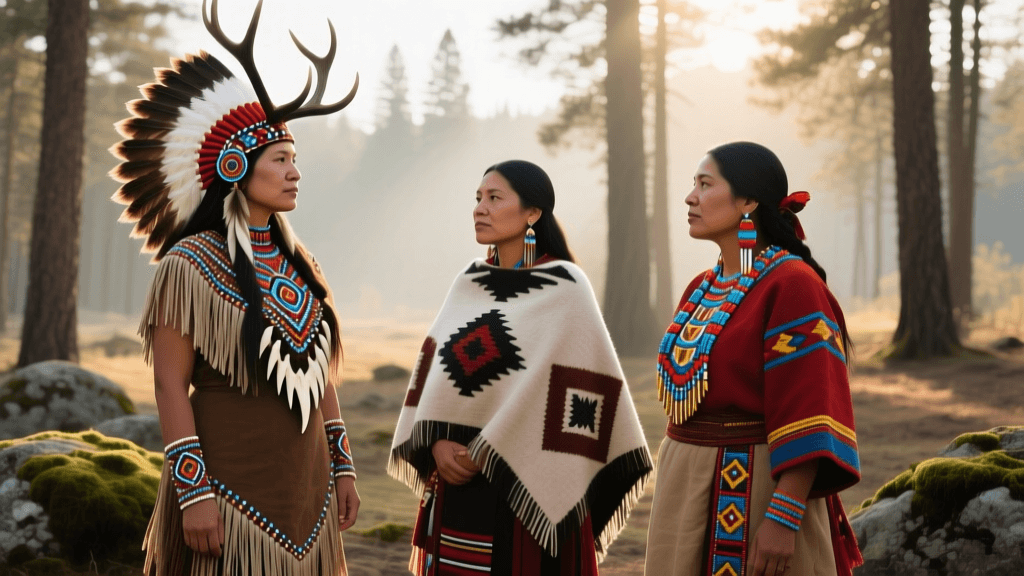
The landscape of Indigenous North American dress is as vast and varied as the continent itself. Far from being a monolith, tribal regalia and traditional garments are deeply rooted in regional ecosystems, ancestral teachings, and the specific materials provided by the land. As we navigate the cultural renaissance of 2026, there is a profound resurgence in the creation, preservation, and wearing of traditional garments. Indigenous artisans are reclaiming ancestral techniques while adapting to modern ethical sourcing and contemporary supply chains.
Understanding these garments requires a regional approach. The materials used by the tribes of the Great Plains differ vastly from those of the arid Southwest or the forested Northeast. This guide explores three distinct regional dress traditions—the Apsáalooke (Crow) elk tooth dress of the Plains, the Diné (Navajo) woven biil of the Southwest, and the Haudenosaunee raised beadwork of the Northeast—detailing their construction, cultural significance, and the realities of sourcing and creating them in 2026.
The Plains: Apsáalooke (Crow) Elk Tooth Dresses
In the Northern Plains, the Apsáalooke (Crow) people are renowned for their breathtaking elk tooth dresses, known as axpe. Historically, these garments were the ultimate symbol of wealth, status, and the hunting prowess of a woman's male relatives. Because an elk possesses only two upper canine teeth (often referred to as ivory or 'buglers'), a single dress adorned with 300 to 400 teeth represents the harvest of over 150 elk, signifying immense community respect and familial dedication.
Construction and 2026 Sourcing Realities
Creating an authentic elk tooth dress in 2026 is a monumental task that requires both deep cultural knowledge and access to highly regulated materials. The teeth are meticulously cleaned, sanded, and drilled before being stitched onto a backing of trade cloth, stroud wool, or brain-tanned buckskin. The bodice is typically covered entirely in the ivory teeth, while the skirt features intricate geometric beadwork or quillwork.
Ethical sourcing is paramount today. In 2026, tribal wildlife agencies and state departments of fish and wildlife have implemented strict tagging and certification programs for elk ivory to prevent poaching and black-market trading. Artisans must purchase certified, ethically harvested teeth, which currently command premium prices. A single, high-quality, certified elk canine can cost between $25 and $45 in the 2026 market. Consequently, the materials alone for a full dress can exceed $10,000, with the finished, master-crafted garment often valued between $18,000 and $30,000, reflecting the hundreds of hours of meticulous hand-stitching required.
The Southwest: Diné (Navajo) Biil (Woven Dress)
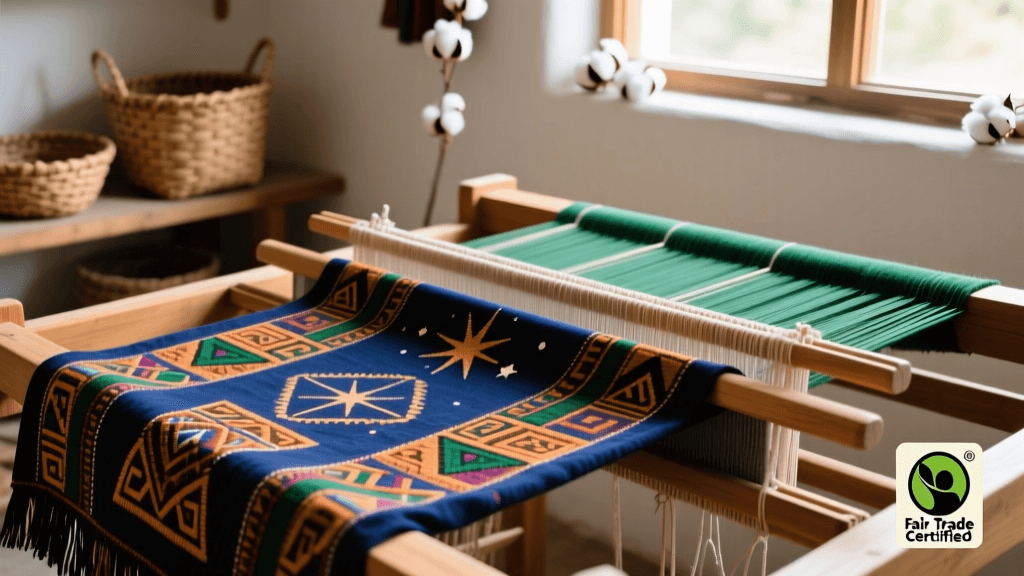
Traveling to the high deserts and canyons of the Southwest, the Diné (Navajo) people maintain the sacred tradition of the biil, a traditional two-piece woven dress. According to Diné cosmology, the art of weaving was taught to the people by Spider Woman (Na'ashjé'íí Asdzáá), who instructed them to use the sky, earth, and sun to create their tools and textiles. The biil is woven on an upright loom, a practice that has remained fundamentally unchanged for centuries.
Materials, Dyes, and the 2026 Textile Market
The biil consists of two rectangular panels woven to match perfectly, joined at the shoulders and laced up the sides with yarn ties. In 2026, the revitalization of the Navajo-Churro sheep breed has been a cornerstone of authentic textile creation. The Churro sheep produces a long-staple, low-lanolin wool that is ideal for hand-spinning and weaving. Premium, hand-carded, and hand-spun Churro wool roving currently costs between $45 and $70 per pound from Indigenous shepherding cooperatives on the reservation.
While commercial aniline dyes are available, master weavers in 2026 are increasingly returning to complex, time-honored botanical dyes. Wild walnut hulls yield rich browns, sagebrush produces soft yellows, and cochineal insects (sourced from prickly pear cacti) are fermented to create vibrant crimsons and deep purples. Weaving a full-sized biil requires immense physical endurance and mathematical precision, often taking 300 to 500 hours to complete. Due to the intensive labor and the high value of authentic, reservation-spun Churro wool, a master-weaver's biil typically starts at $4,500 and can reach upwards of $12,000 for pieces featuring complex, traditional terraced patterns and natural dyes.
The Northeast: Haudenosaunee Raised Beadwork and Regalia
In the woodlands of the Northeast, the Haudenosaunee (Iroquois) Confederacy—including the Mohawk, Oneida, Onondaga, Cayuga, Seneca, and Tuscarora nations—developed a highly distinctive style of garment decoration known as raised beadwork. Emerging heavily in the 19th century as a response to Victorian fashion and the tourist trade at Niagara Falls, Indigenous women adapted European glass beads and velvet to create deeply embossed, three-dimensional floral motifs that reflected their woodland environment.
Technique and Contemporary Preservation
Haudenosaunee women's regalia in 2026 frequently features velvet or heavy cotton calico skirts adorned with this spectacular raised beadwork. The technique involves laying down a thick cotton or wool stuffing thread, then stitching small glass seed beads tightly over the padding to create a raised, textured surface. The floral designs—featuring strawberries, ferns, and woodland blooms—are not merely decorative; they carry deep medicinal and spiritual significance.
The primary challenge for Haudenosaunee beadworkers in 2026 is the global supply chain for high-quality glass seed beads. Artisans rely heavily on antique or newly manufactured Czech glass seed beads (specifically sizes 13/0 and 15/0 Charlotte cut beads) for their uniform size and brilliant light refraction. Due to shifting international trade tariffs and supply bottlenecks affecting European glass exports in 2026, specialized Indigenous beadwork cooperatives have formed bulk-buying networks to secure authentic Czech beads, driving the cost of premium bead hanks up by roughly 15% over the last two years. Despite these hurdles, the transmission of raised beadwork remains robust, with community workshops ensuring the next generation of artists masters the complex, multi-layered stitching techniques.
Regional Dress Comparison Chart (2026)
| Region | Tribe / Nation | Garment | Primary Materials (2026) | Est. Creation Time | Est. Market Value |
|---|---|---|---|---|---|
| Great Plains | Apsáalooke (Crow) | Elk Tooth Dress (Axpe) | Certified Elk Ivory, Stroud Wool, Buckskin | 400 - 800 Hours | $18,000 - $30,000+ |
| Southwest | Diné (Navajo) | Woven Dress (Biil) | Hand-spun Churro Wool, Botanical Dyes | 300 - 500 Hours | $4,500 - $12,000 |
| Northeast | Haudenosaunee | Raised Beadwork Skirt | Velvet, Cotton Padding, Czech Glass Beads | 150 - 300 Hours | $2,500 - $6,000 |
Ethical Sourcing and Supporting Indigenous Artisans
As interest in traditional Indigenous garments grows in 2026, so does the prevalence of mass-produced, culturally appropriated knock-offs. For collectors, museums, and community members looking to acquire authentic regalia or textiles, it is critical to verify the origins of the pieces. The Indian Arts and Crafts Board (IACB) provides essential guidelines and legal frameworks to ensure that buyers are supporting verified Native American artists and cooperatives rather than overseas manufacturers exploiting Indigenous designs.
Furthermore, educational initiatives like the Smithsonian National Museum of the American Indian's Native Knowledge 360° program emphasize the importance of understanding these garments not as historical relics, but as living, evolving expressions of contemporary Indigenous identity. When purchasing materials or finished garments, buyers should prioritize direct relationships with tribal artisans, attend recognized Native art markets, and respect the ceremonial boundaries of certain sacred items that are never meant for commercial sale.
Conclusion
The dress traditions of Indigenous North America are a testament to the resilience, adaptability, and profound artistic vision of Native peoples. Whether it is the striking ivory-adorned elegance of a Crow elk tooth dress, the mathematical and spiritual mastery woven into a Diné biil, or the lush, three-dimensional floral landscapes of Haudenosaunee beadwork, these garments tell the story of the land and its original stewards. In 2026, the continued creation of these regional masterpieces ensures that ancestral knowledge remains a vibrant, wearable, and deeply respected part of everyday Indigenous life.