2026 Modern Hanbok Guide: Styling Jeogori With Streetwear
The Renaissance of Saenghwal Hanbok in 2026
The intersection of heritage and contemporary fashion has never been more vibrant than it is in 2026. While traditional Asian garments were once strictly reserved for ceremonies, holidays, or historical reenactments, the modern wardrobe has fully embraced the concept of saenghwal hanbok (daily life hanbok). Today, fashion-forward individuals are seamlessly integrating the structural elegance of Korean heritage pieces into their everyday streetwear and office attire. This shift is not merely a fleeting trend; it is a profound cultural movement that honors the past while adapting to the practicalities of modern life.
According to the UNESCO Intangible Cultural Heritage registry, the making and sharing of hanbok is a vital cultural practice that continues to evolve. In 2026, this evolution is characterized by sustainable textile innovations, gender-neutral silhouettes, and a deliberate departure from the restrictive, highly formal garments of the past. By mixing traditional pieces like the jeogori (the upper garment or jacket) with Western staples like wide-leg denim and tailored trousers, you can create a sartorial narrative that is entirely your own.
Decoding the Modern Jeogori
To successfully mix traditional Asian pieces with modern wardrobes, one must first understand the anatomy of the garments being adapted. The traditional jeogori is defined by its cropped length, curved sleeves (baerae), and the long, flowing ribbon ties known as goreum. However, the 2026 iterations of the jeogori designed for daily wear feature several crucial modifications:
- Abbreviated Goreum: Instead of floor-sweeping ribbons that can catch on subway doors or office chairs, modern daily jeogori feature shortened, stylized ties, or replace them entirely with hidden magnetic clasps and minimalist snap buttons.
- Adjusted Hemlines: The traditional hem hits just below the bust. Modern streetwear versions often extend the hem by two to three inches to provide more coverage when pairing with high-waisted bottoms, or crop it aggressively to sit exactly at the natural waistline for a bolero-like effect.
- Narrower Sleeves: While the dramatic, ballooning baerae is beautiful, 2026 daily wear often tapers the sleeve slightly at the forearm to allow for easier layering under oversized trench coats or blazers during transitional weather.
Color Theory: Translating Obangsaek for Modern Neutrals
Traditional Korean color theory is rooted in Obangsaek, the five cardinal colors: blue (east), red (south), yellow (center), white (west), and black (north). Historically, these were used in vibrant, high-contrast combinations for ceremonial hanbok. In 2026, integrating these colors into a modern streetwear wardrobe requires a more nuanced, muted approach.
Rather than pairing a bright crimson jeogori with a cobalt blue skirt, contemporary styling relies on extracting these hues and grounding them in modern neutrals. For example, a deep, oxidized rust (a modern take on traditional red) pairs beautifully with charcoal grey wide-leg trousers. A muted, dusty indigo (derived from traditional blue) acts as a perfect transitional layer over a crisp white organic cotton t-shirt. By treating the traditional colors as accent points rather than the entire canvas, you allow the unique silhouette of the garment to take center stage without overwhelming your personal aesthetic.
3 Actionable Ways to Style Jeogori with Contemporary Wardrobes
Moving beyond theory, here are three highly specific, actionable outfit formulas for integrating the jeogori into your 2026 rotation.
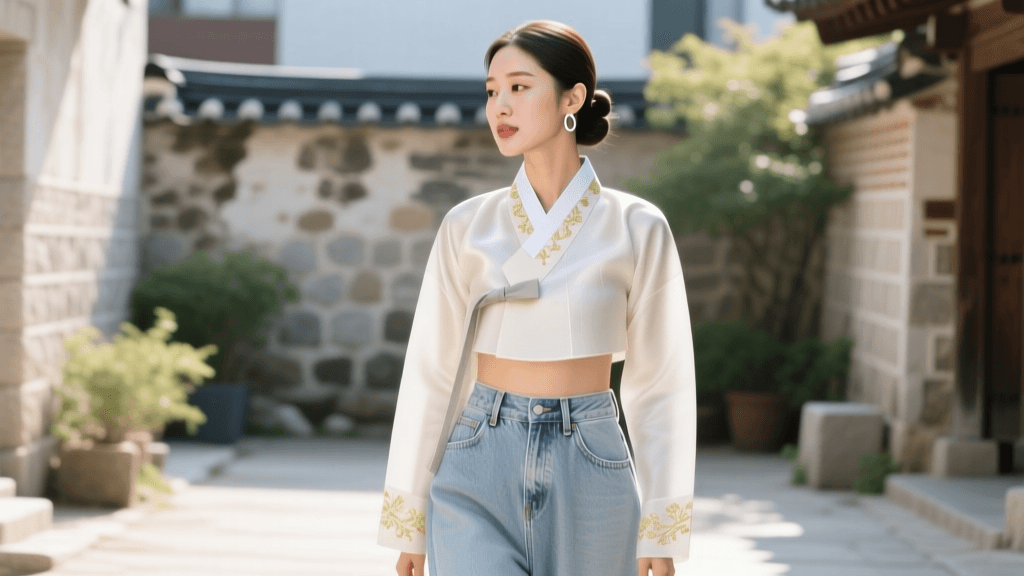
Look 1: The Streetwear Edge (Cropped Jeogori & Wide-Leg Denim)
This look plays with proportions, contrasting the structured, cropped nature of the top with the relaxed, flowing volume of modern denim.
- The Top: A white or ivory linen-cotton blend jeogori with a cropped hem hitting exactly 2 inches above the natural waistline. Look for versions with hidden snap closures instead of traditional ties for a cleaner, more minimalist streetwear vibe. (Expected 2026 cost: $85 - $120).
- The Bottom: Vintage-wash, high-waisted wide-leg denim with a 32-inch inseam. The denim should pool slightly over the shoe to emphasize the relaxed silhouette.
- The Footwear: Chunky leather loafers or retro-runner sneakers.
- Styling Note: Leave the jeogori unbuttoned at the top to reveal a simple ribbed tank top underneath, adding a layer of casual depth to the traditional neckline.
Look 2: The Office-Ready Turtleneck & Pleated Chima
The chima is the traditional wrap skirt. When adapted for the modern office, it transforms into a sophisticated, voluminous midi-skirt that commands respect while maintaining cultural elegance.
- The Top: A lightweight, black merino wool turtleneck, fully tucked into the skirt to maintain a sharp waistline.
- The Bottom: A high-waisted, midi-length pleated chima in a deep navy or forest green heavy crepe fabric. Modern 2026 designs often feature a discreet side-zipper and internal waist-stays to prevent the heavy skirt from slipping throughout the workday.
- The Layer: A structured, collarless wool blazer worn over the turtleneck. The collarless design mimics the traditional git (collar) of the hanbok, creating a cohesive visual language.
- The Footwear: Pointed-toe ankle boots with a modest block heel.
Look 3: Transitional Layering (Long-line Jeogori as a Duster)
For spring and autumn, designers have reimagined the jeogori as an open-front duster jacket, blending the lines between traditional Korean outerwear and the Western trench coat.
- The Outerwear: An oversized, long-line jeogori (extended to the mid-thigh) crafted from a lightweight, unlined cupro fabric. The sleeves remain wide and dramatic, while the front is left entirely open.
- The Base: A simple, slip-style midi dress in a complementary neutral tone, or a monochromatic outfit consisting of a silk blouse and tailored cigarette trousers.
- The Accessories: A thick leather belt worn over the open jeogori at the natural waist. This cinches the voluminous fabric, creating an avant-garde, architectural silhouette that is highly popular in 2026 editorial fashion.
2026 Fabric & Care Guide for Blended Textiles
One of the primary barriers to adopting traditional garments into daily life is the difficulty of maintenance. Traditional silk hanbok requires specialized dry cleaning and careful storage. Fortunately, the 2026 market is dominated by innovative, low-maintenance textiles that mimic the drape and sheen of heritage fabrics. Below is a comparison chart to help you choose the right fabric for your lifestyle.
| Fabric Type | Best Use Case | 2026 Avg Price Range | Care Instructions |
|---|---|---|---|
| Washable Silk (Sand-washed) | Evening streetwear, date nights | $140 - $220 | Machine wash cold on delicate cycle; hang dry. Avoid direct sunlight to prevent fading. |
| Linen-Cotton Blend | Summer daily wear, casual outings | $85 - $130 | Machine wash warm; tumble dry low. Embrace the natural wrinkling as part of the wabi-sabi aesthetic. |
| Cupro (Vegan Silk) | Office wear, transitional layering | $110 - $160 | Dry clean recommended for structured pieces; hand wash for unlined dusters. Iron on low heat. |
| Heavy Crepe (Polyester blend) | Pleated Chima skirts, winter layering | $90 - $150 | Machine wash cold; hang dry. The synthetic blend ensures permanent pleats that will not drop over time. |
When investing in these modern textiles, always check the lining. The best 2026 daily hanbok brands utilize breathable, anti-static linings like Bemberg cupro, which prevent the garment from clinging to your modern base layers and ensure comfort during long commutes.
Sourcing Authentic Modern Pieces
As the global appetite for Asian traditional garments grows, it is crucial to source pieces from designers and brands that respect the cultural origins of the clothing while innovating for the future. The Victoria and Albert Museum has long championed the preservation and study of Asian textiles, noting that true appreciation involves understanding the construction and cultural context of the garments.
In 2026, the most reputable modern hanbok brands operate out of Seoul, offering global shipping and detailed size-conversion charts tailored for Western demographics. Look for brands that provide transparency regarding their textile sourcing and employ artisans trained in traditional chimseon (sewing) techniques, even when constructing modern silhouettes. Avoid mass-produced, fast-fashion knockoffs that misinterpret the structural integrity of the git (collar) or use cheap, non-breathable synthetics that ruin the drape of the garment.
Conclusion
Mixing traditional Asian pieces with modern wardrobes is an exercise in balance, respect, and personal expression. By understanding the structural nuances of the jeogori, adapting the Obangsaek color palette for contemporary neutrals, and selecting innovative, easy-care textiles, you can seamlessly weave Korean heritage into your 2026 daily rotation. Whether you are pairing a cropped silk jacket with vintage denim or cinching a long-line duster over a slip dress, the modern hanbok offers a sophisticated, culturally rich vocabulary for the contemporary wardrobe.