Tai Chi Practice Wear: Choosing the Right Traditional Uniform
The Philosophy Behind Tai Chi Practice Wear
Tai Chi (Taijiquan) is far more than a sequence of physical movements; it is a profound mind-body practice rooted in traditional Chinese philosophy, martial arts, and the cultivation of internal energy, or Qi. When practitioners step onto the mat or into the park at dawn, their clothing is not merely a fashion statement but a functional tool that facilitates deep breathing, grounded stances, and fluid motion. According to Harvard Medical School, Tai Chi is often described as 'medication in motion,' requiring deep diaphragmatic breathing and unhindered joint rotation. Therefore, the traditional Tai Chi uniform, known as Taijiquan fu, is specifically engineered to support these physiological and spiritual demands.
Unlike modern Western athletic wear, which often relies on tight, compressive synthetic fabrics to support muscles, traditional Chinese martial arts practice wear embraces a philosophy of 'wu wei' (effortless action). The garments are intentionally loose-fitting, allowing air to circulate around the body and ensuring that no restrictive seams impede the flow of blood, lymph, or Qi. Selecting the right uniform involves understanding the intersection of historical Chinese garment construction, textile properties, and the specific biomechanics of Tai Chi forms.
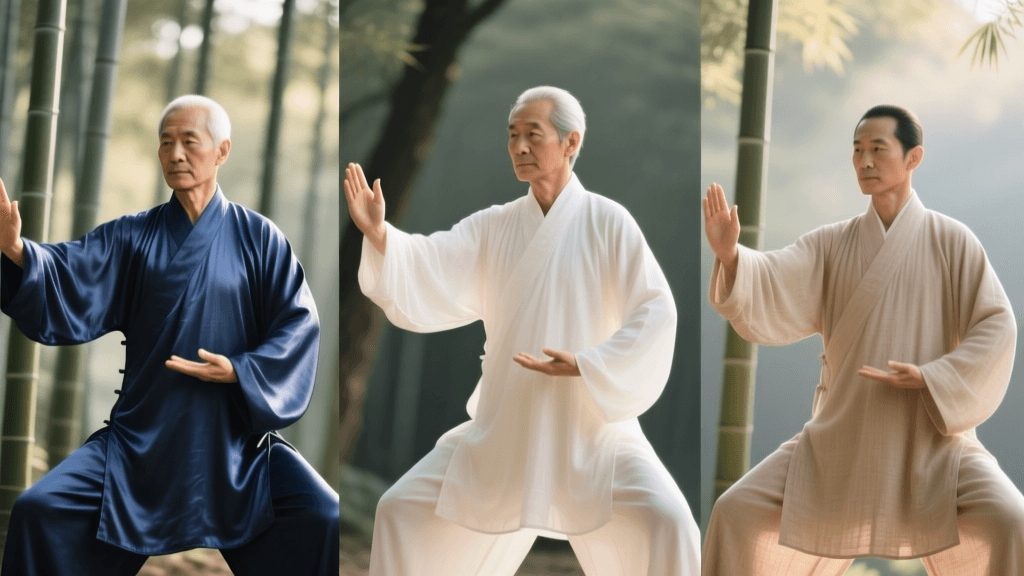
Traditional Silhouettes: Tangzhuang and Daoist Robes
When shopping for Tai Chi clothing, you will generally encounter three primary silhouettes, each with its own historical lineage and practical application:
- The Tangzhuang (Tang Suit): Characterized by a mandarin collar and traditional knotted frog buttons (pankou), the Tangzhuang is the most recognizable Tai Chi uniform. While its modern iteration was popularized in the late 20th century, it draws heavily from Qing dynasty riding jackets. It provides a sharp, dignified look ideal for demonstrations, competitions, and formal group practice.
- Modern Wushu/Tai Chi Suits: These are streamlined versions of traditional garments, often featuring elastic waistbands, hidden zippers beneath frog button plackets, and slightly tapered ankles to prevent tripping during low stances like the 'Snake Creeps Down'.
- Daoist Monastic Robes: Featuring a cross-collared (jiaoling) top and wide, flowing sleeves, these garments are favored by practitioners of internal arts who prefer a deeply traditional, monastic aesthetic. The wide sleeves accentuate the circular, sweeping arm movements of styles like Chen and Yang Tai Chi.
Fabric Comparison: Silk, Cotton, Linen, and Blends
The textile you choose drastically alters your practice experience. Historically, silk was the premier choice for Chinese nobility and martial arts masters. As noted by the Metropolitan Museum of Art, Chinese silk has been prized for millennia not only for its luxurious luster but for its remarkable tensile strength and temperature-regulating properties. Today, practitioners have a wider array of options.
| Fabric Type | Breathability | Drape & Movement | Durability | Best Use Case | Average Cost (USD) |
|---|---|---|---|---|---|
| 100% Mulberry Silk | High | Fluid, luxurious | Low (snags easily) | Competitions, indoor forms | $150 - $350+ |
| Raw Silk (Tussah) | Medium | Structured, crisp | Medium | Outdoor practice, demonstrations | $90 - $180 |
| Cotton/Linen Blend | Very High | Relaxed, slightly stiff | High | Daily practice, hot weather | $50 - $120 |
| Bamboo Viscose | High | Soft, stretchy | Medium | Qigong, gentle movement | $40 - $80 |
| Ice Silk (Synthetic) | Medium | Slippery, lightweight | High | Summer outdoor practice | $30 - $60 |
Pro Tip: Avoid heavy raw silk for daily summer practice. While it looks magnificent and holds the shape of the frog buttons beautifully, it can retain heat and become heavy with sweat. Opt for a cotton-linen blend for daily morning routines, and reserve the mulberry silk for formal performances.
Sizing and Fit: Measurements for Unrestricted Qi Flow
Ill-fitting Tai Chi wear can disrupt your center of gravity (the Dantian, located roughly two inches below the navel). When ordering traditional garments, especially from Asian tailors or specialized martial arts suppliers, standard Western sizing often falls short. Here is an actionable measuring guide to ensure a perfect fit:
1. The Tai Chi Top
- Chest/Bust: Measure around the fullest part of your chest. Add 4 to 6 inches to this measurement. The top must be loose enough that when you raise your arms overhead or cross them in front of your chest, the fabric does not pull across your back or shoulders.
- Sleeve Length: Measure from the base of your neck, across the shoulder, and down to the wrist bone. Traditional Tai Chi sleeves should end exactly at the wrist joint, allowing the hands to move freely without fabric obscuring the intricate finger positions (hand seals) used in Chen style.
- Length: The hem of the jacket should fall just below the hips, covering the belt line but not extending past the mid-thigh, which would restrict high knee raises.
2. The Tai Chi Pants
- The Rise (Crucial): Tai Chi pants must have a high rise, sitting at or slightly above the natural waist (near the navel). This secures the garment at your center of gravity and prevents the waistband from cutting into your lower abdomen during deep diaphragmatic breathing.
- Inseam: Measure from the crotch to the ankle bone. The pants should rest just above the shoe to prevent stepping on the hem during sweeping transitions.
- Thigh Room: Ensure the tailor provides a generous 'horse stance' measurement. You should be able to perform a deep squat (Pu Bu) without feeling tension in the inseam.
Footwear: Grounding Your Practice
No Tai Chi uniform is complete without the correct footwear. Modern running shoes feature thick, cushioned heels and elevated toe boxes that disrupt the body's natural alignment and sever the practitioner's tactile connection to the ground. Tai Chi requires 'rooting'—the ability to feel the earth and transfer kinetic energy from the ground up through the legs.
Invest in dedicated Tai Chi shoes. Brands like Feiyue (a classic Chinese martial arts shoe featuring a thin, flexible rubber sole and canvas upper) or Wu Xing (often made of soft leather with a flat sole) are industry standards. These shoes typically cost between $15 and $45. They provide just enough grip to prevent slipping on polished wood floors, while remaining thin enough to allow the toes to grip the ground and the arch to articulate naturally during weight shifts.
Seasonal Considerations for the Dedicated Practitioner
Traditional Chinese medicine (TCM) heavily influences how martial artists dress. TCM dictates that the joints and the back of the neck (the 'Wind Gate') must be protected from cold drafts, which are believed to cause stagnation and injury.
- Spring/Autumn: Layering is key. Wear a lightweight bamboo viscose undershirt beneath a cotton Tangzhuang. This traps a thin layer of insulating air while wicking away light perspiration.
- Winter: Practitioners often wear quilted cotton jackets or lined silk vests over their base uniforms. It is vital to keep the knees and lower back warm. Many traditional winter Tai Chi pants feature a fleece or quilted cotton lining.
- Summer: 'Ice silk' (a highly processed cellulose fiber blended with synthetics) is incredibly popular in modern Chinese parks. It feels cool to the touch and dries rapidly, though purists may prefer the natural breathability of unbleached linen.
Caring for Your Martial Arts Wardrobe
Traditional garments, particularly those made of silk or featuring delicate handmade frog buttons, require specific care to maintain their structural integrity and aesthetic beauty.
- Washing: Never machine-wash mulberry silk or raw silk. Hand wash in cold water using a pH-neutral detergent (like baby shampoo or specialized silk wash). Cotton and linen blends can be machine-washed on a gentle, cold cycle.
- Drying: Never wring out silk, as this breaks the delicate protein fibers. Roll the garment in a clean, dry towel to press out excess water, then lay it flat in the shade. Direct sunlight will rapidly degrade silk and fade natural dyes.
- Ironing: Use a low-heat setting and always place a cotton pressing cloth between the iron and the garment. Pay special attention to the collar and the frog buttons, ensuring they remain crisp and symmetrical.
Conclusion: Dressing the Mind and Body
Selecting the right Tai Chi practice wear is an investment in your martial arts journey. The right uniform acts as a physical boundary between the chaos of daily life and the meditative sanctuary of your practice. When you put on a well-fitted Tangzhuang or a flowing Daoist robe, you are engaging in a centuries-old ritual that signals to your brain that it is time to move, breathe, and cultivate internal harmony. As highlighted by extensive research from the Mayo Clinic regarding the profound stress-reducing benefits of Tai Chi, the environment and comfort you create for yourself directly impact the physiological rewards of the practice. Choose fabrics that breathe, respect the traditional measurements, and step onto the mat with confidence and grace.