How to Drape a Chiton: Ancient Greek Garments Guide 2026
The 2026 Revival of Classical Antiquity in Dress
The year 2026 has witnessed a profound resurgence in neo-classical fashion, historical reenactment, and theatrical costuming. From the runways of Milan to the meticulous gatherings of global historical societies, the drape of ancient Mediterranean garments has returned to the forefront of textile arts. Understanding the construction, drape, and cultural significance of the Greek chiton, the peplos, and the Roman toga is no longer just an academic exercise; it is a practical skill for designers, costumers, and heritage enthusiasts. Unlike modern tailored clothing, ancient European folk dress relied entirely on the geometry of the woven cloth, the strategic placement of pins, and the manipulation of gravity. This comprehensive guide explores the mechanics of these iconic garments, offering actionable advice on fabric sourcing, historical accuracy, and step-by-step draping techniques for the modern practitioner.
Understanding the Greek Chiton: Doric vs. Ionic
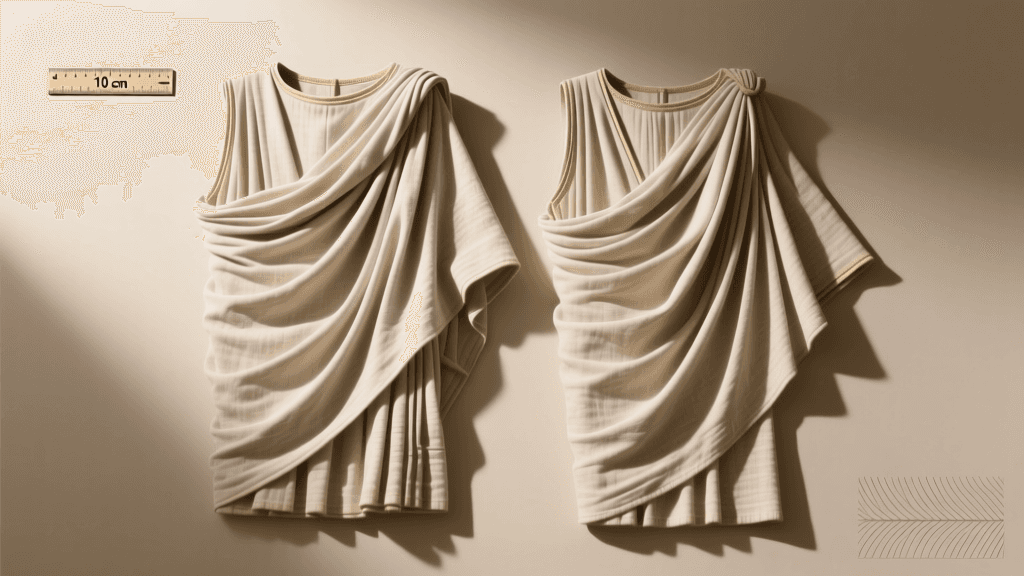
The chiton was the foundational garment of ancient Greece, worn by both men and women. According to the Metropolitan Museum of Art, the fundamental principle of Greek dress was that the fabric was never cut or sewn into complex shapes; instead, it was draped directly onto the body. However, the chiton evolved into two distinct styles: the Doric and the Ionic.
The Doric Chiton
The Doric chiton is the older, simpler form. It consists of a single large rectangle of fabric, typically wool or a medium-weight linen. The width of the fabric is determined by the wearer's height and the desired fullness, usually measuring about 1.5 times the wearer's wingspan. The fabric is folded in half vertically, wrapped around the body, and fastened at the shoulders with fibulae (ancient safety-pin-like brooches). The open side is often left unsewn, allowing for movement and revealing the leg in a manner that was culturally acceptable in ancient Greece. In 2026, historical costumers favor 150 to 200 GSM (grams per square meter) linen for the Doric chiton to achieve the heavy, sculptural folds seen in classical marble statuary.
The Ionic Chiton
The Ionic chiton emerged later and is characterized by its lighter fabric and more complex pinning. Made from fine, lightweight linen or even imported silk for the ultra-wealthy, the Ionic chiton is much wider than the Doric version. Instead of being pinned at just two points on the shoulders, the top edge is gathered and pinned at multiple intervals along the arms, creating the illusion of short sleeves. This style requires a much finer, more pliable textile to ensure the gathered sleeves drape elegantly rather than bulking up at the shoulders.
The Peplos: Heavy Wool and the Apoptygma
While the chiton was versatile, the peplos was the quintessential garment of the ancient Greek woman, deeply associated with the goddess Athena. The World History Encyclopedia notes that the peplos was exclusively a female garment, constructed from a heavy rectangular piece of wool. The defining feature of the peplos is the apoptygma—a deep overfold created by folding the top edge of the fabric down before wrapping it around the body. This overfold hung down to the waist or hips, providing extra warmth and creating a striking, layered silhouette. The peplos was pinned at the shoulders and belted at the waist. Because of the heavy wool required for an authentic apoptygma, modern recreations in 2026 often utilize ethically sourced, lightweight merino wool blends to prevent the garment from becoming uncomfortably heavy during extended wear at historical festivals.
Roman Garments: The Toga and the Stola
As Greek culture influenced the Roman Republic and Empire, Roman dress evolved to reflect strict social hierarchies and civic identity. The Romans adopted the basic tunic but elevated their outer garments to complex symbols of status.
The Toga: A Symbol of Citizenship
The toga is perhaps the most recognizable garment of antiquity, yet it is notoriously difficult to drape correctly. As detailed by the World History Encyclopedia's guide on the Toga, the garment was a massive, semi-circular or elliptical piece of white wool, measuring up to 18 feet in length and 7 feet in width. It was strictly reserved for male Roman citizens. The draping process involved throwing the fabric over the left shoulder, wrapping it around the back, under the right arm, and across the chest, before tossing the remaining fabric over the left shoulder again. The resulting folds created the sinus (a deep pouch across the chest) and the umbo (a decorative knot-like fold at the waist). In 2026, theatrical costumers often use hidden weights in the hem and subtle internal tacking stitches to maintain the toga's complex draping during dynamic stage performances, as the traditional method relies entirely on the wearer's posture and the friction of the wool.
The Stola: The Matron’s Garment
While men wore the toga, respectable Roman married women wore the stola. Worn over a basic tunica, the stola was a long, sleeveless dress suspended from the shoulders by small straps or brooches. Its most critical identifying feature was the instita, a decorative woven border at the hem and sometimes at the neckline. The stola was heavily belted, creating a high-waisted look that signified the wearer's modesty and social standing. Modern interpretations of the stola often incorporate historically accurate natural dyes, such as madder root for deep reds or woad for blues, to reflect the vibrant reality of Roman textiles, dispelling the modern myth of an entirely white classical world.
Sourcing Historically Accurate Textiles in 2026
Achieving an authentic drape requires the correct textile. The synthetic blends and heavily processed cottons of the early 21st century fail to mimic the behavior of ancient fibers. In 2026, the gold standard for historical accuracy relies on certified natural fibers:
- Linen: Seek out European Flax-certified linen. The long staple fibers provide the necessary strength and crispness for Ionic chitons and Roman tunics. A weight of 120-150 GSM is ideal for summer wear, while 200 GSM provides the structural integrity needed for Doric folds.
- Wool: For peplos and togas, avoid modern worsted wools which are too smooth and slippery. Instead, source woolen-spun yarns or lightly fulled wool fabrics that possess the 'bite' and friction necessary to keep heavy draped folds in place without excessive pinning.
- Fasteners: Modern safety pins are a historical anachronism. Invest in cast bronze or iron fibulae reproductions. The tension of a proper penannular or bow fibula is essential for securing heavy wool safely.
Comparative Analysis of Ancient Mediterranean Garments
| Garment | Origin | Primary Fabric | Shape / Cut | Fastening Method | Draping Complexity |
|---|---|---|---|---|---|
| Doric Chiton | Greece | Wool / Medium Linen | Rectangle | Shoulder Fibulae | Low |
| Ionic Chiton | Greece | Fine Linen / Silk | Wide Rectangle | Multiple Sleeve Pins | Medium |
| Peplos | Greece | Heavy Wool | Rectangle with Overfold | Shoulder Fibulae | Low |
| Toga | Rome | Heavy White Wool | Semi-Circle / Ellipse | Friction & Tension | Very High |
| Stola | Rome | Linen / Wool / Silk | Rectangle (Sewn Tube) | Straps / Pins | Medium |
Step-by-Step Guide: Draping the Doric Chiton
To achieve a historically accurate Doric chiton silhouette for a modern wearer, follow these precise construction and draping steps:
- Calculate the Fabric: Measure the wearer's height from the shoulder to the ankle. Add 12 inches to this measurement to allow for the kolpos (the bloused overhang created by the belt). This is your fabric height. For the width, measure the wearer's wingspan (fingertip to fingertip) and multiply by 1.2 for a standard fullness.
- Hem and Finish: Unlike modern garments, ancient edges were often finished with tablet-woven bands or simple rolled hems. In 2026, a serged and rolled hem is acceptable for hidden edges, but visible edges should feature a hand-stitched blanket stitch or an applied linen trim for authenticity.
- The Fold: Fold the fabric in half vertically (bringing the left and right sides together). The folded edge will sit on the wearer's left side, creating a closed seam, while the open edges will fall on the right side.
- Pinning the Shoulders: Wrap the fabric around the wearer's body. Gather the top edge at the front and back of the right shoulder and secure them together with a sturdy bronze fibula. Repeat this process on the left shoulder, ensuring the folded edge hangs straight down the left arm.
- Belting and the Kolpos: Tie a woven wool or linen cord tightly around the natural waist. Pull the fabric up and over the belt, allowing it to blouse out evenly all the way around. This overhang, the kolpos, should ideally fall to the hips, obscuring the belt entirely and creating the iconic classical silhouette.
- Final Adjustments: Adjust the neckline by pulling the fabric through the fibulae to widen or narrow the collar. Ensure the open side on the right leg falls gracefully, allowing for a natural stride.
Accessorizing the Classical Silhouette
No ancient garment was complete without its accompanying accessories. The himation was a heavy rectangular cloak worn over the chiton, draped diagonally across the body to provide warmth in the winter months. For modern winter reenactments, a heavily fulled wool himation is indispensable. Footwear also played a crucial role; the krepides (leather sandals with intricate lacing up the calf) and the kothornoi (elevated boots worn by actors) grounded the outfit. In 2026, bespoke leatherworkers specializing in historical footwear utilize vegetable-tanned leathers and hand-forged iron hobnails to recreate the durable, period-accurate footwear necessary for traversing uneven terrain at outdoor heritage festivals.
Conclusion
The mastery of the chiton, peplos, and toga lies not in complex tailoring, but in a deep understanding of textile physics, geometry, and historical context. As we move through 2026, the intersection of sustainable fashion and historical accuracy continues to drive a renaissance in ancient garment construction. By sourcing the correct natural fibers, utilizing authentic bronze fasteners, and respecting the traditional draping methods, modern creators can breathe life into the classical world, wearing history not as a costume, but as a living, breathing textile tradition.