Chinese Natural Dye Plants: Eco-Friendly Hanfu Dyeing Guide 2026
The Renaissance of Botanical Color in 2026
The global fashion industry's pivot toward circularity and zero-waste production has reached a critical milestone in 2026. Within the Asian Traditions sector, the resurgence of traditional Hanfu and heritage garments has been accompanied by a profound return to caodian—the ancient Chinese art of botanical dyeing. Modern consumers and eco-conscious designers are increasingly rejecting synthetic azo dyes, which are notorious for heavy metal contamination and water pollution, in favor of plant-based alternatives. Chinese natural dye plants not only offer a breathtaking spectrum of historically accurate colors but also align perfectly with contemporary sustainability metrics. According to the United States Environmental Protection Agency (EPA), the principles of green chemistry emphasize the use of renewable feedstocks and the design of degradable products. Traditional Chinese dye plants embody these principles natively, offering a closed-loop system where botanical waste can be composted and water effluent is non-toxic.
In this comprehensive 2026 guide, we explore the most prominent Chinese natural dye plants, their eco-friendly applications in modern Hanfu production, and actionable, step-by-step methodologies for achieving vibrant, colorfast results using sustainable mordants.
Top Chinese Natural Dye Plants for Sustainable Textiles
1. Chinese Indigo (Persicaria tinctoria)
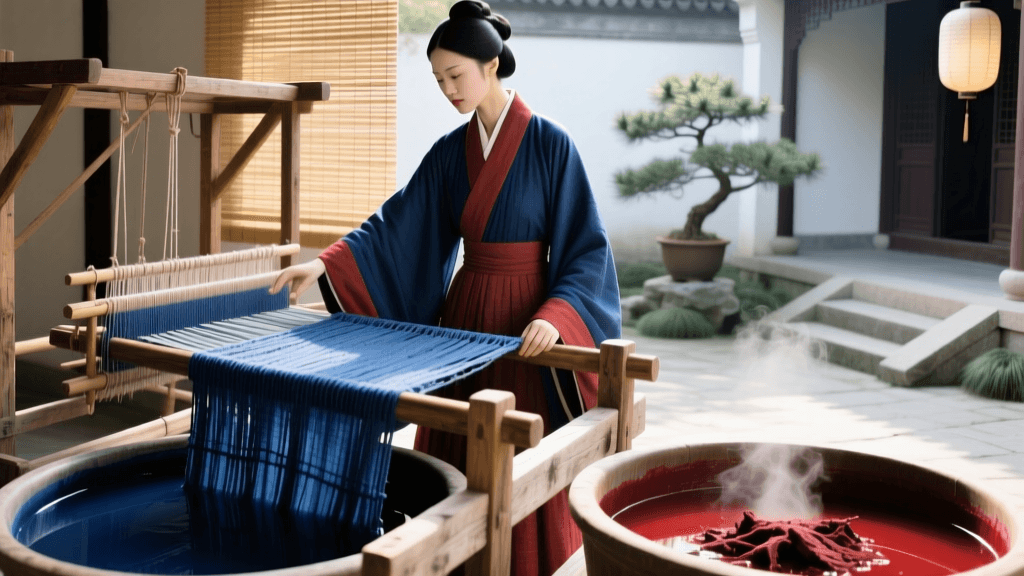
Historically known as Dian in China, Persicaria tinctoria (formerly classified as Polygonum tinctorium) is the cornerstone of traditional blue dyeing. Unlike synthetic indigo, which relies on petrochemical precursors like aniline, Chinese indigo is extracted through the fermentation of fresh leaves. The process yields indoxyl, which oxidizes into the iconic deep blue pigment upon exposure to air. In 2026, regenerative agriculture projects in southern China have optimized the cultivation of Persicaria tinctoria, ensuring that the plant actually improves soil nitrogen levels and prevents erosion. The resulting dye is entirely biodegradable and requires no heavy metal mordants, making it one of the most eco-friendly options for dyeing organic cotton and hemp Hanfu garments.
2. Chinese Madder (Rubia cordifolia)
Known as Qiancao, Chinese Madder has been used for millennia to produce rich reds, terracottas, and soft pinks. The primary coloring agent is alizarin, a compound that binds exceptionally well to protein fibers like silk and wool. The historical significance of madder is profound; as noted by The Metropolitan Museum of Art, madder and indigo were among the most vital and widely traded natural dyes in the ancient world, forming the backbone of historical textile economies. Today, sustainable Hanfu makers utilize the dried roots of Rubia cordifolia, which are harvested without killing the entire plant, allowing for continuous, low-impact yields. When paired with eco-friendly alum mordants, madder produces wash-fast reds that rival synthetic counterparts in longevity.
3. Gardenia (Gardenia jasminoides) and Amur Cork Tree
For brilliant, sunlit yellows, traditional dyers turn to the fruit of the Gardenia plant (Zhizi) and the bark of the Amur Cork Tree (Huangbo). Gardenia contains crocin, a water-soluble carotenoid that yields a vibrant, warm yellow directly without the need for a mordant, though lightfastness can be a challenge. To combat this, 2026 textile innovators often blend Gardenia extracts with natural UV-blocking tannins derived from pomegranate rinds. The Amur Cork Tree, rich in berberine, produces a striking, slightly greenish-yellow that also possesses natural antimicrobial properties, adding a functional wellness benefit to the dyed Hanfu garments.
Step-by-Step Eco-Friendly Dyeing Process
Achieving professional, colorfast results with Chinese natural dye plants requires precision, patience, and an understanding of fiber chemistry. Below is a standardized, eco-friendly protocol adapted for small-batch Hanfu production in 2026.
Step 1: Scouring and Preparation
Natural fibers must be impeccably clean to accept botanical pigments. For silk or cotton, wash the fabric in a pH-neutral, biodegradable detergent at 60°C for 45 minutes. Rinse thoroughly. Avoid synthetic softeners, as they create a barrier that repels natural dye molecules.
Step 2: Eco-Friendly Mordanting
While indigo and gardenia are substantive dyes (requiring no mordant), madder and cork tree require a mordant to bind the pigment to the fiber. In 2026, the industry standard has shifted away from toxic chrome and copper mordants toward bio-mordants and food-grade minerals.
- Alum Mordant: Dissolve 15 grams of Potassium Aluminum Sulfate (alum) and 5 grams of cream of tartar per 100 grams of dry fiber in warm water. Simmer the fabric for one hour, then let it cool in the bath.
- Soy Milk Mordant: For a 100% plant-based approach, soak the fabric in a 1:5 ratio of soy milk to water for 12 hours. The proteins in the soy milk act as a bridge between the cellulose fiber and the dye. Air dry completely before dyeing.
Step 3: The Dye Bath Extraction
For Rubia cordifolia (Madder), use 100 grams of dried, crushed roots per 100 grams of fiber. Place the roots in a muslin bag and submerge in a stainless steel pot with enough water to allow the fabric to move freely. Heat the bath to 70°C—never boiling, as high temperatures will extract brown tannins and muddy the red. Maintain this temperature for two hours. Add the damp, mordanted fabric and simmer gently for another hour. Turn off the heat and allow the fabric to steep overnight for maximum pigment absorption.
Step 4: Oxidation and Washing
Remove the fabric and gently squeeze out excess dye. For indigo, this is the stage where the magic of oxidation occurs; the fabric will appear yellow-green before turning deep blue as it reacts with oxygen. For madder and yellow dyes, rinse the fabric in cool water with a splash of white vinegar to set the pH, then wash gently with a mild, eco-friendly soap. Hang to dry in the shade to prevent UV degradation during the initial setting phase.
Comparative Analysis of Chinese Dye Plants
Understanding the specific characteristics of each plant is crucial for sustainable garment manufacturing. The table below outlines the performance metrics of the top Chinese dye plants as evaluated by 2026 textile sustainability standards.
| Botanical Name | Common Name | Target Color | Mordant Requirement | Lightfastness | Eco-Impact & Biodegradability |
|---|---|---|---|---|---|
| Persicaria tinctoria | Chinese Indigo | Deep Blue / Navy | None (Vat dye) | Excellent | High; improves soil health, zero toxic effluent. |
| Rubia cordifolia | Chinese Madder | Red / Terracotta | Alum or Soy Milk | Good to Very Good | High; root harvesting allows plant regeneration. |
| Gardenia jasminoides | Gardenia Fruit | Bright Yellow | None (but tannins help) | Fair to Good | High; utilizes agricultural byproduct (fruits). |
| Phellodendron amurense | Amur Cork Tree | Greenish-Yellow | Alum | Good | Moderate; bark harvesting requires careful management. |
Sustainability Metrics and the 2026 Market
The integration of Chinese natural dye plants into the modern Hanfu market is not merely an aesthetic choice; it is a measurable environmental intervention. Synthetic dyeing is responsible for approximately 20% of global industrial water pollution. In contrast, the effluent from a madder or indigo dye bath is rich in organic compounds and can be safely used to irrigate agricultural crops once the pH is neutralized.
Furthermore, the 2026 market has seen a surge in "seed-to-stitch" transparency. Leading sustainable Hanfu brands now provide QR codes on their garments, allowing consumers to trace the botanical origins of their clothing back to specific regenerative farms in Yunnan and Fujian provinces. This level of traceability ensures fair compensation for indigenous farming communities and guarantees that no endangered plant species, such as wild Dioscorea or over-harvested barks, are exploited.
"The return to botanical dyes is a rejection of fast fashion's disposable ethos. When you wear a Hanfu dyed with fermented indigo and madder root, you are wearing a living history that actively heals the earth rather than depleting it." — Journal of Sustainable Textile Practices, 2026 Edition.
Conclusion
As we navigate the environmental imperatives of 2026, the ancient wisdom of Chinese natural dye plants offers a viable, scalable, and deeply beautiful alternative to synthetic colorants. By mastering the eco-friendly extraction and mordanting techniques of Persicaria tinctoria, Rubia cordifolia, and Gardenia jasminoides, artisans and consumers alike can participate in a circular fashion economy. Whether you are a hobbyist dyer looking to color your first silk skirt or a designer scaling up a sustainable Hanfu collection, embracing these botanical traditions ensures that the vibrant legacy of Asian textiles will endure for generations to come, without compromising the health of our planet.