Decoding Chinese Couture: A Guide to Runway Heritage Silk
The Global Ascendance of Chinese Couture
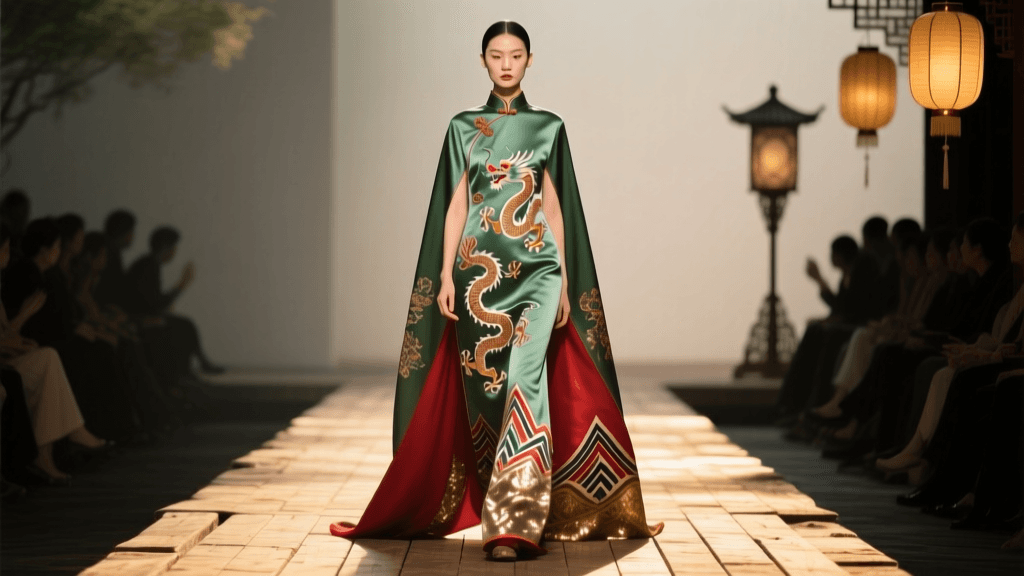
The intersection of traditional Chinese garment-making and international haute couture is not merely a passing trend; it is a profound sartorial dialogue that has reshaped the global luxury landscape. While Western fashion houses have historically borrowed from Asian aesthetics, the modern runway has shifted toward a deeper, more technical appreciation of Chinese heritage textiles. This evolution was cemented during the watershed 2015 China: Through the Looking Glass exhibition at The Metropolitan Museum of Art, which showcased how deeply Chinese motifs, silhouettes, and craftsmanship have permeated high fashion.
Today, collectors and couture enthusiasts are looking beyond superficial dragon and phoenix embroidery. The true luxury lies in the mastery of ancient textile techniques—such as Xiangyunsha mud-dyeing, Song brocade weaving, and Suzhou double-sided embroidery. For the serious collector, understanding these techniques is essential for authenticating, investing in, and preserving runway pieces that bridge the gap between ancient Hanfu traditions and modern Parisian couture.
Key Heritage Textiles on the Runway
International designers and Chinese couturiers like Guo Pei and Uma Wang frequently rely on specific heritage fabrics to give their garments structural integrity and historical weight. Understanding these materials is the first step in building a couture collection.
Xiangyunsha (Gambiered Guangdong Silk)
Often referred to as 'soft gold' in the textile world, Xiangyunsha is a highly specialized silk dyeing technique originating from Guangdong province. The silk is repeatedly soaked in the tannin-rich juice of the Dioscorea cirrhosa plant and then coated with iron-rich river mud. This chemical reaction creates a distinct, dark, crackling fabric that is naturally water-resistant, antibacterial, and incredibly durable. On the runway, Xiangyunsha is prized for its sculptural drape and the subtle, organic crackle patterns that appear on the surface, making it a favorite for avant-garde, architectural couture pieces.
Song Brocade (Songjin)
Recognized for its complex geometric patterns and structural stiffness, Song brocade dates back to the Song Dynasty (960–1279 CE). Unlike the softer, flowing silks used for traditional undergarments, Song brocade is woven with a heavy weft that allows it to hold rigid shapes. In modern couture, it is frequently utilized for structured corsetry, tailored outerwear, and voluminous sleeves that require architectural support without the need for excessive synthetic interfacing.
Suzhou Embroidery (Su Xiu)
Su embroidery represents the pinnacle of Chinese needlework. Master artisans can split a single strand of silk thread into up to 48 finer filaments, allowing for hyper-realistic gradients and nearly invisible stitches. According to the UNESCO Intangible Cultural Heritage registry, the sericulture and silk craftsmanship of China require decades of dedicated practice to master. On the runway, Su embroidery is typically reserved for focal points: intricate bodices, sweeping capelets, and dramatic train detailing.
Actionable Guide: Authenticating Runway Embroidery
When investing in Chinese-inspired couture, distinguishing between authentic hand-embroidered Su Xiu and high-end machine embroidery is critical, as the price differential can exceed tens of thousands of dollars. Here is how to authenticate the needlework:
- Examine the Reverse Side: Authentic double-sided Su embroidery will look nearly identical on both the front and the back, with no messy bobbin threads or visible knots. Machine embroidery will always show a chaotic web of backing threads.
- Check the Thread Thickness: Use a jeweler's loupe (10x magnification). Hand-spun and split silk threads will vary microscopically in thickness and catch the light with a natural, multi-faceted luster. Machine threads are uniformly extruded and often contain synthetic blends that reflect light harshly.
- Assess the Color Gradients: Hand embroidery achieves gradients by threading a needle with two different colored micro-filaments simultaneously. If the color shift looks pixelated or relies on cross-hatching distinct solid threads, it is likely machine-made.
Investment and Sourcing: A Collector's Table
When sourcing Chinese heritage couture, whether directly from ateliers in Beijing or via international auction houses, it is vital to understand the market value and authentication markers of specific techniques. The table below outlines what collectors should expect when evaluating these garments.
| Textile / Technique | Common Runway Application | Estimated Couture Price Range (USD) | Key Authentication Marker |
|---|---|---|---|
| Xiangyunsha Silk | Sculptural draping, wide-leg trousers, trench coats | $3,500 - $8,500 | Earthy, mineral scent; distinct crackling sound when manipulated |
| Su Embroidery | Bodice panels, cloud shoulders, veil accents | $15,000 - $60,000+ | Micro-split threads; seamless color blending; clean reverse side |
| Song Brocade | Corsetry, structured jackets, Mamianqun pleats | $5,000 - $14,000 | Complex geometric weft patterns; heavy, stiff drape without interfacing |
| Yunjian (Cloud Shoulder) | Detachable layering pieces over modern gowns | $2,500 - $9,000 | Intricate edge piping; perfectly symmetrical mythological motifs |
Practical Care for Couture Heritage Silks
Acquiring a piece of Chinese couture is only the beginning; preserving these delicate heritage textiles requires strict environmental controls and specialized cleaning protocols. The historical production and use of silk in China relied on natural proteins that are highly susceptible to modern chemical damage.
Cleaning Protocols
Never dry-clean Xiangyunsha silk using standard perc (perchloroethylene) solvents. The mud-dyeing process relies on a delicate tannin-iron bond that can be stripped by harsh chemicals. Instead, spot clean using a pH-neutral (7.0) silk detergent and distilled water. For Song brocade, avoid water entirely; the heavy weaves can trap moisture, leading to internal mildew. Use a professional textile conservator who specializes in historic Asian garments for any deep cleaning.
Storage and Environment
Heritage silks must be stored in a climate-controlled environment. Maintain a temperature of 65°F (18°C) and a relative humidity of exactly 50%. Fluctuations in humidity will cause the natural silk fibers to expand and contract, leading to micro-tears in heavily embroidered areas. Never hang heavy Xiangyunsha or brocade garments on wire or thin wooden hangers; the weight of the fabric will distort the shoulder seams over time. Instead, pad the bodices with acid-free, unbuffered tissue paper and store the garments flat in archival-grade textile boxes.
Styling Couture Hanfu Elements in Modern Wardrobes
The beauty of modern Chinese couture lies in its modularity. Runway pieces often deconstruct traditional Hanfu elements, allowing them to be integrated into contemporary, global wardrobes. A heavily embroidered Yunjian (cloud shoulder) can be draped over a minimalist, structured black blazer to create a striking juxtaposition of ancient craftsmanship and modern tailoring. Similarly, the Mamianqun (horse-face skirt), with its rigid, flat front and deep side pleats, pairs exceptionally well with fitted, architectural corsets or sleek silk blouses, translating imperial court silhouettes into high-fashion evening wear.
By understanding the deep cultural and technical roots of these textiles, collectors and fashion enthusiasts do more than wear a garment; they become custodians of a living, evolving history that continues to captivate the international runway.