Chinese Haute Couture: Traditional Motifs on the Global Runway
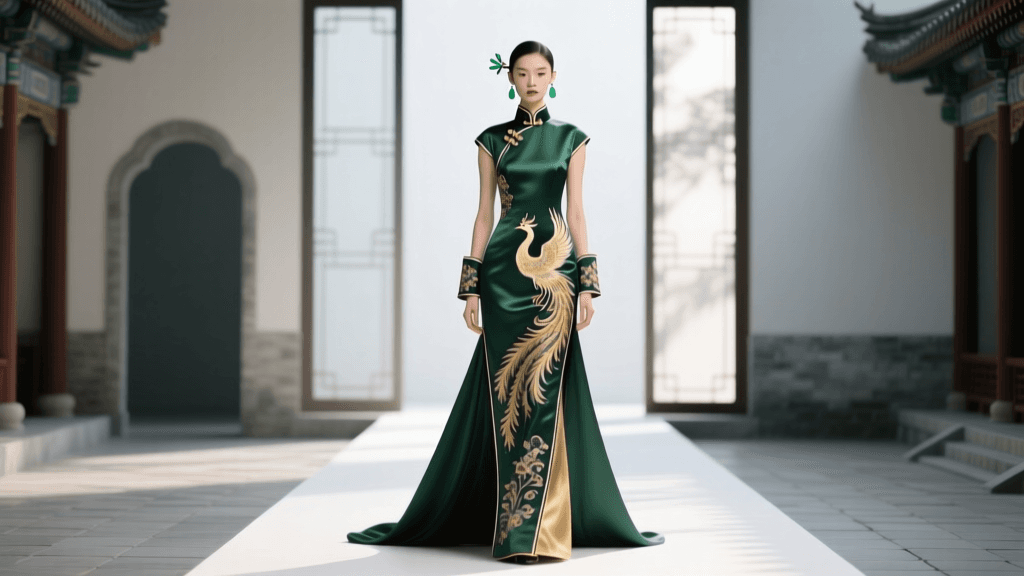
The global runway has long been captivated by the intricate aesthetics of the East, but the narrative surrounding Chinese fashion in international haute couture is undergoing a profound transformation. Moving away from the superficial exoticism of the past, today's premier fashion houses and visionary designers are engaging in a deep, respectful dialogue with Chinese sartorial heritage. From the architectural pleats of the Ming dynasty to the meticulous thread-splitting of Suzhou embroidery, traditional Chinese garments are no longer just sources of exotic inspiration; they are foundational blueprints for modern luxury.
From Exoticism to Authentic Haute Couture
Historically, Western interpretations of Chinese fashion often relied on caricature. However, the landscape shifted significantly following landmark cultural moments, most notably The Metropolitan Museum of Art's 2015 exhibition, China: Through the Looking Glass. Curated by Andrew Bolton, the exhibition examined how China has fueled the fashionable imagination for centuries, ultimately pushing the industry toward more nuanced and historically accurate representations.
Today, designers like Guo Pei—the first Chinese couturier invited to join the prestigious Chambre Syndicale de la Haute Couture in Paris—are leading this authentic renaissance. Her work, which was celebrated in a major retrospective at the Asian Art Museum of San Francisco, merges traditional Chinese imperial motifs with European structural tailoring. For modern fashion editors, stylists, and aspiring couturiers, understanding the mechanics and history behind these garments is no longer optional; it is essential for creating culturally resonant and commercially successful collections.
Deconstructing the Silhouette: Runway Adaptations
Translating historical Chinese garments for the modern runway requires a mastery of both traditional tailoring and contemporary proportions. Two elements, in particular, have dominated recent couture collections:
The Mamianqun (Horse-Face Skirt)
The Mamianqun, a wrap skirt characterized by flat front and back panels with heavily pleated sides, has seen a massive resurgence. Following high-profile cultural discussions regarding its appropriation by Western luxury brands, authentic Mamianqun construction has become a focal point for couture designers. Actionable specification: When drafting a modern couture Mamianqun, the side knife pleats should be precisely 3cm to 4cm in depth, with the flat 'horse-face' panels measuring exactly 35cm to 40cm across to maintain the structural integrity of the garment when the wearer is in motion. Use a heavy silk brocade or wool-blend crepe (minimum 250 GSM) to ensure the pleats hang sharply without the need for permanent heat-setting.
The Modern Mandarin Collar
Often misinterpreted in Western tailoring, the true Mandarin collar (derived from the Qing dynasty's standing collar) requires specific interfacing techniques. For a couture finish, avoid standard fusible interfacings. Instead, use a bias-cut silk organza under-collar, hand-padded to the shell fabric. Measurements: A traditional historical collar stands at 5cm to 6cm, which can restrict modern movement. For contemporary runway adaptations, a height of 3.5cm to 4cm provides the regal silhouette while allowing the model to move comfortably down the catwalk.
Data Table: Traditional Motifs vs. Couture Applications
Understanding the symbolism of traditional motifs is critical. In haute couture, placing a motif incorrectly can alter the entire narrative of the garment. Below is a guide for stylists and designers on how to appropriately adapt these symbols for the runway.
| Traditional Motif | Historical Meaning | Modern Couture Application | Recommended Placement |
|---|---|---|---|
| Peony (Mudan) | Wealth, honor, and prosperity | Oversized, abstract 3D floral appliqués in silk organza | Asymmetrical shoulder or cascading down a train |
| Crane (Xianhe) | Longevity and high scholarly status | Fine silver-thread micro-embroidery on sheer tulle | Concentrated on the back yoke or sleeve cuffs |
| Cloud Collar (Yunjian) | Protection and celestial connection | Deconstructed into architectural, laser-cut leather overlays | Draped over a minimalist silk slip dress |
| Bat (Fuxing) | Good fortune and happiness | Geometric, Art Deco-inspired beadwork patterns | Bordering the hemline or framing a deep V-neck |
Sourcing Couture-Grade Chinese Textiles
True luxury lies in the materials. Sourcing authentic, heritage Chinese textiles elevates a collection from standard ready-to-wear to true haute couture. However, this requires navigating complex supply chains and understanding the costs involved.
- Xiangyunsha (Gambiered Guangdong Silk): Known as 'soft gold,' this silk is dyed with river mud and the juice of the薯莨 (Dioscorea cirrhosa) yam, then dried in the sun. It is recognized by UNESCO as an Intangible Cultural Heritage. Cost: $250 to $450 per meter. Lead Time: 6 to 8 months, as the dyeing process is strictly dependent on specific seasonal weather conditions.
- Suzhou Embroidery (Su Xiu): Famous for its 'double-sided' stitching and the ability to split a single silk thread into 1/16th of its original thickness. Cost: Custom bodice panels start at $5,000 and can exceed $20,000 depending on the density of the stitch. Lead Time: 4 to 9 months per panel.
- Shu Brocade (Shujin): Originating from Sichuan, this heavy, vibrantly colored brocade features complex geometric and floral weaves. Cost: $120 to $180 per meter. Best Use: Structured outerwear, corsetry, and tailored jackets.
Actionable Styling Guide for Editorial and Runway
When styling Chinese-inspired couture for editorials or the runway, the line between homage and pastiche is razor-thin. Follow these strict guidelines to ensure cultural integrity and high-fashion relevance:
1. Respect the 'Jiaoling Youren' Lapel Rule
The most critical rule in traditional Han Chinese clothing is the Jiaoling Youren (交领右衽) cross-collar, where the left lapel crosses over the right. In traditional Chinese culture, the opposite (Zuoren, right over left) is strictly reserved for dressing the deceased. A runway stylist must meticulously check the wrapping direction of every cross-collar garment before a model steps onto the catwalk. A single incorrect wrap will immediately signal cultural ignorance to an increasingly educated global audience.
2. Contextualize, Don't Costume
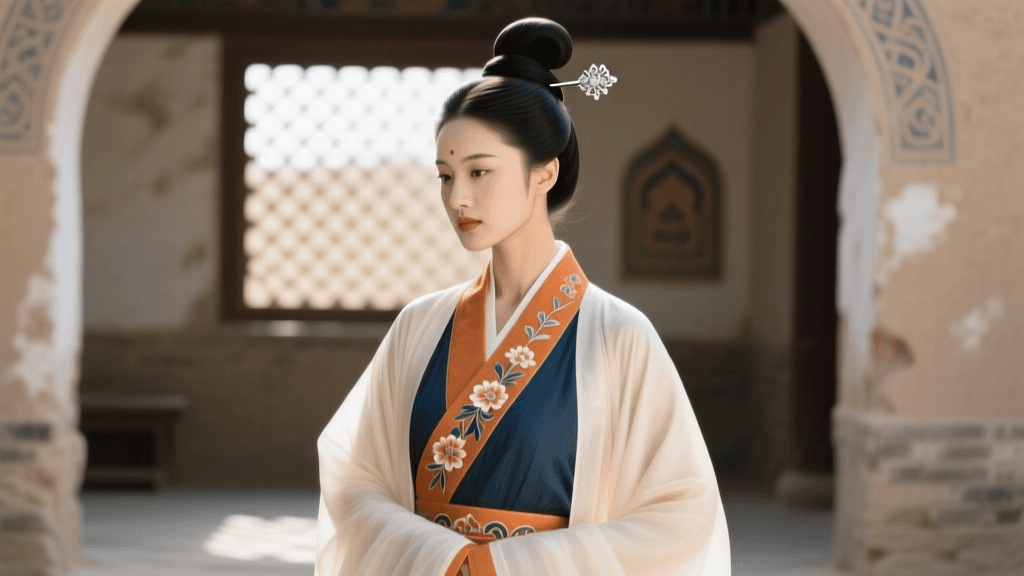
Avoid pairing historical garments with literal historical props. If styling a Ming dynasty-inspired Ao Qun (jacket and skirt set) for a high-fashion editorial, strip away the traditional jade hairpins and lotus shoes. Instead, juxtapose the historical silhouette with severe, modern minimalism: slicked-back architectural hair, stark graphic eyeliner, and modern structural footwear. This contrast highlights the garment's couture construction rather than reducing it to a theatrical costume.
3. Mix Eras with Intentionality
Chinese fashion history spans millennia, and mixing elements from different dynasties without a cohesive design narrative can result in a disjointed look. If you are combining a Song dynasty minimalist, straight-lined Beizi (cloak) with a Qing dynasty heavily embroidered horse-hoof cuff, ensure there is a unifying element—such as a monochromatic color palette or a shared textile weight—to tie the eras together conceptually.
The Future of Chinese Couture
As the global fashion industry continues to demand deeper authenticity and sustainability, the meticulous, slow-fashion ethos of traditional Chinese garment-making offers a powerful antidote to fast fashion. By mastering the technical specifications of historical silhouettes, investing in heritage textiles like Xiangyunsha, and adhering to strict cultural protocols like the Jiaoling Youren lapel, international designers and stylists can elevate Chinese traditions from mere runway trends to enduring pillars of global haute couture.