Chilkat And Ravenstail Weaving: Northwest Coast Regalia 2026
The Enduring Legacy of Northwest Coast Woven Regalia
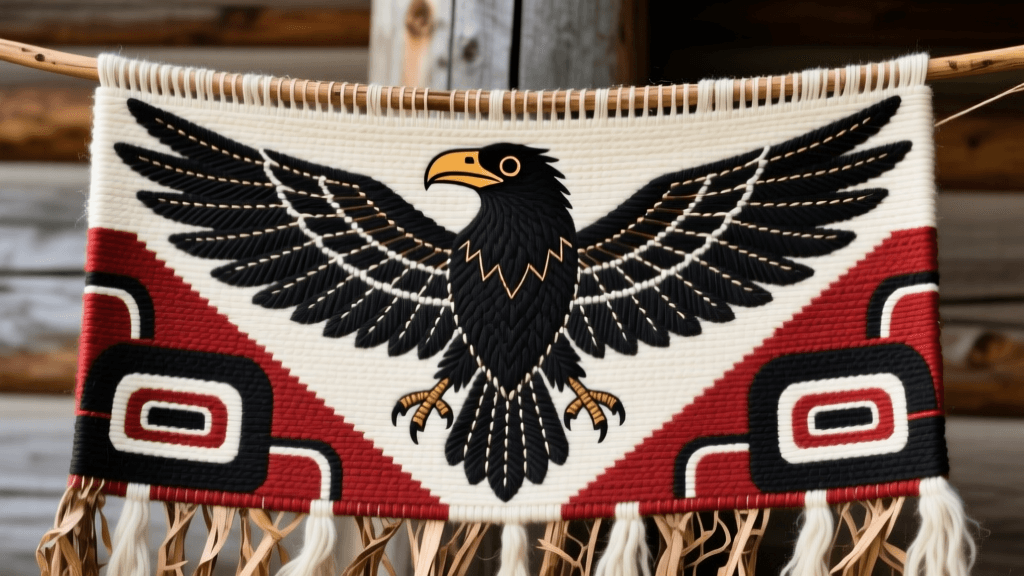
The Indigenous peoples of the Northwest Coast of North America—spanning Southeast Alaska, British Columbia, and Washington State—possess one of the most visually striking and culturally profound textile traditions in the world. Among the Tlingit, Haida, Tsimshian, and Kwakwaka'wakw nations, woven robes are not merely garments; they are living entities, historical records, and sacred property. As we move through 2026, the revival and continuation of these ancient weaving techniques represent a powerful assertion of Indigenous sovereignty and cultural resilience. This article explores the intricate worlds of Ravenstail and Chilkat weaving, examining their historical roots, material preparation, and the contemporary efforts ensuring their survival for future generations.
The Spiritual Weight of the Woven Robe
To understand Northwest Coast regalia, one must first understand the concept of at.óow in Tlingit culture, which translates roughly to 'sacred property' or 'treasured possession.' A woven robe is a physical manifestation of a clan's history, its ancestral connections, and its spiritual obligations. When a leader or designated clan member dons a Chilkat or Ravenstail robe during a potlatch or memorial ceremony, they are not simply wearing a piece of clothing. They are enveloping themselves in the presence of their ancestors. The rhythmic movement of the robe during ceremonial dances is believed to release the spiritual energy woven into the garment, bridging the gap between the physical and spiritual realms. In 2026, cultural protocols regarding who may weave, who may inherit, and who may dance these robes remain strictly governed by clan leaders and tribal councils.
Ravenstail Weaving: The Geometric Ancestor
Predating the more widely recognized Chilkat style, Ravenstail weaving is characterized by its stark, high-contrast geometric patterns. Originating over a millennium ago, Ravenstail robes feature striking horizontal bands of black, white, and sometimes yellow or blue-green, creating abstract designs that resemble the eyes, beaks, and feathers of the raven, as well as other natural phenomena like the northern lights or ocean waves.
The technique relies on a complex form of twining on a warp-weighted loom. Unlike European tapestry weaving, which often uses a shuttle, Ravenstail weavers use only their fingers to twist and interlock the weft threads around the warp. This painstaking method requires immense mathematical precision. A single misstep in the geometric sequence can disrupt the entire pattern, meaning the weaver must maintain intense focus for hundreds of hours. Today, master weavers are actively teaching these geometric structures to apprentices, ensuring the mathematical language of Ravenstail is not lost.
Chilkat Weaving: Curvilinear Masterpieces
Chilkat weaving evolved from Ravenstail, incorporating the distinct Northwest Coast formline art style. Named after the Chilkat Tlingit people who were among its most prolific practitioners, this style features sweeping, curvilinear ovoids, U-shapes, and crescents that depict ancestral beings such as the whale, eagle, bear, and raven.
The creation of a Chilkat robe is a collaborative process that traditionally crosses gender lines. The complex formline patterns are painted onto a pattern board by a male artist trained in the strict rules of Northwest Coast design. The female weaver then translates this two-dimensional painting into a three-dimensional textile, interpreting the curves and adjusting the tension of the threads to bring the design to life. A full-sized Chilkat dancing blanket can take a master weaver over a year of full-time work to complete. In 2026, the demand for authentic, hand-woven Chilkat robes for ceremonial use far exceeds the supply, elevating the status of master weavers to some of the most revered cultural practitioners in their communities.
Material Sourcing and Environmental Stewardship in 2026
The authentic creation of these robes requires specific, locally sourced materials: the underwool of the mountain goat and the inner bark of the yellow cedar tree. The preparation of these materials is a labor-intensive process in itself. Mountain goat wool must be collected, cleaned, and spun with cedar bark to create a strong, durable yarn. The yellow cedar bark is harvested in the spring when the sap is running, carefully stripped, and processed into soft, pliable fibers.
As of 2026, environmental changes and climate shifts in the Pacific Northwest have made sustainable harvesting more challenging. Weavers and tribal environmental departments are working closely together to monitor mountain goat populations and cedar groves. Many tribes have implemented strict harvesting quotas and seasonal restrictions to ensure that the extraction of these materials does not harm the local ecosystem. This stewardship is a core component of the weaving practice; taking only what is needed and offering prayers of gratitude to the plant and animal relatives is non-negotiable.
Comparative Analysis: Ravenstail vs. Chilkat
While both traditions utilize similar looms and materials, their visual languages and historical trajectories differ significantly. The table below outlines the primary distinctions between these two monumental weaving styles.
| Feature | Ravenstail Weaving | Chilkat Weaving |
|---|---|---|
| Design Style | Geometric, horizontal bands, abstract | Curvilinear, formline art, representational |
| Primary Motifs | Raven eyes, ocean waves, northern lights | Whales, eagles, bears, frogs, ancestral crests |
| Color Palette | Mostly black and white, occasional yellow/blue | Yellow, black, blue-green, white |
| Historical Era | Ancient (1,000+ years old) | Evolved later (approx. 300-500 years old) |
| Weaver's Process | Memorized geometric sequences | Translated from painted pattern boards |
The Mechanics of the Warp-Weighted Loom
Both Ravenstail and Chilkat robes are woven on a traditional warp-weighted loom. This loom consists of two upright poles supporting a horizontal top bar. The warp threads (the vertical foundation) are tied to the top bar and weighted at the bottom with stones or heavy wooden blocks. This tensioning system allows the weaver to sit or stand before the loom, working from the top down or bottom up, depending on the specific tribal tradition and the weaver's preference.
The absence of a rigid frame or a reed to beat the weft into place means that the tension of the fabric is entirely controlled by the weaver's hands and the hanging weights. This requires a highly developed tactile sensitivity. Master weavers in 2026 often speak of the 'feel' of the loom, noting that the rhythm of the weights clicking together becomes a meditative soundtrack to the months-long weaving process.
2026 Revival Efforts and Institutional Partnerships
The late 19th and early 20th centuries saw a devastating decline in Northwest Coast weaving due to colonial assimilation policies, the banning of the potlatch, and the introduction of cheap commercial trade blankets. However, the late 20th and early 21st centuries have witnessed a massive cultural renaissance. Organizations like the Sealaska Heritage Institute have been instrumental in funding apprenticeships, hosting weaving summits, and repatriating ancient robes from museums so that contemporary weavers can study their construction.
Institutions such as the Burke Museum and the Smithsonian National Museum of the American Indian have increasingly adopted collaborative curation models. In 2026, it is standard practice for these museums to invite Indigenous weavers into their archives to handle, study, and sometimes even recreate historic pieces. This access to ancestral knowledge, combined with digital archiving and high-resolution macro-photography, has allowed weavers to reverse-engineer complex techniques that were on the brink of being forgotten.
Preservation Protocols for Woven Textiles
For tribal museums, cultural centers, and private collectors tasked with caring for these garments, strict preservation protocols are essential. Woven mountain goat wool and cedar bark are highly susceptible to fluctuations in humidity, pest infestations, and light degradation.
- Climate Control: Maintain a stable relative humidity (RH) between 45% and 55%. Rapid fluctuations can cause the cedar bark core to become brittle and snap.
- Light Exposure: Limit exposure to ultraviolet and visible light. When displayed, illumination should not exceed 50 lux, and garments should be rotated out of exhibition every six months to rest in dark storage.
- Storage Methods: Never hang a historic Chilkat or Ravenstail robe by its shoulders, as the heavy fringe and the weight of the wet wool (if historically cleaned) can cause structural tearing. Instead, store them flat in acid-free, archival-quality boxes with unbuffered tissue paper supporting the folds.
- Pest Management: Implement an Integrated Pest Management (IPM) system. Use pheromone traps to monitor for clothes moths and carpet beetles, which are highly attracted to the protein-rich mountain goat wool.
Conclusion
The traditions of Chilkat and Ravenstail weaving are far more than historical artifacts; they are vibrant, living practices that continue to evolve in 2026. Through the dedication of master weavers, the stewardship of natural resources, and the respectful partnership of cultural institutions, the Northwest Coast's woven regalia will continue to dance, tell stories, and connect generations for centuries to come.