Children's Hanfu & Tang Suits: A Parent's Buying Guide
The Rise of Children's Traditional Chinese Clothing
Over the past decade, the 'Guochao' (national trend) movement has sparked a massive revival of traditional Chinese clothing. While adult Hanfu and modern Qipao often dominate social media feeds, children's traditional Chinese clothing has carved out a vibrant, highly sought-after niche. From Lunar New Year family portraits to Mid-Autumn Festival park strolls, dressing children in historical garments is no longer just a holiday novelty; it is a year-round cultural celebration. According to the South China Morning Post, the Hanfu revival has increasingly trickled down to younger demographics, with parents eager to pass on sartorial heritage to the next generation. However, buying historical garments for active, growing children presents unique challenges regarding sizing, fabric safety, and mobility. This comprehensive guide will help parents navigate the world of children's Hanfu and Tang suits, ensuring your child looks historically inspired while remaining comfortable and safe.
Hanfu vs. Tang Suits: Which is Right for Your Child?
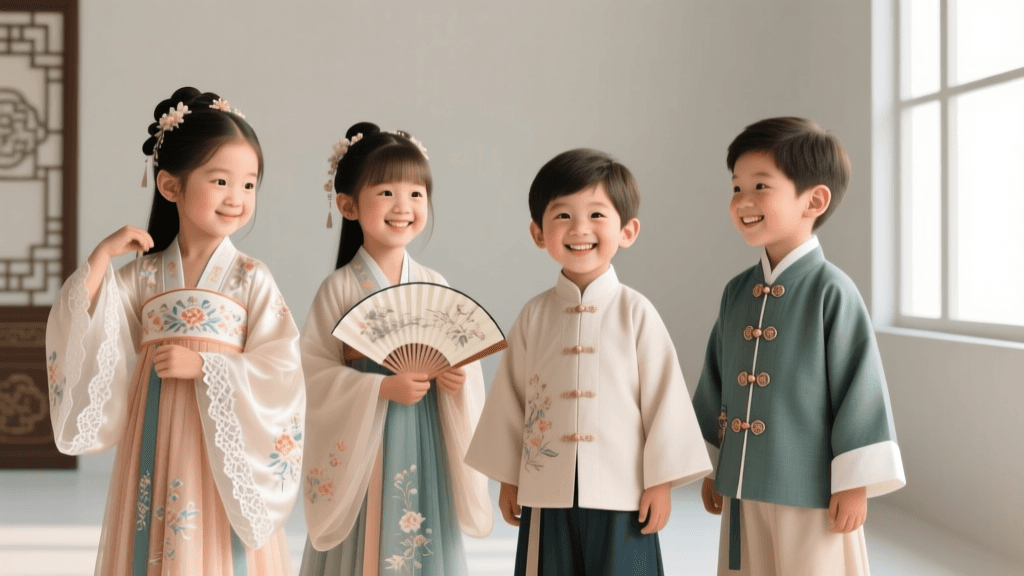
When parents begin their search for traditional Chinese clothing, they generally encounter two main categories: Hanfu (pre-Qing dynasty historical clothing) and the Tang Suit or 'Tangzhuang' (a modern hybrid jacket inspired by Qing-era Manchu clothing, popularized in the early 2000s). Understanding the functional differences between these two styles is crucial for selecting the right outfit for your child's age and the occasion.
| Feature | Children's Hanfu (Ruqun / Beizi) | Children's Tang Suit (Tangzhuang) |
|---|---|---|
| Best Age Group | 4+ years (Requires some coordination to manage skirts and sashes) | 1+ years (Easy snap or toggle buttons, structured fit) |
| Mobility & Play | Moderate. Skirts (like the Mamianqun) can trip toddlers during running. | High. Pants and structured jackets allow for unrestricted playground activity. |
| Formality | High. Ideal for photoshoots, stage performances, and cultural festivals. | Medium. Perfect for family dinners, casual holiday gatherings, and travel. |
| Average Cost (USD) | $45 - $150+ (Depends on embroidery and layer count) | $20 - $60 (Often sold as affordable, ready-to-wear sets) |
| Dressing Time | 10-15 minutes (Involves tying sashes, layering, and adjusting pleats) | 2-3 minutes (Simple button-ups and elastic waistbands) |
For toddlers under the age of three, a cotton Tang suit is highly recommended. The structured collar and toggle buttons (pankou) are secure, and the accompanying pants prevent tripping. For children aged four and older who can participate in the dressing process and enjoy the 'twirl factor,' a Hanfu set—specifically a Ruqun (blouse and skirt) or a Beizi (long open jacket) over a simple dress—offers a more magical, fairy-tale aesthetic.
Sizing and Measurements: Getting the Perfect Fit
Unlike modern Western children's clothing, which relies heavily on age-based brackets (e.g., '2T' or 'Size 4'), traditional Chinese garments are typically sized by height in centimeters. Because historical silhouettes often feature dropped shoulders, wide sleeves, and high-waisted skirts, the fit is inherently more forgiving than modern tailored clothing. However, getting the length right is essential to prevent tripping hazards.
How to Measure Your Child for Hanfu
- Height (Shen Gao): Measure from the top of the head to the heel. This is the primary metric used by Asian retailers. If your child is 105cm tall, order a size 110cm to allow for growth and hem allowances.
- Chest (Xiong Wei): Measure around the fullest part of the chest. Hanfu jackets wrap and tie, offering a 2-3 inch margin of error, but Tang suits with rigid collars require precise chest measurements.
- Skirt Length (Qun Chang): For Hanfu skirts, measure from the natural waist (just above the belly button) down to the ankle bone. Subtract 2 inches if your child will be wearing flat cloth shoes to ensure the hem doesn't drag on the ground.
- Sleeve Length: Traditional Hanfu sleeves are meant to be long, sometimes covering the hands. For everyday children's wear, look for 'daily-style' (richang) Hanfu with narrowed or shortened sleeves to prevent the fabric from dipping into food or paint.
Fabric Choices for Sensitive Skin and Active Play
Children's skin is highly sensitive, and traditional garments can sometimes be constructed from stiff brocades or synthetic polyesters that trap heat. When browsing online marketplaces like Taobao or specialized international boutiques, always check the material composition tags.
Summer and Indoor Wear: Opt for pure cotton, linen, or ramie blends. Ramie is a historically accurate, highly breathable plant fiber used in ancient Chinese summer clothing. It wicks moisture away from the skin, making it ideal for humid Mid-Autumn festivals. Avoid cheap, unlined polyester satin, which can cause heat rashes in active children.
Winter and Outdoor Wear: Look for cotton-padded (mian'ao) jackets or velvet-lined Tang suits. For Hanfu, winter styling involves layering. You can purchase a traditional 'Doufeng' (a hooded, sleeveless cloak) lined with faux rabbit fur. This not only looks incredibly regal in photographs but provides substantial warmth without restricting arm movement.
Occasion-Based Styling and Cultural Context
Traditional clothing is deeply tied to the lunar calendar and seasonal festivals. As noted by the Asia Society, wearing new clothes during the Lunar New Year symbolizes a fresh start and the warding off of evil spirits. Here is how to style your child for major cultural events:
Lunar New Year (Spring Festival)
Red and gold are the undisputed colors of the Spring Festival. For a Tang suit, look for velvet jackets featuring embroidered tigers, koi fish, or firecrackers. For Hanfu, a red 'Mamianqun' (horse-face skirt) paired with a cream-colored woven jacket is a stunning, historically grounded choice. The Mamianqun features flat front and back panels with pleated sides, making it surprisingly easy for children to sit and play in while maintaining a formal silhouette.
Mid-Autumn Festival
This harvest festival calls for lighter, ethereal aesthetics. Pastel blues, soft pinks, and jade greens are popular. Look for Hanfu sets featuring embroidered jade rabbits, osmanthus flowers, or crescent moons. A lightweight Beizi (open jacket) worn over a simple cotton slip dress is perfect for evening lantern-lit walks.
Dragon Boat Festival
During the Duanwu Festival, it is traditional to wear accessories that ward off insects and bad luck. Pair your child's lightweight summer Hanfu with a 'Wudu' (five poisons) embroidered vest or a colorful silk pouch filled with mugwort and calamus hung around the neck.
Accessories and Footwear: Safety First
An outfit is not complete without accessories, but historical accuracy must be balanced with child safety.
- Footwear: Traditional 'Bugong' (cloth shoes) with embroidered uppers are beautiful, but historical versions have soft, slippery cloth soles. Always purchase modern adaptations with textured rubber soles to prevent slipping on polished floors or wet pavement. For Hanfu, simple leather Mary Janes or white canvas sneakers are widely accepted in the modern Hanfu community for daily wear.
- Hair Accessories: Avoid sharp metal hairpins (zan) for children under eight. Instead, use soft silk ribbons, velvet scrunchies, or blunt-tipped wooden hair sticks. For girls, styling the hair into 'double buns' (shuang yatou) using fabric ribbons is historically evocative, incredibly cute, and entirely safe for roughhousing.
Garment Care and Maintenance
Traditional garments, especially those with metallic embroidery or delicate pleats, require specific care to maintain their shape. The Victoria and Albert Museum notes that historical textiles are highly susceptible to damage from harsh chemicals and improper washing. While modern children's reproductions are more durable, you should still follow these rules:
- Never machine-wash a Mamianqun. The pleats will fall out and the metallic threads may fray. Spot clean stains with a damp cloth and mild baby detergent. If a full wash is necessary, hand-wash in cold water and hang to dry in the shade.
- Ironing Tang Suits. The stiff collars of Tang suits can warp in the wash. Always iron them inside out on a low-heat setting, using a pressing cloth to protect any raised embroidery.
- Storage. Do not hang heavy Hanfu skirts on wire hangers, as the weight will distort the waistband. Fold them neatly along their natural pleat lines and store them in breathable cotton garment bags to protect against dust and moths.
Conclusion
Dressing your child in traditional Chinese clothing is a beautiful way to connect them with their heritage, celebrate the changing seasons, and create unforgettable family memories. By prioritizing safe fabrics, accurate height-based measurements, and age-appropriate silhouettes like the Tang suit for toddlers and the Ruqun for older kids, you can ensure that your child's cultural wardrobe is as comfortable as it is stunning. Whether they are running through a park in a cotton Hanfu or posing for a New Year's portrait in a velvet Tangzhuang, these garments offer a tangible, wearable link to centuries of Asian artistry and tradition.