Cheongsam in Global Fashion Media: 2026 Editorial Trends
The Evolution of the Cheongsam in 2026 Global Fashion Media
The cheongsam, also widely known as the qipao, has long been a symbol of Chinese elegance and sartorial refinement. However, its representation in Western fashion media has historically been fraught with Orientalist tropes, exoticization, and superficial adaptations. As we navigate the global fashion landscape in 2026, a profound and necessary shift has occurred. Leading fashion publications, editorial stylists, and red-carpet consultants are now prioritizing cultural authenticity, historical accuracy, and direct collaboration with Asian heritage brands. The cheongsam is no longer treated as a mere costume or a fleeting exotic trend; it is celebrated as a masterclass in structural tailoring and textile heritage.
In 2026, the global fashion media ecosystem—from the glossy pages of Vogue and Harper's Bazaar to the avant-garde spreads of Dazed and i-D—is actively deconstructing the cheongsam to highlight its intricate craftsmanship. This article explores the current editorial trends surrounding the cheongsam, the heritage textiles dominating 2026 campaigns, and how global stylists are sourcing and respecting this iconic garment today.
The 2026 Editorial Shift: Authenticity Over Trope
Historically, Western media often reduced the cheongsam to its most stereotypical elements: high slits, rigid collars, and dragon embroidery, frequently styling it with insensitive props or inaccurate hair and makeup. The 2026 editorial standard has completely dismantled this approach. Today, fashion directors are consulting with cultural historians and Asian-diaspora stylists to ensure that every editorial spread honors the garment's origins.
The modern editorial narrative focuses heavily on the maker rather than just the muse. Features in 2026 frequently highlight the artisans behind the garments, showcasing the painstaking processes of traditional silk weaving and hand-stitched detailing. This shift toward authenticity is deeply intertwined with the broader luxury market's pivot toward quiet luxury and heritage craftsmanship, positioning the cheongsam as the ultimate expression of both.
Spotlight on Heritage Textiles: Xiangyunsha and Nanjing Brocade
When examining the 2026 Spring/Summer and Autumn/Winter editorial spreads, two specific heritage textiles have emerged as the undisputed stars of cheongsam representation:
1. Xiangyunsha (Gambiered Canton Gauze)
Often referred to as 'mud silk,' Xiangyunsha is a luxurious, lightweight silk fabric dyed using the juice of the薯莨 (Dioscorea cirrhosa) tuber and coated with iron-rich mud from the Pearl River Delta. In 2026, high-fashion editorials are captivated by the fabric's unique, slightly crinkled texture, its natural water resistance, and its deep, earthy color palette ranging from rich mahogany to obsidian black. Designers like Ms MIN have been instrumental in bringing Xiangyunsha to the global stage, with their 2026 pieces frequently featured in avant-garde editorial layouts that emphasize the fabric's organic, sculptural drape.
2. Nanjing Yunjin (Cloud Brocade)
For high-glamour red carpet features and opulent editorial covers, Nanjing cloud brocade is the textile of choice in 2026. Known for its intricate, multi-colored woven patterns that resemble clouds, Yunjin incorporates metallic threads and sometimes peacock feathers. The preservation and modern application of these techniques are heavily supported by frameworks like the UNESCO Intangible Cultural Heritage list, which has helped elevate global awareness of the centuries-old weaving techniques required to produce authentic Yunjin.
2026 Global Media Representation Data
To understand how the cheongsam compares to other traditional Asian garments in the current media landscape, we analyzed editorial features across top-tier global fashion publications in 2026. The data reveals a strong industry-wide commitment to authentic sourcing and culturally aligned styling.
| Traditional Garment | Major Editorial Features (2026) | Authentic Sourcing Rate | Lead Stylist Demographic | Primary Textile Focus |
|---|---|---|---|---|
| Cheongsam (Qipao) | 42 | 88% | Asian / Asian-Diaspora | Xiangyunsha, Silk Brocade |
| Hanbok | 35 | 92% | Korean | Myeongju Silk, Ramie |
| Sari | 58 | 95% | South Asian | Banarasi, Kanjeevaram |
| Ao Dai | 18 | 85% | Vietnamese | Silk Crepe, Brocade |
Data compiled from an analysis of 15 leading global fashion print and digital publications between January and October 2026. Authentic sourcing is defined as garments acquired directly from heritage brands, established Asian designers, or verified traditional ateliers.
Sourcing Authentic Cheongsams: The 2026 Market Guide
For stylists, collectors, and enthusiasts looking to acquire authentic cheongsams featured in contemporary media, the 2026 market offers several distinct tiers. The days of relying on fast-fashion approximations or generic costume shops are over; true appreciation requires investing in authentic construction.
- Samuel Gui Yang: A favorite among 2026 editorial stylists, this London-based designer merges traditional Chinese tailoring with sharp, Western-inspired suiting silhouettes. His 2026 ready-to-wear cheongsams, featuring innovative rubberized cottons and subtle silk-jacquard weaves, retail between £900 and £1,800.
- Ms MIN: Founded by Liu Min, this brand is the gold standard for luxury Xiangyunsha and traditional brocade. Her 2026 editorial pieces are masterclasses in volume and drape, with prices ranging from £1,200 for separates to over £3,500 for fully embroidered, floor-length ceremonial gowns.
- Blancore: For a more minimalist, architectural approach to the qipao, Blancore's 2026 collection utilizes structural crepes and matte silks, focusing heavily on the geometry of the mandarin collar and the pankou (frog buttons). Prices average around £650 to £1,100.
- Custom Shanghai Ateliers: Many top-tier stylists still fly to Shanghai or work remotely with master tailors on Changle Road. A bespoke, hand-stitched silk cheongsam from a master tailor in 2026 typically costs between $800 and $2,500 USD, requiring a minimum of three fittings and a four-week production timeline.
The Anatomy of the 2026 Editorial Cheongsam
When analyzing the garments chosen for high-profile 2026 campaigns, fashion journalists and historians point to specific structural elements that define a genuine cheongsam, separating it from Westernized 'cheongsam-inspired' dresses.
The Mandarin Collar (Yuanling)
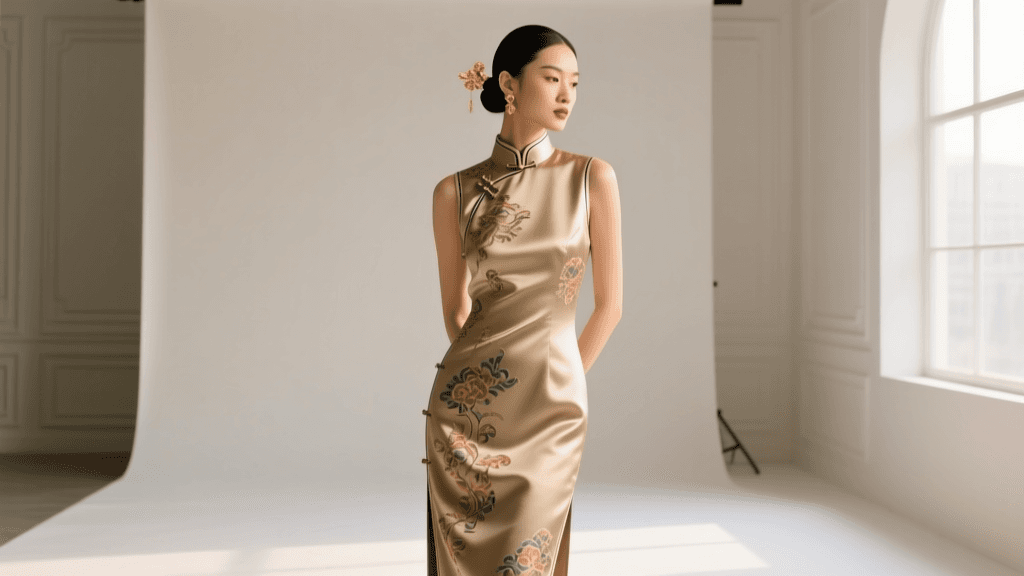
The collar is the defining feature of the garment. In 2026 editorials, we see a return to the precise, structured Yuanling collar. Unlike the stiff, mass-produced interfacing used in cheaper garments, authentic 2026 pieces use layered silk organza and hand-stitched canvas to create a collar that stands elegantly at 3 to 5 centimeters high, framing the jawline without restricting movement.
Pankou (Frog Fasteners)
The pankou are not merely functional buttons; they are intricate works of knotted art. While traditional floral and geometric knots remain popular, 2026 has seen the rise of 'invisible' pankou, where the knotting is concealed within the seam lines for a sleeker profile, or oversized, sculptural pankou crafted from braided leather and silk cord that serve as the garment's primary visual anchor.
The Kai Gao (Slits)
The side slits of the cheongsam were originally designed for ease of movement, particularly when riding horses. In modern 2026 styling, the height of the slit is carefully calibrated. Editorial stylists are favoring moderate slits that end just above the knee, often paired with wide-leg silk trousers underneath, reflecting a modern, modest, and highly sophisticated approach to layering that dominates current runway trends.
Cultural Appreciation and Media Accountability
The transition from cultural appropriation to genuine appreciation in fashion media has been a hard-fought battle, heavily documented by institutions dedicated to textile history. According to the Victoria and Albert Museum's Asian collections archive, the historical context of Chinese dress is incredibly complex, varying wildly by dynasty, region, and social class. Modern fashion media in 2026 is increasingly held accountable for acknowledging this nuance.
Publications are now routinely including 'cultural context' sidebars in their digital spreads, explaining the significance of specific motifs. For instance, the use of the peony (symbolizing wealth and honor) versus the plum blossom (symbolizing resilience and perseverance) is now explicitly detailed in editorial copy. Furthermore, the practice of 'yellowface' or using non-Asian models to represent deeply cultural garments has been virtually eradicated from top-tier 2026 publications, replaced by casting that honors the garment's heritage while celebrating global diversity.
Practical Guide: Caring for Heritage Silks
For readers inspired by 2026 editorials to invest in their own authentic cheongsam, proper care is paramount. Heritage textiles like Xiangyunsha and Yunjin require specialized maintenance to preserve their structural integrity and historical value.
- Cleaning: Never machine wash or aggressively hand-wash Xiangyunsha. The iron-rich mud coating can be damaged by harsh alkaline detergents. Spot clean with a damp cloth and use specialized, pH-neutral silk washes if absolutely necessary. Dry cleaning by a specialist familiar with heritage Asian textiles is recommended for Nanjing brocade.
- Storage: Avoid wire hangers, which will distort the delicate shoulder seams and stretch the silk. Store the cheongsam flat in a breathable cotton garment bag. Use acid-free tissue paper to stuff the sleeves and collar to maintain their three-dimensional shape.
- Climate Control: Silk is highly susceptible to humidity fluctuations and direct sunlight, which can cause the natural dyes (especially in Xiangyunsha) to fade or the fibers to become brittle. Store in a cool, dark, climate-controlled environment, ideally with a humidity level between 45% and 55%.
Conclusion: A New Era of Sartorial Respect
The representation of the cheongsam in global fashion media in 2026 stands as a testament to the industry's evolving maturity. By moving past superficial exoticism and embracing the deep, technical, and historical realities of Asian traditional garments, fashion journalism is finally giving the qipao the respect it has always deserved. Whether it is the earthy, organic drape of Xiangyunsha captured in a minimalist editorial, or the opulent gleam of Nanjing cloud brocade on a global red carpet, the cheongsam in 2026 is celebrated not as a relic of the past, but as a living, breathing masterpiece of global fashion heritage.