Bunka Fashion College 2026 Kimono & Yuzen Hybrid Workshops Guide
The Renaissance of Japanese Garment Education in 2026
The global fascination with traditional Japanese garments has evolved from mere aesthetic appreciation to a deep, technical pursuit of heritage craftsmanship. As we navigate through 2026, the intersection of ancient textile arts and modern digital pedagogy has created unprecedented opportunities for international students. Leading this educational revolution is Bunka Fashion College, an institution synonymous with Japanese sartorial excellence. In response to the growing global demand for sustainable, zero-waste patternmaking and artisanal dyeing techniques, Bunka has completely restructured its traditional arts curriculum for 2026, offering a sophisticated hybrid model that combines rigorous online theory with immersive, in-person workshops in Tokyo and Kyoto.
According to the Ministry of Economy, Trade and Industry (METI), the preservation of traditional crafts like Yuzen dyeing and Wasai (Japanese sewing) is critical to Japan's cultural heritage. By integrating these techniques into accessible global learning tracks, Japanese fashion schools are ensuring that the meticulous art of kimono creation survives and thrives in the contemporary fashion landscape. This guide explores the specifics of Bunka Fashion College’s 2026 hybrid workshops, providing actionable insights, cost comparisons, and curriculum breakdowns for aspiring artisans and fashion professionals.
Bunka Fashion College’s 2026 Hybrid Learning Model
Historically, mastering the art of the kimono required years of apprenticeship under a master artisan in Japan. While the apprenticeship model still exists, the 2026 hybrid curriculum at Bunka Fashion College democratizes access to this knowledge without diluting its rigor. The hybrid model is designed for international fashion students, sustainable designers, and textile enthusiasts who cannot commit to multi-year residencies in Japan but require authentic, master-level instruction.
The program is divided into two primary pillars: the digital Wasai (traditional sewing) modules, which can be completed entirely from a home studio, and the intensive Yuzen dyeing workshops, which require a short-term residency in Kyoto to access specialized water sources and master dye houses.
Module 1: Digital Wasai (Traditional Japanese Sewing)
Unlike Western tailoring, which relies on curved seams and complex darting to contour the body, Wasai is rooted in geometric precision and straight-line cutting. The 2026 online Wasai module teaches students how to deconstruct and reconstruct the tanmono—the traditional bolt of fabric measuring approximately 36 centimeters in width and 12 meters in length. Students learn the zero-waste philosophy inherent in kimono construction, where every inch of the fabric is utilized, and garments can be entirely disassembled, cleaned, and resewn.
For the 2026 intake, Bunka has introduced an Augmented Reality (AR) fitting tool exclusively for remote learners. By uploading their body scans via a secure campus portal, students can digitally drape their straight-line patterns to visualize the ohashori (the waist tuck) and sleeve drop before cutting into expensive silk. This technological bridge ensures that remote students achieve the same precise fit as those studying in the Tokyo campus ateliers.
Module 2: Kaga Yuzen Dyeing Intensive
While sewing can be mastered remotely, the wet processes of traditional dyeing require physical presence. The Japan Kogei Association emphasizes that the chemical interactions between natural dyes, mordants, and local water sources cannot be replicated in a standard home studio. Therefore, the Yuzen module culminates in a mandatory 10-day in-person workshop in Kyoto.
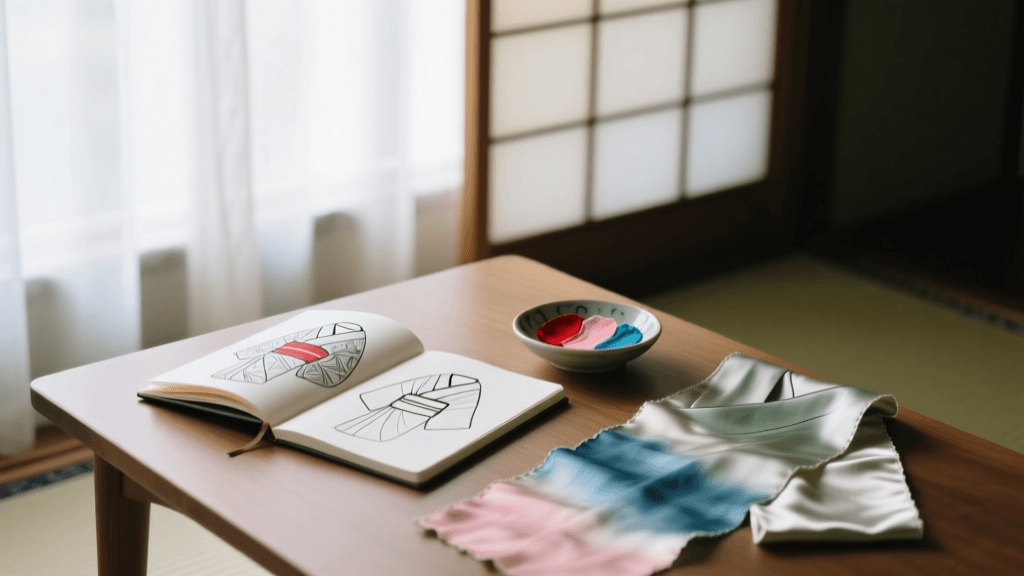
Students learn the highly guarded itome-nori technique, where a fine line of rice paste resist is applied to silk using a specialized metal-tipped cone. This resist prevents dyes from bleeding into adjacent areas, allowing for the photorealistic, painterly designs that define Kaga Yuzen. The 2026 Kyoto workshops are hosted in historic dye houses along the Kamo River, providing students with access to the soft, iron-free water that is essential for achieving the vibrant, unclouded hues characteristic of the region's textiles.
2026 Learning Tracks: Cost and Curriculum Comparison
Bunka Fashion College offers three distinct tracks for the 2026 academic year, catering to different levels of commitment and professional goals. Below is a detailed comparison of the available pathways.
| Track Name | Format & Duration | 2026 Tuition (USD) | Best For |
|---|---|---|---|
| Wasai Digital Certificate | 100% Online (12 Weeks) | $2,400 | Patternmakers and sustainable fashion designers focusing on zero-waste geometry. |
| Hybrid Artisan Diploma | Online Theory + 10-Day Kyoto Residency (6 Months) | $8,500 | Textile artists and brand founders requiring mastery of both construction and Yuzen dyeing. |
| Kyoto Dyeing Intensive | In-Person Only, Kyoto (4 Weeks) | $5,200 | Experienced sewists who only wish to specialize in traditional resist-dyeing techniques. |
Note: Tuition fees for 2026 include digital access to Bunka’s proprietary pattern library, AR fitting software licenses, and all raw silk materials used during the in-person workshops. Travel and accommodation for the Kyoto residency are not included.
The 2026 Essential Toolkit for Remote Artisans
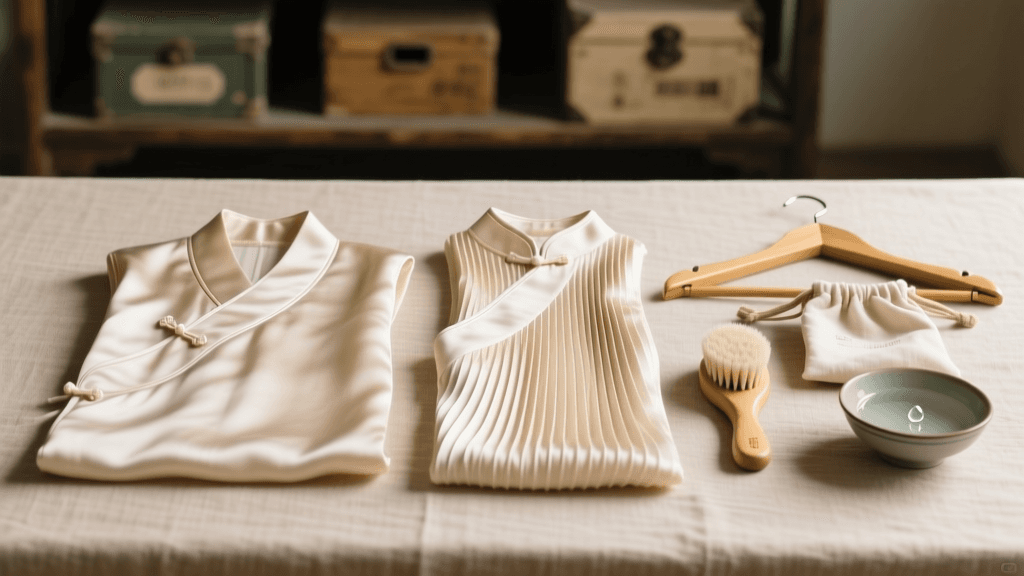
To successfully complete the online Wasai module, students must equip their home studios with traditional Japanese tools. While Western sewing kits rely on measuring tapes and curved shears, Wasai demands specialized instruments. Bunka provides a curated list of required tools for the 2026 cohort, many of which can be shipped internationally from specialized suppliers in Tokyo.
- Shaku (Traditional Ruler): Measuring approximately 37.8 cm, the shaku is the foundational measuring tool in Japanese garment making. Made from bamboo or hinoki cypress, it ensures historical accuracy in pattern drafting. Estimated Cost: $45.
- Hera (Bamboo Spatula): Used instead of chalk or tracing wheels, the hera creates a temporary, crisp crease on silk fabric to mark seam allowances without leaving residue or damaging delicate fibers. Estimated Cost: $15.
- Chakudai (Cutting Board): A specialized, low-profile wooden board used in conjunction with the hera to score fabric lines. It protects the fabric and provides the exact resistance needed for clean creases. Estimated Cost: $120.
- Kote (Traditional Iron): Unlike modern steam irons, the kote is a specialized, flat-bottomed iron used with a atsushi (pressing cloth) to flatten seams without stretching the bias of the silk. The 2026 curriculum recommends temperature-controlled electric models designed specifically for silk chirimen (crepe). Estimated Cost: $180.
- Tanmono Silk Chirimen: Students are required to purchase at least two bolts of practice silk crepe. Bunka has partnered with wholesalers in the Nishijin district to ship authentic, un-dyed tanmono directly to international students. Estimated Cost: $300 per bolt.
Career Pathways and Sustainable Fashion Integration
Graduates of the 2026 hybrid programs are uniquely positioned at the forefront of the global sustainable fashion movement. The zero-waste principles of Wasai are increasingly being adopted by avant-garde and luxury fashion houses in Paris and Milan, which are actively seeking patternmakers who understand geometric, non-wasteful cutting methods. Furthermore, the ability to authentically restore, upcycle, and redesign vintage kimono into modern apparel is a highly lucrative niche market in 2026.
For textile designers, mastering Kaga Yuzen provides a distinct competitive advantage. The slow-fashion movement has created a premium market for hand-dyed, bespoke garments. Artisans who can combine traditional Japanese resist-dyeing with contemporary silhouettes are frequently commissioned by global luxury brands looking to incorporate authentic, ethically produced artisanal textiles into their seasonal runway collections.
Step-by-Step Enrollment Guide for International Students
Securing a spot in Bunka Fashion College’s hybrid programs requires careful planning, as the in-person Kyoto workshops are strictly capped at 15 students per session to maintain the integrity of the master-apprentice dynamic. Follow these steps to apply for the Fall 2026 intake:
- Portfolio Submission (By March 15, 2026): While the Wasai Digital Certificate is open to beginners, the Hybrid Artisan Diploma requires a portfolio demonstrating basic sewing proficiency and an understanding of color theory.
- Language Proficiency: All 2026 online modules and Kyoto workshops are conducted in English with live translation support. However, applicants must pass a basic Japanese terminology quiz to ensure they can comprehend traditional craft vocabulary (e.g., eri for collar, sode for sleeve).
- Visa and Residency Logistics (By June 1, 2026): For the Kyoto intensive, international students must apply for a Short-Term Stay visa. Bunka’s international office provides the necessary Certificate of Eligibility and partners with local Kyoto machiya (traditional townhouse) guesthouses to offer subsidized accommodation blocks for students.
- Tool Procurement: Once enrolled, students receive access to the Bunka global supply portal. It is highly recommended to order your shaku, hera, and tanmono by July to account for international shipping delays, ensuring your home studio is fully operational before the August semester begins.
By embracing the hybrid educational models of 2026, the next generation of global designers can master the profound techniques of Japanese garment making. Whether you are looking to eliminate waste in your patternmaking process or hand-dye bespoke silks using centuries-old resist methods, Bunka Fashion College provides the definitive bridge between ancient heritage and the future of global fashion.