Top Hanbok Sewing Workshops in Seoul 2026: Expert Guide
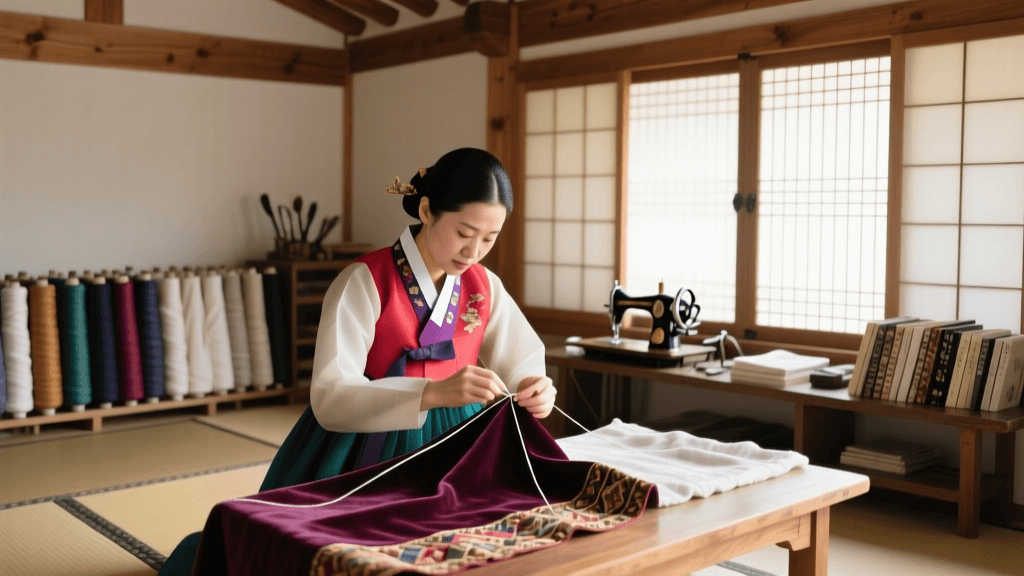
The Global Renaissance of Hanbok Construction
The global fascination with traditional Asian garments has evolved from passive appreciation to active creation. As we navigate the fashion landscape of 2026, the desire to understand the intricate architecture of traditional clothing has never been higher. Among the most sought-after skills is the construction of the Korean Hanbok. With its elegant lines, vibrant silk color palettes, and unique flat-pattern cutting techniques, the Hanbok represents a masterclass in zero-waste tailoring and cultural storytelling. For international designers, textile enthusiasts, and slow-fashion advocates, traveling to Seoul to attend immersive Hanbok sewing workshops has become a definitive rite of passage.
Unlike Western tailoring, which relies heavily on darts and three-dimensional draping to contour the body, traditional Hanbok construction is rooted in flat, geometric pattern cutting. The garments are designed to be forgiving, modular, and deeply respectful of the fabric's natural drape. In 2026, a new wave of heritage academies in Seoul has opened its doors to global students, offering seminars that bridge centuries-old techniques with modern sustainable practices.
Why Study Hanbok Tailoring in Seoul in 2026?
South Korea's commitment to preserving its intangible cultural heritage has reached new heights this year. Supported by government initiatives and a booming cultural export economy, traditional craft villages and heritage centers in Seoul have heavily subsidized masterclass programs for international attendees. According to the Korea Tourism Organization, cultural immersion tourism, specifically focused on traditional crafts and textile arts, has seen a 40% year-over-year increase in early 2026.
Furthermore, the global push for sustainable fashion has spotlighted the Hanbok's inherent eco-friendly design. Because traditional Hanbok patterns utilize almost the entire width of the silk loom without discarding offcuts, learning these methods provides modern designers with invaluable insights into zero-waste pattern drafting. Institutions aligned with UNESCO's Intangible Cultural Heritage frameworks are now emphasizing these sustainable aspects in their 2026 syllabi, making these workshops relevant not just for historians, but for forward-thinking fashion professionals.
Top 3 Hanbok Making Workshops and Seminars in Seoul
1. Korea Traditional Craft Center (KTCC) – Intensive Jeogori Masterclass
Located in the heart of the Insadong district, the KTCC offers a rigorous, five-day intensive seminar focused entirely on the jeogori (the upper garment of the Hanbok). This 2026 cohort is designed for intermediate sewists who already understand basic garment construction but want to master traditional Korean hidden stitches. Students learn to draft the baerae (the beautifully curved underarm sleeve) and construct the git (collar) using traditional silk interfacing. The 2026 tuition is 850,000 KRW (approximately $630 USD), which includes a premium kit of domestic myeongju (raw silk) and traditional brass sewing tools.
2. Bukchon Heritage Tailoring Academy – Full Chima & Jeogori Cohort
For those seeking a comprehensive deep dive, the Bukchon Heritage Tailoring Academy offers a four-week evening seminar. Nestled in the historic Bukchon Hanok Village, this program allows students to construct a complete women's Hanbok ensemble, including the voluminous chima (skirt) and the jeogori. The curriculum places a heavy emphasis on the goreum (the long, flowing chest ties), teaching the precise mathematical ratios required to achieve the perfect modern-traditional drape. Tuition for the 2026 spring and autumn cohorts is set at 1,500,000 KRW. The academy also provides bilingual teaching assistants, making it highly accessible for international students.
3. Seoul Sustainable Silk Seminar – Upcycling Vintage Hanbok
A brand-new addition to the 2026 workshop circuit is the Sustainable Silk Seminar, hosted in the trendy Seongsu-dong fashion district. This two-day weekend workshop focuses on deconstructing vintage, mid-century Hanboks and upcycling the antique silks into modern, everyday garments or accessories. Students learn how to properly clean, press, and stabilize fragile vintage silks, as well as how to adapt traditional flat patterns for contemporary wardrobes. Priced at an accessible 350,000 KRW, this seminar is incredibly popular among eco-conscious designers and sells out months in advance.
2026 Workshop Comparison Chart
| Workshop Name | Duration | Primary Focus | Skill Level | 2026 Tuition (KRW) |
|---|---|---|---|---|
| KTCC Jeogori Masterclass | 5 Days (Full-time) | Upper garment, hidden stitches, curved sleeves | Intermediate | 850,000 |
| Bukchon Heritage Academy | 4 Weeks (Evenings) | Full ensemble, pattern drafting, goreum tying | Beginner to Advanced | 1,500,000 |
| Seoul Sustainable Silk Seminar | 2 Days (Weekend) | Vintage upcycling, fabric stabilization, modern adaptation | All Levels | 350,000 |
Core Techniques You Will Master
Attending a traditional Hanbok seminar is fundamentally different from a standard Western sewing class. You will be introduced to a completely different philosophy of garment making. Key techniques covered in these 2026 masterclasses include:
- Baerae (Curved Sleeve Construction): Unlike the straight, set-in sleeves of Western shirts, the Hanbok sleeve features a gentle, sweeping curve at the underarm. Mastering the baerae requires precise easing and specialized hidden stitching to ensure the sleeve drapes elegantly when the arms are lowered, yet allows complete freedom of movement when raised.
- Git and Dongjeong (Collar Architecture): The git is the fabric collar band, while the dongjeong is the crisp, white paper-like insert that gives the Hanbok its signature sharp neckline. Students learn how to draft the collar to sit perfectly flush against the nape of the neck and how to properly insert and secure the dongjeong so it remains pristine.
- Goreum (Chest Ties): The long ties that secure the jeogori are not merely functional; they are a focal point of the garment's aesthetic. Workshops teach the exact width (typically 6 to 7 centimeters) and length (often exceeding 100 centimeters) required for the 2026 traditional-modern hybrid style, alongside the specific knot-tying etiquette.
- Gamchimjil (Hidden Blind Stitching): A hallmark of high-quality Hanbok is the absence of visible topstitching. Students spend hours practicing gamchimjil, a microscopic blind stitch used to close seams and attach linings so that the garment looks identical, and equally flawless, on both the inside and the outside.
'The beauty of the Hanbok lies not in how it forces the body into a shape, but in how the fabric creates a new, flowing architecture around the wearer. It is an exercise in respecting the textile.' — Master Tailor Kim, Bukchon Heritage Academy.
Sourcing Authentic Fabrics: Gwangjang & Dongdaemun Markets
No Hanbok-making journey in Seoul is complete without sourcing your own textiles. While most workshops provide basic materials, serious students often visit local markets to purchase additional fabrics for personal projects.
Gwangjang Market remains the undisputed king of traditional textiles. In the dedicated silk alleys, you can find authentic myeongju (raw silk), which has a beautiful, slightly textured matte finish, and mosi (ramie), a breathable, crisp fabric ideal for summer Hanboks. When shopping in 2026, look for stalls displaying the 'Certified Heritage Textile' badge, a new municipal initiative guaranteeing the fabric is woven on traditional looms.
Dongdaemun Comprehensive Market is better suited for modern blends, brocades, and experimental textiles. If you are taking the Sustainable Silk Seminar, the vintage deadstock stalls on the third floor of Building C are a treasure trove of 1980s and 1990s Hanbok silks, often featuring stunning, hand-painted floral motifs that are no longer in production.
For those interested in the historical context of these textiles, the National Museum of Korea frequently hosts rotating exhibitions on Joseon-era textile weaving and natural dyeing processes, providing incredible visual references for your own fabric selections.
Practical Tips for International Students in 2026
- Booking Lead Times: The post-pandemic boom in craft tourism has made these seminars highly competitive. For the 2026 academic year, it is strongly recommended to book your spot at least four to six months in advance, particularly for the Bukchon Heritage Academy's bilingual cohorts.
- Visa and Entry Requirements: Most short-term workshops (under 30 days) can be completed on a standard tourist entry or K-ETA (Korea Electronic Travel Authorization). However, if you plan to enroll in a multi-month apprenticeship, you must apply for a D-4 (General Trainee) or specific cultural training visa well in advance.
- Tool Kits: While academies provide fabric, many master tailors require you to purchase a specific set of traditional shears and silk-weight pins. Budget an extra 50,000 KRW to purchase a professional-grade Korean tailoring kit, which makes for an excellent souvenir and a vital tool for your future projects.
- Language Barrier: While the major academies now offer English translation headsets or bilingual assistants, learning basic Korean sewing terminology (such as si-chim for basting and gok-sun for curve) will vastly improve your rapport with the master artisans and enhance your overall learning experience.
Embarking on a Hanbok tailoring seminar in Seoul is more than just a sewing class; it is a profound immersion into Korean philosophy, geometry, and artistry. Whether you are deconstructing vintage silks in Seongsu-dong or mastering the hidden stitches of a jeogori in Insadong, the skills you acquire in 2026 will forever change the way you view, respect, and construct traditional garments.