The 2026 Guide to Bespoke Geta and Zori Footwear Craft
The Enduring Legacy of Japanese Footwear in 2026
As the global fashion industry pivots heavily toward sustainable, slow-fashion paradigms in 2026, traditional Japanese footwear has experienced a remarkable renaissance. Far from being mere historical relics, geta (wooden clogs) and zori (flat sandals) are actively worn today, blending centuries-old craftsmanship with modern ergonomic sensibilities. For enthusiasts of Asian traditions and traditional garments, understanding the intricate craft behind these footwear staples offers a profound glimpse into Japanese material culture, woodworking, and textile weaving.
In 2026, the bespoke footwear market in Tokyo and Kyoto has seen a significant surge in international commissions. Artisans are adapting to contemporary needs without sacrificing historical integrity, utilizing sustainably harvested timber and reviving heritage weaving techniques. Whether you are attending a summer matsuri (festival) or participating in a formal tea ceremony, selecting the right footwear is an essential component of the traditional Japanese silhouette.
Anatomy of Traditional Footwear: Geta vs. Zori
While often conflated by the untrained eye, geta and zori serve distinctly different purposes and are constructed using fundamentally different methodologies. According to cultural heritage resources like the Japan Guide's comprehensive overview of traditional Japanese garments, the distinction between these two forms is rooted in both class history and practical utility.
| Feature | Geta (Wooden Clogs) | Zori (Flat Sandals) |
|---|---|---|
| Base Material | Paulownia, Cypress, or Cedar | Straw, Vinyl, Leather, or Woven Fabric |
| Elevation | Raised on wooden 'teeth' (ha) | Flat against the ground |
| Primary Use | Summer festivals, Yukata, Rain protection | Formal Kimono, Tea Ceremony, Indoor |
| Acoustic Profile | Distinctive 'clack' (karankoron) | Silent or soft rustle |
The Materials: Paulownia Wood and Igusa Rush
Kiri (Paulownia) Wood for Geta
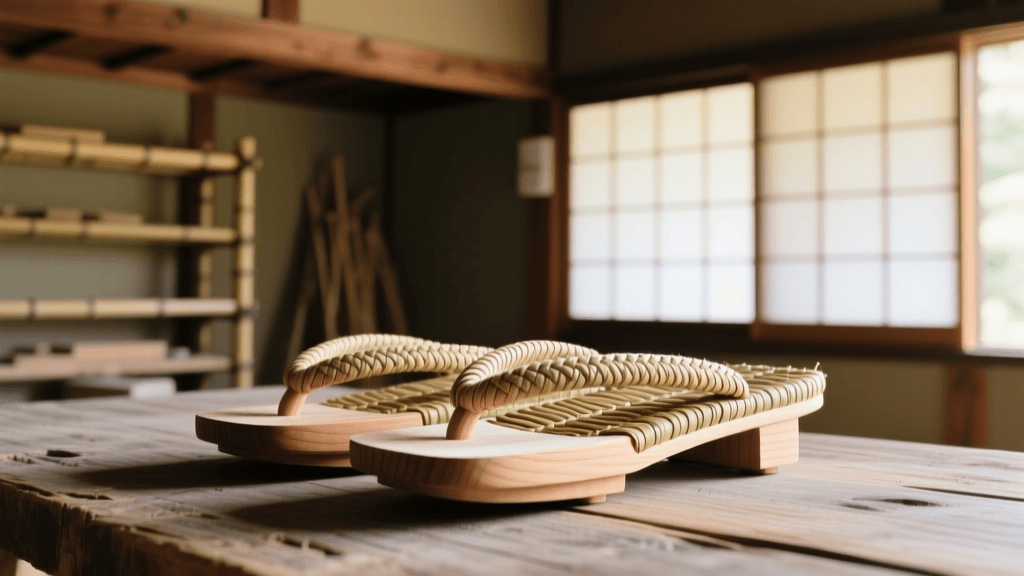
The foundation of a high-quality geta is the dai (base board). In 2026, the gold standard for this base remains kiri, or paulownia wood. Paulownia is prized for its lightweight nature, resistance to moisture, and beautiful, pale grain. Master carpenters in regions like Niigata and Fukushima carefully select kiln-dried paulownia that has been aged for a minimum of three years to ensure stability. The wood is then carved using specialized planes to create the ha (teeth) of the geta. While standard geta feature two teeth, artisan variations like the senryou (one tooth) or tengu (high single tooth) require extraordinary precision to balance the wearer's weight.
Igusa (Rush) and Shirafu for Zori
Zori bases are traditionally woven from igusa, the same soft rush used to tatami mats. The premier source for this material is Kumamoto Prefecture, which produces over 80% of Japan's igusa. In 2026, due to climate shifts and a shrinking agricultural workforce, authentic Kumamoto igusa has become a premium luxury material. For formal zori, the base is often covered in shirafu (woven fabric) or brocade, with the thickness of the sole indicating the formality of the garment; thicker, multi-layered soles are reserved for the most formal occasions, such as weddings.
The Craftsmanship: Carving, Weaving, and Hanao Tying
The creation of bespoke footwear is a multi-disciplinary craft. The geta-shi (clog maker) must possess skills in woodworking, textile selection, and knot-tying. The most critical component connecting the foot to the base is the hanao (thong).
In 2026, a major trend in bespoke geta crafting is the integration of hidden ergonomic supports. Artisans are now inserting high-density memory foam and silicone arch supports inside the velvet or leather wrapping of the hanao. This innovation provides the comfort expected by modern consumers while maintaining the flawless, traditional exterior silhouette. The hanao is threaded through three precisely drilled holes in the dai and secured using a complex internal knotting system that allows for future tightening as the fabric naturally stretches over time.
Where to Commission Bespoke Geta and Zori in 2026
For travelers and collectors seeking authentic, made-to-measure footwear, Japan remains the undisputed epicenter of the craft. For travelers seeking authentic experiences, the Japan National Tourism Organization (JNTO) highlights several artisan districts where these heritage crafts thrive. Here is what you need to know about commissioning bespoke pieces in 2026:
- Tsujiya Honten (Asakusa, Tokyo): A legendary establishment located near Senso-ji Temple. They offer an extensive selection of pre-made hanao and dai, but their bespoke service allows you to select your exact wood grain, teeth height, and velvet thong color. 2026 Pricing: Bespoke paulownia geta start at ¥28,000 ($190 USD), with a turnaround time of 4 to 6 weeks.
- Moto-Chika (Kyoto): Renowned for formal zori and specialized okobo (the high, platform geta worn by apprentice geisha). Their brocade zori are considered some of the finest in the Kansai region. 2026 Pricing: Formal brocade zori range from ¥35,000 to ¥60,000 ($235 - $400 USD).
- Karankoron (Online & Flagship): A modern brand bridging the gap between traditional craft and contemporary streetwear. They offer rubber-soled geta hybrids designed for urban commuting, eliminating the traditional clack for quieter city walking.
How to Walk and Care for Your Footwear
The Art of Suriashi (Sliding Foot)
Walking in geta and zori requires a departure from the Western heel-to-toe stride. The correct technique is suriashi, a gliding motion where the foot remains relatively flat and close to the ground. You lift the footwear slightly using your toes and the hanao, sliding it forward before setting it down gently. This not only prevents the hanao from snapping but also produces the rhythmic, poetic karankoron sound that is deeply romanticized in Japanese literature and film.
Maintenance in a Changing Climate
Proper care is essential to preserve the longevity of natural materials. With summer humidity levels in Japan frequently exceeding 75% in 2026, paulownia wood can absorb moisture and warp if stored improperly.
Pro-Tip for Collectors: Never store your geta in plastic bags or airtight containers. Always use the breathable cotton dust bags provided by the artisan. Insert silica gel packets into the storage box during the rainy season (tsuyu) to regulate moisture and prevent the wood from developing hairline fractures.
For the hanao, gently wipe velvet thongs with a soft-bristled brush to remove dust, and apply a specialized leather conditioner if you have opted for a premium calfskin thong. If the internal knot loosens over the years, most original ateliers offer a hanao suge-kae (thong replacement) service for a nominal fee, ensuring your footwear lasts a lifetime.
Conclusion
The craft of geta and zori is a testament to the Japanese philosophy of monozukuri—the art of making things with profound dedication and precision. As we navigate 2026, the continued patronage of these artisans ensures that the rhythmic clack of wooden clogs on stone paths and the silent elegance of woven rush sandals remain a living, breathing part of Asian traditions. Investing in a bespoke pair is not merely a purchase; it is an act of cultural preservation and a deeply personal connection to centuries of heritage.
The historical evolution of these crafts is meticulously documented in institutions such as The Metropolitan Museum of Art's Heilbrunn Timeline of Art History, which underscores how everyday objects in Japan are elevated to the status of high art through masterful craftsmanship and an intimate understanding of natural materials.