Banarasi vs Kanjeevaram Silk Sarees: 2026 Bridal Fabric Guide
Introduction to Heritage Silks in 2026
When it comes to South Asian bridal fashion, few textiles command the reverence, heritage, and sheer visual impact of Banarasi and Kanjeevaram silks. As we navigate the 2026 bridal season, a distinct shift is occurring in how modern brides approach traditional garments. Rather than simply choosing a color palette, today's discerning brides are focusing heavily on the textile architecture—the weave density, yarn ply, zari composition, and drape physics that dictate how a garment moves and feels throughout a multi-day wedding celebration.
Both Banarasi (originating from Varanasi in the north) and Kanjeevaram (from Kanchipuram in the south) represent the pinnacle of Indian handloom craftsmanship. However, their fundamental textile structures are vastly different. Understanding these differences is crucial for making an informed investment in 2026, where artisanal wages, raw silk costs, and sustainable weaving practices are reshaping the market. This comprehensive guide breaks down the fabric and textile choices between these two legendary weaves, helping you select the perfect foundation for your bridal trousseau.
The Textile Anatomy of Banarasi Silk
Banarasi sarees are renowned for their intricate motifs, Mughal-inspired patterns, and fluid drape. The magic of a Banarasi lies in its extra-weft weaving technique, traditionally executed on a jacquard loom. The base fabric is created using warp and weft threads, while a supplementary weft thread—often the zari (metallic yarn)—is woven over and under the base to create raised, embossed patterns.
Yarn Types and Weave Variations
- Katan Silk: The gold standard for bridal Banarasi. Katan involves twisting two or more pure silk yarns together, resulting in a highly durable, slightly textured, and lustrous fabric. In 2026, lightweight Katan weaves (using finer denier yarns) are highly sought after for daytime wedding functions.
- Kora (Organza) Silk: Woven with zari as the primary extra weft on a sheer, stiff silk organza base. It offers a translucent, ethereal quality but lacks the heavy drape of Katan.
- Tanchoi: A complex satin weave where the extra weft is so densely packed that it forms the base design without the need for a separate jacquard mechanism. It is incredibly soft and fluid.
The hallmark of a traditional Banarasi is its minakari (enamel-like inlay work) and jaal (trellis) patterns. Because the jacquard mechanism allows for continuous, flowing designs across the body of the fabric, Banarasi textiles tend to be more pliable and softer to the touch compared to their southern counterparts.
The Textile Anatomy of Kanjeevaram Silk
If Banarasi is about fluid intricacy, Kanjeevaram is about structural grandeur. Woven on traditional pit looms, the Kanjeevaram relies on the korvai technique—a complex method of interlocking the body of the saree with its contrasting border. This requires two or three weavers to work simultaneously, throwing different colored shuttles and interlocking the weft threads with mathematical precision.
The Korvai and Petni Techniques
The border (korvai) and the pallu (petni) are woven separately and interlocked into the main body of the saree. This interlocking is so robust that even if the saree tears, the border will not detach. The silk used is pure mulberry silk, typically spun into a thick 3-ply or 4-ply yarn. This high ply count gives the Kanjeevaram its signature weight, stiffness, and brilliant light-reflecting qualities.
In 2026, weavers are increasingly offering 'soft-finish' Kanjeevarams, where the silk is degummed more thoroughly and woven with a 2-ply yarn to reduce the overall weight, catering to brides who want the traditional South Indian look without the physical strain of carrying a 1.5-kilogram garment on their shoulder.
2026 Bridal Fabric Comparison Chart
To help you visualize the technical and practical differences, refer to the comparison table below detailing the core textile properties of both weaves as of the current 2026 market.
| Textile Property | Banarasi Silk (Katan) | Kanjeevaram Silk (Traditional 3-Ply) |
|---|---|---|
| Loom Type | Jacquard Loom (Extra-Weft) | Pit Loom (Interlocking Weft / Korvai) |
| Fabric Weight | Medium (400g - 800g) | Heavy (800g - 1.5kg) |
| Drape Physics | Fluid, gathers softly, excellent pleats | Stiff, holds architectural pleats, heavy pallu |
| Zari Composition | Often copper/silver alloy or tested zari | High-purity silver wire electroplated with gold |
| Climate Suitability | Versatile; breathable weaves available | Best for cooler, air-conditioned environments |
| 2026 Avg. Price (USD) | $250 - $1,200+ | $400 - $2,500+ |
Pricing and Market Trends for 2026
The cost of authentic handloom silk has seen notable adjustments in 2026. According to data monitored by the Ministry of Textiles, Government of India, the rising cost of raw mulberry silk and the push for fair-wage artisan cooperatives have elevated the baseline price of genuine handloom pieces. A pure Kanjeevaram with certified pure zari (gold and silver) now rarely falls below $600, with master-weaver pieces featuring intricate mythological motifs commanding upwards of $2,500.
Banarasi silks offer a slightly wider price bracket. While a pure Katan silk Banarasi with real zari will cost between $800 and $1,500, the introduction of high-quality viscose-silk blends and 'tested' zari (where a synthetic or copper core is electroplated) has created a market for stunning, durable bridal alternatives in the $250 to $400 range. For the 2026 eco-conscious bride, sustainable zari alternatives that prevent the tarnishing associated with traditional metal threads are becoming a major selling point.
Actionable Authentication: Avoiding Powerloom Fakes
The proliferation of powerloom replicas is the greatest threat to the traditional textile market. Powerlooms can mimic the visual motifs of both Banarasi and Kanjeevaram weaves but lack the structural integrity, breathability, and heirloom value of handloom fabrics. Here is how you can authenticate your textile choices in 2026:
The Silk Mark and Handloom Mark
Always look for the official Silk Mark Organisation of India label. This government-backed certification guarantees that the base fabric is 100% natural silk. Additionally, the Handloom Mark certifies that the fabric was woven on a manual loom, ensuring your purchase supports traditional artisan livelihoods rather than mass-production factories.
The Burn Test
If you are sourcing textiles directly from weavers or boutiques that allow testing, the burn test remains the most reliable method for verifying pure silk and pure zari.
- Testing the Silk: Pluck a single thread from the warp or weft and burn it. Pure mulberry silk will burn slowly, smell distinctly like burnt hair or flesh, and leave behind a crushable, powdery black ash. Synthetic blends will melt, smell like plastic, and form a hard, uncrushable bead.
- Testing the Zari: Take a piece of the metallic thread and burn off the outer wrapping. If the core wire is pure silver (used in high-grade Kanjeevarams), it will melt into a silver bead and remain intact. If it is plastic or cheap copper, it will either melt into a black sludge or snap and oxidize into a brittle green/black powder.
Draping Physics and Styling Considerations
The choice between Banarasi and Kanjeevaram should also be dictated by your preferred draping style and the physical demands of your wedding day.
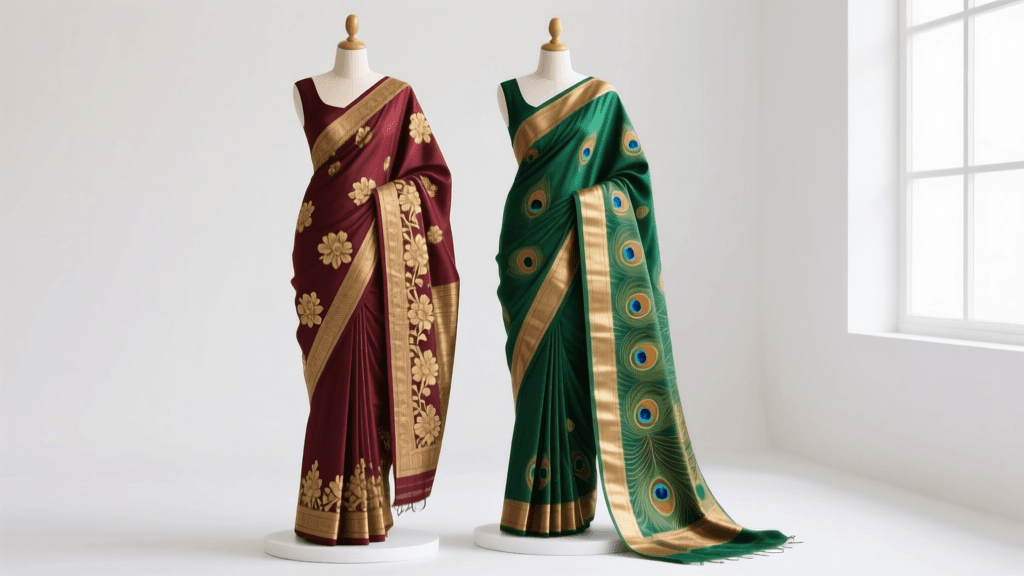
'The structural stiffness of a Kanjeevaram demands sharp, heavily pinned pleats, creating a statuesque silhouette. Conversely, a Banarasi Katan silk flows like water, allowing for softer, modern drape styles like the dhoti-pant or the butterfly drape without the fabric fighting back against the folds.' — Textile Drape Specialist, 2026 Bridal Symposium.
If you are planning a highly active reception with extensive dancing, the medium weight and fluidity of a Banarasi Tanchoi or Katan silk will move seamlessly with your body. If you are presiding over a traditional morning ceremony where a regal, structured, and immobile silhouette is desired, the heavy 3-ply Kanjeevaram is unmatched in its architectural presence.
Care and Storage for Heavy Silks
Investing in heritage textiles requires meticulous care to ensure they become true heirlooms. In 2026, textile conservators strongly advise against dry-cleaning pure zari silks unless absolutely necessary, as the harsh chemicals can strip the gold electroplating from the silver core. Instead, opt for professional 'silk spa' services that use gentle, pH-neutral organic solvents. When storing, never use plastic covers, which trap moisture and cause the metallic zari to oxidize and turn black. Always wrap your Banarasi or Kanjeevaram sarees in unbleached, pure cotton muslin cloth, and refold them every three months along different axis lines to prevent permanent crease damage and fiber degradation.
Conclusion
Choosing between Banarasi and Kanjeevaram silk is not merely a decision about color or pattern; it is a choice between two fundamentally different textile engineering philosophies. The fluid, jacquard-woven grace of the Banarasi contrasts beautifully with the interlocked, heavy-ply majesty of the Kanjeevaram. By understanding the yarn structures, weave techniques, and 2026 market realities outlined in this guide, you can confidently select a bridal garment that not only looks breathtaking but honors centuries of Asian textile tradition.