Awa Odori Dance Costumes: Japanese Festival Performance Guide
Introduction to Awa Odori Festival Attire
The Awa Odori is one of Japan's most vibrant and energetic traditional dance festivals, drawing over a million spectators to Tokushima Prefecture every August. According to the Tokushima City Tourism Association, the festival features tens of thousands of dancers, known as ren, moving through the streets in highly coordinated, rhythmic performances. While the music and choreography are mesmerizing, the traditional garments worn by the performers are equally critical to the spectacle. Unlike static ceremonial wear, Awa Odori costumes are engineered for extreme mobility, breathability, and visual impact during dynamic, high-energy routines.
Whether you are a cultural enthusiast, a cosplayer, or a performer preparing for a Japanese matsuri (festival) abroad, understanding the specific requirements of Awa Odori attire is essential. This guide breaks down the male and female performance costumes, offering actionable advice on sizing, sourcing, and preparing your gear for the stage or street.
Historical Context and Performance Evolution
Originating in the late 16th century, the Awa Odori (literally 'Fool's Dance') evolved from Bon Odori, the traditional dances held to welcome the spirits of the deceased. As noted by The Japan Times, the festival's unique style was heavily influenced by the Noh theater and the celebratory spending of the local merchant class during the Edo period. Over centuries, the costumes transitioned from everyday summer wear to specialized performance gear. Today, the garments reflect a blend of historical aesthetics and modern textile advancements designed to withstand the sweltering Japanese summer and the physical demands of the dance.
The Female Dancer (Onna Odori) Costume
Female Awa Odori dancers are renowned for their graceful, sweeping movements, intricate footwork, and striking silhouettes. The female costume is a masterclass in balancing modesty, tradition, and kinetic flair.
The Performance Yukata
Unlike standard summer yukata, which are often made from stiff cotton or polyester blends, performance yukata for Awa Odori are tailored specifically for movement. They feature a wider sleeve opening and are worn significantly higher than formal kimono. The hemline is typically pinned or tied to hit at the mid-calf (approximately 45 to 50 centimeters from the floor). This shorter length is non-negotiable; it prevents the dancer from tripping during the signature low-to-the-ground steps and allows the audience to see the intricate footwork. High-quality, breathable miyako-ori cotton or advanced moisture-wicking poly-blends are preferred to manage perspiration during the humid August performances.
Amigasa (Woven Hats) and Koshi-Maki
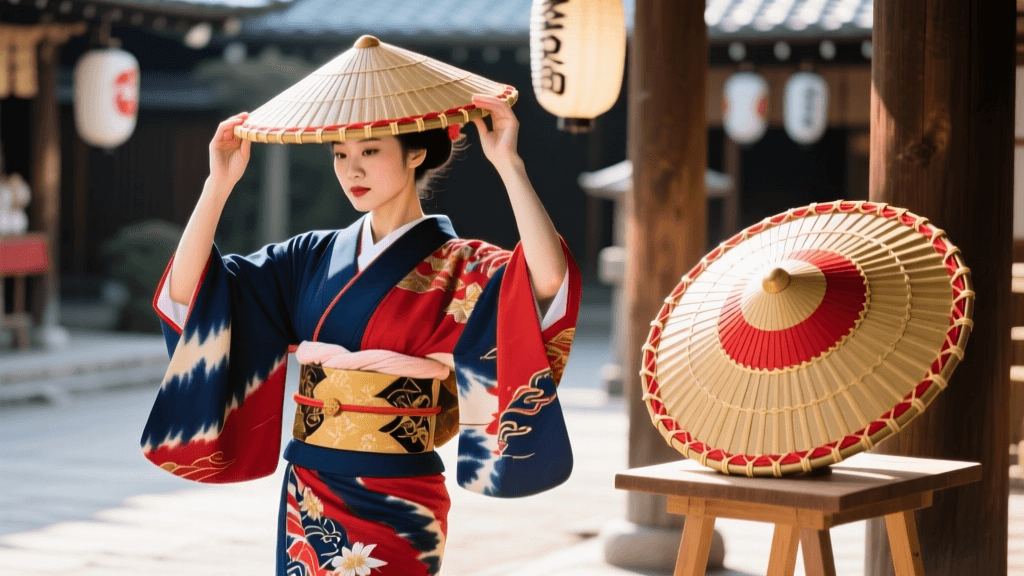
The amigasa is a distinctive, conical hat woven from sedge grass. It casts a shadow over the dancer's face, adding an air of mystery and elegance while protecting the performer from the sun. The hat is secured with a braided chin cord. Beneath the yukata, dancers wear a koshi-maki, a wraparound skirt tied at the waist. When the dancer executes high kicks or deep lunges, the koshi-maki flashes brightly, adding a dynamic layer of color and preserving modesty.
Dance Geta (Wooden Clogs)
Perhaps the most challenging element of the female costume is the geta. Female Awa Odori dancers wear specialized wooden clogs with two elevated 'teeth' that are typically 12 to 15 centimeters high. Dancing in these requires immense core strength and balance. The hanao (thongs) are often placed slightly further back than on standard geta to provide better leverage for the toe-flicking motions characteristic of the dance.
The Male Dancer (Otoko Odori) Costume
Male Awa Odori dancers perform with a grounded, martial energy, often mimicking the movements of a marionette or a samurai. Their attire prioritizes freedom of movement and a rugged, festive aesthetic.
Happi Coats and Tasuki
Male dancers typically wear a happi coat, a short, loose-fitting jacket adorned with the crest or kanji of their specific dance troupe (ren). The happi is worn open or secured with a simple sash, revealing a haramaki (belly band) or bare chest underneath. To prevent the wide sleeves from interfering with arm movements, dancers use a tasuki—a long cloth cord tied in an X-shape across the back to hoist the sleeves up and out of the way.
Momohiki and Tabi
Instead of hakama or yukata, men wear momohiki, which are tight-fitting, stretch-cotton trousers that taper at the calves. These allow for deep squats and rapid lateral movements. On their feet, male dancers traditionally wear split-toe tabi socks, though many modern troupes opt for jikatabi (rubber-soled ninja shoes) or dance barefoot to maintain a low center of gravity and grip the asphalt during street parades.
Practical Guide: Sizing, Costs, and Preparation
Acquiring authentic Awa Odori gear requires an understanding of Japanese sizing and performance-specific modifications. Below is a breakdown of the essential components, estimated costs, and sizing advice for international buyers.
| Garment Component | Material / Style | Estimated Cost (USD) | Sizing / Fit Advice |
|---|---|---|---|
| Onna Odori Yukata | Breathable Cotton / Poly-blend | $80 - $250 | Select a length that allows hemming to mid-calf. Width should allow a 30cm stride. |
| Amigasa Hat | Woven Sedge Grass | $30 - $60 | One size fits most. Ensure the inner headband can be padded for a secure fit. |
| Dance Geta | Paulownia Wood (Kiri) | $45 - $120 | The geta base should be 1 to 2 cm shorter than your actual foot length to prevent tripping. |
| Otoko Odori Happi | Cotton Canvas | $40 - $90 | Should fall just below the hips. Sleeves must be wide enough to tie back with a tasuki. |
| Momohiki Trousers | Stretch Cotton | $35 - $70 | Snug at the calves, loose at the thighs. Measure inseam carefully for deep squats. |
Breaking In Your Dance Geta
Performing in 15cm geta without preparation is a recipe for blisters and ankle injuries. You must break in your geta at least four weeks before your performance. Start by lightly sanding the bottom teeth to remove the factory finish and improve traction. Wear thick, padded tabi socks during your first few practice sessions. To soften the hanao (thongs), dampen them with warm water and gently stretch them by hand to prevent blistering between the toes.
Tying the Performance Yukata
Standard yukata tying methods will restrict your movement. For Awa Odori, the yukata must be tied higher, just above the natural waistline, using a firm date-jime (wide belt) rather than a traditional stiff obi. This allows the hips to rotate freely. Secure the excess fabric at the waist with a koshi-himo (tie cord), creating a bloused effect that prevents the garment from pulling taut when you raise your arms.
Timing and Sourcing Authentic Gear
If you are planning to perform at a major matsuri or a cultural exhibition, timing is everything. Authentic, high-quality performance gear is often crafted by specialized artisans in Tokushima and Kyoto. According to the Japan National Tourism Organization, the Awa Odori Kaikan in Tokushima serves as a year-round hub for the dance, and their associated shops are excellent resources for authentic gear. However, for international orders, you must account for production and shipping times.
- Custom Orders: If you require custom happi coats with your troupe's logo or specific yukata patterns, place your order by early May. Artisans require 4 to 6 weeks for production.
- Shipping: International EMS shipping from Japan typically takes 1 to 2 weeks. Factor in potential customs delays.
- Ready-to-Wear: Standard sizes and off-the-rack momohiki or basic geta can be purchased from specialized online Japanese festival retailers (such as Japan Hanten Shop or Kyoto-based costume suppliers) with a lead time of 3 weeks.
Care and Maintenance of Festival Garments
Festival performances are notoriously hard on clothing. Sweat, asphalt dust, and friction can quickly degrade your garments. After every performance, untie all cords and hang your yukata and happi in a well-ventilated area away from direct sunlight to prevent the cotton from fading and the sweat from setting into the fibers. For momohiki and tabi, machine wash on a gentle, cold cycle and air dry; the heat from a tumble dryer will destroy the elasticity of the stretch cotton and shrink the split-toe seams. Geta should be wiped down with a slightly damp cloth and stored in a dry environment to prevent the paulownia wood from warping or developing mold.
Conclusion
The costumes of the Awa Odori are not merely decorative; they are functional tools that dictate the posture, movement, and spirit of the dance. From the rhythmic clack of the elevated geta to the sweeping arc of the amigasa, every element is designed to bring the 400-year-old tradition to life. By investing in properly sized, performance-grade garments and taking the time to prepare and maintain them, performers can fully immerse themselves in the joyous, demanding, and deeply rewarding world of Japanese festival dance.