2026 Guide to Authentic Viking Smokkr & Tablet Weaving
Introduction to the Viking Smokkr in the 2026 Reenactment Season
As we enter the 2026 historical reenactment season, the standard for Viking Age accuracy has never been higher. Gone are the days of fantasy-inspired costumes with excessive leather and ahistorical horned helmets. Today's Norse reenactors demand archaeological precision, driven by recent textile analyses and isotope studies published over the last few years. The centerpiece of the female Viking wardrobe remains the smokkr, commonly referred to as the apron dress. This iconic garment, suspended by a pair of oval brooches, offers a fascinating study in early medieval tailoring, textile production, and social signaling.
Reconstructing a historically accurate smokkr in 2026 requires an understanding of Norse construction techniques, which prioritized minimal fabric waste and maximum durability. Whether you are preparing for the Moesgaard Viking Moot in Denmark or the massive Wolin festival in Poland, this comprehensive guide will walk you through the materials, dyeing processes, and tablet weaving techniques required to build a museum-quality Viking apron dress.
The Foundation: The Linen Serk and Wool Smokkr
Before constructing the outer smokkr, one must begin with the foundational layer: the serk (underdress). According to the National Museum of Denmark, the serk was typically made of linen or fine, lightweight wool. For a high-status 2026 reconstruction, opt for a pleated linen serk, reminiscent of the finds at Birka and Købing. The linen should be unbleached or naturally sun-bleached, as chemical whitening agents are strictly avoided in authentic circles.
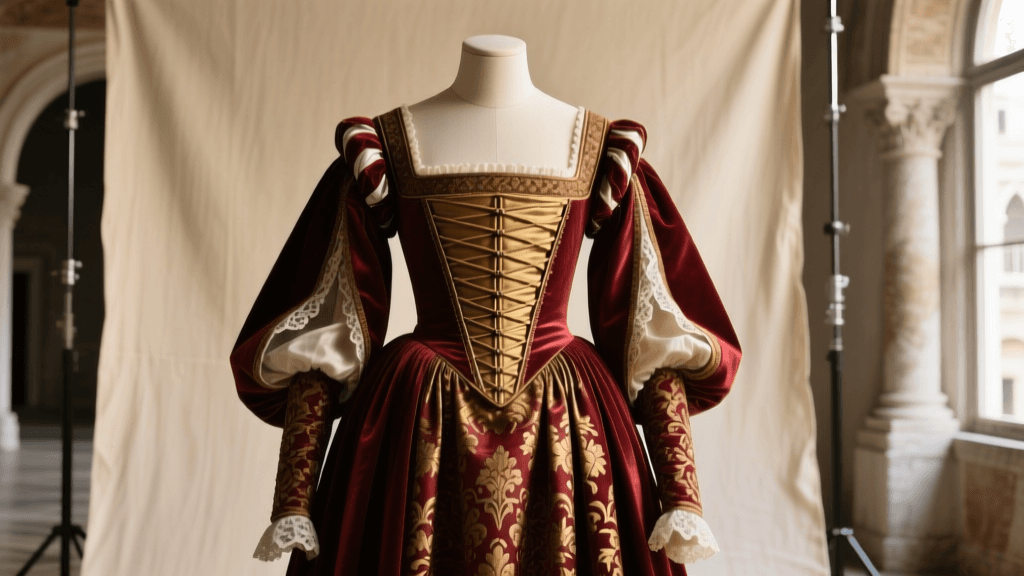
The smokkr itself was worn over the serk. While early 20th-century historians debated whether the smokkr was a wrapped garment or a closed tube, the modern archaeological consensus leans toward a closed, tubular construction with pleats at the front or back, suspended by shoulder straps. The fabric of the smokkr was almost exclusively wool, providing necessary insulation during the harsh Scandinavian winters and maritime voyages.
Selecting Historically Accurate Textiles
Sourcing the correct wool is the most critical step in your 2026 project. Modern commercial wools are often heavily processed and dyed with synthetic chemicals. Authentic Viking clothing utilized the wool of native sheep breeds, such as the Norwegian Spælsau, Gotland, or Icelandic sheep. These breeds produce a dual-coated fleece: a long, water-resistant outer coat (tog) and a soft, insulating inner coat (thel). Handwoven diamond twill (Köper) was the hallmark of high-status Viking women.
Below is a comparison of historically accurate textiles and their current 2026 market rates from specialized European weavers:
| Textile Type | Weave Structure | Historical Use | 2026 Market Price |
|---|---|---|---|
| Diamond Twill | 2/2 Broken Twill | High-status Smokkr | €75 - €95 / meter |
| Tabby Weave | Plain 1/1 Weave | Linen Serk / Shift | €30 - €45 / meter |
| Herringbone | 2/2 Twill Variation | Cloaks and Mantles | €60 - €80 / meter |
| Wadmal | Heavy Fulled Tabby | Winter Outerwear | €50 - €70 / meter |
For a standard smokkr, you will need approximately 2.5 to 3 meters of 150cm wide diamond twill. Investing in handwoven fabric from specialized artisans on platforms dedicated to historical textiles ensures the drape and weight perfectly mimic 9th and 10th-century archaeological finds.
Natural Dyeing: Achieving Authentic Norse Palettes
The Viking Age was far more colorful than the drab browns and grays often depicted in popular media. The Viking Ship Museum in Roskilde highlights that Norse dyers were highly skilled, utilizing complex mordanting techniques to achieve vibrant, colorfast hues. In 2026, natural dyeing has seen a massive resurgence, and sourcing organic botanicals is easier than ever.
- Woad (Isatis tinctoria): The primary source of blue. Woad requires a complex vat dyeing process, but yields the iconic, deep Norse blues found in high-status graves.
- Madder (Rubia tinctorum): Used for reds, oranges, and deep brick tones. Madder root must be mordanted with alum to ensure the color binds permanently to the wool fibers.
- Weld (Reseda luteola): Produces brilliant, sunlight-resistant yellows. Often over-dyed with woad to create vibrant 'Lincoln greens' and deep teals.
- Walnut Hulls & Oak Galls: Excellent for producing rich browns, deep grays, and acting as a natural tannin mordant for darker shades.
When dyeing your diamond twill, remember that the tog (outer coat) and thel (inner coat) of dual-coated wool absorb dyes differently. This creates a beautiful, natural heathering effect that synthetic dyes simply cannot replicate.
Tablet Weaving: The Signature Viking Trim
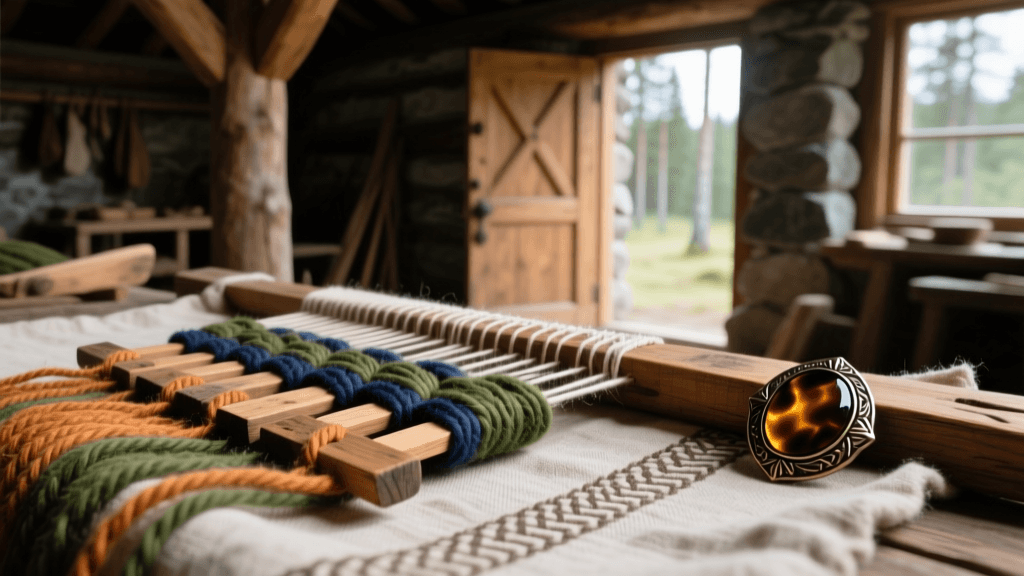
No Viking smokkr is complete without intricate tablet-woven trim. Tablet weaving (or card weaving) was used to create strong, decorative bands that reinforced the top edge of the apron dress and the hems of the serk. In 2026, modern reenactors utilize laser-cut wooden tablets and 3D-printed inkle looms to speed up the process, though purists still carve their own bone or antler cards.
To weave a basic 16-card Norse pattern, follow these steps:
- Warp the Loom: Use a strong, worsted-spun wool yarn for the warp. Thread four strands through the holes of each of the 16 tablets, alternating the direction of the threads (S and Z threading) to create a chevron or diamond motif.
- Tensioning: Secure the warp to a sturdy belt loom or rigid heddle setup. Proper tension is the secret to a tight, even weave.
- The Weft: Use a finer wool or silk thread for the weft, beating it in tightly with a wooden sword beater after every half-turn of the cards.
- Turning the Cards: Rotate the tablets forward or backward in groups to create the shed. The sequence of turns dictates the pattern. Keep a detailed drafting chart on hand to avoid losing your place in complex motifs like the Snartemo or Købing bands.
Attaching this tablet-woven band to the top edge of your smokkr not only provides historical authenticity but also prevents the wool from stretching and sagging under the weight of the brooches.
Tortoise Brooches and Garment Assembly
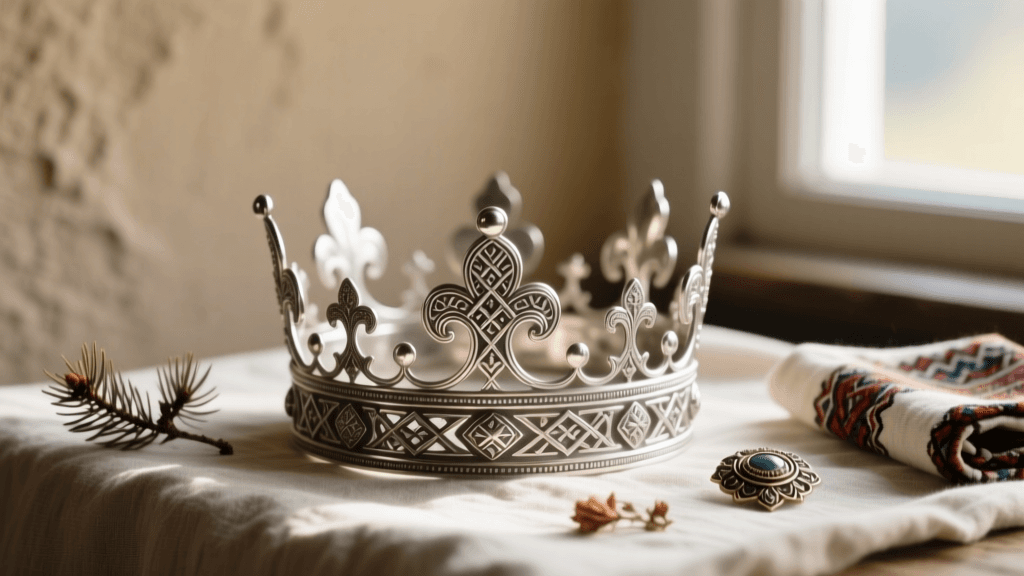
The smokkr is held together by a pair of oval brooches, colloquially known as 'tortoise brooches' due to their domed, shell-like shape. These brooches were typically cast in bronze, copper alloy, or occasionally gilded silver for royalty. When sourcing brooches in 2026, avoid cheap, mass-produced zinc alloys from generic costume shops. Instead, commission or purchase from artisan blacksmiths and casters who use the traditional lost-wax casting method.
The most common archaeological types are the P37 (simpler, single-shelled) and the P51 (elaborate, double-shelled with gripping beast motifs). To assemble the dress, loop the tablet-woven straps through the pins of the brooches, ensuring the weight is distributed evenly across the collarbone. Between the brooches, it is highly accurate to string swags of glass and amber beads, a staple of Viking Age female fashion that denoted wealth and trade connections stretching from Scandinavia to the Middle East.
2026 Festival Guide for Showcasing Your Smokkr
Once your smokkr, serk, and tablet-woven trims are complete, it is time to test them in the field. The 2026 European reenactment calendar is packed with events that enforce strict authenticity standards. The Moesgaard Viking Moot in Denmark remains the gold standard for living history, offering workshops on Norse textile crafts. In Poland, the Festival of Slavs and Vikings in Wolin provides a massive, immersive environment to showcase your garment in a bustling 10th-century market setting. Finally, the Lofotr Viking Festival in Norway offers the dramatic backdrop of the Lofoten Islands, perfect for testing the weather-resistant properties of your naturally dyed, lanolin-rich wool smokkr.
By adhering to archaeological evidence, utilizing historically accurate weaves, and mastering the art of tablet weaving, your 2026 Viking smokkr will not only be a beautiful piece of clothing but a wearable testament to the incredible textile engineering of the Norse people.