Sourcing Authentic Silk for Kimono and Hanbok in 2026
The 2026 Landscape of Heritage Silk
The intersection of heritage craftsmanship and modern sustainability has radically transformed the landscape of Asian traditional garments in 2026. For enthusiasts, collectors, and designers, sourcing authentic silk for kimono and hanbok is no longer just about aesthetics; it is about preserving intangible cultural heritage while navigating a new era of ethical textile production. Whether you are commissioning a formal uchikake for a wedding or sewing a lightweight summer hanbok, understanding the specific weaves, weights, and origins of these textiles is paramount. This comprehensive guide explores the premier silk choices available this year, offering actionable sourcing advice, current market pricing, and construction insights for the modern maker.
Historical Foundations and Modern Innovation
Silk has been the lifeblood of Asian sartorial traditions for millennia. As noted by The Metropolitan Museum of Art, the historical Silk Road did not merely transport fabrics; it facilitated a profound exchange of weaving technologies and aesthetic philosophies across continents. Today, in 2026, the legacy of those ancient routes is reflected in the hyper-specialized regional silk hubs of Japan and Korea. Artisans are now combining centuries-old loom techniques with advanced, climate-controlled rearing facilities to produce fibers of unprecedented consistency and strength, ensuring that traditional garments can withstand the rigors of modern ceremonial use while retaining their historical drape and luster.
Japanese Kimono Silks: Nishijin-Ori and Chirimen
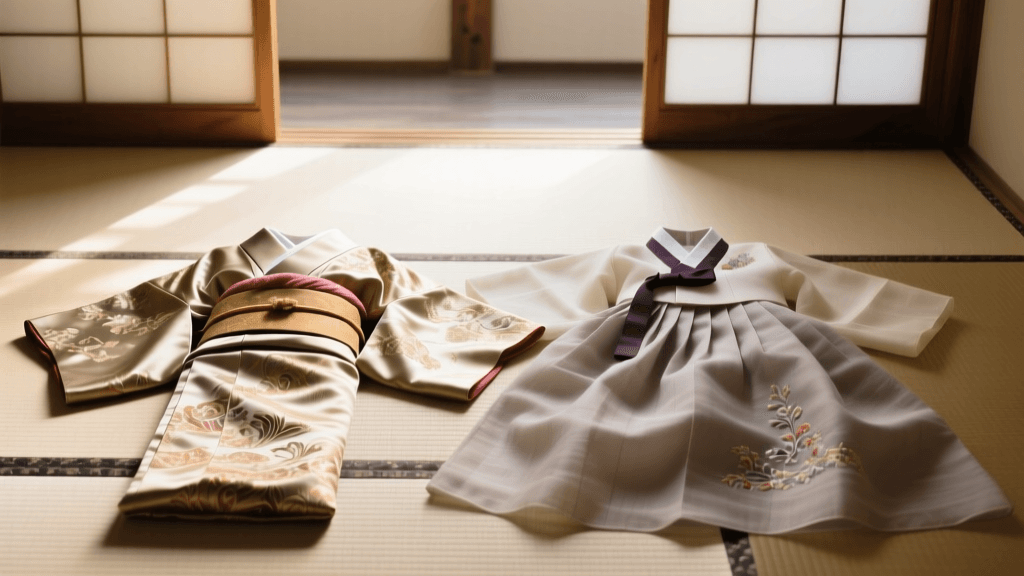
When constructing a Japanese kimono, the foundational unit of measurement is the 'tan'—a single bolt of fabric typically measuring about 36 centimeters in width and 11 to 12 meters in length. This narrow width is not arbitrary; it dictates the straight-line, zero-waste cutting method inherent to kimono construction. The zero-waste philosophy of the kimono means that the 36cm width is utilized entirely; the sleeves, body panels, and collar are all cut in straight lines. This not only honors the precious nature of the silk but also allows the garment to be entirely disassembled, washed, and re-sewn—a vital maintenance practice that has seen a major revival among eco-conscious consumers in 2026.
The most coveted textile for formal wear remains Nishijin-Ori, a luxurious brocade originating from Kyoto. Woven using complex Jacquard techniques and often incorporating metallic threads, Nishijin-Ori is primarily used for obi (sashes) and highly formal outerwear. Due to a continued shortage of master weavers and the rising costs of sustainably farmed mulberry leaves, a premium Nishijin-Ori obi bolt now commands between $1,800 and $5,500 USD on the 2026 market.
For the kimono body itself, Chirimen (silk crepe) is the undisputed standard. The crepe texture is achieved by over-twisting the weft threads before weaving, which creates a subtle, pebbled surface that resists wrinkling and takes dye beautifully. Modern 2026 Chirimen features improved colorfastness thanks to eco-friendly, plant-based mordants that replace heavy metal salts. A standard tan of high-grade Chirimen, sufficient for one adult kimono, currently retails for $600 to $1,200 USD, depending on the complexity of the Yuzen dyeing applied post-weave.
Korean Hanbok Silks: Myeongju and Gapsa
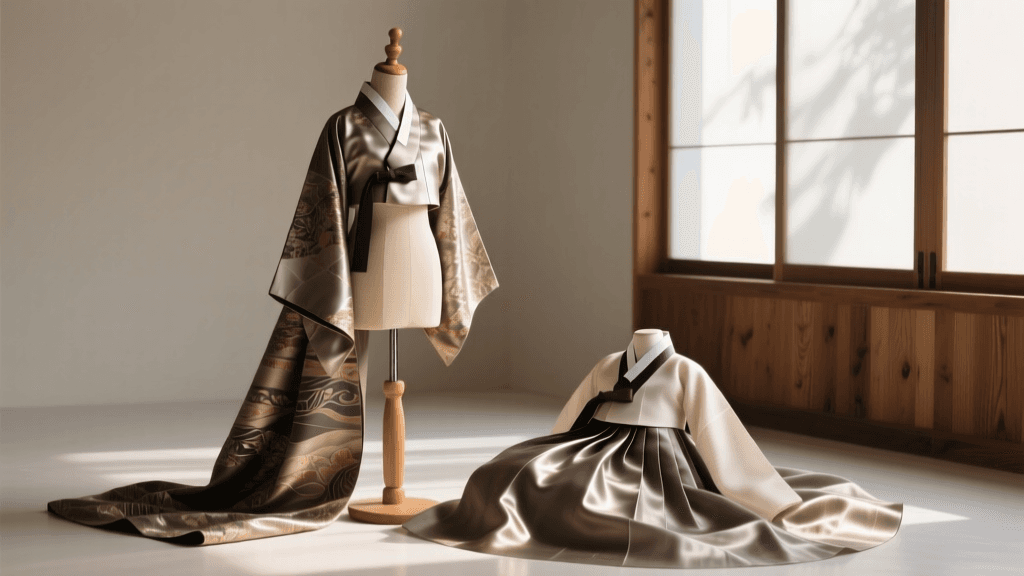
Transitioning to the Korean peninsula, the architectural silhouette of the hanbok demands textiles with vastly different structural properties. Unlike the straight, tubular drape of the kimono, the hanbok relies on voluminous gathers and structured curves, particularly in the 'chima' (skirt) and 'jeogori' (jacket). Myeongju, a traditional plain-weave silk, is the cornerstone of authentic hanbok construction. It is prized for its soft, matte finish and moderate stiffness, which allows the skirt to hold its bell-like shape without the need for excessive synthetic crinolines.
Unlike the Japanese straight-line method, hanbok construction utilizes curved seams and strategic gussets, particularly around the armscye and the voluminous skirt waist. The moderate stiffness of Myeongju is essential here; if the silk is too fluid, the iconic architectural silhouette collapses. Modern 2026 hanbok makers often blend traditional Myeongju with a 5% natural lotus fiber thread to increase tensile strength at these high-stress curved seams without sacrificing the historical hand-feel.
For warmer months or ethereal outer layers, Gapsa (silk gauze) and Sa (a lighter, more open leno weave) are essential. These fabrics offer breathability while maintaining the crisp, structural integrity required for traditional Korean tailoring. In 2026, Korean silk mills in the Jeollanam-do province have pioneered new natural dyeing techniques using fermented persimmon and indigo, yielding colors that are both vibrant and naturally antimicrobial. Sourcing authentic Myeongju directly from these regional cooperatives costs approximately $80 to $150 USD per yard in 2026, a slight increase from previous years reflecting fair-wage initiatives for rural sericulture workers.
Comparative Textile Data Table
To assist makers and buyers in selecting the appropriate textile, the following table outlines the primary characteristics and 2026 market rates for heritage silks.
| Textile Name | Origin | Weave Type | Weight (Momme) | Best Garment Use | 2026 Avg. Cost (USD) |
|---|---|---|---|---|---|
| Nishijin-Ori | Kyoto, Japan | Brocade/Jacquard | 20-30+ | Obi, Uchikake | $150 - $400 / meter |
| Chirimen | Japan | Crepe | 15-20 | Furisode, Houmongi | $80 - $150 / meter |
| Myeongju | Korea | Plain | 12-16 | Jeogori, Chima | $60 - $120 / yard |
| Gapsa | Korea | Gauze/Leno | 8-12 | Summer Hanbok, Veils | $90 - $180 / yard |
Sustainable Sericulture and Peace Silk
The year 2026 has also seen a massive surge in demand for sustainable and 'peace' (Ahimsa) silks within the traditional garment community. Traditional sericulture involves boiling the cocoon with the pupa inside to maintain a continuous, unbroken filament. Ahimsa silk, however, allows the moth to emerge naturally, resulting in a spun silk that is slightly more textured but entirely cruelty-free. According to the Food and Agriculture Organization (FAO), modern sustainable sericulture initiatives are heavily focused on integrating agroforestry and reducing the water footprint of mulberry cultivation. While Ahimsa silk lacks the high-gloss sheen of filament silk, its matte, linen-like quality has become highly fashionable for everyday, semi-formal hanbok and casual kimono (komon) in 2026.
Authentication and Sourcing Best Practices
Understanding the biological basis of these fibers is crucial for authentication. As detailed in Britannica's comprehensive guide to sericulture, the fibroin protein structure of genuine mulberry silk gives it a unique triangular prism-like cross-section, which refracts light and creates the signature silk shimmer. When sourcing vintage or new-old-stock textiles in 2026, buyers must be vigilant against advanced synthetic imitations like high-grade mercerized rayon or Cupro.
To verify authenticity, the burn test remains the most reliable method for the home sewist. Genuine silk will burn slowly, self-extinguish when removed from the flame, and smell distinctly like burning hair, leaving behind a crushable, dark ash. Synthetic alternatives will melt, bead, and emit a chemical or plastic odor. Furthermore, when purchasing a Japanese 'tan', always inspect the selvedge. Authentic, artisan-woven silk will often feature a small, woven registration mark or the stamp of the weaving cooperative near the end of the bolt, a practice that has been strictly maintained and digitized for blockchain verification in 2026.
Care and Archival Storage
Finally, the longevity of these investment textiles depends entirely on proper archival care. In 2026, the standard for storing unworn kimono and hanbok remains the traditional 'tansu' (wooden chest), ideally crafted from Paulownia or Camphor wood. These woods naturally regulate humidity and repel insects without the need for chemical mothballs, which can degrade protein fibers and yellow white silks over time. Garments should be folded along their original construction seams, interleaved with acid-free, unbuffered tissue paper, and aired out in a shaded, well-ventilated room twice a year to prevent permanent crease weakening and moisture trapping.
Conclusion
Whether you are draping a heavy Nishijin-Ori obi or stitching the delicate gathers of a Myeongju chima, the fabrics you choose in 2026 connect you to a living, breathing lineage of Asian artistry. By prioritizing authentic weaves, supporting sustainable sericulture, and understanding the unique structural demands of each garment, you ensure that these magnificent traditions continue to thrive in the modern wardrobe.