Buying Authentic Silk Hanbok Online in 2026: A Buyer's Guide

The 2026 E-Commerce Landscape for Traditional Korean Dress
The global fascination with traditional Korean garments has only deepened as we move through 2026. Driven by the sustained international influence of Korean cinema, music, and contemporary fashion integrations, the hanbok has transitioned from a strictly ceremonial garment to a celebrated piece of global cultural apparel. However, this surge in demand has also flooded the internet with mass-produced, synthetic replicas. For collectors, cultural enthusiasts, and those seeking genuine ceremonial wear, navigating online marketplaces to find authentic silk hanbok requires a discerning eye and an understanding of modern e-commerce logistics.
According to Encyclopædia Britannica's comprehensive guide to Hanbok, the traditional silhouette is defined by its vibrant colors and simple lines without pockets, historically reflecting the social status and marital standing of the wearer. Today, while the social restrictions have vanished, the commitment to traditional textiles remains a hallmark of high-quality garments. In 2026, buying authentic silk hanbok online is entirely feasible, provided you know which platforms to trust and how to verify textile claims from afar.
Top Online Marketplaces for Authentic Hanbok in 2026
The online marketplace ecosystem has evolved significantly. While general craft sites like Etsy remain popular, they are increasingly saturated with drop-shippers selling polyester costumes under the guise of traditional wear. For authentic silk, buyers in 2026 are turning to more specialized avenues:
- Direct-from-Artisan Korean Boutiques: Many master tailors in Seoul's Bukchon Hanok Village and Jeonju Hanok Village now operate localized English storefronts. These sites often utilize advanced AI-driven translation and consolidated Asian freight forwarding, making direct purchases from South Korea seamless.
- Global Proxy Shopping Services: Platforms that allow international buyers to purchase directly from Korean domestic marketplaces (like Naver Smart Store) have become the gold standard. By employing a proxy, you gain access to domestic-only artisan shops that use premium Myeongju and Gapsa silks, which are rarely exported to Western-facing retail sites.
- Curated Cultural Aggregators: Niche luxury platforms focusing exclusively on Asian heritage textiles have emerged, vetting their sellers and guaranteeing the provenance of the silk. These are ideal for buyers seeking museum-quality pieces, as referenced in the Victoria and Albert Museum's Asian textile archives, which highlight the historical importance of authentic weaving techniques.
Silk vs. Synthetic: Verifying Fabric Authenticity
The most critical challenge when shopping online is verifying fabric composition without physically touching the garment. Mass-market sellers often use deceptive terminology like 'silk-like', 'satin-silk blend', or 'Korean traditional silk' to describe 100% polyester. To ensure you are purchasing genuine silk in 2026, look for the following specific textile terms in the product description:
Key Traditional Silk Weaves
- Myeongju (명주): A plain-woven silk that is durable, has a subtle matte finish, and drapes beautifully. It is the most common and historically accurate choice for everyday and semi-formal hanbok.
- Gapsa (갑사): A thin, crisp, and slightly sheer silk weave. It is often used for summer garments, lightweight overlays, or as a high-quality lining for the jeogori (jacket).
- Sa (사): A traditional gauze weave that is highly breathable and features a distinct textured pattern. Authentic Sa is expensive and usually reserved for high-end summer ceremonial wear.
- Geumseon (금선): Silk interwoven with gold thread. If a listing claims to have gold detailing, verify whether it is authentic metallic thread woven into the silk or merely cheap, stiff foil printed on polyester.
Reputable sellers in 2026 will provide macro-photography of the fabric weave and explicitly state the silk's origin, such as domestically produced Korean silk or high-grade imported mulberry silk. If the listing only shows heavily filtered, distant photos of the garment on a mannequin, proceed with caution.
Navigating Custom Measurements and Virtual Fittings
Unlike Western clothing, which relies on standardized S/M/L sizing based on body volume, traditional hanbok is constructed using flat-pattern cutting based on linear measurements. The official Korean government cultural portal frequently highlights the unique structural geometry of the hanbok, which relies on the natural drape of the fabric rather than tailored darts and seams.
When ordering a custom silk hanbok online, you will need to provide specific measurements:
- Jeogori (Jacket) Length: Measured from the base of the neck to the desired hemline. Modern hanbok often feature shorter jackets, but traditional ceremonial styles require precise torso measurements.
- Hwa-jang (Sleeve Length): Measured from the center back of the neck, over the shoulder, down to the wrist.
- Bust and Upper Arm Circumference: Crucial for ensuring the jeogori does not restrict movement, as traditional silk lacks the stretch of modern knits.
- Chima (Skirt) Length and Waist: The skirt sits high on the ribcage, just below the bust. You must provide the circumference of your ribcage, not your natural waist, alongside the desired length from the ribcage to the ankle.
In 2026, many premium online boutiques offer AR (Augmented Reality) virtual fitting tools via their mobile apps. By inputting your height and using your smartphone camera to map your proportions, these tools generate a highly accurate measurement profile that is sent directly to the tailor in Seoul, drastically reducing the risk of sizing errors.
2026 Price Guide: What Should You Expect to Pay?
Understanding the current market rates is essential for spotting scams. If a listing claims to offer a 100% pure silk hanbok set for under $150 USD, it is almost certainly a synthetic counterfeit. Below is a breakdown of the 2026 pricing landscape for a standard women's hanbok set (jeogori and chima).
| Garment Tier | Material Composition | 2026 Price Range (USD) | Lead Time | Best Use Case |
|---|---|---|---|---|
| Mass-Market | 100% Polyester / Nylon | $45 - $120 | 1 - 2 Weeks | Costume parties, casual photo shoots, stage performances. |
| Silk-Blend | 30% Silk / 70% Synthetic | $180 - $350 | 2 - 4 Weeks | Festivals, cultural presentations, entry-level formal wear. |
| Pure Mulberry Silk | 100% Myeongju or Gapsa Silk | $450 - $900 | 4 - 8 Weeks | Weddings, formal ceremonies, serious cultural enthusiasts. |
| Artisan Heritage | Hand-woven Silk, Natural Dyes | $1,200 - $3,500+ | 2 - 6 Months | Heirloom collecting, museum exhibitions, high-end bridal. |
Red Flags: Avoiding Dropshippers and Costume Replicas
As cross-border e-commerce has become more sophisticated in 2026, so have the tactics of drop-shipping syndicates. To protect your investment, watch out for these common red flags when browsing online marketplaces:
- Vague Origin Shipping: If a site claims to sell authentic Korean heritage garments but the estimated shipping origin is listed as a generic warehouse in a region not known for silk production, it is likely a mass-produced drop-shipped item.
- Stolen Artisan Photography: Scammers frequently scrape images from independent Korean designers' social media pages. Always perform a reverse image search on the product photos. If the same image appears on a dozen different storefronts with wildly varying prices, the authentic designer's work is being used to sell cheap polyester knock-offs.
- The 'One-Size-Fits-All' Myth: Authentic traditional hanbok is highly dependent on proper proportions. Any seller offering a 'one-size' pure silk hanbok is selling a factory-made costume, as genuine silk requires precise tailoring to drape correctly over the shoulders and bust.
Caring for Your Silk Hanbok Post-Purchase
Once your authentic silk hanbok arrives, proper care is vital to preserve the integrity of the natural fibers. Unlike modern polyester costumes that can be tossed in a washing machine, pure silk requires meticulous maintenance.
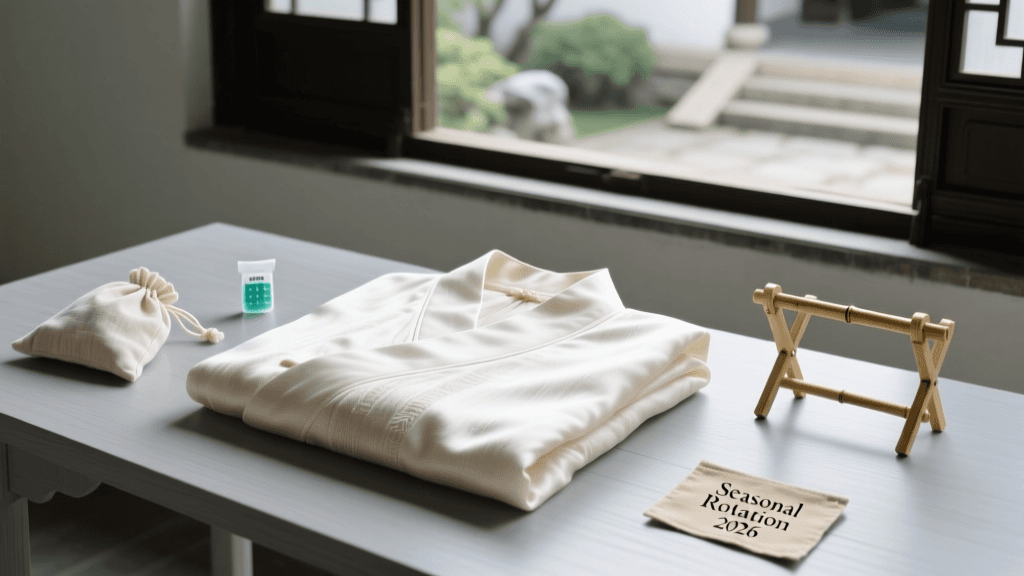
Always store your hanbok in a breathable cotton garment bag, away from direct sunlight, which can cause the natural dyes to fade and the silk proteins to weaken. When it comes to cleaning, avoid home washing entirely unless the artisan has specifically treated the silk for water washing. Instead, seek out a dry cleaner in your area who specializes in heritage textiles and bridal wear. Inform them explicitly that the garment is constructed using traditional flat-seam techniques, as standard commercial pressing can crush the delicate collars (git) and ruin the structural drape of the chima.
By approaching your online purchase with a focus on textile education, precise measurements, and an understanding of the 2026 global marketplace, you can successfully acquire a breathtaking, authentic silk hanbok that honors centuries of Korean sartorial tradition.