Kunqu Opera Hanfu Guide 2026: Sourcing Authentic Mang Robes
The Resurgence of Theatrical Hanfu in 2026
As we navigate the cultural landscape of 2026, the intersection of historical Hanfu and traditional performing arts has never been more vibrant. While the everyday Hanfu movement has popularized Ming and Song dynasty silhouettes for streetwear, a dedicated subset of enthusiasts and performers is turning its attention to the stage. Specifically, the theatrical garments of Kunqu and Peking Opera—collectively known as Xifu (theatrical dress)—are experiencing a massive renaissance. Kunqu, often referred to as the 'ancestor of a hundred operas,' relies heavily on the visual poetry of its costumes to convey character, status, and emotion. According to the UNESCO Intangible Cultural Heritage registry, Kunqu's survival depends not just on the vocal techniques of its performers, but on the preservation of its intricate visual and material culture.
For modern practitioners, university theater troupes, and serious collectors, sourcing authentic Kunqu Opera Hanfu in 2026 requires a deep understanding of traditional tailoring, regional embroidery hubs, and the distinct differences between historical daily wear and stage-ready garments. This comprehensive guide will walk you through the anatomy of the iconic Mang (python robe), the mechanics of Shui Xiu (water sleeves), and exactly where to commission these masterpieces today.
Deconstructing the Kunqu Mang (Python Robe)
The Mang robe is the pinnacle of theatrical Hanfu, reserved for characters of high imperial or noble rank, such as emperors, generals, and high-ranking officials. Unlike the historically accurate round-collar robes of the Ming dynasty, the theatrical Mang is highly stylized, designed to catch the stage lights and amplify the actor's movements.
Fabrics and Embroidery Techniques
In 2026, the highest quality Mang robes are still woven from heavy, pure mulberry silk satin, providing the necessary weight to drape majestically and swing with kinetic energy during performances. The embroidery is where the true value lies. Authentic pieces utilize Su Xiu (Suzhou embroidery), renowned for its incredibly fine silk threads and complex color gradients.
- Gold Couching (Pan Jin): Real gold and silver foil threads are laid on the surface of the silk and stitched down with fine silk threads. This creates the shimmering, raised scales of the python motif.
- The Python Motif: Unlike the five-clawed imperial dragon (Long), the Mang features a four-clawed serpent-like creature, symbolizing immense power just one step below the emperor.
- Supporting Motifs: The lower hem invariably features the Lishui (standing water) pattern, depicting crashing waves and jagged rocks, symbolizing the foundation of the empire and the stability of the wearer's rule.
The Art and Mechanics of Shui Xiu (Water Sleeves)
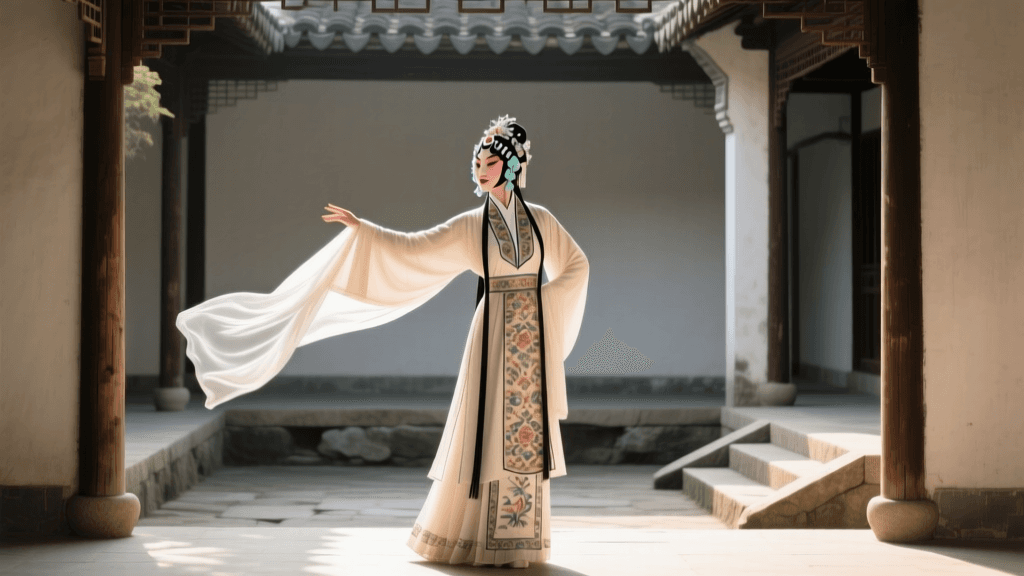
No discussion of Kunqu Opera Hanfu is complete without addressing the Shui Xiu, or water sleeves. These are the long, flowing extensions of white silk attached to the cuffs of the Mang robe and other theatrical garments. As noted in Britannica's archives on traditional Chinese theater, the water sleeve is an extension of the actor's body, used to express emotions that words and facial expressions cannot capture.
Measurements and Sourcing Specifications
When commissioning water sleeves in 2026, you must specify the exact weight and length of the silk. Standard performance sleeves extend 18 to 24 inches beyond the wrist. However, for advanced Kunqu practitioners, custom lengths of up to 32 inches are common. The silk used must be a specific type of lightweight, unlined crepe de chine or soft habotai. If the silk is too heavy, it will not 'float' during the Piao (drifting) technique; if it is too stiff, it will not snap cleanly during the Dou (flicking) technique.
Core Sleeve Techniques Facilitated by the Garment
- Tou (Throwing): Flinging the sleeves outward to express anger, dismissal, or grand declarations. The weighted cuff of the Mang robe provides the necessary centrifugal force.
- Dou (Flicking): A sharp upward flick of the wrist to catch the falling silk, often used to show sudden realization or surprise.
- Yun (Clouding): Rolling the sleeves in continuous, fluid figure-eight motions to depict weeping, deep thought, or flowing water.
2026 Sourcing Guide: Where to Commission Theatrical Hanfu
Finding authentic theatrical Hanfu requires looking beyond standard e-commerce Hanfu boutiques. The epicenter of Xifu production remains Suzhou (for embroidery and silk weaving) and Beijing (for final tailoring and historical theatrical archiving). In 2026, the market is divided into three distinct tiers:
Tier 1: Master-Crafted Bespoke (Suzhou & Beijing Workshops)
For professional troupes and serious collectors, bespoke commissions are the only way to guarantee museum-quality Su embroidery. Workshops in Suzhou's Zhenhu district take between 6 to 10 months to complete a single Mang robe. The artisan will take precise measurements of the performer's wingspan and shoulder slope to ensure the water sleeves deploy correctly. 2026 Pricing: $2,800 to $5,500 USD, depending on the density of the gold couching.
Tier 2: Semi-Custom Theatrical Tailors
Many university theater programs and regional opera societies utilize semi-custom tailors in Beijing's Liulichang cultural street district. These tailors use pre-embroidered silk panels and assemble them to your measurements. While the embroidery may be a mix of hand and high-end machine work, the structural integrity and sleeve weighting are perfectly calibrated for the stage. 2026 Pricing: $900 to $1,800 USD, with a 6-week lead time.
Tier 3: Off-the-Rack Performance Wear
For beginners, cosplay, or photography, mass-produced theatrical Hanfu is available through specialized performance wear vendors online. These garments use synthetic brocades and machine embroidery. While they lack the kinetic drape of pure silk, they are durable and easy to clean. 2026 Pricing: $120 to $350 USD.
Historical Hanfu vs. Theatrical Xifu: A Comparison
It is crucial for buyers to understand that theatrical Xifu is not meant to be historically accurate to any single dynasty. It is an amalgamation of Ming, Qing, and fantastical elements designed purely for the stage. Below is a comparison to help you identify what you are purchasing.
| Feature | Historical Hanfu (Ming Dynasty) | Theatrical Kunqu Xifu (Mang Robe) |
|---|---|---|
| Silhouette | Natural drape, follows body lines, A-line skirts. | Exaggerated, boxy, padded shoulders to project authority. |
| Sleeves | Pipa sleeves or wide straight sleeves, ending at the hand. | Shorter base sleeve with attached white silk Shui Xiu (water sleeves). |
| Collar | Cross-collar (Jiaoling Youren) or round collar. | Often features a stiff, high standing collar or exaggerated round collar. |
| Fastenings | Hidden ties, subtle fabric knots. | Heavy brass or copper hooks, thick sashes for quick stage changes. |
| Embroidery | Subtle, auspicious motifs, often woven into the fabric. | Loud, high-contrast, heavily raised Su embroidery for stage visibility. |
Garment Care and Archival Storage
A master-crafted Mang robe is an investment that can last generations if properly maintained. The heavy silk satin and metallic gold threads are highly susceptible to environmental damage. In 2026, conservationists recommend the following archival storage methods for theatrical Hanfu:
- Never Hang by the Shoulders: The weight of the dense embroidery will warp the silk over time, causing micro-tears in the shoulder seams. Always store the Mang robe flat or rolled.
- Acid-Free Tissue Paper: When folding the garment, stuff the sleeves and the bodice with acid-free, unbuffered tissue paper to prevent hard creases from forming in the silk satin.
- Climate Control: Store the garment in a cedar chest or an archival textile box in a room with a strict humidity level of 45-55%. High humidity will tarnish the gold couching threads, while low humidity will make the silk brittle.
- Cleaning: Never dry clean a bespoke Mang robe. The harsh chemicals will strip the natural sericin from the silk and dissolve the adhesives used in the gold thread. Spot clean only with distilled water, and rely on professional textile conservators for deep cleaning.
Conclusion: Preserving a Living Tradition
The year 2026 marks a thrilling era for traditional Chinese performing arts, where the boundaries between historical appreciation and theatrical performance are beautifully blurred. Whether you are a Kunqu performer seeking the perfect water sleeves to execute a flawless Tou technique, or a collector preserving the intricate Su embroidery of a Mang robe, understanding the material culture of Xifu is essential. By sourcing from master artisans and respecting the distinct architecture of theatrical Hanfu, you are not just buying a costume—you are actively participating in the preservation of a centuries-old artistic legacy.