Buying Authentic Guatemalan Huipiles in 2026: A Complete Guide
The huipil (pronounced wee-peel) is far more than a simple garment; it is a woven codex of Maya identity, history, and cosmology. Worn by Indigenous women across Guatemala and parts of Mexico, this traditional tunic-like blouse serves as a visual language that communicates the wearer’s village, social status, and personal beliefs. As we navigate the global textile market in 2026, the intersection of international fashion and Indigenous intellectual property has reached a critical juncture. Mass-produced, machine-embroidered knockoffs have flooded online marketplaces, threatening the livelihoods of master weavers and diluting centuries of cultural heritage. This comprehensive guide will teach you how to identify, ethically source, and properly care for authentic handwoven Guatemalan huipiles in 2026.
The Cultural Significance of the Maya Huipil
To understand the value of a huipil, one must first understand its role within the broader traje (traditional dress). According to the UNESCO Intangible Cultural Heritage frameworks, traditional weaving is recognized not merely as a craft, but as a vital living heritage that sustains community cohesion and Indigenous identity. Every municipality in Guatemala boasts distinct motifs, color palettes, and weaving techniques. For instance, the huipiles from San Juan La Laguna are renowned for their intricate brocade featuring geometric representations of local flora and fauna, while the garments from Nahualá are famous for their heavy, dark cotton and striking, stylized bird motifs. When you purchase an authentic huipil, you are acquiring a piece of living history that supports the economic independence of Maya women.
The Backstrap Loom: An Ancient Technology in 2026
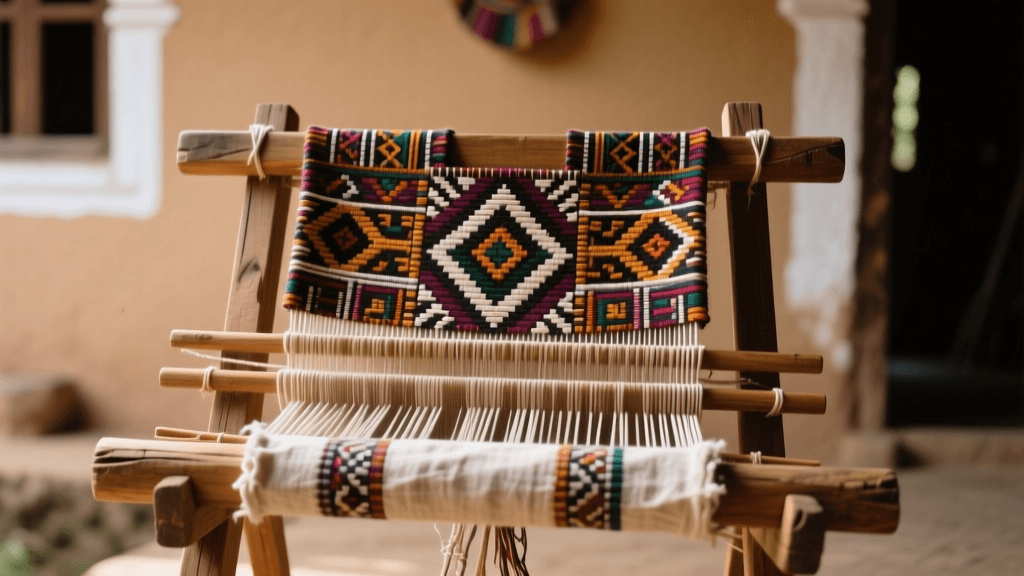
Authentic huipiles are woven on a telar de cintura, or backstrap loom. This pre-Columbian technology relies on the weaver’s own body weight to create tension on the warp threads. One end of the loom is tied to a sturdy post or tree, while the other is secured around the weaver’s lower back via a leather or wooden strap. By leaning forward or backward, the weaver precisely controls the tension of the shed (the space between warp threads), allowing for the insertion of the weft and the creation of complex brocade patterns.
The mathematical precision required for backstrap looming is staggering. A master weaver must calculate the exact number of warp threads—often exceeding 1,200 threads for a single panel—to ensure the garment’s symmetry. The brocade motifs are not embroidered onto the fabric after it is woven; rather, they are integrated directly into the weave structure using a supplementary weft thread. This technique, known as double-faced brocade, results in a motif that is nearly identical on both the inside and outside of the garment. In 2026, despite the availability of modern foot-treadle looms for commercial yardage, the backstrap loom remains the undisputed standard for high-end, ceremonial, and deeply personal huipiles.
Natural Dyes: The Cochineal and Indigo Revival
While synthetic aniline dyes became prevalent in the late 20th century due to their low cost and vibrant hues, 2026 has seen a massive resurgence in the use of natural, botanical dyes among elite weaving cooperatives. This revival is driven by both environmental concerns and a desire to reconnect with ancestral chemistry.
- Cochineal (Dactylopius coccus): A parasitic insect native to Mesoamerica that lives on prickly pear cacti. When dried and crushed, it yields a potent carminic acid. By altering the pH of the dye bath with natural mordants like lemon juice (acidic) or wood ash (alkaline), weavers can extract a stunning spectrum of colors ranging from bright crimson to deep plum and soft lavender.
- Indigo (Indigofera suffruticosa): Known locally as añil, this plant requires a complex fermentation process to create a vat dye. The cotton is submerged in the oxygen-deprived vat and emerges yellow-green, only to oxidize in the air and turn a rich, colorfast blue.
- Sacatinta (Justicia colorata): A native shrub used to produce deep, moody blacks and dark purples, often used in the mourning huipiles of specific highland communities.
The Metropolitan Museum of Art's Heilbrunn Timeline of Art History notes that the mastery of natural dyeing and cotton cultivation was a cornerstone of ancient Mesoamerican economies. Today, cooperatives that specialize in natural dyes charge a premium, reflecting the weeks of botanical harvesting and vat preparation required before a single thread is even placed on the loom.
2026 Buyer’s Guide: Spotting Authentic Handwoven Textiles
Distinguishing between an authentic, handwoven huipil and a factory-made imitation is essential for ethical purchasing. Below is a structured comparison to help you evaluate textiles in 2026.
| Feature | Authentic Handwoven Huipil | Machine-Made / Mass-Produced Imitation |
|---|---|---|
| Selvedge Edges | Finished naturally on the loom; no raw or serged edges. | Fabric is cut from large rolls; edges are serged or hemmed. |
| Brocade Motifs | Integrated into the weave; double-faced or clean floats on the reverse. | Printed on the surface, or machine-embroidered post-weave with visible backing. |
| Seams (Randas) | Panels are joined by intricate, hand-stitched decorative seams (randas). | Panels are joined by standard, straight machine stitching. |
| Texture & Weight | Heavy, dense, and slightly stiff initially due to tight warp tension. | Lightweight, uniform, and soft like standard commercial cotton. |
| Time to Create | 2 to 6 months of daily labor. | Minutes per unit in an industrial factory. |
| 2026 Avg. Price | $180 to $450+ USD (up to $1,500 for ceremonial). | $25 to $60 USD. |
Pro Tip for Buyers: Always turn the garment inside out. If the intricate patterns look like messy, tangled threads or are backed by a layer of white interfacing, it is machine-embroidered, not handwoven. True brocade will look remarkably neat on the reverse side.
Ethical Sourcing: Supporting Indigenous Cooperatives
In 2026, the most direct and ethical way to purchase a huipil is through established, women-led cooperatives. These organizations ensure that the artisans receive a living wage, have access to healthcare, and retain the intellectual property rights to their village-specific designs. When buying online or visiting Guatemala, look for certifications or partnerships with organizations like Weave a Real Peace (WARP) or the Fundación Paiz.
Avoid purchasing 'vintage' huipiles from unverified antique dealers unless you are certain of their provenance. The unauthorized resale of used ceremonial garments can sometimes violate community norms regarding sacred textiles. Instead, commission a new piece directly from a weaving collective. This not only guarantees authenticity but also injects capital directly into the local Indigenous economy, allowing the next generation of weavers to sustain their practice.
Caring for Your Handwoven Garments
An authentic huipil is an investment piece that can last for generations if cared for properly. Because many artisans in 2026 are returning to natural dyes and hand-spun cotton, modern laundry practices can be disastrous for these textiles.
- Washing: Never machine wash or dry clean a handwoven huipil. Hand wash the garment in cold water using a pH-neutral, organic textile soap. Avoid harsh detergents, bleach, or fabric softeners, which can strip natural dyes and break down cotton fibers.
- Drying: Do not wring or twist the fabric, as this can warp the tension of the brocade. Gently press the water out between two clean towels and lay the garment flat to dry in the shade. Direct sunlight will rapidly fade cochineal and indigo dyes.
- Storage: Store your huipil flat or loosely rolled in acid-free tissue paper. Hanging a heavy, handwoven garment for long periods will cause the cotton to stretch and distort the geometric motifs under its own weight.
- Ironing: If the garment requires pressing, use a low-heat setting and always place a damp cotton pressing cloth between the iron and the huipil to protect the raised texture of the brocade.
Conclusion
The Guatemalan huipil is a masterpiece of Indigenous engineering and artistic expression. As consumers in 2026, we hold the power to either contribute to the cultural appropriation of these sacred textiles or to actively participate in their preservation. By learning to identify the hallmarks of backstrap looming, understanding the chemistry of natural dyes, and purchasing directly from Maya cooperatives, you ensure that this magnificent textile tradition continues to thrive for centuries to come.