Authentic Guatemalan Huipiles 2026: Sourcing & Weaving Guide
The Enduring Legacy of the Guatemalan Huipil in 2026
The Guatemalan huipil is far more than a traditional garment; it is a wearable manuscript of Indigenous Maya cosmology, history, and identity. As we navigate the global textile market in 2026, the huipil stands at a critical intersection of cultural preservation and modern ethical fashion. While mass-produced imitations continue to flood tourist markets, a powerful movement led by Indigenous women's cooperatives is reclaiming the narrative, utilizing new 2026 intellectual property frameworks to protect their ancestral designs.
For collectors, cultural enthusiasts, and conscious consumers, understanding the nuances of the huipil is essential. This comprehensive guide explores the intricate backstrap weaving techniques, regional variations, and actionable strategies for ethically sourcing authentic Guatemalan huipiles today.
The Mechanics of the Backstrap Loom (Tela de Cintura)
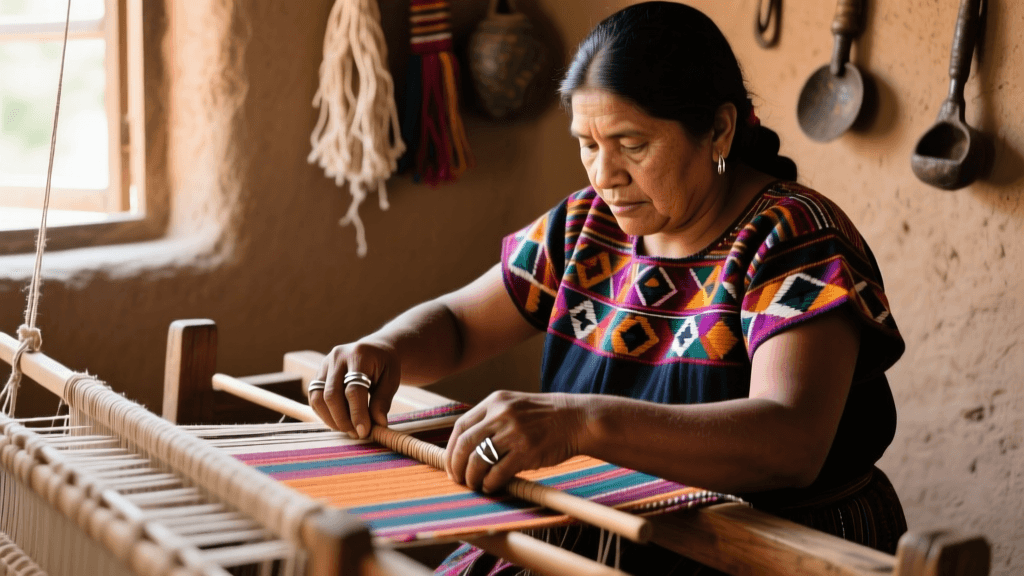
To appreciate the value of a genuine huipil, one must understand the profound physical and mental dedication required to weave it. The traditional backstrap loom, or tela de cintura, has remained largely unchanged for millennia. The loom consists of a series of wooden rods, a heddle, and a shuttle, with one end tied to a sturdy post or tree and the other secured around the weaver's lower back via a leather or woven strap.
This setup allows the weaver to control the tension of the warp threads using her own body weight. The physical connection between the artisan and the textile is literal; every breath and subtle shift in posture affects the tension and, consequently, the uniformity of the weave. In 2026, master weavers in cooperatives continue to use hand-spun cotton and naturally dyed threads—utilizing indigo, cochineal, and marigold—though high-quality mercerized cottons are also widely used for their vibrant color retention.
The most prized technique is brocado (brocade), where supplementary weft threads are woven directly into the fabric to create complex geometric and zoomorphic patterns. Unlike embroidery, which is stitched onto finished cloth, brocade is integrated during the weaving process, making it significantly more time-consuming and durable.
Regional Variations: A Tapestry of Identity
Historically, a Maya woman's huipil immediately identified her specific village, marital status, and social standing. While modern mobility has blurred these strict sartorial boundaries, regional cooperatives in 2026 still fiercely protect and celebrate their distinct local styles. Below is a comparison of three highly sought-after regional styles in the current market.
| Region | Distinctive Features | Common Motifs | 2026 Market Price (USD) |
|---|---|---|---|
| Chichicastenango | Heavy cotton base, intricate cross-stitch brocade, often featuring a prominent sun or starburst pattern around the neckline. | Sun rays, double-headed eagle, geometric diamonds representing the universe. | $180 - $350 |
| San Juan La Laguna | Renowned for natural dyes and lighter, softer cotton. Often features a more minimalist, elegant aesthetic with subtle tonal variations. | Local flora, mountains, stylized birds, and intricate jaspe (ikat) tie-dye patterns. | $120 - $250 |
| Nahualá | Characterized by bold, high-contrast colors, particularly deep reds, yellows, and purples. The fabric is often thicker, suited for the highland chill. | Lions, horses, quetzals, and large geometric stars. | $150 - $280 |
How to Authenticate a Handwoven Huipil in 2026
The proliferation of mechanized looms and digital printing has made it increasingly difficult for untrained eyes to distinguish between a genuine handwoven huipil and a factory-made knockoff. In 2026, fast-fashion brands have become more sophisticated in mimicking the look of Indigenous textiles, making authentication a vital skill for ethical buyers.
1. Examine the Reverse Side
The most definitive test of a true brocade weave is the reverse side of the fabric. Because the supplementary weft threads are woven through the warp, the pattern on the back should be a near-perfect, albeit slightly less defined, mirror image of the front. If the back is covered in loose, tangled threads, or if the pattern is completely absent, the design has likely been machine-embroidered or printed onto pre-woven cloth.
2. Check the Selvedge and Seams
Authentic huipiles are typically woven in one, two, or three separate panels (lienzos) and then joined together using a decorative hand-stitched seam called a randa. Inspect the side seams and the bottom edge. Handwoven fabric will have a finished selvedge that looks organic, with slight, natural irregularities. Machine-woven fabric will have perfectly uniform, laser-straight edges.
3. Feel the Tension and Weight
Run your hands across the textile. A backstrap-woven garment will have a dense, substantial hand-feel. You may notice microscopic variations in the tightness of the weave, which are the hallmarks of human tension control. Machine-made textiles feel uniformly flat and lack this organic topography.
Ethical Sourcing and the 2026 Pricing Landscape
As awareness of cultural appropriation has grown, so has the demand for ethical sourcing. Organizations like the Maya Traditions Foundation have been instrumental in establishing fair-trade pricing models that ensure artisans receive a living wage. Furthermore, groups such as Cultural Survival continue to advocate for the legal recognition of Indigenous intellectual property, fighting against multinational corporations that patent traditional Maya patterns.
When purchasing a huipil in 2026, it is crucial to understand the economics of the craft. A master weaver may spend anywhere from two to six months working four to six hours a day on a single, highly complex ceremonial huipil. Therefore, bargaining aggressively in local markets is not just culturally insensitive; it is economically damaging to the artisan.
Where to Buy Ethically
- Direct from Cooperatives: Visiting weaving cooperatives in towns like San Juan La Laguna or Totonicapán is the best way to ensure your money goes directly to the weavers. Many co-ops now offer international shipping via their digital storefronts.
- Certified Fair-Trade NGOs: Purchasing through established NGOs guarantees that the artisans were paid upfront and that the materials were sourced sustainably.
- Avoid Street Hawkers: While street vendors in Antigua or Lake Atitlán may offer lower prices, these garments are frequently sourced from middlemen who pay weavers below-market rates, or they are imported factory reproductions.
Care and Maintenance of Handwoven Cotton
To preserve the structural integrity and vibrancy of your huipil, proper care is non-negotiable. Never machine-wash or machine-dry a handwoven textile. The agitation will distort the warp tension and cause the brocade threads to snag.
Instead, hand-wash the garment in cold water using a mild, pH-neutral detergent. If the huipil features natural dyes like indigo or cochineal, add a splash of white vinegar to the rinse water to help set the colors. Gently press the water out—never wring or twist the fabric—and lay it flat on a clean towel in the shade to dry. Direct sunlight will rapidly fade both natural and synthetic dyes over time.
Conclusion
The Guatemalan huipil remains one of the most sophisticated and culturally rich textile traditions in the Americas. By educating yourself on the mechanics of the backstrap loom, learning to authenticate handwoven brocade, and committing to ethical sourcing, you actively participate in the preservation of Maya heritage. In 2026, every conscious purchase is a vote for the survival of Indigenous artistry against the tide of homogenized global fashion.