2026 Silk Road Textile Finds: Astana Weaves Revived
The 2026 Astana Excavations: Unearthing Sogdian Masterpieces
The year 2026 has ushered in a remarkable renaissance for Silk Road textile archaeology, fundamentally shifting our understanding of ancient trans-Eurasian fashion exchanges. Recent excavations in the Turpan basin, specifically within the Astana cemetery complex, have yielded an unprecedented cache of pristine Sogdian samite silks. Preserved by the hyper-arid climate of the Tarim Basin, these eighth-century textiles offer a vivid window into the cosmopolitan wardrobes of Silk Road merchants. According to the UNESCO Silk Roads Programme, these 2026 findings are among the most significant textile discoveries in the last decade, highlighting the sophisticated cultural syncretism between Sasanian Persian motifs and Tang Dynasty weaving techniques.
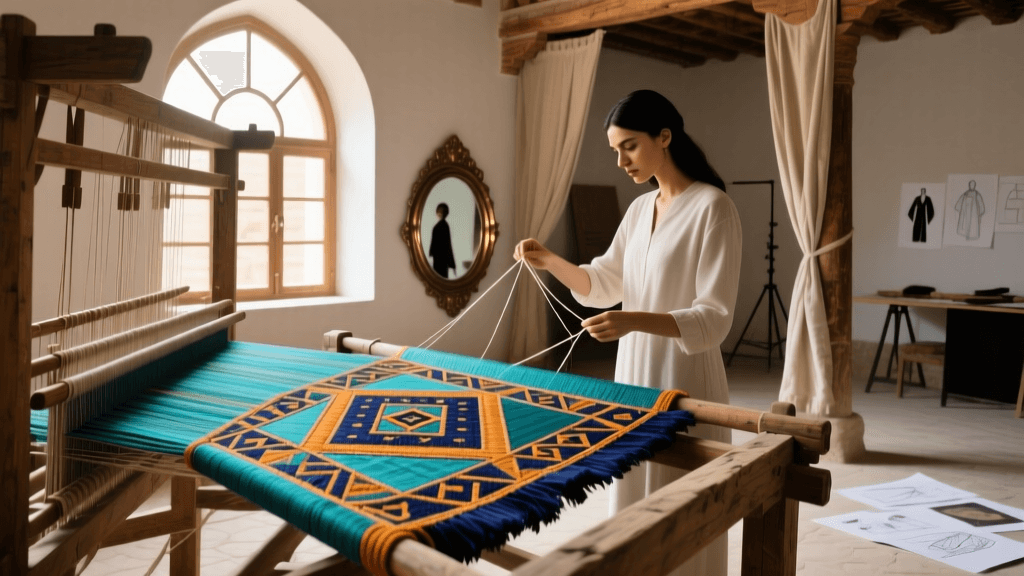
Among the most celebrated finds of 2026 is the 'Pearl Roundel Boar' motif silk, a weft-faced compound twill that showcases the technical brilliance of Sogdian weavers. The pearl roundel—a border of repeating dots enclosing a central animal figure—was a hallmark of Sasanian royal art, yet its execution in silk was perfected by Central Asian artisans who acted as the ultimate cultural intermediaries. The Astana chamber, sealed for over a millennium, contained not only garments but also raw silk skeins and partially finished loom setups, providing archaeologists with a complete ecosystem of ancient textile production.
Decoding the Weave: Technical Analysis and Fabric Drape
To truly appreciate the Astana silks, one must understand the complex mechanics of samite. Unlike the lightweight, warp-faced damasks commonly associated with later Chinese silk production, samite is a heavy, weft-faced compound twill. The 2026 Astana samples reveal a dense structure featuring a Z-spun warp and an S-twist weft, creating a fabric with substantial body and a luxurious, light-reflecting surface. Researchers utilizing advanced 3D cloth simulation software have mapped the drape coefficient of these ancient textiles, revealing that the heavy samite was specifically engineered to hold structured, volumetric shapes rather than clinging to the body.
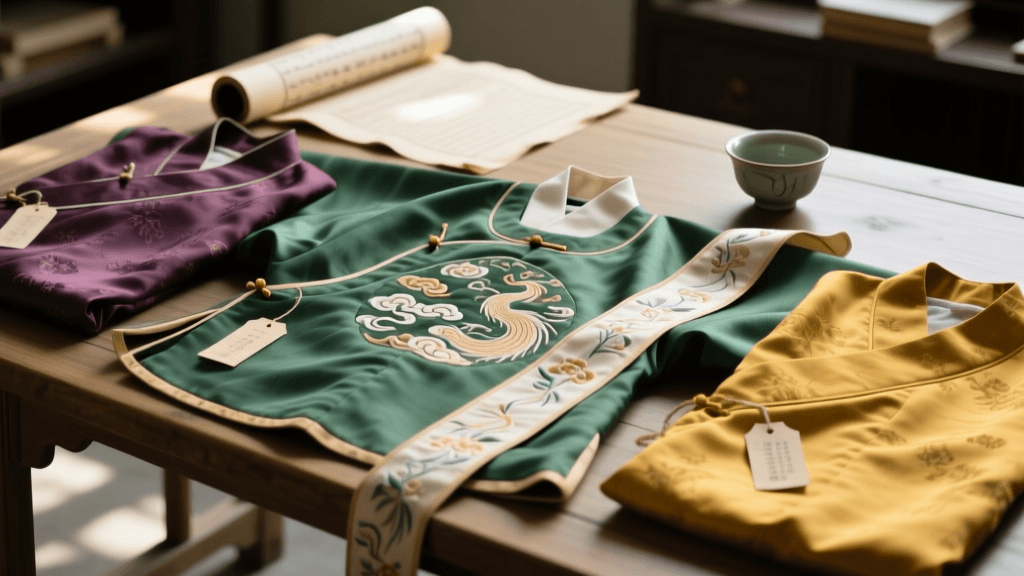
This structural integrity is precisely what makes the Astana weaves so highly sought after in the contemporary Xin Zhongshi (new Chinese style) movement. Designers in 2026 are moving away from the flimsy, mass-produced chiffons of the early 2020s, favoring instead the architectural drape of historical samite. When crafting modern interpretations of Tang-era round-collared robes or structured half-sleeves, the high gram-weight of samite allows the garment to maintain its silhouette without the need for synthetic interfacing. For a comprehensive look at historical silk structures, the Metropolitan Museum of Art Asian Silk Collection provides excellent comparative baseline data for these complex weaves.
Comparative Analysis: Ancient Samite vs. 2026 Xin Zhongshi Replicas
Modern textile mills in Hangzhou and Suzhou have spent the last eighteen months reverse-engineering the Astana finds. Below is a technical comparison between the original 2026 archaeological samples and the premium neo-samite jacquards currently available on the market.
| Feature | Ancient Astana Samite (8th Century) | 2026 Neo-Sogdian Jacquard Replica |
|---|---|---|
| Weave Structure | Weft-faced compound twill (1/2) | Modified weft-faced jacquard |
| Thread Count | 120 warp / 40 weft per cm | 110 warp / 45 weft per cm |
| Fiber Content | 100% Bombyx mori (mulberry silk) | 85% Mulberry silk, 15% metallic yarn |
| Weight (g/m²) | 145 g/m² | 138 g/m² |
| Drape Coefficient | High stiffness, structural volume | Moderate stiffness, fluid volume |
Preservation Protocols for Excavated Silk Road Textiles
The unearthing of the Astana silks has also prompted a rigorous update to global conservation standards. When ancient textiles are exposed to modern atmospheric conditions, the sudden shift in humidity and the introduction of airborne pollutants can cause rapid protein degradation. For museum curators, private collectors, and archivists handling Silk Road artifacts—or even high-end, historically accurate replicas—adhering to the 2026 preservation protocols is non-negotiable. The Victoria and Albert Museum Asian Textile Archives outlines several critical parameters for the long-term storage of protein-based fibers.
Implementing a proper storage environment requires meticulous attention to the microclimate. Below are the actionable, industry-standard steps for preserving delicate silk textiles in 2026:
- Light Exposure Limits: Silk is highly susceptible to photo-oxidation. Display lighting must be strictly capped at 30 to 50 lux, with all UV radiation filtered out. For long-term storage, absolute darkness is required.
- Climate Control: Maintain a stable relative humidity (RH) between 45% and 55%. Fluctuations in RH cause the silk fibers to expand and contract, leading to micro-fractures in the ancient weave. Temperature should be kept strictly between 18°C and 20°C.
- Argon Gas Enclosures: For the most fragile Astana fragments, 2026 conservation labs are utilizing custom-built acrylic enclosures flushed with argon gas. This inert environment halts oxidative decay and prevents insect infestation without the use of harmful chemical pesticides.
- Support Materials: Never fold excavated silks. Garments must be stored flat in custom-milled, acid-free, unbuffered tissue paper. Buffered tissue (which contains calcium carbonate) must be avoided, as the alkaline environment can degrade protein fibers over time.
- Handling Protocols: Always use powder-free nitrile gloves. The natural oils and salts from human skin can catalyze localized degradation and leave permanent stains on the weft-faced twill.
Integrating Astana Motifs into Modern Xin Zhongshi Wardrobes
Beyond the laboratory and the museum, the 2026 Astana discoveries have sent shockwaves through the international fashion scene. During the recent Shanghai and Paris Design Weeks, the 'Pearl Roundel' motif emerged as the defining print of the new season. However, the modern Xin Zhongshi movement is not about wearing historical costumes; it is about translating ancient aesthetics into functional, contemporary luxury. The heavy, structured nature of the neo-samite jacquards makes them ideal for outerwear and structured layering pieces.
For those looking to incorporate these Silk Road textiles into their 2026 wardrobe, balance is the key to successful styling. Because the Astana samite replicas are visually loud and physically heavy, they should be paired with garments that offer contrasting lightness and fluidity. A popular silhouette seen on the runways this year features a cropped, neo-samite jacket with a standing collar, worn over a lightweight, high-waisted Song Dynasty-style pleated skirt or a flowing Mamian skirt made from sheer silk organza. This juxtaposition honors the structural integrity of the Sogdian weave while maintaining modern mobility and comfort.
Furthermore, the color palettes extracted from the 2026 Astana finds have redefined the season's trending hues. The oxidized mineral dyes used in the eighth century have mellowed into sophisticated, muted tones: lapis lazuli blues that have faded to dusty indigo, and madder roots that have softened into terracotta and oxidized rust. These earthy, historically grounded colors pair exceptionally well with modern neutrals like charcoal, oat, and slate, allowing the intricate pearl roundel motifs to serve as the focal point of the ensemble without overwhelming the wearer.
Conclusion: A Living Heritage
The 2026 Astana excavations remind us that the Silk Road was never merely a conduit for trade; it was a vibrant artery of artistic and technological exchange. The Sogdian weavers who crafted these masterpieces were the ultimate innovators, blending Persian iconography with Chinese silk technology to create textiles that captivated the ancient world. Today, through rigorous archaeological preservation, advanced fabric drape analysis, and the creative vision of the Xin Zhongshi movement, these ancient weaves are not just surviving in glass cases—they are being worn, reinterpreted, and kept alive. As we continue to unravel the secrets of the Tarim Basin, the legacy of the Silk Road remains as vibrant and relevant as ever.