2026 Silk Road Textile Finds: Astana Conservation Tech
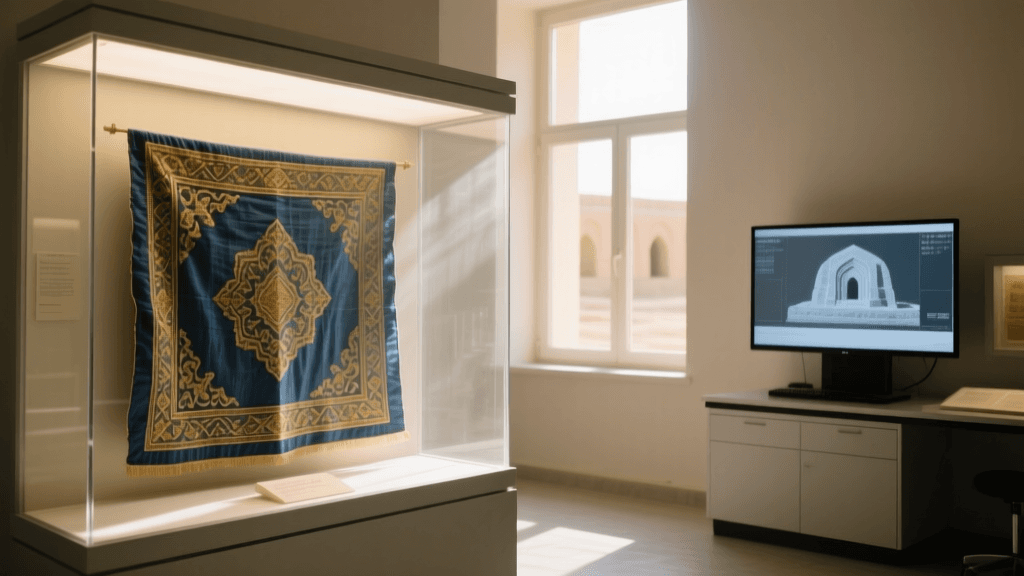
The Legacy of the Astana Cemetery Silk Finds
The ancient Silk Road was not merely a conduit for spices, precious metals, and philosophical exchange; it was the great artery of ancient textile innovation. Among the most spectacular archaeological finds in Asian textile history are the garments and fabrics unearthed from the Astana Cemetery in Turpan, Xinjiang. Thanks to the region's exceptionally arid desert climate, organic materials that would have decomposed centuries ago in more humid environments were preserved in astonishing detail. As we navigate the archaeological landscape of 2026, the Astana Cemetery remains a focal point for understanding the complex sartorial exchanges between Han Chinese, Sogdian merchants, and various nomadic confederations.
For researchers and conservators in 2026, the challenge is no longer just excavation; it is the meticulous preservation of these fragile protein fibers. The textiles recovered from Astana—ranging from intricate tapestry-woven shoes to expansive samite (weft-faced compound twill) robes—require highly specialized care. The integration of advanced diagnostic technology and modern conservation ethics has fundamentally transformed how we study and display these Silk Road masterpieces today.
Sogdian Influences and the Pearl Roundel Motif
One of the most captivating aspects of the Astana finds is the prominent influence of Sogdian weaving traditions. Sogdian merchants were the premier middlemen of the Silk Road, and their aesthetic preferences heavily dictated the luxury textile markets from Samarkand to Chang'an. The hallmark of this exchange is the "pearl roundel" motif—a circular border of pearl-like dots enclosing symmetrical pairs of animals such as boars, ducks, peacocks, and winged lions.
In 2026, textile historians utilize these motifs not just for aesthetic appreciation, but as geographical and chronological markers. The presence of specific zodiac animals or hunting scenes within the roundels helps archaeologists trace the exact routes of Sogdian diaspora communities. However, the heavy metallic threads and complex dye structures used to create these opulent garments make them highly susceptible to environmental degradation once removed from their stable, subterranean microclimates.
2026 Breakthroughs in Silk Road Textile Archaeology
Multispectral Imaging for Faded Sogdian Dyes
When the Astana silks are first excavated, centuries of burial can leave the vibrant reds, blues, and yellows looking dull or entirely faded to the naked eye. In 2026, the standard for non-invasive dye analysis relies heavily on macro-X-ray fluorescence (macro-XRF) combined with AI-driven multispectral imaging. According to guidelines supported by institutions like the Getty Conservation Institute, these imaging techniques allow conservators to map the elemental composition of the fabric's surface without extracting a single physical sample.
By analyzing the specific light reflectance and elemental signatures, researchers can identify ancient organic dyes with unprecedented accuracy. For instance, the presence of aluminum and specific organic markers can confirm the use of madder root or safflower for reds, while indigotin signatures reveal the use of indigo. This technology has recently allowed teams to digitally reconstruct the original, blindingly vibrant color palettes of 7th-century Sogdian caftans, revealing a level of chromatic sophistication that rewrites our understanding of Silk Road fashion.
Nanocellulose Consolidation for Brittle Fibers
Silk is a protein fiber (fibroin) that becomes incredibly brittle over centuries, especially when exposed to fluctuating humidity during the excavation process. Traditional consolidation methods using synthetic polymers often yellowed over time or altered the drape and hand-feel of the ancient textile. As of 2026, the leading edge of textile conservation utilizes cellulose nanocrystals (CNC) and bacterial nanocellulose.
These bio-compatible materials are applied in microscopic aerosolized mists. They penetrate the degraded fibroin structure and provide structural reinforcement at the molecular level without adding visible bulk or altering the optical properties of the silk. This ensures that the garment retains its historical drape analysis characteristics, which is crucial for scholars studying the tailoring and movement of traditional Asian garments.
Modern Conservation Techniques for Ancient Silks
Anoxic Display Cases and Microclimate Control
Once stabilized, the display of Silk Road textiles requires rigorous environmental controls. Oxygen and light are the twin enemies of ancient silk. In 2026, museum-grade anoxic display vitrines are the gold standard for exhibiting high-value archaeological textiles. These cases are flushed with inert gases—typically argon, which is preferred over nitrogen due to its higher density and superior ability to displace oxygen entirely.
The vitrines are sealed using advanced Escal barrier films and specialized gaskets to maintain an oxygen level below 0.1%. Furthermore, internal microclimate generators actively monitor and adjust the relative humidity (RH), keeping it locked at a strict 50% (±2%). This precise environment halts oxidative degradation and prevents the embrittlement of the silk fibers, allowing the public to safely view these treasures.
Comparison of 2026 Textile Conservation Methods
Below is a structured comparison of the primary conservation and display methodologies utilized for Silk Road archaeological finds in 2026:
| Methodology | Primary Target Issue | 2026 Cost / Scale | Reversibility |
|---|---|---|---|
| Macro-XRF & Multispectral Imaging | Dye identification, fading, hidden motifs | High (Institutional Equipment) | 100% Non-invasive |
| Bacterial Nanocellulose Mist | Fibroin embrittlement, structural tears | Medium (Specialist Lab) | Highly Reversible |
| Argon-Flushed Anoxic Vitrines | Oxidative degradation, pest infestation | Very High (Custom Fabrication) | N/A (Display Environment) |
| Low-Temperature Anoxia Treatment | Eradication of dormant micro-pests | Low to Medium (Chamber Access) | 100% Non-invasive |
Actionable Advice for Curators and Private Collectors
While major institutions have access to argon-flushed vitrines, smaller regional museums and private collectors of Asian antiquities must rely on practical, cost-effective preservation strategies. The ICOM Costume Committee and the UNESCO Silk Roads Programme frequently emphasize that preventative conservation is always superior to interventive treatment. If you are managing a collection of traditional Silk Road textiles or high-quality historical replicas in 2026, adhere to the following protocols:
- Illuminance Limits: Never expose ancient silk to more than 50 lux of light. Utilize UV-filtering LED fixtures with a color rendering index (CRI) of 95+ to ensure accurate color representation without the damaging heat and ultraviolet radiation of older halogen systems.
- Storage Materials: Avoid standard cardboard or untreated wood, which off-gas acidic compounds that destroy protein fibers. Store textiles flat in archival-grade, acid-free boxes lined with unbuffered, acid-free tissue paper. For rolled storage, use acid-free honeycomb board tubes covered in washed, unbleached cotton muslin or Tyvek.
- Handling Protocols: Discard traditional white cotton gloves when handling fragile, flaking silks, as the cotton fibers can snag on brittle threads. In 2026, the standard is to use well-fitting, powder-free nitrile gloves, which provide better tactile sensitivity and eliminate the risk of snagging.
- Pest Management: Implement a strict integrated pest management (IPM) program. Use pheromone traps to monitor for webbing clothes moths and carpet beetles. If an infestation is suspected, isolate the textile in a sealed polyethylene bag and utilize a commercial freezing protocol (-20°C for 72 hours) to eradicate pests without chemical fumigants.
Sourcing Authentic Replicas and Ethical Display
Because original Astana and Sogdian textiles are incredibly rare and fragile, there is a growing movement in 2026 toward commissioning museum-quality replicas for educational handling and traveling exhibitions. Master weavers in China and Central Asia are utilizing traditional drawlooms to recreate the complex weft-faced compound twills of the pearl roundel motifs. When sourcing these replicas, ensure that the artisans are using traditionally spun silk and natural dyes, as this preserves the intangible cultural heritage of the Silk Road weaving techniques.
By combining the archaeological marvels of the Astana Cemetery with the cutting-edge conservation science of 2026, we ensure that the vibrant legacy of Silk Road textile exchanges continues to educate and inspire. The meticulous preservation of these garments is not just about saving fabric; it is about safeguarding the tangible evidence of ancient globalization, artistic synthesis, and human ingenuity.
"The textiles of the Silk Road are the closest things we have to time machines. Every thread of Sogdian samite and Han dynasty gauze holds the DNA of ancient cross-cultural exchange. Our duty in 2026 is to ensure they survive for the next millennium." — Dr. Aris Thorne, Textile Archaeologist.