Traditional Geta & Zori Craft 2026: Hanao Tying Tips
The Enduring Legacy of Japanese Footwear in 2026
In the global fashion landscape of 2026, the shift towards sustainable, slow-fashion and heritage craftsmanship has brought traditional Japanese footwear back into the spotlight. No longer confined solely to summer festivals or formal ceremonial wear, authentic geta (wooden clogs) and zori (flat sandals) are being integrated into contemporary streetwear and everyday wardrobes. This resurgence is driven by a renewed appreciation for artisanal techniques, natural materials, and the ergonomic benefits of toe-grip footwear. For enthusiasts and newcomers alike, understanding the craft behind these iconic silhouettes—particularly the intricate art of hanao (thong) tying and material selection—is essential for both comfort and longevity.
As highlighted by the Japan National Tourism Organization, preserving regional crafts like Kurume geta and Kyoto zori remains a vital part of Japan's cultural heritage, with modern artisans adapting traditional methods to meet the ergonomic demands of today's consumers. Whether you are looking to purchase your first pair of handcrafted paulownia wood geta or need to adjust the hanao on your favorite zori, this comprehensive guide covers the artisan craft of traditional Japanese footwear in 2026.
Geta vs. Zori: Understanding the Foundations
While often grouped together by Western observers, geta and zori serve distinct purposes and are constructed using entirely different foundational techniques. Understanding these differences is the first step in appreciating the artisan craft.
| Feature | Geta (Wooden Clogs) | Zori (Flat Sandals) |
|---|---|---|
| Base Material | Solid wood (typically Paulownia/Kiri, Cedar, or Cypress) | Rush grass (Tatami-omote), vinyl, leather, or EVA foam |
| Structure | Elevated on one to three 'teeth' (ha) or a solid platform | Completely flat base, no elevated teeth |
| Sound Profile | Distinctive 'clack' (karankoron) on hard surfaces | Silent or soft slapping sound |
| Primary Occasion | Casual wear, summer festivals (matsuri), yukata pairing | Formal wear (kimono), tea ceremony, martial arts, everyday |
| 2026 Artisan Price Range | $120 - $350 USD | $80 - $400 USD (high-end leather/setta) |
| Weather Resistance | Poor (unless lacquered/treated); best for dry days | Varies; vinyl and leather are highly weather-resistant |
The Artisan Craft: Wood, Weave, and Lacquer
The Woodworking of Geta
The soul of a traditional geta lies in its wooden base, known as the dai. In 2026, the most prized material remains Kiri (Paulownia wood). Kiri is exceptionally lightweight, resistant to moisture, and possesses a natural softness that molds slightly to the wearer's foot over time. Artisans harvest the wood and allow it to cure for several years to prevent warping. Once shaped, the surface is often treated using a technique called yaki-ita, where the wood is lightly scorched with a blowtorch. This brings out the beautiful, intricate grain patterns and creates a natural, water-resistant carbon barrier without the need for synthetic chemical sealants.
The Weaving and Layering of Zori
Zori craftsmanship focuses on the layering of the base. Traditional formal zori utilize tatami-omote (woven rush grass) for the footbed, providing a cooling, breathable surface that absorbs perspiration. The core is often made of compressed rice straw or, in modern 2026 iterations, high-density cork and EVA blends for improved shock absorption. For formal occasions, the base is wrapped in premium materials like brocade silk, textured vinyl, or supple calfskin leather. According to historical archives at The Metropolitan Museum of Art, the structural evolution of zori from simple straw waraji (sandals) to multi-layered, fabric-wrapped formal footwear reflects centuries of refinement in Japanese textile arts.
The Heart of the Craft: Hanao Tying and Adjustment
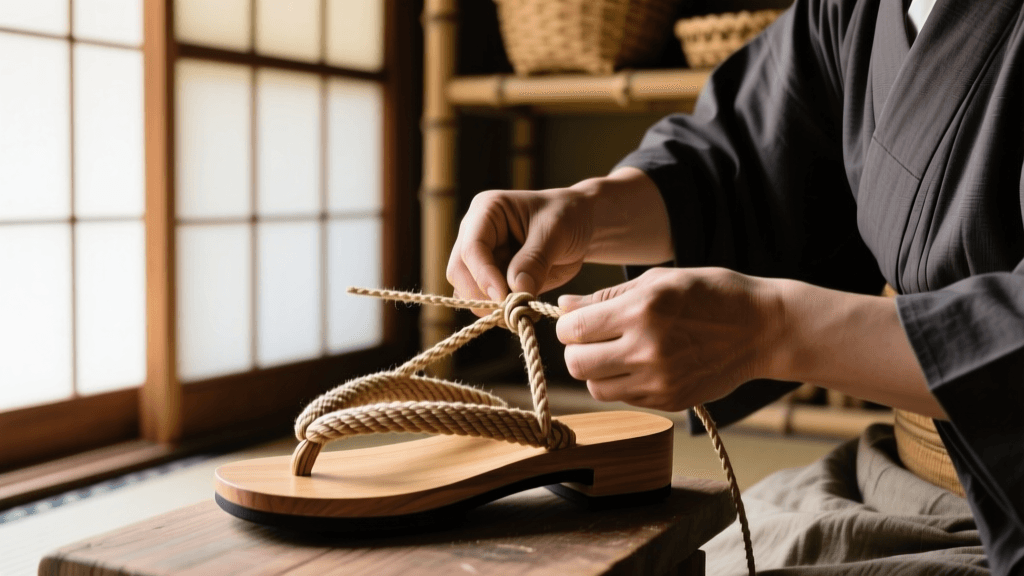
The hanao is the Y-shaped thong that secures the footwear to the foot. It is arguably the most critical component for comfort. A poorly tied hanao will cause blisters, foot fatigue, and an unnatural gait, while a masterfully crafted and adjusted hanao feels like an extension of the body.
Anatomy of the Hanao
The hanao consists of two main parts:
- The Core (Shin): The inner strength of the thong, traditionally made of twisted hemp, cotton cord, or, in contemporary 2026 designs, durable nylon or elasticized paracord for added give.
- The Cover (Kawa/Nuno): The outer wrapping that touches the skin. This can be velvet, cotton, leather, or vinyl. Velvet is favored for formal zori, while cotton and leather are popular for everyday geta.
Step-by-Step Guide to Tying and Adjusting Your Hanao
Over time, the hanao will stretch and loosen. Artisans recommend checking and adjusting the tension every few months. Here is how to properly adjust the internal knotting system located beneath the wooden dai or inside the zori base:
- Access the Knots: For geta, turn the wooden base upside down. You will see three holes: one at the front (maetsubo) and two at the rear sides (yokotsubo). The hanao cords are secured here with specialized knots or small plastic/metal washers.
- Loosen the Rear Knots: Untie or unclip the knots at the two rear yokotsubo holes. Leave the front maetsubo knot intact, as it bears the brunt of the forward pulling force.
- Pull for Tension: Grasp the hanao at the junction where the three cords meet (the 'Y' intersection). Pull the rear cords downward through the holes to tighten the thong. Pro Tip: The ideal tension allows you to slide one finger snugly between the hanao and the top of your foot when standing.
- Secure the Knots: Once the desired tension is reached, tie a secure double overhand knot or use the artisan-provided locking washers at the base of the rear holes. Trim any excess cord, leaving about half an inch to prevent fraying.
- Seal the Ends: If using synthetic or hemp cords, lightly melt the tips with a lighter or apply a drop of clear fabric glue to prevent unraveling.
Artisan Insight: Never tie the hanao so tightly that your toes are forced to grip the base constantly. The toes should rest naturally. The security should come from the gentle wedge of the front post between the first and second toes, not from toe-clenching tension.
2026 Market Guide: Pricing, Sizing, and Authenticity
Navigating the market for traditional Japanese footwear in 2026 requires an understanding of sizing and craftsmanship tiers. Unlike Western shoes, geta and zori are traditionally sized so that the heel slightly overhangs the back edge of the base by about 1 to 2 centimeters. This overhang prevents the heel from striking the wooden base while walking, which can cause splintering and discomfort.
What to Expect to Pay in 2026
- Mass-Produced / Souvenir Grade ($30 - $60): Usually made from composite woods or injected plastics with pre-attached, non-adjustable vinyl hanao. Suitable for a single festival, but lack ergonomic support.
- Mid-Tier Artisan ($120 - $200): Genuine Kiri wood geta or rush-grass zori with replaceable, adjustable hanao. The wood is properly cured, and the hanao covers are made of quality cotton or synthetic velvet.
- Master Craftsman / Bespoke ($250 - $500+): Hand-carved dai, custom-lacquered finishes, and hanao tied by master artisans using premium silk, woven brocade, or hand-stitched leather. These pairs often come with lifetime hanao re-tying services from the original workshop.
Care and Maintenance for Longevity
Proper maintenance ensures that a high-quality pair of geta or zori can last for decades. Because these items are crafted from natural materials, they react to environmental changes.
Wood Care for Geta
Keep wooden geta away from prolonged direct sunlight, which can cause the Kiri wood to crack. If your geta feature unfinished wood, you can occasionally rub them with a light coat of natural tung oil or camellia oil to nourish the grain and enhance water resistance. If the wooden 'teeth' (ha) wear down unevenly from your specific gait, a cobbler or geta artisan can sand and level them, or attach replaceable rubber caps to the bottom to extend their lifespan and provide better traction on modern asphalt.
Hanao Hygiene and Replacement
The hanao cover absorbs sweat and oils from the skin. For velvet or cotton covers, spot cleaning with a damp cloth and mild detergent is recommended. If the inner core stretches beyond repair or the outer fabric frays, the entire hanao should be replaced. In 2026, many online heritage retailers sell 'hanao replacement kits' that include the inner cord, outer cover, and the specialized threading tools needed to pull the cord through the narrow holes of the dai.
Conclusion
The craft of traditional Japanese footwear is a masterclass in functional minimalism and material harmony. Whether you are stepping into a pair of elevated Kiri geta for a summer evening or sliding into formal leather-soled setta zori for a tea ceremony, the experience is defined by the artisan's attention to detail. By understanding the materials, mastering the art of hanao adjustment, and investing in authentic craftsmanship, you ensure that this beautiful tradition continues to walk confidently into the future.