Kimono Storage Preservation 2026: Archival Care & Climate Control
The Rising Value of Vintage Silk Kimonos in 2026
As we navigate the collector landscape in 2026, the global appreciation for vintage Japanese textiles has reached unprecedented heights. Whether you are safeguarding a fragile Meiji-era uchikake (wedding kimono), a vibrant Taisho-era omeisho silk garment, or a contemporary ceremonial piece, proper kimono storage preservation is no longer just a recommendation—it is an absolute necessity. The intersection of traditional Japanese garment care and modern archival science has evolved significantly, offering private collectors and institutional curators advanced methods to halt degradation. This comprehensive guide details the exact protocols, materials, and environmental controls required to manage a silk kimono collection in 2026.
The Science of Silk Degradation
Silk is a natural protein fiber composed primarily of fibroin and sericin. While it boasts remarkable tensile strength, it is highly susceptible to environmental stressors. The amino acids in silk are particularly vulnerable to hydrolysis (breakdown via moisture), photodegradation (damage from ultraviolet and visible light), and oxidative stress. In 2026, conservation science emphasizes that the invisible threats—fluctuating relative humidity (RH) and off-gassing from poor-quality storage materials—are responsible for the majority of irreversible damage in private collections. When silk is exposed to high humidity, the fibers swell and weaken, creating an ideal breeding ground for mold. Conversely, excessively dry conditions cause the protein structures to become brittle, leading to micro-fractures along the traditional fold lines.
Archival Storage Materials: Beyond the Traditional Tansu
Historically, kimonos were stored in tansu (traditional wooden chests) made from hinoki (Japanese cypress) or kiri (paulownia). While kiri wood possesses natural humidity-buffering properties and is resistant to pests, antique wooden chests often lack the airtight seals required to protect against modern urban pollutants and extreme climate fluctuations. In 2026, the gold standard for kimono collection management involves a hybrid approach: utilizing archival-grade enclosures housed within climate-controlled environments.
Unbuffered Acid-Free Tissue Paper
When folding a kimono, the traditional tatami folding method creates sharp creases that can eventually cause the silk to split. To mitigate this, archivists use unbuffered, acid-free tissue paper to cushion the folds. It is critical to use unbuffered tissue (pH neutral) rather than buffered tissue (which contains an alkaline reserve like calcium carbonate). Buffered tissue is excellent for plant-based fibers like cotton or linen, but the alkalinity can actively degrade protein-based fibers like silk and wool over time. Brands like Gaylord Archival and Hollinger Metal Edge continue to dominate the 2026 market with their museum-grade unbuffered tissue sheets.
Archival Boxes and Enclosures
Once padded with tissue, the kimono should be placed in an archival-quality box. Drop-front archival boxes constructed from acid-free, lignin-free corrugated board are highly recommended. These boxes allow you to slide the garment out without lifting it, reducing the risk of snagging delicate metallic threads or shibori (tie-dye) textures. For exceptionally fragile or heavy pieces, such as those adorned with extensive kinran (gold leaf) embroidery, rolling the garment around an archival-grade honeycomb tube covered in washed, unbleached cotton muslin is the preferred method to eliminate fold stress entirely.
Climate Control and Smart Environmental Monitoring
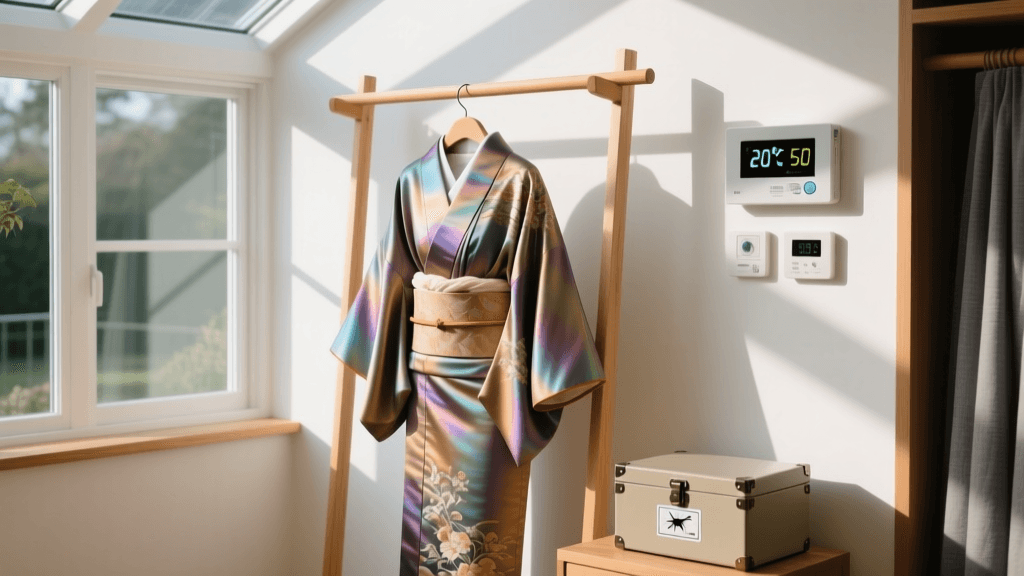
According to the Canadian Conservation Institute, the ideal environment for storing mixed textile collections requires strict adherence to specific temperature and humidity parameters. For silk kimonos, the target is a stable temperature of 65°F (18°C) and a relative humidity (RH) between 45% and 55%. Fluctuations in RH are far more damaging than a steady, slightly sub-optimal reading, as the fibers continuously expand and contract.
In 2026, relying on a standard household hygrometer is considered inadequate for serious collection management. Modern collectors utilize IoT (Internet of Things) micro-sensors, such as the latest SensorPush or Govee Wi-Fi data loggers, placed directly inside the archival boxes and the surrounding room. These devices provide real-time cloud-based alerts to your smartphone if the RH deviates by more than 3%, allowing you to adjust your HVAC system or deploy localized silica gel cassettes (like Prosorb) before damage occurs.
Integrated Pest Management (IPM) for Textile Collections
Pests such as webbing clothes moths (Tineola bisselliella), carpet beetles, and silverfish are the natural enemies of silk and the organic dyes used in traditional Japanese garments. The outdated practice of using naphthalene mothballs or paradichlorobenzene (PDB) crystals is strictly forbidden in modern preservation. These chemicals off-gas toxic fumes that not only pose severe health risks to humans but also accelerate the oxidation and yellowing of silk fibers.
The American Institute for Conservation advocates for Integrated Pest Management (IPM). This proactive strategy focuses on exclusion, monitoring, and non-chemical eradication. Pheromone traps should be deployed in the storage area to monitor for insect activity. If an infestation is suspected, the standard 2026 eradication protocol involves sealing the affected kimono in a polyethylene bag and placing it in a deep freezer at -20°C (-4°F) for a minimum of 72 hours, followed by a gradual thawing period. This thermal shock effectively eliminates all life stages of the pests without introducing harmful residues to the textile.
Handling and Exhibition Best Practices
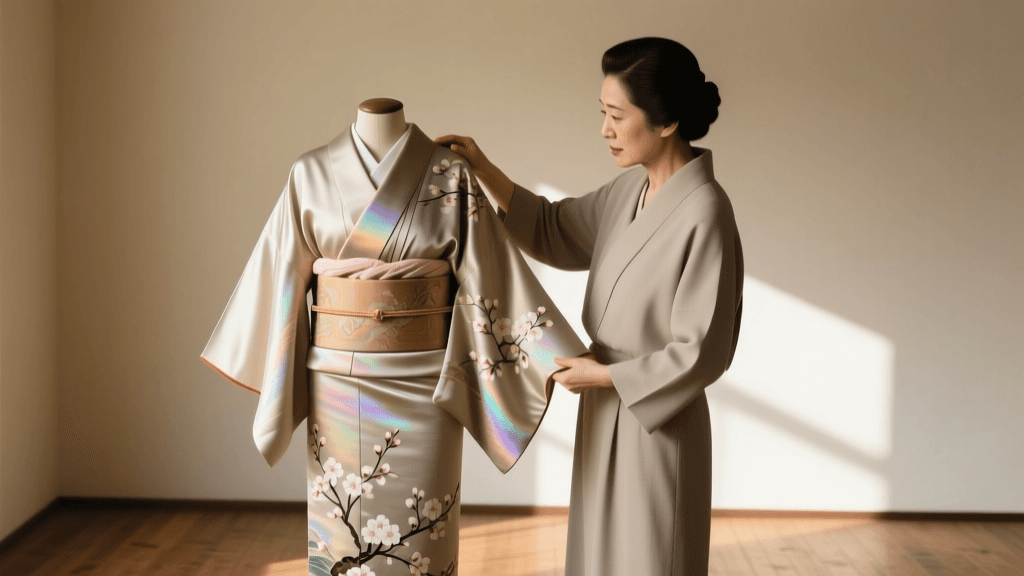
Human skin naturally secretes oils, salts, and acids that can permanently stain silk and attract pests. When handling your collection, always ensure your hands are freshly washed and thoroughly dried. While cotton gloves were once the standard, the 2026 conservation consensus, supported by institutions like the Victoria and Albert Museum, often favors clean, bare hands for handling fragile textiles to maintain tactile sensitivity and prevent accidental snagging on rough cotton seams. However, if the kimono features metallic threads or delicate beadwork, powder-free nitrile gloves are mandatory to prevent tarnishing and snagging.
When displaying a kimono, never hang it by the shoulders on a standard wooden or wire hanger. The weight of the wet or heavy silk will distort the weave and tear the shoulders. Instead, use a padded, archival-quality kimono hanger (emono) with a wide, curved profile, and limit exhibition time to no more than three months before returning the garment to dark storage to rest the fibers.
Digital Collection Management in 2026
Preservation is not solely physical; it is also administrative. A robust digital cataloging system is essential for tracking the provenance, condition, and exhibition history of each piece. In 2026, private collectors are increasingly adopting cloud-based collection management software like CollectiveAccess or PastPerfect. These platforms allow you to upload high-resolution macro photographs of the weave and dye, log condition reports (noting any new creases, discoloration, or pest damage), and set automated reminders for when a garment needs to be removed from storage, refolded along different lines to prevent permanent creasing, and inspected.
Comparing Kimono Storage Solutions
| Storage Method | Pros | Cons | Best For (2026) |
|---|---|---|---|
| Traditional Kiri Tansu | Aesthetic appeal; natural humidity buffering; culturally authentic. | Lacks airtight seals; vulnerable to modern pollutants; heavy and difficult to move. | Display pieces and robust, everyday silk garments in stable climates. |
| Archival Drop-Front Boxes | Acid-free; prevents light damage; easy to slide garments out without lifting. | Requires significant shelf space; lacks the visual charm of traditional furniture. | Long-term deep storage of vintage, fragile, and high-value Meiji/Taisho silks. |
| Archival Rolling Tubes | Eliminates fold stress and crease damage entirely. | Requires large, specialized flat-file cabinets or wide shelving; difficult to unroll. | Heavily embroidered uchikake, gold-leaf textiles, and fragile obi sashes. |
| Climate-Controlled Vault | Ultimate protection; precise IoT temp/RH monitoring; maximum security. | Extremely high initial financial investment and ongoing energy costs. | Institutional archives, museum collections, and ultra-high-net-worth private investors. |
Conclusion
Preserving a kimono collection in 2026 requires a delicate balance between honoring traditional Japanese craftsmanship and applying rigorous, modern archival science. By abandoning outdated chemical pest deterrents, investing in unbuffered acid-free enclosures, and leveraging smart IoT climate monitoring, collectors can ensure that these magnificent silk garments survive for future generations. Whether you are safeguarding a single family heirloom or managing a sprawling archive of Edo-period textiles, meticulous attention to the storage environment is the ultimate key to preservation.