Vintage Kimono Auction Appraisal & Value Guide 2026
The 2026 Landscape of the Secondhand Kimono Market
The global fascination with Japanese traditional garments has surged, making 2026 a landmark year for the secondhand kimono market. Collectors, fashion archivists, and sustainable style enthusiasts are increasingly turning to online auctions to acquire authentic, vintage Japanese textiles. As the fashion industry pivots heavily toward circular economies and heritage craftsmanship, the demand for pre-owned Taisho (1912–1926) and early Showa (1926–1989) era kimonos has driven auction prices to new heights. Navigating this market requires a keen eye for textile quality, an understanding of historical context, and a strategic approach to bidding on Japanese domestic platforms.
According to textile archives at The Metropolitan Museum of Art, the kimono is not merely a garment but a canvas reflecting the socio-economic and artistic shifts of its time. In 2026, buyers are no longer just looking for wearable clothing; they are acquiring museum-quality art. Whether you are sourcing pieces for a private collection, upcycling projects, or cultural preservation, understanding how to accurately appraise a kimono's value is essential before placing your first bid.
Core Metrics for Kimono Value Appraisal
Appraising a vintage kimono requires looking far beyond the surface pattern. The true value lies in the intersection of material, technique, and condition. When reviewing auction listings, pay close attention to the following metrics.
Fabric Weaves and Silk Quality
The foundation of any high-value kimono is its fabric. While cotton and hemp hold cultural significance for casual wear, silk commands the highest premiums at auction.
- Chirimen (Crepe): Known for its textured, pebbled surface, chirimen is highly prized for its drape and durability. Vintage chirimen from the Taisho era often features a heavier, more luxurious hand-feel than modern equivalents.
- Rinzu (Satin Damask): This glossy, patterned silk is a hallmark of formal and semi-formal garments. Appraisers look for the clarity of the woven jimon (background patterns) which catch the light subtly.
- Oshima Tsumugi: Originating from Amami Oshima, this mud-dyed, hand-woven pongee silk is one of the most expensive and sought-after textiles in the 2026 market. Authentic vintage Oshima Tsumugi features incredibly tight, precise kasuri (ikat) patterns that are visible on both sides of the fabric.
Dyeing and Embellishment Techniques
The method used to apply color and pattern drastically alters a piece's auction value. Hand-crafted techniques are vastly superior to machine-printed alternatives.
- Yuzen Dyeing: A resist-dyeing technique that allows for intricate, painterly designs. Kaga Yuzen (from Kanazawa) is famous for its realistic, nature-inspired motifs and deep color palettes, while Kyoto Yuzen often features more stylized, elegant patterns.
- Shibori: The Japanese art of shaped resist dyeing. Tiny, meticulously hand-tied dots (kanoko shibori) that create complex geometric or flowing patterns can take hundreds of hours to produce, making these pieces highly valuable.
- Embroidery and Gold Leaf: Formal garments like the uchikake (wedding overcoat) or kurotomesode (black formal kimono) often feature heavy silk embroidery and applied gold or silver leaf (surihaku). The condition of these metallic elements is a primary factor in appraisal.
Motif Symbolism and Seasonality
In Japanese tradition, the motifs on a kimono dictate not only its formality but the exact season it should be worn. The Victoria and Albert Museum highlights that seasonal awareness is a cornerstone of Japanese dress. For collectors and appraisers in 2026, understanding these motifs helps identify the garment's original purpose and target demographic.
- Shochikubai (Pine, Bamboo, and Plum): A deeply auspicious combination representing longevity, resilience, and perseverance. Often found on highly formal, celebratory kimonos.
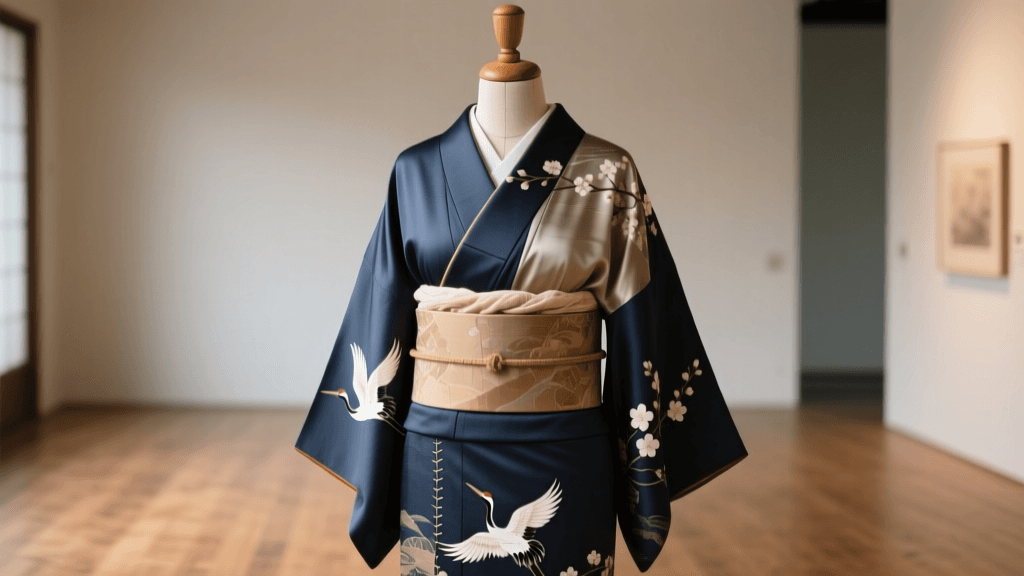
- Tsuru (Cranes): Symbolizing a long life and good fortune, crane motifs are heavily associated with weddings and milestone birthdays.
- Sakura (Cherry Blossoms) and Momiji (Autumn Maple): These strictly seasonal motifs indicate a garment meant for specific times of the year. A kimono featuring scattered cherry blossoms is designed for early spring, while flowing water and maple leaves denote autumn.
Navigating Japanese Online Auctions in 2026
The epicenter of the secondhand kimono trade remains Yahoo! Auctions Japan (Yahuoku), supplemented by Mercari Japan and specialized estate sale platforms. Because these sites are geo-restricted, international buyers in 2026 rely heavily on proxy bidding services like Buyee, Neokyo, and Sendico.
Understanding Japanese Condition Terminology
One of the greatest risks in cross-border auction bidding is misinterpreting condition reports. Japanese sellers are notoriously meticulous, but their grading systems require translation:
- Shimi: Age spots or oxidation stains. Small shimi on the inner lining (doura) are common and acceptable, but shimi on the outer silk drastically reduce value.
- Hika: Snags or pulls in the silk threads. Common in older chirimen silk, but fatal to the value of pristine rinzu.
- Kaori: The scent of the garment. A strong smell of camphor (from traditional tansu storage) or incense is normal, but musty odors indicate mold damage, which is a strict pass for serious collectors.
- Junkyuu / Shunari: Sold 'as-is' or for parts. These lots are goldmines for upcyclers and textile artists in 2026, often yielding high-quality silk for a fraction of the cost.
2026 Kimono Valuation Comparison Chart
To provide a realistic benchmark for buyers, the following table outlines the estimated 2026 auction hammer prices for various vintage kimono types, assuming good to excellent condition with no major outer stains.
| Era | Garment Type | Primary Material / Technique | Estimated 2026 Auction Value (USD) |
|---|---|---|---|
| Taisho (1912-1926) | Komon (Everyday Patterned) | Silk Chirimen / Hand-dyed | $150 - $450 |
| Early Showa (1926-1950) | Houmongi (Visiting Wear) | Silk Rinzu / Yuzen & Embroidery | $300 - $850 |
| Mid Showa (1950-1975) | Kurotomesode (Formal Black) | Heavy Silk / 5 Kamon / Gold Leaf | $400 - $1,200 |
| Various (Pre-1980) | Oshima Tsumugi | Mud-dyed Pongee / Tight Kasuri | $600 - $2,500+ |
| Meiji / Taisho | Uchikake (Wedding Overcoat) | Heavy Silk / Extensive Embroidery | $1,500 - $5,000+ |
Expert Tips for Authenticating Vintage Pieces
As the market has grown in 2026, so has the prevalence of modern reproductions marketed as vintage. Authenticating a piece requires examining the construction and the finish of the dye.
Inspecting the Eri (Collar) and Construction
Traditional kimonos are constructed from straight bolts of fabric (tanmono) with minimal cutting, allowing them to be entirely unpicked, washed, and resewn. The collar (eri) of a genuine vintage kimono will have a soft, hand-stitched curve and a distinct inner stiffener. Furthermore, look for the shitsuke-ito—the temporary basting stitches used to keep the garment flat in storage. While not always present in used garments, their presence is a strong indicator of careful traditional maintenance.
Hand-Painted vs. Digital Print Yuzen
The most critical skill for a modern appraiser is distinguishing between hand-painted Yuzen and modern digital or screen-printed imitations. Hand-painted Yuzen will feature a distinct white outline (ito-me) where the rice-paste resist was applied before dyeing. If you examine the edge of a motif and the color bleeds slightly or lacks a crisp, raised white boundary, it is likely a modern print. Additionally, the Smithsonian's National Museum of Asian Art notes that historical textile conservation relies heavily on identifying these traditional resist boundaries to date garments accurately.
The Kamon (Family Crest) Hierarchy
For formal black kimonos (kurotomesode) and mourning wear (mofuku), the number of family crests dictates the formality and, consequently, the value. A five-crest (itsutsumon) kimono is the most formal and commands the highest price, followed by three-crest (mitsumon) and one-crest (hitotsumon). Ensure the crests are hand-drawn or meticulously embroidered, as printed crests indicate a lower-tier, mass-produced garment.
Conclusion
The 2026 secondhand kimono market offers an unprecedented opportunity to acquire breathtaking examples of Japanese textile artistry. By mastering the nuances of silk weaves, understanding the profound symbolism of seasonal motifs, and learning to navigate the intricacies of Japanese auction terminology, collectors can build exceptional, historically significant wardrobes. Whether you are bidding on a mud-dyed Oshima Tsumugi or a heavily embroidered Taisho-era uchikake, rigorous appraisal and a respect for the garment's heritage will ensure your investments are both culturally and financially rewarding.