Discovering Ainu Attush: Indigenous Japanese Garment Guide
Introduction to Ainu Sartorial Heritage
When discussing traditional Japanese clothing, the global imagination immediately gravitates toward the silk kimono, the lightweight cotton yukata, and the formal hakama. However, the Japanese archipelago is home to a rich tapestry of indigenous and ethnic minority cultures whose sartorial traditions predate and parallel the mainstream Wajin (ethnic Japanese) garments. Foremost among these is the Ainu people, the indigenous inhabitants of Hokkaido, Sakhalin, and the Kuril Islands. Their traditional attire, centered around the remarkable bark-cloth known as attush, represents a profound intersection of environmental stewardship, spiritual animism, and masterful textile engineering.
Unlike the sericulture-dependent textiles of mainland Japan, Ainu garments were born from the dense, ancient forests of the northern islands. For collectors, cultural historians, and sustainable fashion enthusiasts, understanding the nuances of Ainu dress offers a vital counter-narrative to the homogenized view of Asian traditional clothing. This guide explores the craftsmanship of Ainu garments, decodes their spiritual motifs, and provides actionable advice for ethically sourcing and experiencing these cultural treasures today.
The Material Marvel: Understanding Attush Bark Cloth
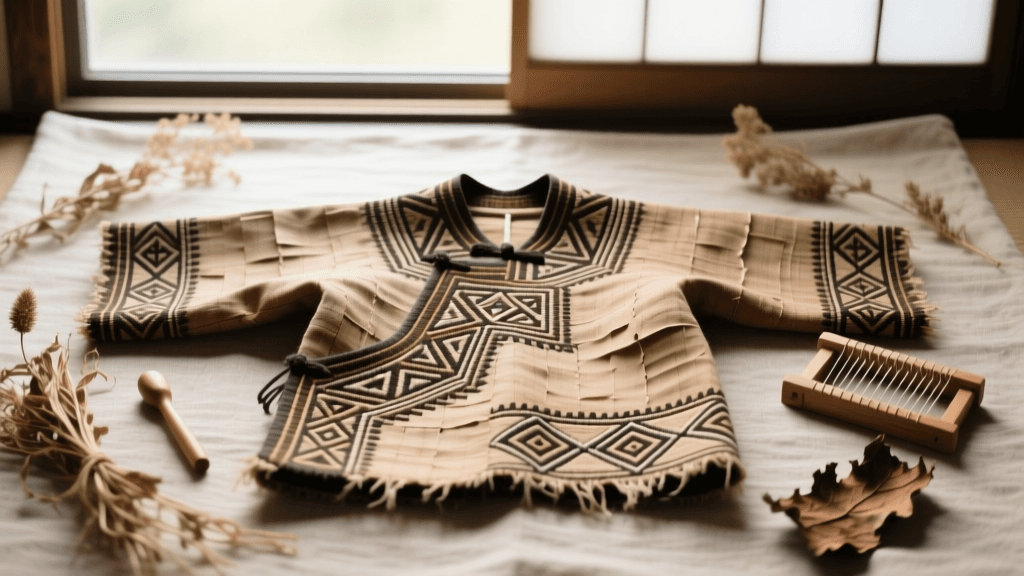
The cornerstone of traditional Ainu everyday wear is attush, a durable, breathable textile woven from the inner bark of the Manchurian elm (nire) or the Japanese linden (ohyo). The creation of attush is a labor-intensive process that requires deep botanical knowledge and seasonal timing.
The Harvesting and Processing Timeline
To produce high-quality attush, artisans must adhere to a strict seasonal calendar. The bark is only harvested in early summer, typically between June and July, when the sap is flowing and the inner bast fibers are most pliable.
- Stripping: The outer bark is carefully scored and peeled away to reveal the creamy inner bast layer.
- Soaking and Drying: The bark is soaked in running river water or hot springs to break down the pectins, then dried in the shade to prevent brittleness.
- Thread Preparation: Artisans tear the dried bark into remarkably uniform threads, typically 1 to 2 millimeters in thickness, using only their fingers and teeth to maintain the natural tensile strength of the fibers.
Weaving Mechanics and Measurements
Ainu weavers utilize a traditional backstrap loom, known as an emush at. Because the loom is anchored to the weaver’s body and a fixed post, the width of the fabric is limited by the weaver’s reach and the loom's structure. Consequently, standard attush cloth measures between 30 and 40 centimeters in width. To create a full-length robe, multiple panels must be meticulously stitched together using twisted elm thread or sinew. A finished full-length attush robe is exceptionally durable, often weighing upwards of 1.5 kilograms, and is naturally water-resistant and insulating.
The Spiritual Armor: Moreu and Ayus Embroidery
While plain attush was used for daily labor and hunting, formal and ceremonial garments were heavily adorned with intricate appliqué and embroidery. This decorative work is not merely aesthetic; it serves as a vital spiritual defense mechanism.
The Ainu worldview is deeply animistic, believing that all natural elements possess a spirit or kamuy. However, malevolent spirits (wenkamuy) can enter the human body through the openings of clothing. To prevent this, Ainu women meticulously embroidered protective patterns around the neck, cuffs, and hems of robes.
Decoding the Motifs
- Moreu (Swirls): The most iconic Ainu motif, representing the flowing currents of rivers or the curling smoke of a hearth. The continuous, unbroken line is meant to trap and confuse evil spirits.
- Ayus (Thorns): Sharp, bracket-like patterns resembling the thorns of the wild rose or the spikes of a fish. These act as spiritual barbed wire, warding off malicious entities.
"The embroidery on an Ainu garment is a map of the cosmos and a shield for the soul. Every stitch placed at the hem or collar is a prayer for the wearer's safe return from the mountains or the sea." — Cultural interpretation from the Foundation for Research and Promotion of Ainu Culture (FRPAC).
Comparative Analysis: Ainu Attire vs. Mainstream Kimono
To fully appreciate the uniqueness of Ainu garments, it is helpful to contrast them with the traditional clothing of the Wajin (mainland Japanese). The differences highlight the distinct environmental and cultural priorities of each group.
| Feature | Ainu Attush Robe | Wajin Silk Kimono |
|---|---|---|
| Primary Material | Elm/Linden inner bark, cotton trade cloth, nettle | Mulberry silk, hemp, later cotton |
| Construction | Woven in narrow 35cm panels, stitched with minimal cutting | Woven in standard 36cm bolts (tanmono), cut into straight rectangles |
| Fastening | Simple woven sash or leather belt; no complex tying | Complex Obi sash requiring specific knots and accessories |
| Decoration | Appliqué and chain-stitch embroidery at spiritual vulnerabilities | Yuzen dyeing, brocade weaving, full-surface pictorial motifs |
| Climate Adaptation | Highly insulating, wind-resistant, ideal for sub-arctic Hokkaido | Layered for cold, but primarily adapted for temperate Honshu climates |
Practical Guide: Sourcing, Costs, and Cultural Tourism
For textile collectors and cultural travelers, acquiring authentic Ainu garments or experiencing the culture firsthand requires careful planning and an understanding of the market. Mass-produced "indigenous-style" souvenirs are common in Hokkaido, but true artisanal work commands respect and a higher price point.
Cost Expectations and Sourcing
Authentic, handmade Ainu textiles are rare and highly valued. When sourcing pieces, consider the following market rates:
- Modern Artisan Accessories: Small items like coin purses, coasters, or bookmarks featuring authentic moreu embroidery on cotton typically range from ¥3,000 to ¥8,000 ($20–$55 USD).
- Contemporary Attush Jackets: Modern Ainu weavers creating wearable, tailored jackets from authentic elm bark cloth charge between ¥80,000 and ¥150,000 ($550–$1,000 USD) due to the hundreds of hours of labor involved.
- Antique Ceremonial Robes: Vintage 19th-century kosante (cotton trade cloth robes with heavy appliqué) or pristine attush robes found in specialized antique markets in Sapporo or Tokyo can range from ¥200,000 to over ¥800,000 ($1,400–$5,500+ USD), depending on provenance and condition.
Actionable Tip: Always look for certification or direct sales from recognized Ainu cooperatives. The Upopoy National Ainu Museum and Park in Shiraoi, Hokkaido, features an official shop that sells verified, ethically sourced crafts directly from indigenous artisans, ensuring your money supports the living community.
Timing Your Cultural Visit
To witness the creation and wearing of these garments in their proper context, align your travel itinerary with key cultural events:
- June - July: Visit the Hidaka or Nibutani regions in Hokkaido to observe the seasonal harvesting of elm bark and the initial stages of thread preparation.
- September (Shakushain Festival): Held in Shinhidaka, this festival honors the 17th-century Ainu leader Shakushain. It is one of the best opportunities to see elders and youth wearing full ceremonial attire, including the sacred sapanpe (wooden crown) and intricately embroidered robes.
- Winter (Iomante Ceremonies): While private and deeply sacred, some public cultural demonstrations at the Hokkaido Ainu Center showcase the heavy layering of attush and animal pelts used to survive the brutal sub-arctic winters.
Ethical Considerations and Cultural Appreciation
As global interest in indigenous fashion grows, the line between cultural appreciation and appropriation can blur. The Ainu have faced centuries of forced assimilation, land dispossession, and bans on their language and customs by the Japanese government. It was only in 2019 that the Japanese government officially recognized the Ainu as an indigenous people.
When purchasing or wearing Ainu-inspired garments, avoid treating sacred ceremonial items (like the sapanpe or specific ritual sashes) as casual fashion accessories. Instead, focus on supporting contemporary Ainu designers who are actively blending traditional moreu motifs with modern, everyday streetwear. Brands led by Ainu youth are currently revitalizing their heritage, using fashion as a tool for political visibility and cultural pride.
Conclusion
The traditional garments of the Ainu people are far more than historical artifacts; they are living testaments to a culture that has survived against immense odds. The rugged elegance of the attush robe and the spiritual geometry of Ainu embroidery offer a profound lesson in sustainable design and animistic respect for nature. By understanding the meticulous craftsmanship behind these textiles and choosing to engage with the culture ethically, collectors and travelers can help ensure that the threads of Ainu heritage continue to be woven for generations to come.