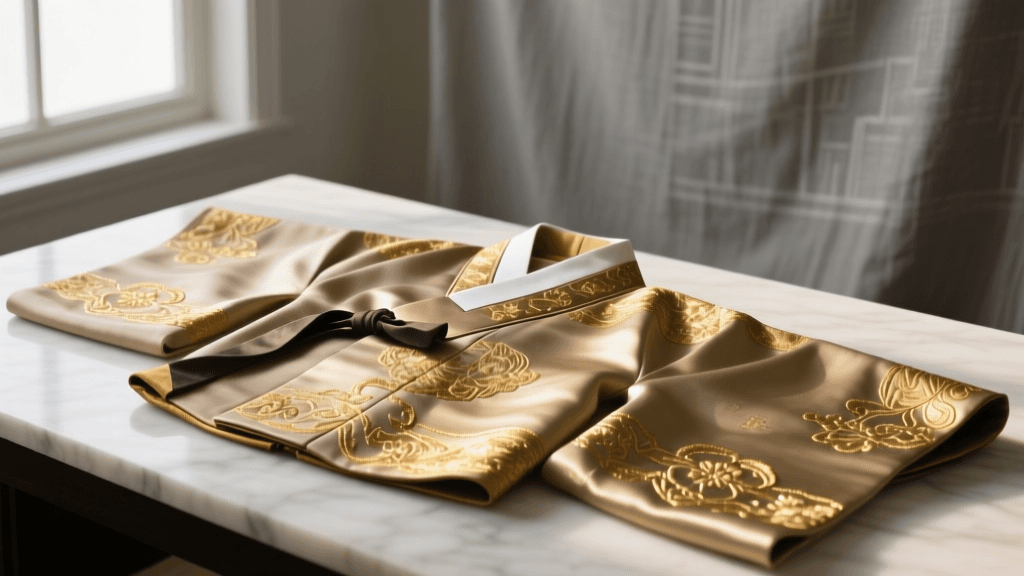
Top AI Drape Tools for Chinese Fashion History Research 2026
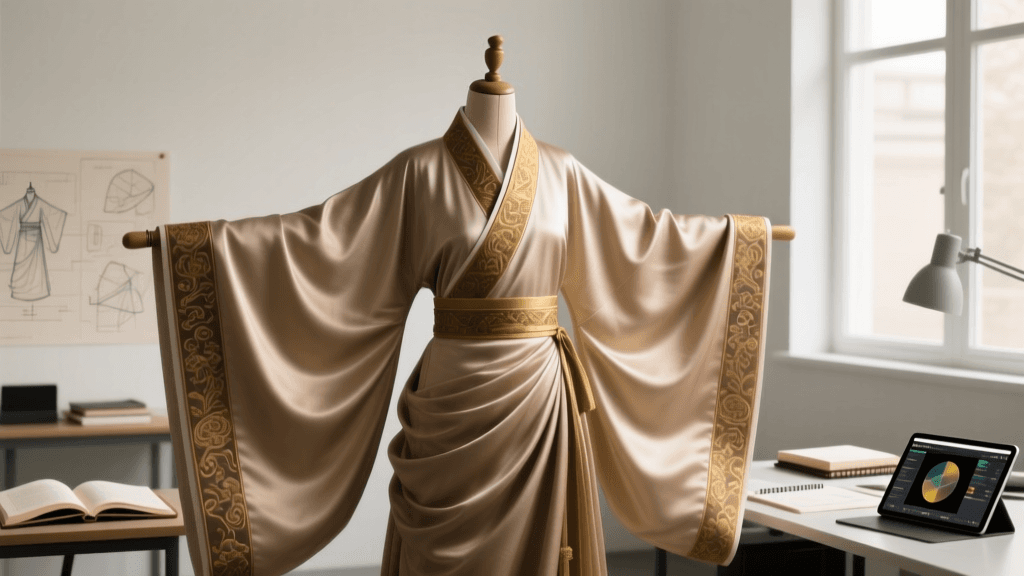
The Evolution of Chinese Fashion History Education in 2026
As of the 2026 academic year, the study of Chinese fashion history has undergone a radical digital transformation. Driven by the massive global and domestic popularity of the Xin Zhongshi (New Chinese Style) movement, universities and research institutions are no longer satisfied with static, two-dimensional sketches of historical garments. Today, academic research demands a rigorous understanding of how ancient textiles moved, folded, and interacted with the human body. This has led to the widespread adoption of AI-driven fabric drape analysis and 3D simulation tools in fashion history curricula across Asia and beyond.
Historically, researchers relied on flat-pattern drafting and physical draping on mannequins to understand historical tailoring. However, physical draping poses severe risks to fragile, centuries-old artifacts. Furthermore, modern substitute fabrics rarely replicate the exact physics of ancient weaves. In 2026, the intersection of digital humanities, machine learning, and textile physics has provided a non-destructive, highly accurate alternative. By utilizing advanced AI drape simulation, scholars can now reconstruct the dynamic movement of Ming dynasty Mamianqun (horse-face skirts) and Tang dynasty Qixiong Ruqun (chest-high skirts) with unprecedented precision.
The Physics of Ancient Silk: Why Drape Analysis Matters
To truly understand historical Chinese garments, one must understand the physics of the textiles from which they were constructed. The drape of a fabric—its ability to hang, fold, and flow under the influence of gravity—is dictated by complex mechanical properties. In academic textile testing, these properties are traditionally measured using the Kawabata Evaluation System (KES), which assesses tensile, shear, bending, compression, and surface friction characteristics.
However, conducting physical KES testing on museum-grade historical silks is impossible due to the destructive nature of the clamps and weights involved. This is where 2026's AI computer vision models have revolutionized the field. Researchers now use high-resolution macro-photography and machine learning algorithms to predict the KES parameters of ancient textiles non-destructively. By analyzing the weave structure, yarn twist, and thread density from digital archives, AI models can generate highly accurate virtual material presets.
This technological leap is crucial because ancient Chinese textiles varied wildly in their physical behavior. For instance, the fluid, airy drape of Luo (silk gauze) behaves entirely differently from the heavy, structured stiffness of Zhuanghua (Song brocade) or the intricate tapestry-like Kesi. As noted by The Metropolitan Museum of Art's Heilbrunn Timeline of Art History, the evolution of Chinese silk weaving techniques over millennia resulted in a vast library of textile behaviors, making accurate digital drape simulation a mandatory skill for modern fashion historians.
Leading AI and 3D Simulation Tools for 2026 Researchers
For academic researchers and university students specializing in Asian traditions, selecting the right software is critical. The 2026 landscape of 3D fashion technology offers several powerful tools, each with unique AI-driven features tailored for historical garment reconstruction. Below is a comparison of the top platforms currently utilized in university digital humanities labs.
| Software Platform | Best Historical Use Case | Key AI / Physics Feature (2026) | Academic License Cost |
|---|---|---|---|
| CLO 3D (Academic) | Precise historical pattern drafting and seam analysis | AI Fabric Auto-Grading from macro-images | ~$250 / year per seat |
| Marvelous Designer (Edu) | Complex layering and dynamic animation of court dress | Machine Learning Drape Solver for heavy brocades | ~$199 / year per seat |
| Blender (with ClothWeave) | Open-source macro-texture weaving and physics simulation | Node-based AI physics mapping for raw silk | Free / Open Source |
Many leading institutions, utilizing resources similar to the CLO Virtual Fashion Educational Program, have integrated these tools directly into their syllabi. CLO 3D remains the industry standard for its precise pattern-making capabilities, allowing students to input exact historical measurements and immediately visualize the 3D drape. Meanwhile, Blender has gained immense traction in open-source academic circles due to its customizable physics nodes, which allow researchers to manually tweak the shear stiffness and bending rigidity of virtual Kesi tapestries.
Case Study: Digitizing the Tang Dynasty Banbi
To illustrate the practical application of these tools, consider the academic reconstruction of the Tang Dynasty (618–907 AD) Banbi (half-arm jacket). The Banbi was a short-sleeved jacket worn over long-sleeved undergarments, popular among both men and women. Reconstructing its drape presents a unique challenge: the garment often featured a stiff, structured collar made of heavy brocade or tapestry silk, while the body of the jacket was crafted from lightweight, fluid gauze.
In a 2026 graduate-level reconstruction project, researchers begin by establishing the foundational measurements based on excavated artifacts and historical murals. A standard Banbi might feature a wingspan (sleeve tip to sleeve tip) of 120cm and a back width of 45cm. Using CLO 3D, students draft the 2D pattern pieces, paying strict attention to the historical grainline placement, which heavily influences the bias drape of the silk.
The true magic occurs during the material assignment phase. Using AI-predicted KES data, the researcher assigns a high-bending-rigidity preset to the collar and a low-shear-stiffness preset to the body panels. When the virtual avatar is animated in a walking cycle, the simulation accurately demonstrates how the stiff collar maintains its structural integrity while the lightweight body panels billow and collapse against the undergarments. This level of dynamic analysis provides profound insights into the lived experience of Tang dynasty clothing, revealing how the garments facilitated movement in ways that static museum displays simply cannot convey. The Victoria and Albert Museum's Asian Collections frequently highlight the importance of understanding the structural layering of such historical garments, making digital drape analysis an invaluable complementary research method.
Archival Preservation and the Xin Zhongshi Movement
The academic rigor applied to AI drape analysis in 2026 is not confined to the ivory tower; it has direct implications for the booming Xin Zhongshi (New Chinese Style) commercial market. Modern fashion brands are increasingly collaborating with university research labs to ensure their contemporary adaptations of historical garments are structurally and aesthetically authentic.
By utilizing the digital drape data generated by academic researchers, commercial designers can select modern, mass-producible fabrics that mimic the exact physics of ancient silks. For example, if a brand wishes to release a modern Mamianqun using a synthetic blend for durability, they can use AI simulation to test how different synthetic weaves will fold and swing compared to the original Ming dynasty silk damask. This ensures that the iconic, structured pleats of the horse-face skirt behave correctly in motion, preserving the cultural integrity of the garment while adapting it for modern wear.
Integrating Digital Reconstruction into University Curricula
The integration of these technologies has fundamentally altered the Asian traditions and fashion history curriculum. In 2026, students specializing in Chinese fashion history are required to be as proficient in 3D physics engines as they are in historical textile identification. Coursework now frequently includes modules on digital material science, where students learn to calibrate virtual friction and damping parameters to match specific historical weaves.
Furthermore, digital reconstruction allows for the creation of immersive, interactive educational archives. Universities are building virtual reality (VR) museums where students and the public can interact with historically accurate, physics-simulated garments. Users can virtually "touch" the fabrics, observing how the AI-driven drape responds to their input, thereby fostering a deeper, tactile understanding of Asian textile traditions without risking damage to priceless antiquities.
Conclusion
The year 2026 marks a definitive turning point in Chinese fashion history education and academic research. By embracing AI-driven fabric drape analysis and advanced 3D simulation tools, scholars have unlocked the ability to study the dynamic, living nature of historical garments. From the structured collars of the Tang dynasty Banbi to the flowing pleats of the Ming dynasty Mamianqun, digital reconstruction bridges the gap between ancient tailoring and modern technological capability. As the Xin Zhongshi movement continues to evolve, the rigorous academic research underpinning it ensures that the rich, complex traditions of Asian garments are preserved, understood, and celebrated with unprecedented accuracy.