Afrasiyab Sogdian Silk Finds: 2026 Spectral Dye Analysis
Unearthing the Sogdian Middlemen: The Afrasiyab Context
The ancient city of Afrasiyab, the predecessor to modern-day Samarkand in Uzbekistan, remains one of the most vital archaeological windows into the Silk Road's bustling textile trade. As the undisputed middlemen of the ancient world, the Sogdians facilitated a massive exchange of goods, ideas, and aesthetics between the Sasanian Empire, Tang Dynasty China, and the Byzantine world. While the famous Afrasiyab murals have long captivated historians, it is the surviving textile fragments—specifically the intricate silk weaves found in elite tombs and hidden caches—that provide the most intimate data regarding ancient material culture. For decades, analyzing these fragile silk scraps was a destructive process, requiring the physical dissolution of fibers to identify the organic dyes used. However, as of 2026, a revolution in non-destructive archaeological science has allowed researchers to map the exact chemical signatures of these ancient textiles without harming a single thread.
According to the UNESCO Silk Roads Programme, the Sogdian trade networks were not merely conduits for raw silk; they were hubs of technological and artistic synthesis. Sogdian weavers adopted Chinese silk thread but adapted Sasanian motifs, such as the iconic pearl roundels and confronting boars, creating a hybrid aesthetic that eventually influenced the Tang Dynasty's own textile production. Understanding the precise dyes and weave structures of these Afrasiyab finds is crucial for tracing the exact geographical routes of botanical and mineral exchanges across Central Asia.
The 2026 Breakthrough: Non-Destructive Hyperspectral Imaging
In early 2026, international conservation teams deployed next-generation hyperspectral imaging arrays combined with AI-assisted macro-X-ray fluorescence (MA-XRF) to analyze the Afrasiyab silk cache. Unlike older High-Performance Liquid Chromatography (HPLC) methods, which required clipping and dissolving milligrams of priceless 8th-century fabric, the 2026 spectral protocols bounce specific wavelengths of near-infrared and ultraviolet light off the textile surface. The resulting spectral reflectance curves are then cross-referenced against a massive 2026 digital library of degraded historical dyes.
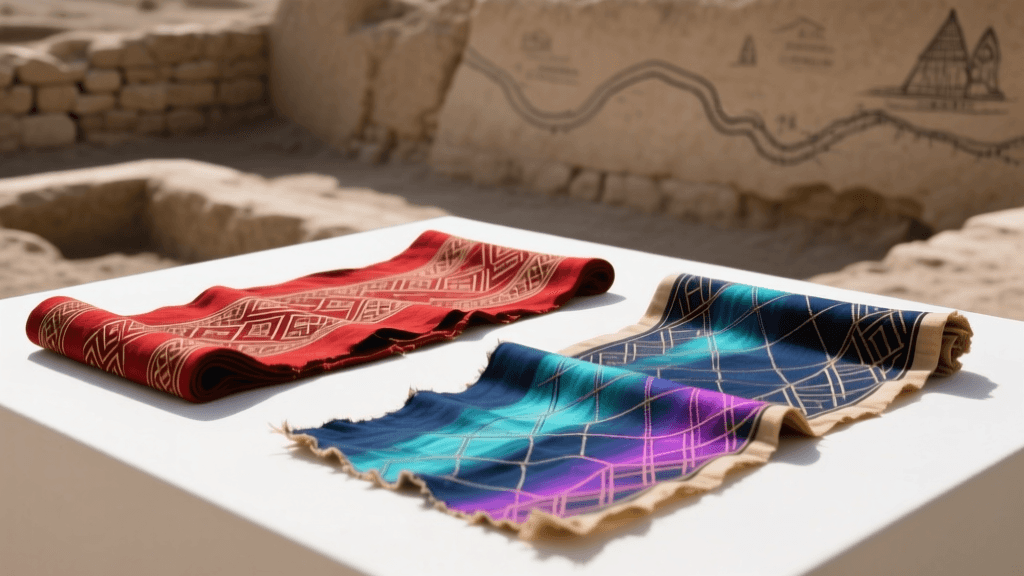
This technological leap has yielded unprecedented insights into the Sogdian palette. Conservators can now differentiate between local Central Asian madder (Rubia tinctorum) and imported Indian chay root (Oldenlandia umbellata) based on the distinct degradation markers of purpurin and munjistin left on the silk fibers after a millennium in the soil. Furthermore, portable Raman spectrometers, which in 2026 are priced around $45,000 for institutional use and are small enough to fit inside a standard excavation field kit, have allowed on-site identification of mineral mordants like alum and iron without moving the artifacts from their climate-controlled storage environments.
Comparative Analysis of Afrasiyab Silk Dyes
The following table outlines the primary dyes identified in the Afrasiyab Sogdian silk fragments during the 2026 spectral analysis, detailing their chemical markers and geographical origins. This data is currently being used by the Metropolitan Museum of Art and partner institutions to authenticate and date newly excavated Silk Road textiles.
| Dye Source | Primary Color | 2026 Spectral Chemical Marker | Mordant Used | Probable Origin Route |
|---|---|---|---|---|
| Madder Root (Rubia tinctorum) | Deep Red / Crimson | Alizarin & Purpurin degradation peaks at 540nm | Alum (Potassium aluminum sulfate) | Local Central Asia / Iranian Plateau |
| True Indigo (Indigofera tinctoria) | Vivid Blue | Indigotin and Indirubin ratios via Raman shift | None (Vat dye process) | Imported via Northern India / Bactria |
| Weld (Reseda luteola) | Bright Yellow | Luteolin and Apigenin fluorescence signatures | Alum / Chalk buffer | Steppe regions / Caucasus trade routes |
| Kermes (Kermes vermilio) | Scarlet / Blood Red | Kermesic acid markers distinct from cochineal | Alum / Tin (rare) | Mediterranean / Byzantine exchange |
Weave Structures: From Warp-Faced to Weft-Faced Samite
Beyond color, the 2026 analysis has provided high-resolution structural mapping of the Sogdian loom techniques. Early Chinese silks were predominantly warp-faced, meaning the longitudinal threads dictated the pattern and color. However, the Afrasiyab finds heavily feature samite (a weft-faced compound twill) and taqueté (weft-faced compound tabby). These structures allowed weavers to create wider, heavier fabrics with complex, polychrome geometric and figural patterns that were highly prized in the Sasanian and Byzantine courts.
'The transition to weft-faced weaves among the Sogdians represents a brilliant technological adaptation. By utilizing the drawloom to manipulate the weft threads, they could hide the binding warps entirely, resulting in a textile that looked remarkably similar to their traditional tapestry-woven woolens, but with the luxurious sheen of Chinese silk.' — 2026 Journal of Archaeological Textile Science.
Modern textile historians and master weavers are currently using these 2026 structural scans to recalibrate replica drawlooms. By understanding the exact tension and thread count (often exceeding 120 warp ends per centimeter in the finest Afrasiyab samites), contemporary artisans are recreating these fabrics for museum displays and high-end cultural exhibitions.
Modern Applications: Conservation and the Xin Zhongshi Movement
The data harvested from the Afrasiyab spectral analysis is not confined to academia; it is actively shaping modern fashion and conservation in 2026. In the realm of conservation, the precise identification of iron-based mordants in certain black and brown silk fragments has alerted conservators to 'iron rot'—a phenomenon where the acidic mordant degrades the silk protein over centuries. Armed with this knowledge, 2026 preservation protocols now mandate that iron-mordanted Afrasiyab silks be stored in specialized micro-climates with an inert argon gas overlay and relative humidity strictly maintained at 45% ± 1% to halt catalytic degradation.
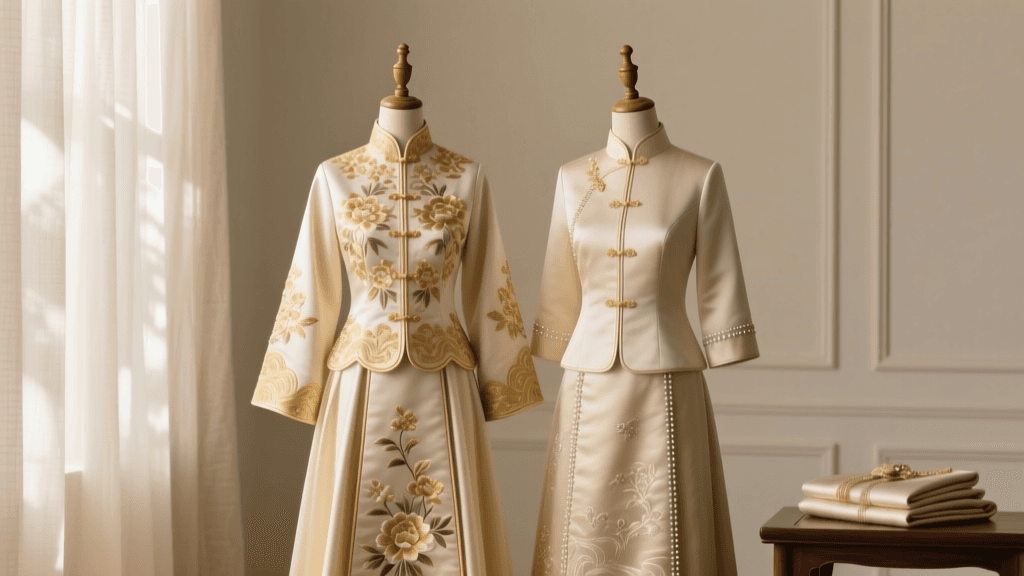
Simultaneously, the Xin Zhongshi (new Chinese style) fashion movement has embraced these archaeological findings. Leading avant-garde designers in Shanghai and Beijing are collaborating with historians to integrate authentic Sogdian pearl-roundel motifs and historically accurate madder-indigo color palettes into modern 2026 streetwear and haute couture. Rather than relying on generic, anachronistic 'ancient' patterns, these designers use the exact spectral color hex codes derived from the Afrasiyab silks, pairing them with modern sustainable Tencel-silk blends. This fusion of rigorous 2026 archaeological science and contemporary Asian fashion design ensures that the legacy of the Sogdian middlemen continues to weave its way through the cultural fabric of the modern world.
Actionable Preservation Protocols for 2026 Collectors and Archivists
- Lighting Limits: Limit exhibition lighting to a maximum of 50 lux, utilizing 2026 UV-filtered OLED panels that emit zero near-infrared heat.
- Spectral Auditing: Conduct non-destructive MA-XRF scanning every 36 months to monitor the oxidation rates of metallic mordants.
- Mounting Materials: Use only unbleached, washed linen or custom-milled Tyvek for support mounts; avoid any synthetic adhesives that could off-gas and alter the fragile dye structures.
- Pest Management: Deploy anoxic treatment chambers using nitrogen gas for any new acquisitions before introducing them to the main archive, ensuring no modern textile pests compromise the ancient fibers.