Best Hanfu for Tai Chi & Qigong Practice in 2026: Fabric Guide
The Intersection of Hanfu and Mind-Body Wellness in 2026
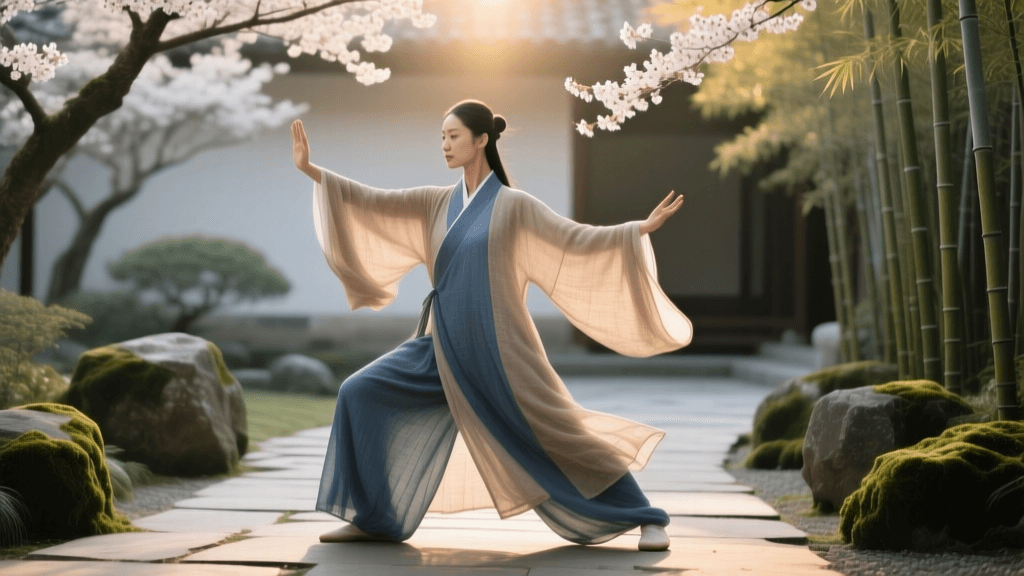
The intersection of the Xin Zhongshi (New Chinese Style) movement and traditional wellness practices has reached unprecedented heights in 2026. As practitioners increasingly seek authenticity in their mind-body routines, wearing traditional Hanfu during Tai Chi (Taijiquan) and Qigong has transitioned from a niche aesthetic choice to a mainstream wellness standard. According to the UNESCO Intangible Cultural Heritage registry, Taijiquan is deeply rooted in the cyclic movements of nature and the philosophical concepts of Yin and Yang. Wearing garments that honor these traditional philosophies enhances the meditative depth of the practice.
Furthermore, the physical benefits of these practices are well-documented. As noted by Harvard Health Publishing, Tai Chi improves balance, reduces stress, and enhances cardiovascular health. However, to fully realize these benefits, practitioners require clothing that facilitates unrestricted movement, optimal thermoregulation, and proper Qi (energy) flow. In 2026, the market for adaptive Hanfu activewear has matured, offering specialized fabrics and tailored silhouettes designed explicitly for the deep stances and sweeping arm movements characteristic of internal martial arts and Qigong.
Core Fabric Requirements for Unrestricted Qi Flow
When selecting a Hanfu for wellness practices, the fabric must balance traditional aesthetics with modern biomechanical needs. The primary requirements include breathability, moisture management, structural drape, and four-way stretch. In 2026, textile innovators have successfully blended ancient natural fibers with modern bio-yarns to create the ultimate Qigong wardrobe.
- Breathability and Thermoregulation: Qigong practice often induces a deep, internal heat. Fabrics must allow this heat to escape while protecting the practitioner from external wind (a concept known in traditional Chinese medicine as defending the 'Wei Qi').
- Drape and Weight: The fabric must possess enough weight to fall gracefully during slow, deliberate movements, grounding the practitioner visually and physically, yet remain light enough not to cause fatigue.
- Stretch and Recovery: Traditional woven fabrics lack elasticity. Modern adaptive Hanfu incorporates hidden spandex or elastane wefts to allow for deep lunges and horse stances (Ma Bu) without tearing the seams.
2026 Fabric Performance Comparison Chart
| Fabric Type | Breathability | Drape Quality | Stretch Capacity | Best Practice Environment |
|---|---|---|---|---|
| Pure Ramie (Xia Bu) | Excellent | Structured / Crisp | Low (0-2%) | Hot outdoor summer sessions |
| Mulberry Silk Crepe | High | Fluid / Luxurious | Moderate (5-8%) | Indoor meditation & light Qigong |
| Bamboo-Linen Blend | Very High | Soft / Natural | Low-Moderate (3-5%) | All-season outdoor Tai Chi |
| Cupro-Spandex Bio-Weave | Moderate | Heavy / Flowing | High (15-20%) | Dynamic martial forms & deep stances |
Ideal Silhouettes for Deep Stances and Forms
The silhouette of your Hanfu directly impacts your range of motion. While flowing, floor-length skirts like the Mamianqun (horse-face skirt) are stunning for formal events, they are highly impractical for the wide, grounded stances required in Tai Chi. For 2026 wellness practitioners, the most recommended silhouettes prioritize lower-body mobility and upper-body alignment.
The Jiaoling Youren Top and Songku Trousers
The cross-collar, right-lapel (Jiaoling Youren) top paired with wide-leg Songku trousers is the gold standard for Tai Chi. The cross-collar naturally frames the neck and encourages an upright posture, aligning the spine—a critical requirement for allowing Qi to flow freely from the base of the spine to the crown of the head. The Songku trousers, featuring a relaxed fit through the thigh and a slight taper at the ankle, provide ample room for the hips to open during the 'Single Whip' or 'Snake Creeps Down' postures without fabric resistance.
The Modified Shenyi (Deep Robe)
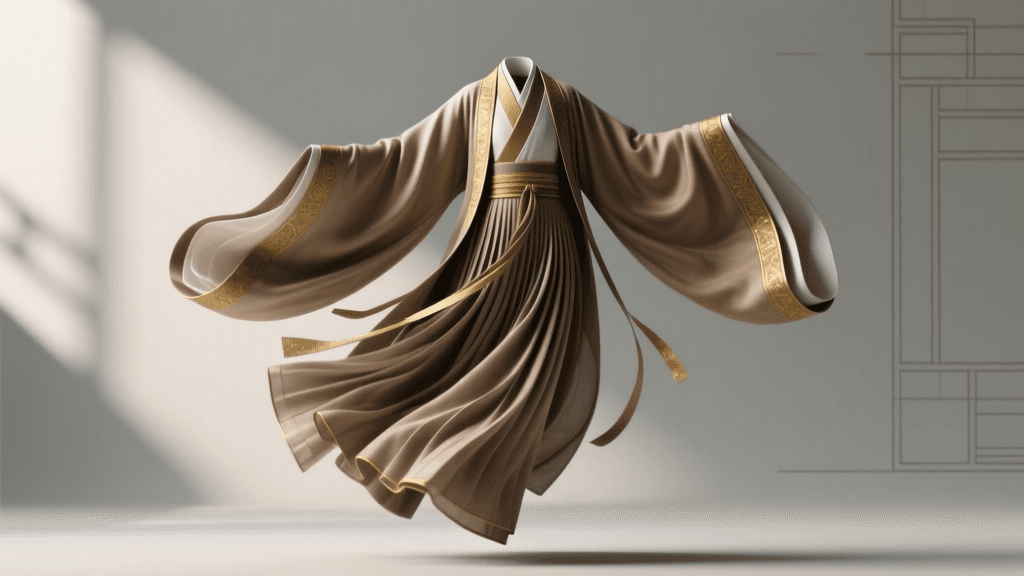
For practitioners who prefer the look of a one-piece robe, the modified Shenyi is an excellent choice. In 2026, leading Xin Zhongshi activewear brands have introduced the 'Action Shenyi,' which features hidden side-slit gussets extending up to the mid-thigh. This adaptation maintains the unbroken vertical line of the traditional robe while permitting the legs to move freely in wide lateral stances.
Sleeve Management and the Role of Huanbi
Sleeve design is perhaps the most debated topic among Hanfu-wearing martial artists. The traditional Guangxiu (wide sleeves) offers a breathtaking visual of 'cloud hands' during Tai Chi, emphasizing the fluidity of the movements. However, wide sleeves can become a hazard during faster forms or when practicing with weapons like the Jian (straight sword) or Tai Chi fan, as the excess fabric may obscure vision or catch on the equipment.
To solve this, practitioners utilize two main approaches:
- Shouxiu (Narrow Sleeves): Opting for tops with tailored, narrow sleeves that end precisely at the wrist bone. This is the preferred choice for dynamic Chen-style Tai Chi, which features explosive movements (Fajin) and low stances.
- Huanbi (Bracers/Cuffs): For those who wish to own a single versatile Hanfu top with wide sleeves, traditional bracers (Huanbi) are essential. In 2026, modern Huanbi are crafted from breathable, moisture-wicking compression fabrics that securely bind the excess sleeve material to the forearm. This allows the practitioner to transition seamlessly from a formal tea ceremony to an intense Qigong session without changing garments.
Footwear: Grounding Your Practice
A critical, yet often overlooked, component of the Hanfu wellness ensemble is footwear. The connection between the foot and the earth (Yongquan acupoint) is vital for balance and rooting in Tai Chi. Traditional Lao Beijing cloth shoes (Bu Xie) feature flat, flexible cotton soles that promote excellent ground feel. However, practicing on modern concrete or hard indoor floors in 2026 requires additional joint protection.
The latest innovation in traditional wellness footwear is the integration of ultra-thin, high-density EVA orthotic insoles into traditional cotton uppers. These hybrid shoes maintain the minimalist, unobtrusive aesthetic required to complement the Hanfu silhouette while providing the necessary shock absorption for the knees and lower back during prolonged weight-shifting exercises. When selecting footwear, ensure the toe box is wide enough to allow the toes to 'grip' the floor naturally, a key mechanic for maintaining stability in the 'Wu Chi' standing posture.
Sizing, Fit, and the Principle of 'Song'
In Tai Chi and Qigong, the concept of 'Song' translates to active relaxation—being loose and supple without being limp or collapsed. This philosophy must directly translate to the fit of your Hanfu. A garment that is too tight restricts blood circulation and lymphatic flow, while a garment that is excessively baggy can feel cumbersome and distract from the meditative focus.
When measuring for a Tai Chi-specific Hanfu in 2026, follow these guidelines:
- Shoulders: The shoulder seam should drop slightly (about 1 to 1.5 inches) past the natural shoulder bone. This drop-shoulder design prevents the fabric from pulling across the chest when the arms are raised overhead.
- Chest and Torso: Ensure there is at least 3 to 4 inches of ease beyond your actual chest measurement. This accommodates deep diaphragmatic breathing, which is foundational to Qigong.
- Inseam and Rise: The crotch seam of the trousers must be dropped or gusseted. A standard modern trouser rise will severely restrict the hips during a deep horse stance, potentially causing seam failure or joint strain.
Garment Care Post-Practice
Wellness practices, particularly those performed outdoors in the summer or involving rigorous martial forms, will result in perspiration. Proper care of your Hanfu ensures the longevity of the natural fibers and maintains the garment's structural integrity.
For bamboo-linen blends and Cupro-spandex activewear, a gentle machine wash on a cold, delicate cycle using a pH-neutral detergent is sufficient. However, for pure Ramie and Mulberry Silk, hand-washing is mandatory. The National Center for Complementary and Integrative Health emphasizes the holistic nature of these practices, which extends to the mindful care of the tools and garments we use. Hand-washing your silk Qigong attire in cool water with a specialized silk wash, followed by air-drying in the shade, preserves the protein structure of the silk fibers. Never wring or twist the fabric; instead, gently press the water out and lay the garment flat on a drying rack to maintain its precise drape and alignment.
Conclusion
As we navigate the wellness landscape of 2026, the integration of traditional Hanfu into Tai Chi and Qigong practice represents a beautiful synthesis of cultural heritage and physical health. By carefully selecting breathable, adaptive fabrics, choosing silhouettes that honor the biomechanics of deep stances, and respecting the principles of mindful garment care, practitioners can elevate their mind-body connection. Whether you are flowing through a 24-form Yang-style routine in a bamboo-linen Songku set or finding stillness in a silk Shenyi during standing meditation, the right Hanfu transforms from mere clothing into an essential instrument of your wellness journey.